

2026’da İncelenen En İyi 10 Yapay Zekâ Gereksinim Yönetimi Aracı

En İyi Yapay Zekâ Gereksinim Yönetimi Araçları Kısa Listesi


Proje gereksinimlerini yönetmek, özellikle ayrıntılar sık sık değiştiğinde göz korkutucu bir görev olabilir. Her şeyi takip etmekte zorlanabilir, bu da teslim tarihlerinin kaçırılmasına ve ekiplerin hayal kırıklığına uğramasına neden olabilir. Yapay zekâ gereksinim yönetimi araçları, projenizin ihtiyaçlarına uyum sağlayan akıllı özellikler sunarak bu zorlukların üstesinden gelmenize yardımcı olmak için tasarlanmıştır.
Bu yapay zekâ araçları, zahmetli görevleri otomatikleştirir, gereksinimleriniz hakkında içgörüler sunar ve hiçbir şeyin gözden kaçmamasını sağlar. Deneyimlerime göre bu özellikler, projeleri ne kadar verimli yönetebildiğiniz konusunda gerçekten büyük bir fark yaratır.
Bu makalede, en iyi yapay zekâ gereksinim yönetimi araçlarını inceleyecek, yapay zekâ özelliklerine ve bunların ekibinize nasıl fayda sağlayabileceğine odaklanacağım.
Why Trust Our Software Recommendations
Our team has been testing and reviewing software since 2012. As project managers ourselves, we know how difficult—and important—it is to choose the right software.
For this guide, we evaluated tools using hands-on testing and independent research, scoring tools using our selection criteria. We also draw on insights from industry thought leaders and practicing project management experts.
Our reviews reflect our human editorial judgment, not a sales pitch.
Expert reviewers:
Yapay Zekâ Gereksinim Yönetimi Araçları Karşılaştırma Tablosu
Bu karşılaştırma tablosu, en iyi yapay zekâ gereksinim yönetimi araçları seçimlerimin fiyatlandırma ayrıntılarını özetlemektedir.
| Tool | Starting Price | Website | |
|---|---|---|---|
| Best with AI-powered requirements analysis | 4.6 out of 5 | $995/year 30-day free trial + free demo available | Website |
| Best for digital compliance in medical fields | — | Pricing upon request Free demo available | Website |
| Best for regulated-industry traceability | — | Pricing upon request 30-day free trial + free demo available | Website |
| Best for Microsoft integration | 4.5 out of 5 | Pricing upon request Free 30 days trial available | Website |
| Best for AI-driven multi-industry adaptability | 4.6 out of 5 | $9/user/month Free plan + 14-day trial available | Book Demo |
| Best for real-time collaboration tools | 4.3 out of 5 | $10/user/month Free plan + 14-day trial + demo available | Book Demo |
| Best for customizable workflows | 4.3 out of 5 | $8.48/user/month Free plan available | Website |
| Best for large enterprises | — | Pricing upon request Free demo available | Website |
| Best for test management integration | — | $5/month Free 30-day trial available | Website |
| Best for DevOps integration | — | $20/month Free plan and 15-day free trial available | Website |
En İyi Yapay Zekâ Gereksinim Yönetimi Aracı İncelemeleri
Aşağıda, kısa listeme giren en iyi yapay zekâ gereksinim yönetimi araçlarının ayrıntılı özetlerini bulabilirsiniz. İncelemelerim, sizin için en iyi aracı bulmanıza yardımcı olmak amacıyla her aracın temel özelliklerine, artılarına ve eksilerine, entegrasyonlarına ve ideal kullanım alanlarına ayrıntılı bir bakış sunmaktadır.

Best with AI-powered requirements analysis
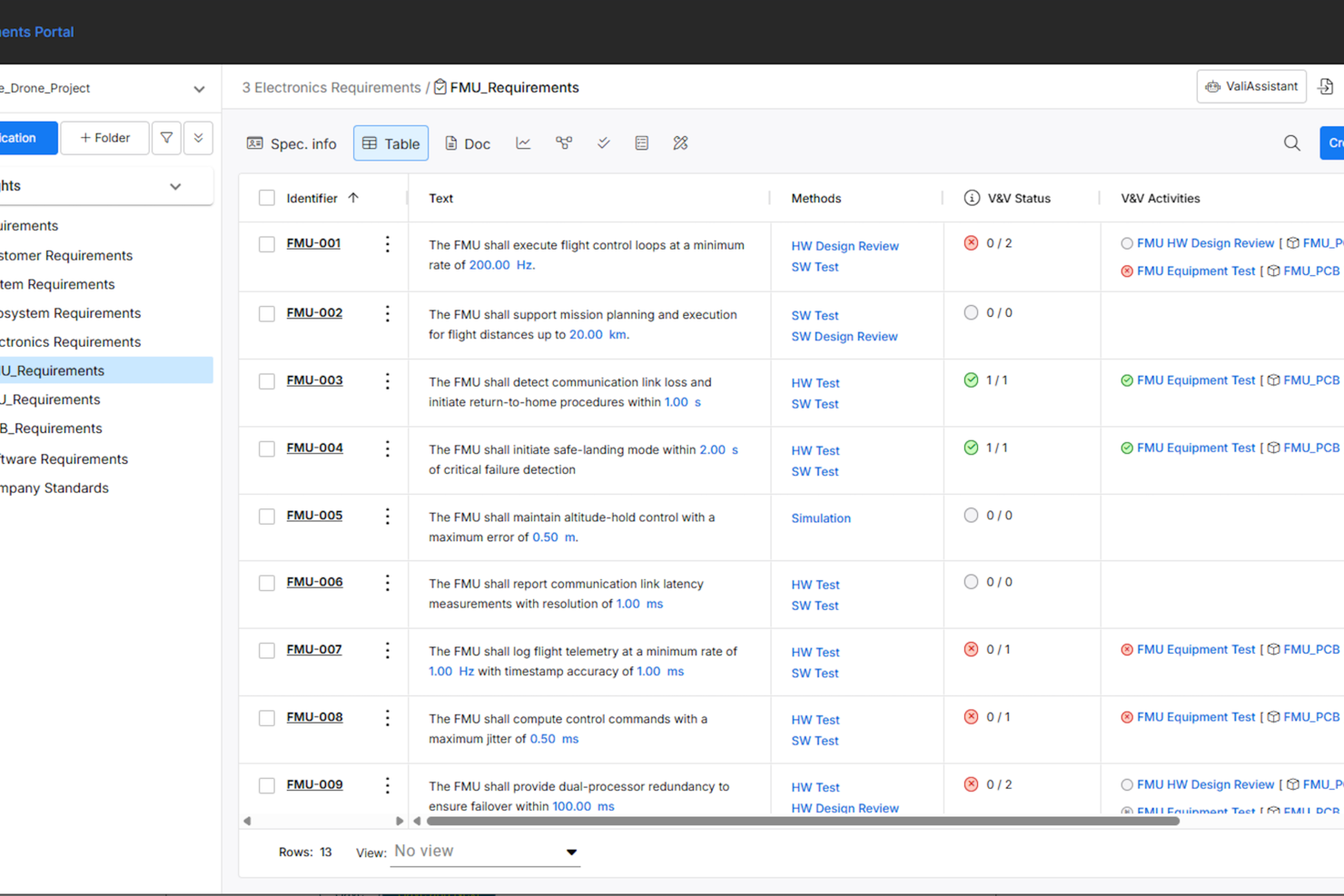
Requirements Portal is built for engineering and product teams who need to manage complex requirements, offering AI-driven analysis and traceability to help teams in electronics and high-tech industries keep projects aligned and compliant.
Who Is Requirements Portal Best For?
Engineering teams in electronics, aerospace, or high-tech industries who need advanced requirements management and collaboration.
Why I Picked Requirements Portal
I picked Requirements Portal as one of the best because its AI-powered requirements analysis helps my team quickly identify gaps, inconsistencies, and dependencies in complex specs. I like how the platform uses AI to flag ambiguous language and suggest improvements right in the requirements documentation. In practice, that means my team can catch issues early and keep our project documentation clear and actionable.
Requirements Portal Key Features
- Requirements traceability matrix: Track relationships between requirements, design elements, and test cases in a single view.
- Version control: Maintain a full history of changes to requirements and easily revert to previous versions.
- Role-based access control: Assign permissions and visibility to different team members based on their roles.
- Custom workflow automation: Set up approval processes and notifications tailored to your team’s requirements management process.
Requirements Portal Integrations
Integrations include Altium Designer, Altium 365, and an API is available for custom integrations.
Pros and Cons
Pros:
- Automated document generation for audits and reviews
- Built-in change impact analysis visualization
- Hierarchical requirements structuring for complex projects
Cons:
- Lacks mobile app for on-the-go access
- AI-powered analysis features are limited in scope
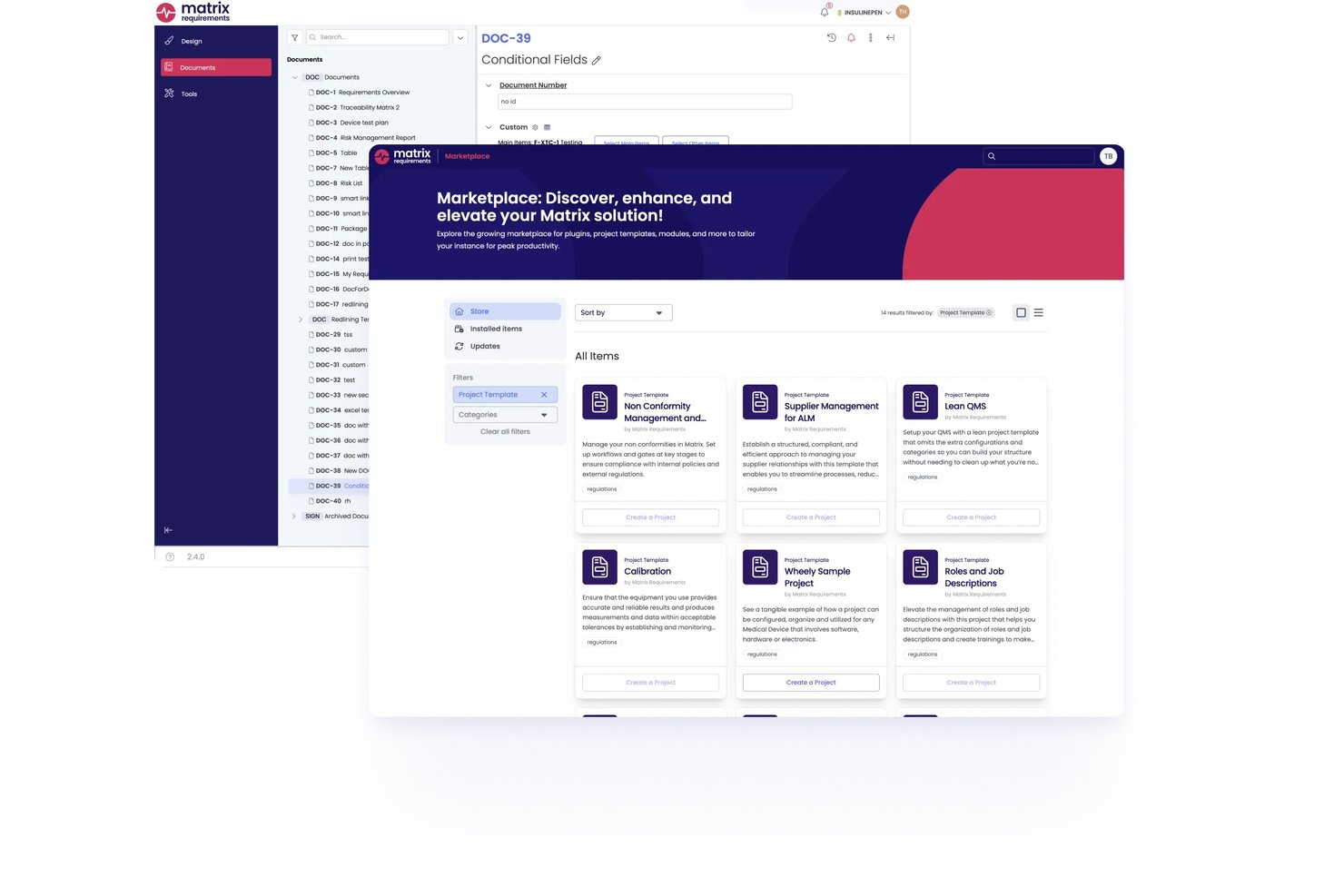
Matrix Req is an AI-powered requirements management and design control platform built specifically for medical device companies, combining requirements authoring, risk management, test case management, and compliance documentation in one regulated environment.
Who Is Matrix Req Best For?
Matrix Req is a strong fit for medtech and software-as-a-medical-device teams navigating FDA or EU MDR regulatory submissions who need built-in design control from day one.
Why I Picked Matrix Req
Matrix Req earns its spot on my shortlist because it's the only AI requirements management tool I've found built entirely around regulated medical device development rather than retrofitted for it. I particularly like the Compliance Checker, which maps requirements directly against standards like ISO 14971 or IEC 62304 and flags gaps automatically. The Matrix Mind AI assistant generates requirements and test cases within a zero data retention environment, keeping your design files isolated from LLM training.
Matrix Req Key Features
- Compose module: Shared requirements library enables centralized updates and reuse across multiple medical device projects.
- Risk management templates: Configurable hazard analysis and risk matrices aligned with ISO 14971 and FMEA standards.
- Configurable traceability: Customizable trace rules and automated detection of missing or outdated traces between requirements, risks, and tests.
- Native Jira and Azure DevOps integration: Bidirectional syncing connects requirements, issues, and dev workflows across popular ALM tools.
Matrix Req Integrations
Matrix Req offers native integrations with Jira, Azure DevOps, GitHub, GitLab, Confluence, YouTrack, and Slack, with an API available for custom integrations.
Pros and Cons
Pros:
- Robust traceability for design control artifacts
- AI assistant generates compliant requirements and tests
- Built for FDA and EU MDR compliance
Cons:
- Not suitable for non-medical device industries
- Lacks ReqIF import and export support

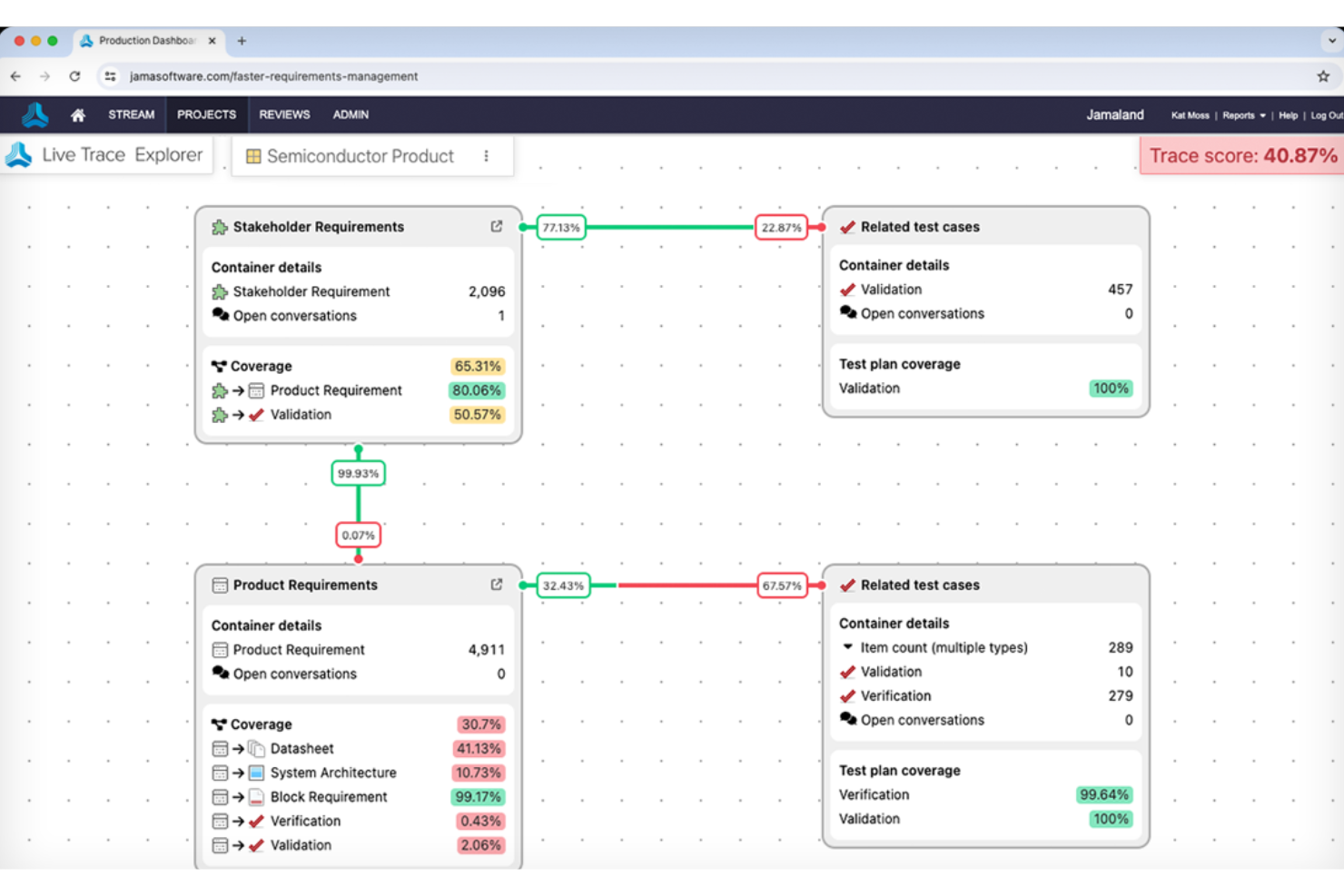
Jama Software is an AI-powered requirements management platform built for engineering teams, combining requirements authoring, traceability, test management, risk analysis, and formal review workflows in a single environment.
Who Is Jama Software Best For?
Jama Software is a strong fit for systems and requirements engineers working in regulated industries like aerospace, medical devices, and automotive, where traceability and compliance documentation aren't optional.
Why I Picked Jama Software
Jama Software earns its spot on my shortlist because no other tool I've reviewed handles regulated-industry traceability with this depth. I love how Live Traceability links requirements directly to test cases, risk analyses, and code, giving you a complete audit trail that holds up under FDA or DO-178C scrutiny. Jama Software Advisor layers on top with INCOSE and EARS-aligned quality scoring, flagging weak language like "should try to ensure" before it reaches a formal review.
Jama Software Key Features
- AI Relationship Discovery: Suggests missing trace links from a single requirement, each with a confidence rating you accept or reject.
- AI-generated test cases: Generates test cases with steps linked back to the source requirement, based on your chosen test type and industry vertical.
- Review Center: A formal review and approval workflow with e-signatures, discussion threads, and a full audit trail.
- Reuse and synchronization: Detects differences between reused requirements across projects and flags how those differences affect releases.
Jama Software Integrations
Jama Software offers native integrations with Jira and Microsoft Excel, plus ReqIF imports from tools including IBM DOORS, IBM DOORS Next, and Polarion. It also provides an open REST API and an MCP Server for custom connectivity and AI development workflows.
Pros and Cons
Pros:
- Formal approvals preserve review accountability
- AI flags ambiguous requirements before reviews
- Traceability supports safety-case audits
Cons:
- Large projects can slow trace views
- Exports often require manual formatting

Best for Microsoft integration
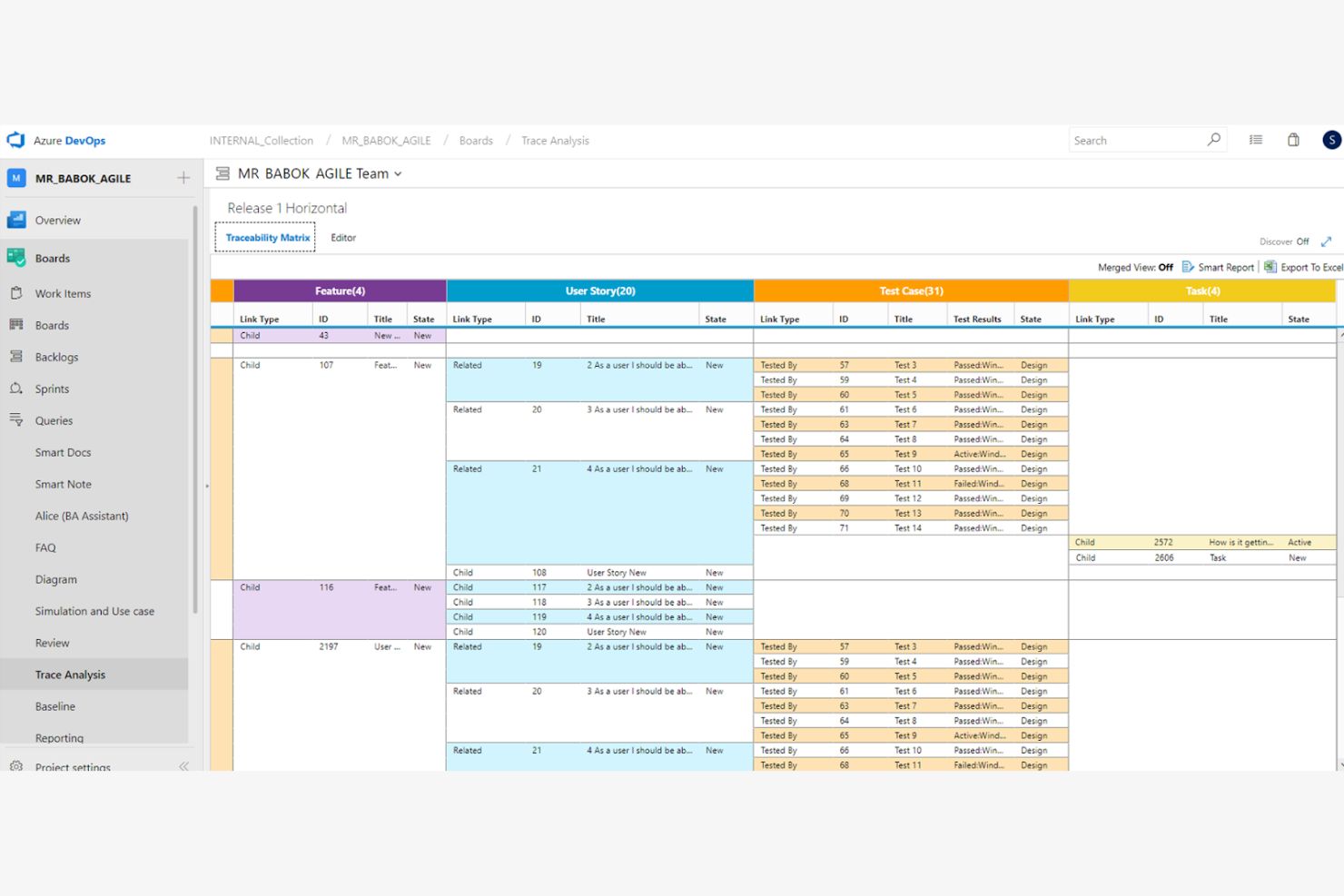
Modern Requirements is a requirements management tool designed for teams using Microsoft tools, primarily serving industries like IT and software development. It supports end-to-end traceability and requirements visualization, leveraging AI to enhance accuracy and collaboration.
Why I picked Modern Requirements: Its integration with Microsoft tools is a key differentiator, making it ideal for teams already using Microsoft ecosystems. AI functionalities such as automated requirement elicitation and analysis enhance productivity.
The tool helps your team align requirements data with project goals. Its modern requirements ensure integration with Microsoft, providing a cohesive user experience.
Standout features & integrations:
Features include drag-and-drop diagramming, automated trace analysis, and customizable dashboards. These features provide your team with flexibility and control over project requirements. The platform's visual modeling capabilities enhance understanding and communication.
Integrations include Microsoft Azure DevOps, Jira, Microsoft Teams, SharePoint, Office 365, Slack, GitHub, GitLab, Trello, and Salesforce.
Pros and Cons
Pros:
- Visual modeling enhances team communication
- AI-driven requirement analysis improves accuracy
- Built directly into Azure DevOps Server
Cons:
- Requires training for full feature utilization
- May be complex for non-Microsoft users
Best for AI-driven multi-industry adaptability
monday AI Workspace is a flexible, AI-powered work management platform that combines requirement gathering, task tracking, workflow automation, and cross-functional collaboration across a wide range of industries and team structures.
Who Is monday AI Workspace Best For?
It's a strong fit for product managers and program managers at mid-to-large organizations running cross-functional workflows across multiple departments or industries.
Why I Picked monday AI Workspace
monday AI Workspace earns its spot on my shortlist because its AI layer adapts to how different teams define and track requirements, regardless of industry. I use AI Agents to automate intake workflows, triage incoming requests, and route items across product, IT, and operations from one platform. The Vibe app builder also lets me create custom requirement-tracking workflows in plain English, with no developer support needed.
monday AI Workspace Key Features
- AI columns: Add dynamic, AI-driven columns to boards for automated insights, summarization, and content generation.
- Item version history: Track changes to requirements and other items with detailed version history and restore points.
- Board-level permissions: Set role-based access at the board level to control which team members can view or edit specific boards.
- Native Jira integration: Connect requirements and tasks to Jira for cross-platform traceability and live sync with engineering backlogs.
monday AI Workspace Integrations
monday AI Workspace provides native integrations with Jira, GitHub, Salesforce, HubSpot, Slack, Microsoft Teams, Google Workspace, Dropbox, Excel, and Outlook. It also supports Zapier and offers an API for custom integrations.
Pros and Cons
Pros:
- Strong multi-user collaboration and permissions
- Highly customizable boards for requirements tracking
- AI-driven automations support requirements intake workflows
Cons:
- Lacks formal traceability and compliance tools
- No requirement quality analysis features
New Product Updates from monday AI Workspace
monday AI Workspace Adds Human Approval Routing
monday AI Workspace adds a human-in-the-loop approval block to AI Workflows, sending approval requests and routing workflow paths based on responses. For more information, visit monday AI Workspace's official site.
 .
Wrike
Best for real-time collaboration tools

For teams seeking an AI-driven solution to manage project requirements, Wrike offers a compelling package that blends automation with collaboration. It appeals to industries ranging from creative agencies to large enterprises, providing tools that streamline processes and reduce routine tasks. By enhancing productivity and offering a centralized platform for project management, Wrike addresses the challenge of managing complex workflows and requirements efficiently.
Why I Picked Wrike
I picked Wrike for its standout AI capabilities that directly enhance requirements management. The platform's generative AI allows your team to automatically generate project plans and summarize meeting notes, making it easier to keep track of evolving requirements. Additionally, Wrike's no-code automation feature ensures that routine tasks are handled seamlessly, freeing up your team to focus on critical, strategic work. These features make Wrike an ideal choice for those looking to enhance efficiency and accuracy in managing project requirements.
Wrike Key Features
In addition to its AI-driven functionalities, here are some other features beneficial for requirements management:
- Customizable Dashboards: Tailor your workspace to display the most relevant information for your team’s specific needs.
- Real-Time Collaboration: Enable team members to work together effectively with tools that support instant communication and updates.
- Advanced Reporting: Gain insights into project progress and performance with customizable reports and data visualization.
- Mind Mapping for Ideation: Facilitate brainstorming sessions and capture ideas effectively with integrated mind mapping tools.
Wrike Integrations
Integrations include Google Workspace, Microsoft Teams, Salesforce, Slack, Dropbox, Box, GitHub, Jira, Adobe Creative Cloud, and Okta. Wrike also offers an API for custom integrations.
Pros and Cons
Pros:
- Strong collaboration across cross functional teams
- Customizable workflows support complex requirements
- AI automation reduces manual requirements work
Cons:
- AI value depends on plan tier
- Advanced features create learning curve
New Product Updates from Wrike

Wrike Redesigns Workspace Search With New Filters
Wrike introduces a redesigned Workspace Search interface with recent search shortcuts, item type and location filters, and parent-task context. These updates help users find relevant work items and navigate search results efficiently. For more information, visit Wrike’s official site.
 .

Jira
Best for customizable workflows

Jira is a project management tool widely used by software development teams to plan, track, and release software. It offers AI capabilities that help automate repetitive tasks and provide insights into project progress, enhancing team productivity.
Why I picked Jira: Jira’s customizable workflows make it ideal for teams needing flexibility in project management. Its AI-powered automation rules and predictive analytics allow your team to simplify processes and anticipate project needs.
Jira enables you to adapt workflows to match your team's unique processes. Its flexibility ensures your team stays organized and efficient, meeting project goals.
Standout features & integrations:
Features include Agile reporting, backlog prioritization, and real-time collaboration boards. These features help your team track progress and make informed decisions. The tool's ability to handle complex project structures enhances your team's clarity and focus.
Integrations include Slack, GitHub, GitLab, Microsoft Teams, Confluence, Trello, Bitbucket, Zoom, Salesforce, and Zendesk.
Pros and Cons
Pros:
- AI-driven automation boosts efficiency
- Strong support for Agile methodologies
- Highly customizable to fit various workflows
Cons:
- Performance may slow with large datasets
- Complexity can lead to a steep learning curve


IBM Engineering Requirements Management DOORS is a scalable requirements management solution tailored for large enterprises, focusing on sectors like aerospace and defense. It enhances project efficiency and reduces development costs by leveraging AI to improve the quality of requirements and facilitate better team communication.
Why I picked IBM DOORS: IBM DOORS' suitability for large enterprises is evident through its compliance management and real-time project tracking. Its automated requirement quality checks and enhanced collaboration tools set it apart.
These help your team manage complex product requirements. With IBM DOORS, you can ensure compliance and maintain control over large-scale projects.
Standout features & integrations:
Features include concurrent editing, customizable dashboards, and task management. These features allow your team to track project status and collaborate. The platform supports various engineering domains, enhancing its versatility for different projects.
Integrations include Jira, GitHub, GitLab, Azure DevOps, Confluence, and MATLAB.
Pros and Cons
Pros:
- Supports various engineering domains
- AI-enhanced collaboration boosts team productivity
- Scalable for large and complex projects
Cons:
- Generating highly customized reports can require specialized knowledge
- Cost may be prohibitive for small and medium-sized businesses


aqua cloud is an AI-enhanced test management software designed for QA teams seeking efficiency and productivity in testing processes. It serves industries like banking, insurance, and healthcare, offering automated test generation and reporting to improve quality assurance.
Why I picked aqua cloud: aqua cloud excels in test management integration, making it ideal for teams using various testing tools. Its AI Copilot automates test case creation, reducing manual effort and errors.
The software’s integration capability allows your team to work smoothly across different platforms. Aqua Cloud's focus on test management ensures you can maintain high standards throughout your QA processes.
Standout features & integrations:
Features include AI-assisted test case creation, unified workflows for team collaboration, and project hierarchies. These features ensure you can manage both manual and automated tests. The intuitive interface helps your team adapt quickly to new testing requirements.
Integrations include Jira, Jenkins, Confluence, Azure DevOps, Oracle Database, and UFT.
Pros and Cons
Pros:
- API and custom integrations
- Broad feature set supports diverse testing needs
- AI capabilities enhance testing speed and accuracy
Cons:
- AI features are still maturing
- Maintaining data synchronization between disparate tools can be challenging


Copilot4DevOps is a requirements management tool tailored for DevOps teams, facilitating enhanced planning and testing phases. It automates various DevOps tasks, using AI to optimize workflows and enhance collaboration across development cycles.
Why I picked Copilot4DevOps: Copilot4DevOps’ integration with DevOps processes makes it perfect for teams seeking to automate and refine their operations. Its predictive analytics and automated testing ensure your team can anticipate issues and maintain quality.
The platform’s capabilities help optimize your development lifecycle and improve release management. Copilot4DevOps provides valuable insights that keep your team aligned and efficient.
Standout features & integrations:
Features include automated test case generation, quality analysis, and UI mockups. These features allow your team to enhance communication and maintain control over development processes. The tool's ability to adapt to changing project needs enhances its value in dynamic environments.
Integrations include Jenkins, GitHub, GitLab, Azure DevOps, Jira, Slack, Docker, Kubernetes, AWS, and Microsoft Teams.
Pros and Cons
Pros:
- Reported 80% faster requirements authoring
- Automated testing reduces manual effort
- AI-driven predictive analytics for proactive management
Cons:
- Limited customization for non-standard workflows
- Complexity may require dedicated setup time
Diğer Yapay Zekâ Gereksinim Yönetimi Araçları
İşte kısa listeme girmeyen ancak yine de göz atmaya değer bazı ek yapay zekâ gereksinim yönetimi aracı seçenekleri:
- Requiment
For Agile teams
- ReqSuite RM
For the German market
- MindyGem
For documentation support
- Visure
For traceability features
- Perforce Helix ALM
For version control integration
- ClickUp
For team collaboration features
- ReqView
For offline access
- Reqi
For intuitive user interface
- DocSheets
For document-centric projects


How I Evaluate AI Requirements Management Tools
Every tool on this list needs to go beyond AI branding—I look for platforms where AI actually saves time drafting, analyzing, or tracing requirements across complex programs. I split my evaluation into core functionality every tool must have to qualify and differentiating factors that separate one vendor from the next.
Core Functionality (Table Stakes For This List)
When I'm selecting tools for my list, I rank each one on a scale from 0 (does not offer the functionality) to 5 (excels in this area) for each core functionality listed below. Then, I calculate the tool's total score into a percentage. Each tool needs to achieve a minimum total score of 65% to be considered for inclusion.
- AI-Powered Requirement Generation: I evaluate whether the tool can draft structured requirements from natural language inputs like meeting notes, stakeholder emails, or uploaded spec documents.
- AI Quality & Consistency Analysis: Each tool should flag vague language, duplicates, and conflicts—like catching passive voice or missing acceptance criteria in user stories.
- Centralized Requirements Repository: I look for a structured database where teams can author, organize, and version requirements with custom attributes rather than just flat documents.
- End-to-End Traceability: Linking requirements upstream to business needs and downstream to test cases and design artifacts is key. I check for trace matrices and impact analysis views.
- Collaboration & Review Workflows: Teams need commenting, formal review cycles, and approval gates. I evaluate how the tool handles multi-stakeholder sign-off across distributed groups.
- Integrations & Standard Exports: I check for native connections to tools like Jira, Azure DevOps, or Polarion, plus support for formats like ReqIF, CSV, and Word for handoffs.
Once I have a list of tools that meet this criteria, I consider what sets each platform apart.
Differentiating Factors (What Sets Vendors Apart)
Here's how I compare and contrast different vendors:
Standout Features
I pay close attention to whether a tool can auto-generate test cases or acceptance criteria directly from approved requirements, which saves QA teams hours of manual derivation. AI-driven compliance mapping also stands out—especially for teams delivering into regulated spaces where tracing requirements to FDA or ISO 26262 frameworks is routine. Reuse and variant intelligence matters too. I look for AI that surfaces similar requirements across projects so teams can standardize instead of rewriting from scratch.
Beyond Features
AI transparency is something I evaluate closely—I check whether vendors disclose which LLMs power their features and confirm that customer data isn't used to train external models. Deployment options matter just as much, since teams working on defense or medical device programs often need on-premise or air-gapped hosting alongside certifications like SOC 2 or ISO 27001. I also consider migration support, particularly how well a vendor handles imports from legacy tools like DOORS or Excel-based requirement sets.
Yapay Zekâ Gereksinim Yönetimi Araçları Nasıl Seçilir?
Uzun özellik listeleri ve karmaşık fiyatlandırma yapılarına kendinizi kaptırmanız kolaydır. Benzersiz yazılım seçim süreciniz üzerinde çalışırken odağınızı korumanıza yardımcı olmak için göz önünde bulundurmanız gereken faktörlerin bir kontrol listesi aşağıdadır:
| Faktör | Dikkate Alınması Gerekenler |
|---|---|
| Ölçeklenebilirlik | Aracın ekibinizle birlikte büyüyüp büyüyemeyeceğini değerlendirin. Artan proje karmaşıklığını ve kullanıcı sayısını yönetebilecek mi? Platformu tamamen yenilemeye gerek kalmadan büyümeye uyum sağlayan esnek fiyatlandırma kademelerini tercih edin. |
| Entegrasyonlar | Aracın mevcut yazılım yığınınızla entegre olup olmadığını kontrol edin. Proje yönetimi, iletişim ve geliştirme araçlarınızla çalışıyor mu? Entegrasyonlar zamandan tasarruf sağlayabilir ve hataları azaltabilir. |
| Özelleştirilebilirlik | Aracı iş akışlarınıza uyacak şekilde ne ölçüde uyarlayabileceğinizi düşünün. Panoları, raporları ve süreçleri ayarlayabilir misiniz? Özelleştirilebilirlik, aracın özel proje ihtiyaçlarınızı karşılamasını sağlar. |
| Kullanım kolaylığı | Aracın yeni kullanıcılar için ne kadar sezgisel olduğunu değerlendirin. Ekip üyeleri aracı hızlıca öğrenip kullanabilir mi? Kullanıcı dostu bir arayüz, eğitim süresini en aza indirir ve üretkenliği artırır. |
| Uygulama ve işe alıştırma | Aracı uygulamak için gereken zaman ve kaynakları değerlendirin. İşe alıştırma aşamasında kurulum kılavuzları, öğreticiler ve destek sunuluyor mu? Verimli bir işe alıştırma süreci, ekibiniz için sorunsuz bir geçiş sağlar. |
| Maliyet | Fiyatlandırmanın bütçenize uygun olup olmadığını analiz edin. Gizli ücretler var mı, yoksa her şey açıkça belirtilmiş mi? Yatırımınızın karşılığını aldığınızdan emin olmak için maliyetleri rakiplerle karşılaştırın. |
| Güvenlik önlemleri | Aracın güvenlik önlemlerini değerlendirin. Veri şifreleme, kullanıcı kimlik doğrulama ve düzenli denetimler sunuyor mu? Güncel güvenlik, hassas proje bilgilerini korur ve sektör standartlarına uyumu sağlar. |
| Destek erişilebilirliği | Sunulan desteğin düzeyini kontrol edin. Sohbet, e-posta veya telefon yoluyla destek ekiplerine 7/24 erişim var mı? Sorunlarla karşılaştığınızda güvenilir destek hayati önem taşıyabilir. |
Yapay Zekâ Gereksinim Yönetimi Araçları Nedir?
Yapay zekâ gereksinim yönetimi araçları, ekiplerin proje gereksinimlerini daha verimli bir şekilde yönetmesine yardımcı olmak için yapay zekâ kullanan yazılım çözümleridir. Bu araçlar genellikle proje yöneticileri, iş analistleri ve proje spesifikasyonlarının doğru şekilde karşılandığından emin olması gereken geliştiriciler tarafından kullanılır. Otomatik gereksinim çıkarma, tahmine dayalı analiz ve doğal dil işleme; gereksinim boşluklarının belirlenmesine, iş akışlarının optimize edilmesine ve uyumluluğun sağlanmasına yardımcı olur. Bu araçlar, karar alma süreçlerini geliştirerek ve karmaşık projelerdeki hataları azaltarak önemli değer sunar.
Özellikler
Yapay zekâ gereksinim yönetimi araçlarını seçerken aşağıdaki temel özelliklere dikkat edin:
- Otomatik gereksinim çıkarma: Gereksinimleri çeşitli kaynaklardan toplamak ve belgelemek için yapay zekâyı kullanır; zamandan tasarruf sağlar ve manuel hataları azaltır.
- Tahmine dayalı analiz: Olası proje riskleri ve gereksinim değişiklikleri hakkında öngörüler sunarak ekiplerin daha etkili planlama yapmasına yardımcı olur.
- Doğal dil işleme: Gereksinimlerin açık ve eksiksiz olmasını sağlamak için metni analiz eder; yanlış anlaşılmaları ve yeniden çalışmayı azaltır.
- İzlenebilirlik matrisi oluşturma: Gereksinimler ile diğer proje unsurları arasında otomatik olarak bağlantılar oluşturur; uyum ve uygunluk sağlar.
- Etki analizi: Gereksinim değişikliklerinin proje üzerindeki etkilerini değerlendirerek ekiplerin riskleri öngörmesine ve azaltmasına yardımcı olur.
- Yapay zekâ destekli içgörüler: Proje iş akışlarını ve karar alma süreçlerini optimize etmek için verilere dayalı öneriler sunar.
- Özelleştirilebilir iş akışları: Ekiplerin süreçleri özel proje ihtiyaçlarına uyacak şekilde uyarlamasına olanak tanıyarak esnekliği ve verimliliği artırır.
- Gerçek zamanlı iş birliği: Ekip iletişimini ve güncellemeleri kolaylaştırarak herkesin bilgili ve uyumlu kalmasını sağlar.
- Otomatik test: Sürekli doğrulama ve geçerleme yoluyla gereksinimlerin karşılandığından emin olmak için test araçlarıyla entegre olur.
- Uyumluluk yönetimi: Projelerin sektör standartlarına ve düzenlemelere uymasını sağlayarak uyumsuzluk riskini azaltır.
Faydalar
Yapay zekâ gereksinim yönetimi araçlarını uygulamak, ekibiniz ve işletmeniz için çeşitli faydalar sağlar. Yararlanmayı bekleyebileceğiniz bazı faydalar şunlardır:
- Geliştirilmiş doğruluk: Otomatik gereksinim çıkarma ve doğal dil işleme, manuel hataları azaltır ve netlik sağlar.
- Daha iyi karar alma: Tahmine dayalı analizler ve yapay zekâ destekli içgörüler, riskleri önceden tahmin etmenize ve bilinçli proje kararları almanıza yardımcı olur.
- Zaman tasarrufu: Otomatik test ve etki analizi gibi özellikler süreçleri hızlandırır ve manuel görevlere harcanan zamanı azaltır.
- Daha iyi iş birliği: Gerçek zamanlı iş birliği araçları, ekibinizin uyumlu ve bilgili kalmasını sağlayarak iletişimi ve proje sonuçlarını iyileştirir.
- Daha yüksek uyumluluk: Uyumluluk yönetimi özellikleri, sektör standartlarına uyulmasını sağlayarak uyumsuzluk riskini azaltır.
- Uyarlanabilirlik: Özelleştirilebilir iş akışları, süreçleri ihtiyaçlarınıza göre uyarlamanıza olanak tanıyarak çeşitli projeleri yönetmede esneklik sağlar.
- Risk azaltma: Etki analizi ve izlenebilirlik matrisi oluşturma, olası proje risklerini belirlemeye ve azaltmaya yardımcı olur.
Maliyetler ve Fiyatlandırma
Yapay zekâ gereksinim yönetimi araçlarını seçmek, mevcut çeşitli fiyatlandırma modellerinin ve planların anlaşılmasını gerektirir. Maliyetler; özelliklere, ekip büyüklüğüne, eklentilere ve diğer unsurlara göre değişir. Aşağıdaki tablo, yapay zekâ gereksinim yönetimi araçları çözümlerinde yaygın olan planları, bunların ortalama fiyatlarını ve genellikle sunulan özellikleri özetlemektedir:
Yapay Zekâ Gereksinim Yönetimi Araçları İçin Plan Karşılaştırma Tablosu
| Plan Türü | Ortalama Fiyat | Yaygın Özellikler |
|---|---|---|
| Ücretsiz Plan | $0 | Temel gereksinim takibi, sınırlı kullanıcı erişimi ve minimum depolama alanı. |
| Temel Plan | $5-$30/kullanıcı/ay | Gereksinim takibi, temel analizler, sınırlı entegrasyonlar ve temel iş birliği araçları. |
| İşletme Planı | $30-$60/kullanıcı/ay | Gelişmiş analizler, birden fazla entegrasyon, geliştirilmiş iş birliği özellikleri ve özelleştirilebilir panolar. |
| Kurumsal Plan | +$60/kullanıcı/ay - Özel fiyatlandırma | Tam yapay zekâ özellikleri, uyumluluk yönetimi, sınırsız entegrasyonlar, öncelikli destek ve gelişmiş güvenlik özellikleri. |
Yapay Zekâ Gereksinim Yönetimi Araçları Hakkında SSS
Yapay zekâ gereksinim yönetimi araçları hakkında sık sorulan bazı soruların yanıtları aşağıdadır:
Yapay zekâ gereksinim yönetimi araçları mevcut yazılımlarla entegre olabilir mi?
\u003cspan style=\u0022font-weight: 400\u0022\u003eEvet, yapay zekâ gereksinim yönetimi araçlarının çoğu Jira, Slack ve GitHub gibi popüler yazılımlarla entegrasyonlar sunar. Bu entegrasyonlar, verilerin farklı platformlar arasında aktarılmasını sağlayarak ekibinizin kesintisiz bir iş akışını sürdürmesine yardımcı olur. Bir araç seçmeden önce entegrasyon ihtiyaçlarınızı karşıladığından emin olmak için mevcut yazılım yığınınızla uyumluluğunu kontrol edin.\u003c/span\u003e
Yapay zekâ gereksinim yönetimi araçları güvenliği nasıl ele alır?
\u003cspan style=\u0022font-weight: 400\u0022\u003eYapay zekâ gereksinim yönetimi araçları, verilerinizi korumak için genellikle şifreleme, kullanıcı kimlik doğrulama ve düzenli güvenlik denetimleri kullanır. Bir araç seçerken güvenlik özelliklerinin şirketinizin standartları ve sektör düzenlemeleriyle uyumlu olduğunu doğrulayın. Belirli gereksinimlerinize uygun özelleştirilebilir güvenlik ayarları sunan araçları tercih edin.\u003c/span\u003e
Yapay zekâ gereksinim yönetimi araçları proje sonuçlarını nasıl iyileştirebilir?
\u003cspan style=\u0022font-weight: 400\u0022\u003eYapay zekâ gereksinim yönetimi araçları, zahmetli görevleri otomatikleştirerek, veriye dayalı içgörüler sağlayarak ve uyumluluğu güvence altına alarak proje sonuçlarını iyileştirir. Ekibinizin olası sorunları erken belirlemesine, iş akışlarını optimize etmesine ve bilinçli kararlar almasına yardımcı olurlar. Bu iyileştirmeler daha az hataya, kaynakların daha iyi tahsis edilmesine ve projelerin başarıyla teslim edilmesine yol açar.\u003c/span\u003e
Sektöre özel yapay zekâ gereksinim yönetimi araçları mevcut mu?
\u003cspan style=\u0022font-weight: 400\u0022\u003eEvet, bazı yapay zekâ gereksinim yönetimi araçları sağlık, havacılık veya finans gibi belirli sektörlere hizmet verir. Bu araçlar genellikle sektöre özel uyumluluk özellikleri ve şablonları içererek ekibinizin düzenleyici gereksinimleri karşılamasına yardımcı olur. Bir araç seçerken sektörünüzün kendine özgü ihtiyaçlarını göz önünde bulundurun ve bunları etkili bir şekilde karşılayan bir çözüm seçin.\u003c/span\u003e