

10 melhores alternativas ao Google Docs para colaboração em 2026

Melhores alternativas ao Google Docs — lista restrita


Uma boa alternativa ao Google Docs permite editar documentos online, colaborar em tempo real e garantir uma compatibilidade fiável dos ficheiros, sem o prender ao ecossistema da Google. Se está à procura de alternativas ao Google Docs, é provável que procure ferramentas que se adaptem ao fluxo de trabalho da sua equipa, respondam a necessidades de privacidade ou conformidade, ou ofereçam funcionalidades que o Google Docs não disponibiliza.
Com tantas opções disponíveis, é difícil saber quais as plataformas que proporcionam realmente colaboração, integração e flexibilidade. Esta lista ajudá-lo-á a comparar as principais alternativas ao Google Docs para 2026, para que possa encontrar o pacote de escritório online certo para os seus projetos e equipas.
O que é o Google Docs?
O Google Docs é um pacote de escritório baseado na nuvem que funciona como uma plataforma moderna de processamento de texto, permitindo aos utilizadores criar, editar e partilhar documentos online. Enquanto processador de texto baseado no navegador, suporta colaboração em tempo real, histórico de versões e acesso a partir de qualquer dispositivo com ligação à Internet. As equipas utilizam o Google Docs para colaborar em documentos de texto, acompanhar alterações, deixar comentários e gerir conteúdos partilhados sem instalar software de ambiente de trabalho.
A sua integração com outras aplicações do Google Workspace torna-o numa das ferramentas de colaboração tudo-em-um mais utilizadas pelas equipas distribuídas. Para muitas organizações, o Google Docs ajuda a simplificar os fluxos de trabalho de criação e revisão de documentos entre departamentos, especialmente quando é combinado com ferramentas como o Sheets e o Slides.
Tabela de comparação de alternativas ao Google Docs
Esta tabela de comparação resume os detalhes de preços das minhas principais alternativas ao Google Docs:
| Tool | Best For | Trial Info | Price | ||
|---|---|---|---|---|---|
| 1 | Best for AI-assisted collaborative editing in real-time | Free plan available | From $8/month | Website | |
| 2 | Best for combining notes and databases | Free plan + free trial + free demo available | From $10/user/month | Website | |
| 3 | Best for private cloud document hosting | 1-hour free trial | From 71.29€/user/year (billed annually) | Website | |
| 4 | Best for compatibility with Microsoft file formats | Free plan available | From $2.49/user/month (billed annually) | Website | |
| 5 | Best for real-time team collaboration | 30-day free trial + free plan available | From $6/user/month (billed annually) | Website | |
| 6 | Best for mobile-first document access | 7-day free trial + free plan available | From $4.19/month (billed annually) | Website | |
| 7 | Best for open-source document editing | Free plan available | Pricing upon request | Website | |
| 8 | Best with integrated project management tools | Free plan + 30-day free trial available | From $20/admin/month | Website | |
| 9 | Best for offline document creation | Free plan available | Free and open-source | Website | |
| 10 | Best for cross-device file syncing | Free plan available | Pricing upon request | Website |
Why Trust Our Software Recommendations
Our team has been testing and reviewing software since 2012. As project managers ourselves, we know how difficult—and important—it is to choose the right software.
For this guide, we evaluated tools using hands-on testing and independent research, scoring tools using our selection criteria. We also draw on insights from industry thought leaders and practicing project management experts.
Our reviews reflect our human editorial judgment, not a sales pitch.
Expert reviewers:
Avaliações das melhores alternativas ao Google Docs
Apresentamos abaixo os meus resumos detalhados das alternativas ao Google Docs que entraram na minha lista restrita. As minhas avaliações analisam detalhadamente as funcionalidades, os melhores casos de utilização e as integrações de cada plataforma, para o ajudar a encontrar a melhor opção para si.

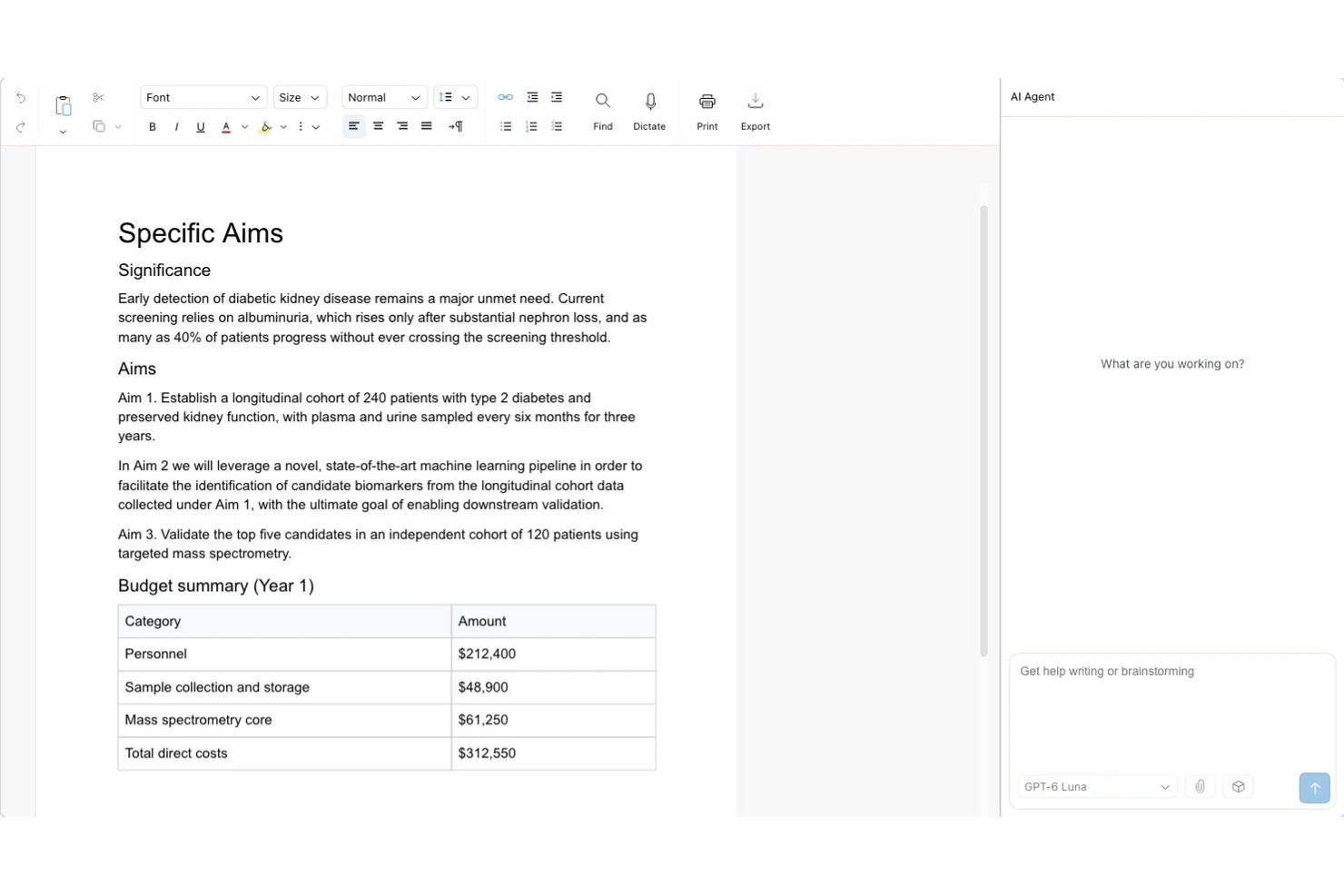
Revise is a browser-based word processor that brings AI-assisted editing and real-time collaboration together for teams who want tracked, reviewable AI changes alongside live co-authoring, rich formatting, and high-fidelity DOCX workflows.
Who Is Revise Best For?
Revise is a strong fit for distributed teams who need to review and refine AI-generated edits without losing control of the final document.
Why Revise Is a Good Google Docs Alternative
I picked Revise as one of the best because it solves a real problem: AI edits that overwrite your work before you've approved them. Every change the AI agent proposes appears as a tracked change, green for additions and red for deletions, so my team can accept or reject each one individually. I also appreciate that the built-in model picker lets us switch between OpenAI, Anthropic, Google, xAI, and Meta models mid-project without leaving the editor.
Revise Key Features
- Live presence: Colored cursors, selections, and collaborator avatars show who’s in the document.
- Sharing roles: Set access to Editor, Suggester, or Viewer, including for people with a public link.
- Revision history: Replay saved versions and compare selected points in the timeline.
- Document formatting: Add tables, images, headers, footers, columns, footnotes, and page numbers.
Revise Integrations
Revise supports MCP connections with Claude, ChatGPT, Codex, Hermes, OpenClaw, and other MCP clients. MCP access is free on every Revise plan, requires a Revise account, and uses the AI app’s subscription; hourly rate limits apply.
Pros and Cons
Pros:
- No account needed to collaborate via public link
- Switch between multiple AI models mid-project
- AI edits appear as reviewable tracked changes
Cons:
- Offline access limited to previously opened documents
- No one-click restore from version history
Notion
Best for combining notes and databases
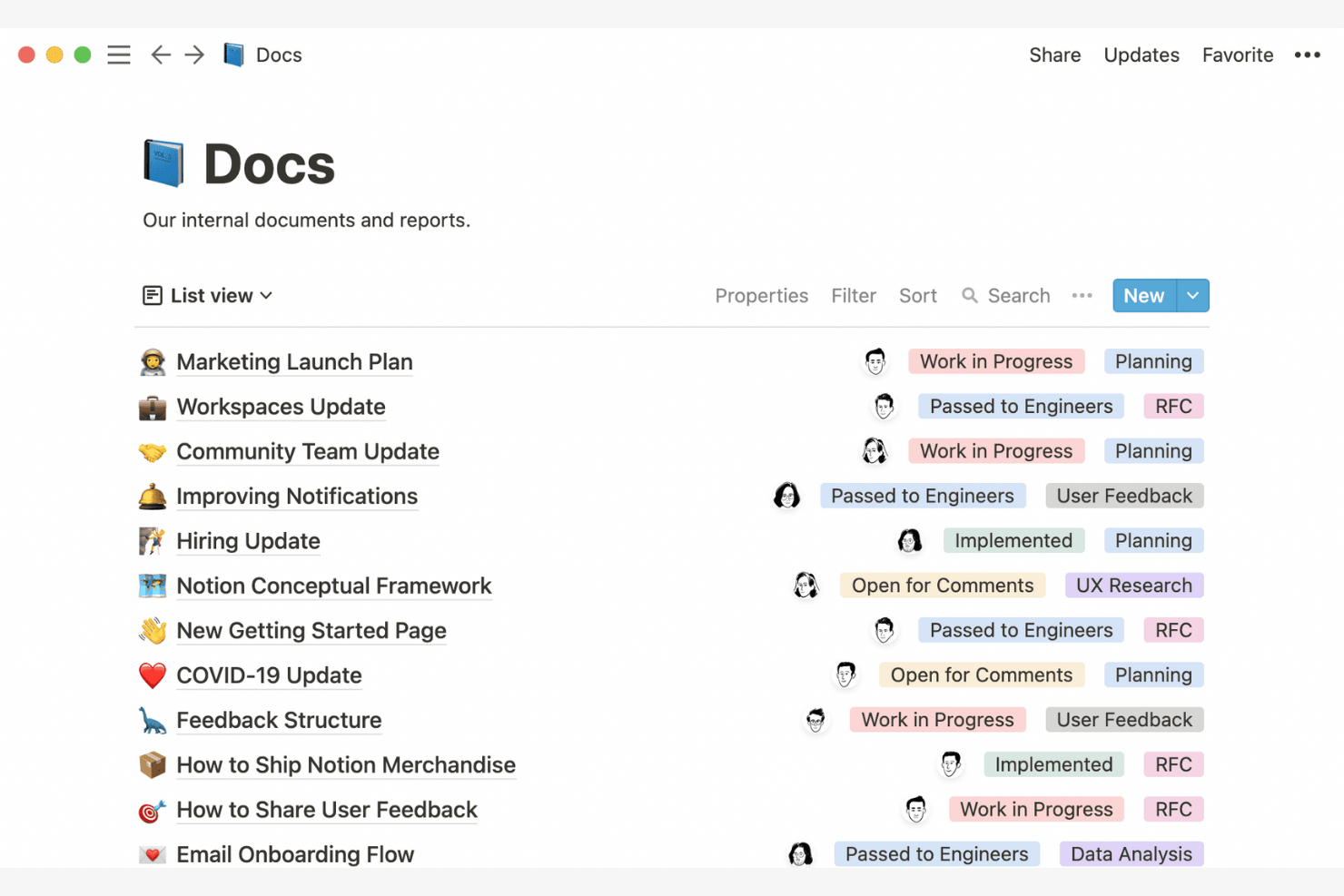
Notion gives teams a way to blend note-taking, documentation, and databases in a single workspace. It’s especially useful for product managers, operations leads, and anyone who needs to organize structured and unstructured information side by side. Unlike Google Docs, Notion lets you build custom tables, link notes to project trackers, and create dashboards that bring all your work together.
Why Notion Is a Good Google Docs Alternative
If you need to manage both notes and structured data in one place, Notion offers a unique approach that goes beyond traditional document editors. I picked Notion because you can create databases, link them to your notes, and build custom views for tracking projects or resources. This flexibility lets your team organize everything from meeting notes to product roadmaps without jumping between tools. For anyone who wants to combine documentation with dynamic tables and lists, Notion stands out as a strong Google Docs alternative.
Notion Key Features
Some other features in Notion help teams manage and collaborate on content more flexibly:
- Drag-and-drop page organization: Move pages and sections around to quickly restructure your workspace.
- Real-time collaborative editing: Multiple users can edit the same page at once and see changes live.
- Rich media embedding: Add images, videos, code snippets, and files directly into any page.
- Customizable templates: Start new projects or documents with pre-built templates for wikis, meeting notes, and more.
Notion Integrations
Integrations include Slack, Jira, GitHub, Asana, Google Drive, Figma, Trello, GitLab, Webex, and Typeform.
Pros and Cons
Pros:
- Great for team wikis, meeting notes, and lightweight project docs
- Flexible organization with templates and linked pages
- Combines docs with databases for structured knowledge management
Cons:
- Exporting to PDF or Word can break layouts and hierarchy
- Advanced document formatting is limited

Best for private cloud document hosting

If your team needs full control over document storage and privacy, Nextcloud offers a private cloud platform you can host yourself. It’s a strong fit for organizations with strict data security requirements or those in regulated industries. Nextcloud stands out by letting you manage documents, collaboration, and sharing entirely on your own infrastructure, unlike most cloud-based office suites.
Why Nextcloud Is a Good Google Docs Alternative
Unlike most cloud office suites, Nextcloud gives you the option to host your own private document environment. I picked Nextcloud because it lets you control where your data lives and who can access it, which is essential for teams with strict privacy or compliance needs. The platform supports collaborative editing, file sharing, and user management—all on infrastructure you manage yourself. This makes Nextcloud a strong choice for organizations that can’t rely on public cloud services for sensitive documents.
Nextcloud Key Features
Some other features in Nextcloud make it a flexible platform for document collaboration:
- Integrated calendar and contacts: Manage events and address books alongside your files and documents.
- End-to-end encryption: Protect sensitive files with encryption that only you and your collaborators can access.
- Version control: Track changes and restore previous versions of documents as needed.
- Collaboration apps marketplace: Extend functionality with add-ons for chat, video calls, and workflow automation.
Nextcloud Integrations
Integrations include OnlyOffice, Nextcloud Office, Nextcloud Assistant, Giphy, draw.io, Discord, Edusign, XtalaDraw, Sentry, Slack, YouTube, OneDrive, Google services, GitLab, Dropbox, Jira, Reddit, GitHub, and more.
Pros and Cons
Pros:
- Provides extensive user and group access controls for admins
- Integrates file sharing, calendar, and contacts in one platform
- Supports collaborative editing with OnlyOffice or Collabora Online
- Offers end-to-end encryption for sensitive document storage
- Lets you host documents on your own private cloud server
Cons:
- Collaboration quality depends on the editor stack you pair with it
- Requires technical setup and ongoing server maintenance

Best for compatibility with Microsoft file formats
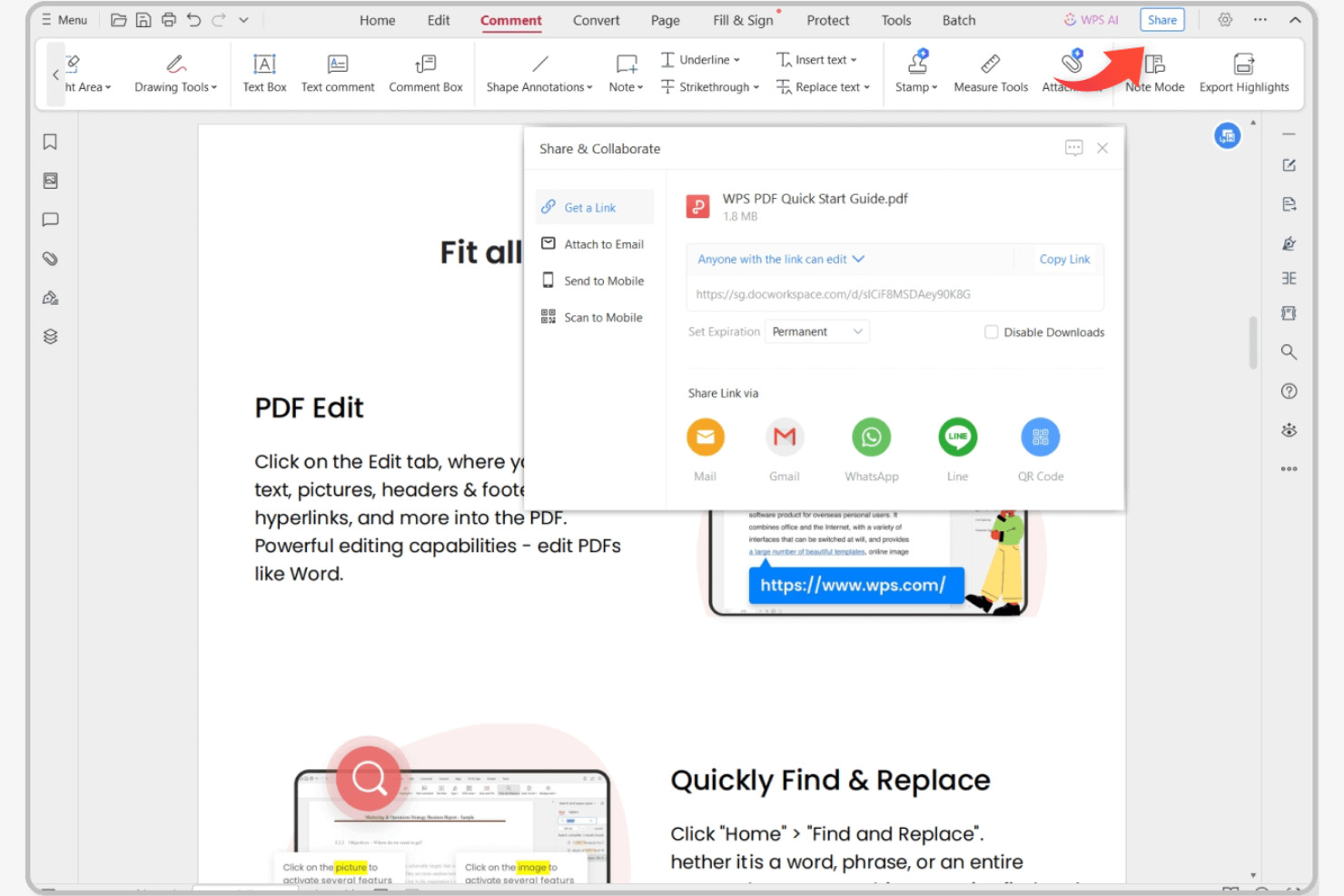
If you’re looking for an online office suite that handles Microsoft file formats without hiccups, WPS Office is worth a close look. It’s designed for professionals and teams who regularly exchange Word, Excel, and PowerPoint files with clients or colleagues using Microsoft Office. Unlike Google Docs, WPS Office preserves advanced formatting and features in Microsoft files, reducing compatibility headaches during collaboration.
Why WPS Office Is a Good Google Docs Alternative
When you need flawless compatibility with Microsoft file formats, WPS Office stands out from other online office suites. I picked WPS Office because it opens, edits, and saves DOCX, XLSX, and PPTX files while preserving advanced formatting, macros, and embedded objects. The suite also includes a built-in PDF editor, which is helpful for teams that work with a mix of document types. If your workflow depends on exchanging files with Microsoft Office users, WPS Office helps you avoid the formatting issues that often come up with Google Docs.
WPS Office Key Features
Some other features in WPS Office help teams manage documents and workflows more efficiently:
- Tabbed document interface: Open and switch between multiple documents in a single window.
- Cloud storage integration: Connect to services like Dropbox, Google Drive, and OneDrive for direct file access.
- Document templates library: Access a wide range of pre-built templates for reports, resumes, and presentations.
- Cross-platform support: Use WPS Office on Windows, macOS, Linux, Android, and iOS devices.
WPS Office Integrations
Native integrations are not currently listed by WPS Office.
Pros and Cons
Pros:
- Works across many operating systems with offline support
- Built-in PDF editor plus large template library
- Strong compatibility with Microsoft Word, Excel, and PowerPoint formats
Cons:
- Free version includes ads that can distract while editing
- Real-time collaboration is more limited than Google Docs

Best for real-time team collaboration
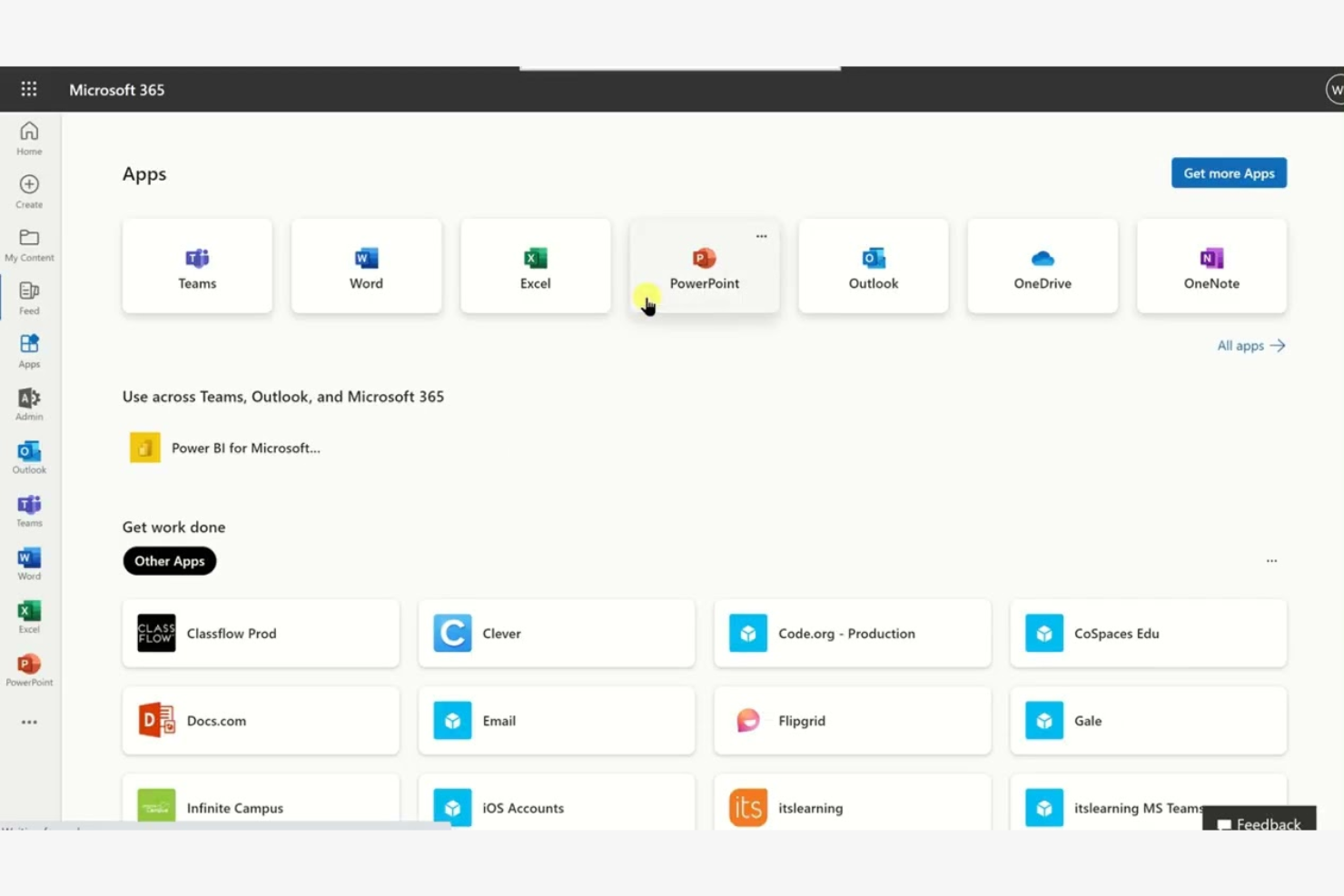
Microsoft 365 offers a suite of online office tools designed for teams that need advanced collaboration and document management. It’s a strong fit for businesses that rely on real-time co-authoring, deep integration with Microsoft Teams, and compatibility with complex file formats. If your projects demand strict version control and simplified workflow across Word, Excel, and PowerPoint, Microsoft 365 stands out from Google Docs.
Why Microsoft Is a Good Google Docs Alternative
For teams that need real-time collaboration, Microsoft 365 offers co-authoring in Word, Excel, and PowerPoint with instant updates across devices. I picked Microsoft because its document editing tools let multiple users work together on the same file while tracking changes and comments in detail. The integration with Microsoft Teams means you can chat, meet, and share files without leaving your workspace. These features make it a strong choice for organizations that prioritize live teamwork and document accuracy.
Microsoft Key Features
Some other features in Microsoft 365 make it a flexible choice for teams managing documents online:
- Advanced permission controls: Set granular access levels for files and folders to manage who can view, edit, or share documents.
- Automated version history: Restore previous versions of documents and track changes over time without manual backups.
- Built-in accessibility tools: Use features like Immersive Reader and voice dictation to support diverse work styles and needs.
- Offline editing mode: Work on documents without an internet connection and sync changes automatically when you’re back online.
Microsoft Integrations
Integrations include Microsoft Teams, OneDrive, SharePoint, Outlook, Power BI, Dynamics 365, Yammer, Planner, Forms, and Power Automate.
Pros and Cons
Pros:
- Advanced permission settings allow granular control over document access
- Deep integration with Microsoft Teams supports in-document chat and meetings
- Real-time co-authoring works across Word, Excel, and PowerPoint files
Cons:
- Some advanced features are only available in higher-tier plans
- Requires a Microsoft account and subscription for full functionality
Best for mobile-first document access
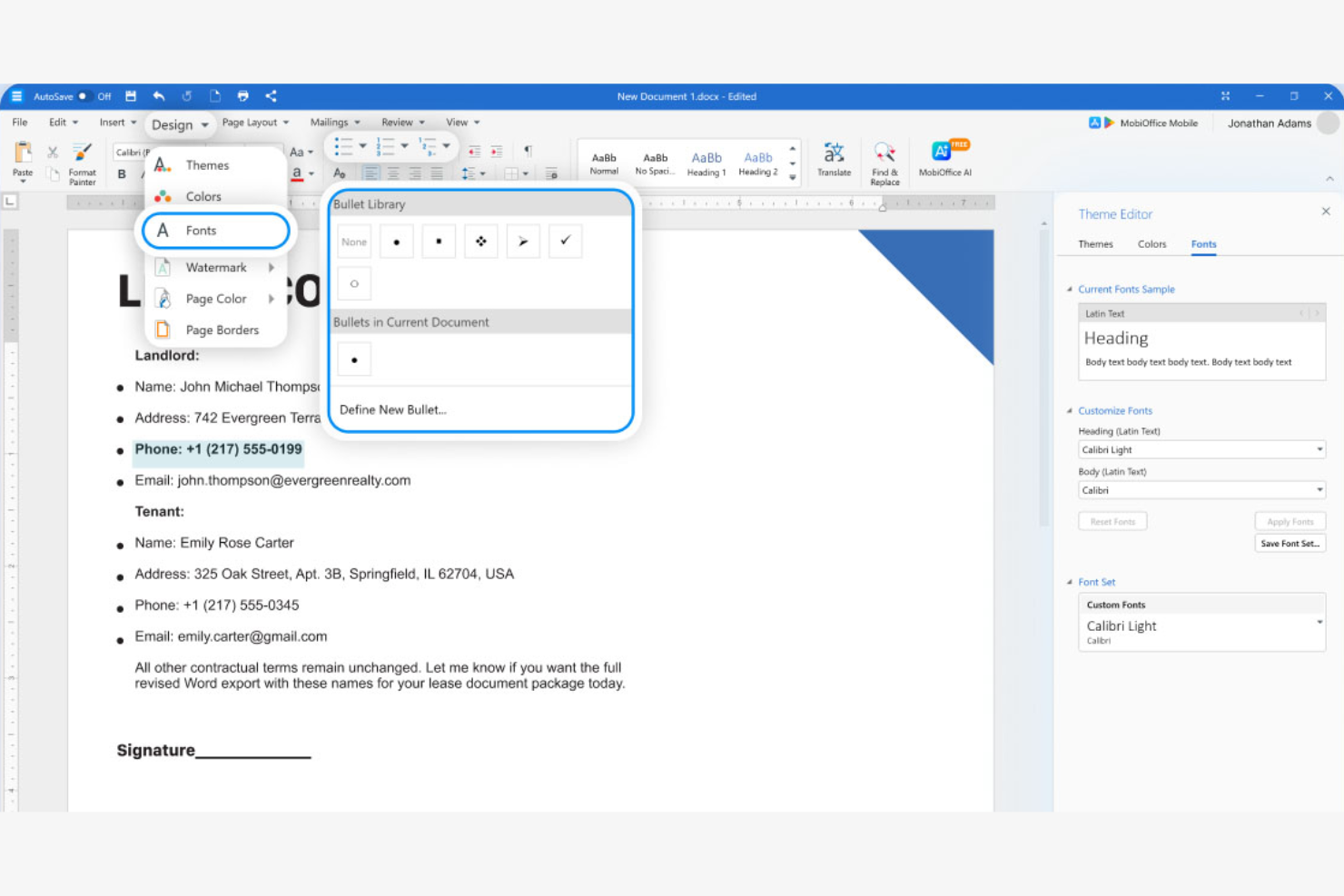
If your team needs to work with documents on the go, MobiSystems delivers a mobile-first office suite designed for smartphones and tablets. It’s a strong fit for field teams, remote workers, and anyone who relies on mobile devices for document editing and access. Unlike Google Docs, MobiSystems offers robust offline functionality and native mobile apps that support advanced editing features across Android and iOS.
Why MobiSystems Is a Good Google Docs Alternative
Unlike most office suites that focus on desktop or browser-based editing, MobiSystems is built specifically for mobile-first document access. I picked it because its OfficeSuite app offers full-featured document, spreadsheet, and presentation editing directly on Android and iOS devices. The platform also supports offline editing, so you can work with files even when you don’t have an internet connection. This makes MobiSystems a strong choice for teams that need reliable document access and editing while away from a desk.
MobiSystems Key Features
Some other features in MobiSystems help teams manage documents and collaborate across devices:
- PDF editing tools: Edit, annotate, and convert PDF files directly within the app.
- Cloud storage integration: Connect to Google Drive, Dropbox, OneDrive, and MobiDrive for file access and backup.
- Document encryption: Protect sensitive files with password and encryption options.
- Cross-platform compatibility: Access and edit documents on Windows, Android, and iOS devices.
MobiSystems Integrations
Native integrations are not currently listed by MobiSystems.
Pros and Cons
Pros:
- Works across Android, iOS, and Windows for on-the-go teams
- Built-in PDF tools for editing, annotation, and conversion
- Mobile-first editing with strong offline access
Cons:
- Smaller integration ecosystem for business workflows
- Limited real-time collaboration compared to Google Docs
Best for open-source document editing

If you’re looking for a fully open-source alternative to Google Docs, LibreOffice stands out. It’s a strong fit for organizations and professionals who need complete control over their documents and data, without relying on cloud-based platforms. LibreOffice appeals to teams that value privacy, offline access, and compatibility with a wide range of file formats.
Why LibreOffice Is a Good Google Docs Alternative
Unlike most online office suites, LibreOffice gives you full access to its source code and complete control over your documents. I picked LibreOffice because it lets you edit and store files locally, which is ideal for teams with strict privacy or data residency requirements. Its support for a wide range of file formats, including Microsoft Office and legacy document types, makes it easy to work with diverse content. These open-source features set LibreOffice apart for users who want transparency and flexibility in their document editing tools.
LibreOffice Key Features
Some other features in LibreOffice make it a versatile choice for document editing:
- Built-in PDF export: Create PDF files directly from any document without needing extra software.
- Customizable toolbars and menus: Adjust the interface to match your workflow and preferences.
- Extensive template library: Access a wide range of pre-built templates for documents, spreadsheets, and presentations.
- Macro recording and scripting: Automate repetitive tasks using built-in macro tools and scripting languages.
LibreOffice Integrations
Integrations include Kasm Workspaces, Intrexx, Ultima Linux, NemoVote, TimeSpreader, BuildViewVU, Sprint Boards, File Manager Pro, Scribens, Twake, Devart ODBC Drivers, CSVpad, Agent S, FileRun, Zotero, LibreOffice Draw, and more.
Pros and Cons
Pros:
- Broad format support plus PDF export and macro scripting
- Strong offline editing and local file control for privacy
- Free open-source suite with no licensing fees
Cons:
- Formatting can shift when working with complex Microsoft files
- No native real-time co-editing like Google Docs

Best with integrated project management tools
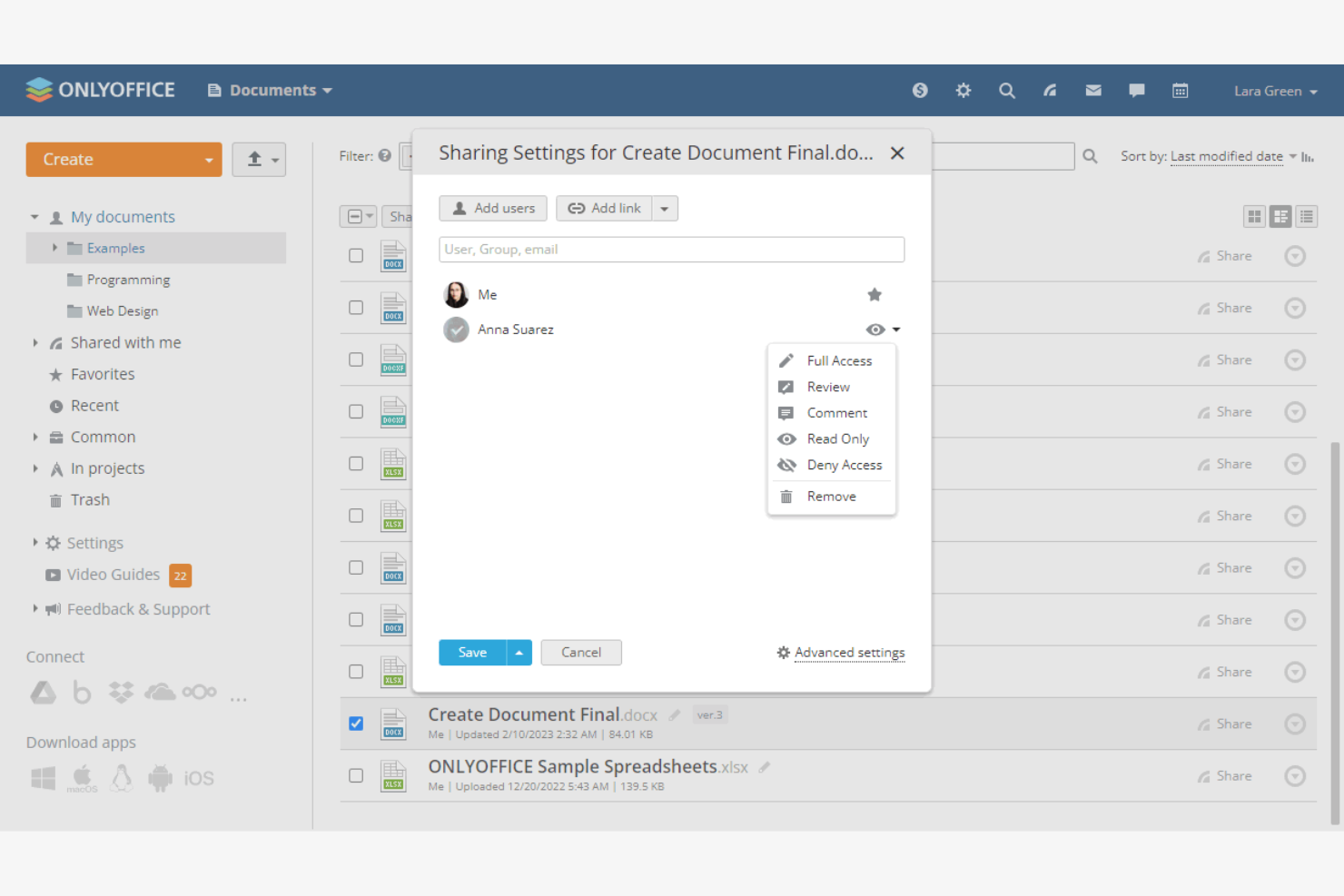
Teams that want document editing and project management in one place often turn to ONLYOFFICE. This platform is designed for businesses and project-driven teams that need to manage documents, tasks, and collaboration from a single dashboard. ONLYOFFICE stands out by combining familiar office suite tools with integrated project tracking and team communication features.
Why ONLYOFFICE Is a Good Google Docs Alternative
For teams that want more than just document editing, ONLYOFFICE brings project management tools directly into its online office suite. I picked ONLYOFFICE because it lets you create, assign, and track tasks alongside your documents, so you can manage projects and content in one place. The platform includes features like Gantt charts and milestone tracking, which help teams coordinate work without switching between separate apps. This integrated approach makes ONLYOFFICE a strong choice for businesses that need both collaboration and project oversight.
ONLYOFFICE Key Features
Some other features in ONLYOFFICE make it a flexible choice for teams:
- Document co-editing: Multiple users can edit documents at the same time with real-time updates.
- Built-in chat and comments: Communicate and leave feedback directly within documents and projects.
- Customizable access permissions: Set detailed user roles and permissions for documents and folders.
- Mail and calendar modules: Manage email and schedule events without leaving the platform.
ONLYOFFICE Integrations
Integrations include Trello, Odoo, Moodle, Monday, Pipedrive, Alfresco, Box, Confluence, Dropbox, DZZ Office, Jira, Nextcloud, SharePoint, SuiteCRM, Trello, WordPress, Zapier, Zoom, and more.
Pros and Cons
Pros:
- On-premises deployment option for strict data policies
- Supports real-time co-editing with role-based access permissions
- Combines document editing with built-in project management modules
Cons:
- Mobile apps have fewer features than desktop and web
- Third-party integration ecosystem is smaller than Google Workspace
Best for offline document creation
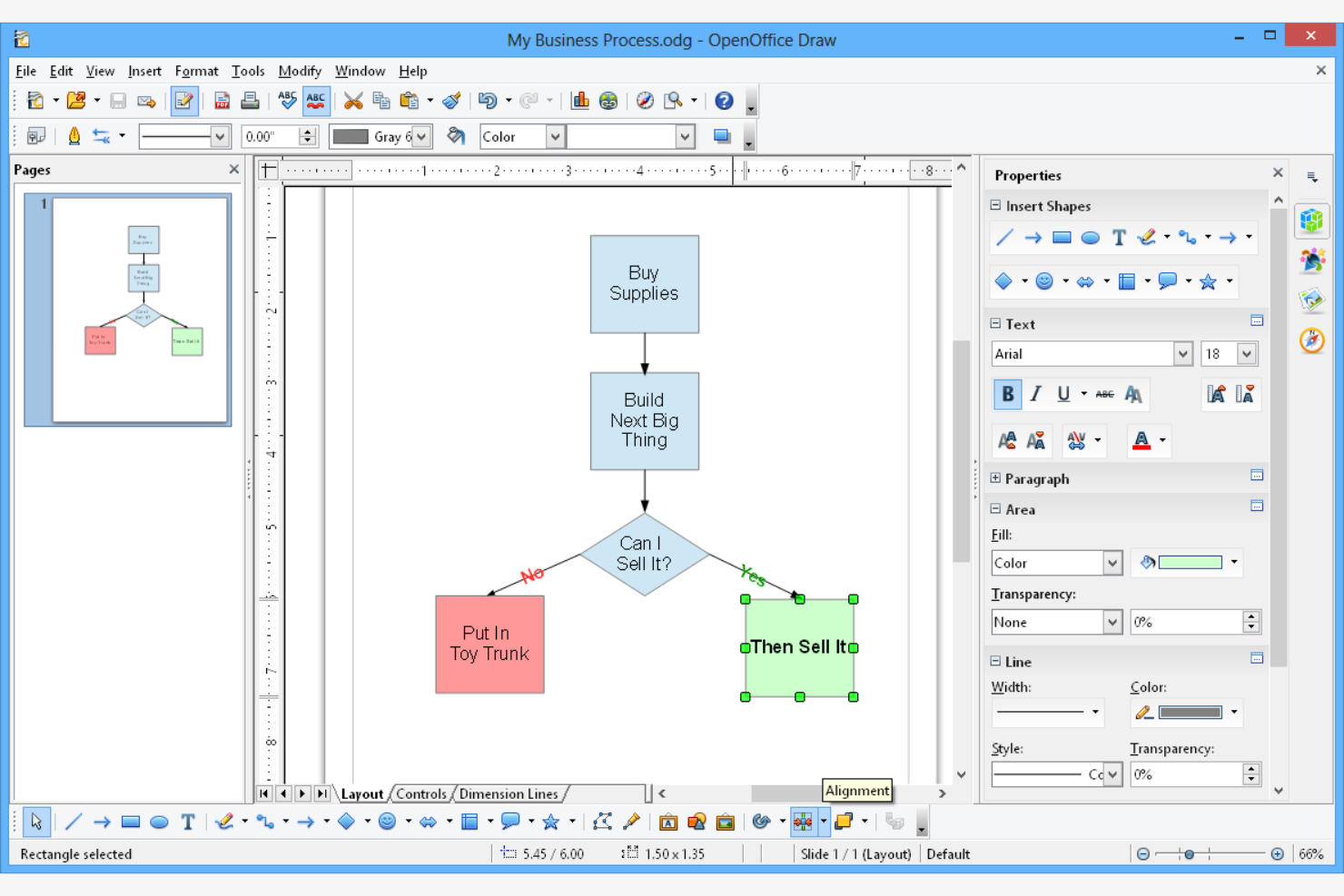
For teams that need a fully offline office suite, Apache OpenOffice offers a downloadable solution with no internet required. It’s a strong fit for organizations with strict data privacy policies or those working in low-connectivity environments. Unlike Google Docs, OpenOffice lets you create, edit, and store documents entirely on your local devices.
Why Apache OpenOffice Is a Good Google Docs Alternative
If you need to work without an internet connection, Apache OpenOffice stands out as a reliable choice. I picked it because it lets you create and edit documents, spreadsheets, and presentations entirely offline, which is something Google Docs can’t do natively. OpenOffice also supports saving files directly to your local drive, so you keep full control over your data. This makes it a strong fit for teams with strict privacy requirements or those in remote locations.
Apache OpenOffice Key Features
Some other features in Apache OpenOffice make it a versatile office suite:
- Draw module: Create diagrams, flowcharts, and vector graphics directly within the suite.
- Math formula editor: Build and edit complex mathematical equations for technical documents.
- PDF export: Save any document, spreadsheet, or presentation as a PDF file without extra plugins.
- Multi-format compatibility: Open and save files in Microsoft Office, OpenDocument, and other common formats.
Apache OpenOffice Integrations
Native integrations are not currently listed by Apache OpenOffice.
Pros and Cons
Pros:
- Includes Draw and Math tools for diagrams and formulas
- Free open-source suite with PDF export included
- Offline-first document creation with no cloud dependency
Cons:
- Modern file compatibility and feature updates lag behind competitors
- No real-time collaboration or built-in syncing
Best for cross-device file syncing
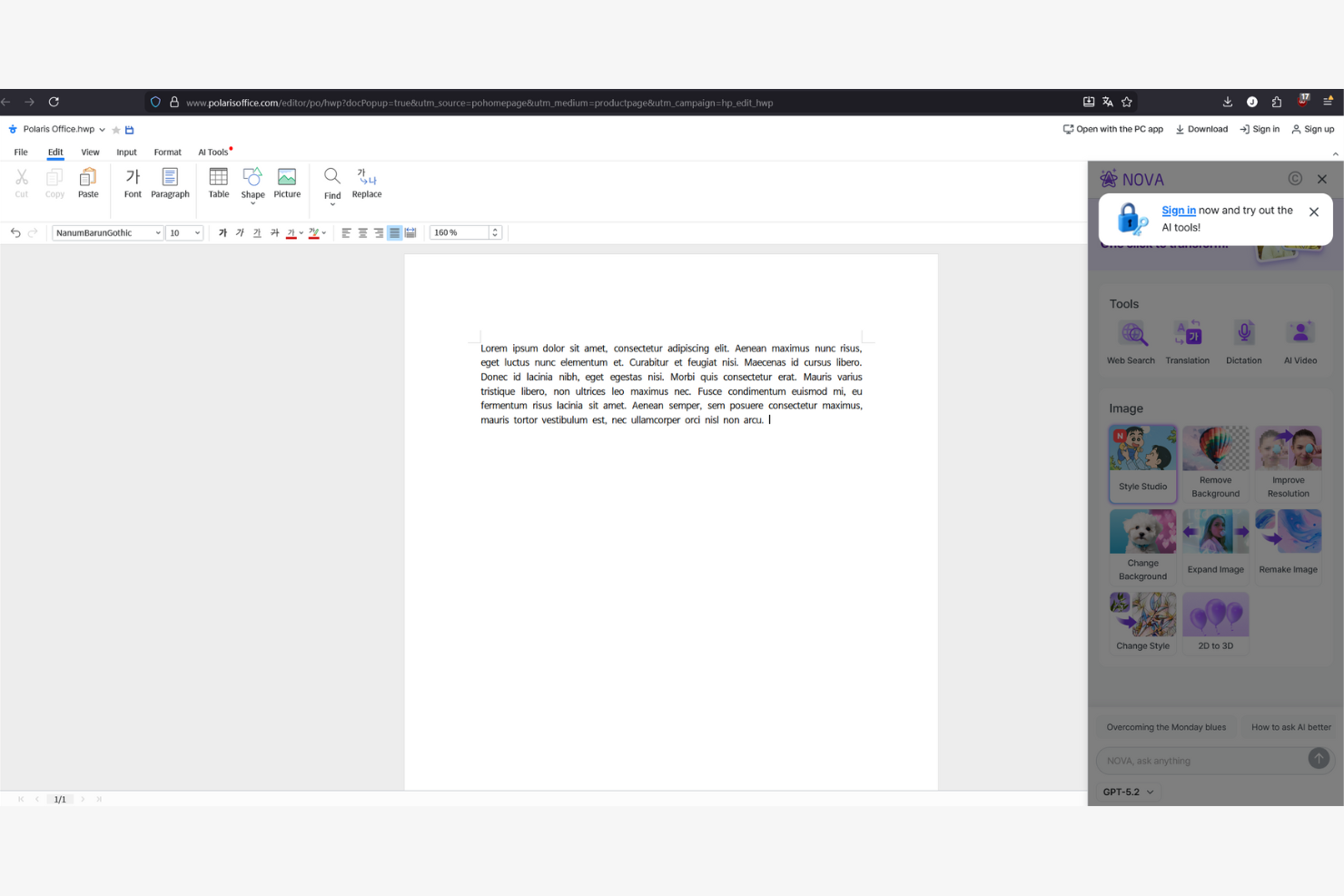
Polaris Office stands out for teams and individuals who need to work across multiple devices without losing track of their files. It’s a strong fit for remote workers, field teams, or anyone who switches between desktop, mobile, and tablet throughout the day. Unlike Google Docs, Polaris Office offers built-in syncing for a wide range of file types, making it easier to keep documents, spreadsheets, and presentations up to date everywhere you work.
Why Polaris Office Is a Good Google Docs Alternative
For anyone who needs to keep documents in sync across multiple devices, Polaris Office offers a clear advantage over traditional online office suites. I picked Polaris Office because it automatically syncs files between desktop, mobile, and tablet, so you always have the latest version at hand. The platform supports editing and viewing of a wide range of file formats, including Microsoft Office and PDF files, without conversion. If your workflow depends on moving between devices throughout the day, Polaris Office makes it much easier to keep your work consistent and accessible.
Polaris Office Key Features
Some other features in Polaris Office help teams work with documents more flexibly:
- Built-in PDF editing: Edit, annotate, and convert PDF files directly within the platform.
- Document encryption: Protect sensitive files with password-based encryption and access controls.
- Handwriting input support: Add handwritten notes or drawings using a stylus or touchscreen device.
- Cloud storage integration: Connect to services like Google Drive, Dropbox, and OneDrive to access and manage files from multiple sources.
Polaris Office Integrations
Integrations include Google Drive, OneDrive, Dropbox, Box, Jira, Okta, and DocHub
Pros and Cons
Pros:
- Offline editing is supported with sync when reconnected
- Edits Microsoft formats and PDFs without conversion friction
- Cross-device syncing across desktop, mobile, and tablet
Cons:
- Free plan experience can feel cluttered with ads and prompts
- Collaboration is weaker than Google Docs for live co-editing
Outras alternativas ao Google Docs
Eis algumas alternativas adicionais ao Google Docs que não entraram na minha lista restrita, mas que vale a pena conhecer:
- Visual Paradigm
For visual workflow documentation
- Zoho
For built-in business app integrations
- ClickUp
For task and document linking
- Evernote
For personal knowledge capture and organization
- Confluence
For structured team knowledge management
- Miro
For collaborative whiteboarding
- Coda
For turning documents into interactive apps
- Quip
For document and spreadsheet collaboration inside Salesforce
- Dropbox Paper
For lightweight collaborative brainstorming
- FreeOffice
For lightweight system requirements


How I Evaluate Google Docs Alternatives
I split my evaluation into baseline criteria—like real-time co-editing, task integration, and version history—and differentiators that separate a doc tool from a true project documentation hub.
Core Functionality (Table Stakes For This List)
When I'm selecting tools for my list, I rank each one on a scale from 0 (does not offer the functionality) to 5 (excels in this area) for each core functionality listed below. Then, I calculate the tool's total score into a percentage. Each tool needs to achieve a minimum total score of 65% to be considered for inclusion.
- Real-Time Collaborative Editing: I check whether multiple team members can co-author a project brief or status report simultaneously with live cursors, inline comments, and suggestions.
- Rich Document Creation: The editor should support formatted headings, tables, embedded media, and content blocks for structured docs like SOWs and sprint plans.
- Task & Project Integration: I look for native connections between docs and tasks, boards, or timelines so a project charter links directly to its deliverables.
- Version History & Permissions: Every doc revision should be trackable and restorable, with role-based sharing that lets you control access for internal teams and external clients.
- Cloud Storage & Sync: I evaluate whether docs autosave, sync across devices, and offer offline access for distributed teams working across time zones.
- Export & Format Compatibility: Tools should import and export standard formats like DOCX, PDF, and Markdown so project docs stay compatible with stakeholder workflows.
Once I have a list of tools that meet this criteria, I consider what sets each platform apart.
Differentiating Factors (What Sets Vendors Apart)
Here's how I compare and contrast different vendors:
Standout Features
I look for built-in wiki and knowledge base features that let you nest project docs, link pages, and build a searchable hub your team actually references. AI writing tools also stand out—auto-generating a sprint retro summary or drafting a status update from task data saves real time. Project-specific templates for SOWs, RAID logs, and kickoff agendas matter too, especially when paired with automations that populate recurring docs across workstreams.
Beyond Features
Integration depth matters—I check whether the tool connects natively to PM platforms like Jira, Asana, or monday.com, because a doc tool that sits outside your delivery stack creates friction. Pricing structures vary widely too. I evaluate whether guest seats and external collaborator access come included or cost extra, since most project teams loop in clients and vendors regularly. Migration support from Google Docs or Confluence is another factor I weigh, because a painful switchover can stall adoption across the team.
Por que razão procurar uma alternativa ao Google Docs?
Embora o Google Docs seja uma solução sólida de processamento de texto online, existem várias razões pelas quais alguns utilizadores procuram plataformas alternativas. Pode estar à procura de uma alternativa ao Google Docs porque…
- Precisa de uma melhor compatibilidade com formatos de ficheiro do Microsoft Office
- A sua equipa necessita de ferramentas avançadas para editar e anotar PDFs
- Trabalha em regiões onde os serviços da Google são restringidos
- Precisa de editar documentos offline sem depender de extensões do navegador
- A sua organização tem requisitos rigorosos de privacidade dos dados ou de utilização no local
- Quer ter mais controlo sobre a formatação, a disposição dos documentos ou o suporte de Markdown
- Está preocupado com a curva de aprendizagem para utilizadores não técnicos
- Prefere uma interface ou um estilo de fluxo de trabalho diferente e fácil de utilizar
Se alguma destas situações lhe é familiar, está no sítio certo. As opções desta lista incluem plataformas de processamento de texto e colaboração online concebidas para equipas que precisam de mais flexibilidade, maior controlo da formatação ou uma abordagem diferente à gestão de documentos.
Principais funcionalidades do Google Docs
Eis algumas das principais funcionalidades do Google Docs para o ajudar a compará-lo com outras ferramentas de colaboração completas e plataformas de processamento de texto:
- Edição colaborativa em tempo real com vários utilizadores
- Guardado automático na nuvem no Google Drive
- Histórico de versões e acompanhamento das revisões do documento
- Ferramentas integradas de comentários e sugestões
- Integração com aplicações do Google Workspace, como o Sheets e o Slides
- Modo de edição offline para trabalhar sem acesso à Internet
- Controlos abrangentes de partilha e permissões
- Escrita por voz e funcionalidades de acessibilidade