

De 10 beste programvarene for bestilling av fleksible arbeidsplasser for virksomheter i 2026

Beste programvare for bestilling av fleksible arbeidsplasser for store virksomheter


Programvare for bestilling av fleksible arbeidsplasser for store virksomheter hjelper organisasjoner med å administrere arbeidsmiljøet gjennom fleksible bestillinger av skrivebord, hotellering av skrivebord og arealstyring på tvers av flere lokasjoner. Dette gir teamene fleksibilitet samtidig som det støtter samarbeid på kontoret og effektiv utnyttelse av kontorlokaler. Hvis du leter etter slike løsninger, står du sannsynligvis overfor utfordringen med å holde tritt med hybride arbeidsplaner, maksimere bruken av kontorressurser og gjøre det enklere for medarbeiderne å finne den rette plassen hver dag. I denne veiledningen får du en rask og tydelig oversikt over de ledende plattformene for store virksomheter, som hjelper deg med å få kontroll på kaoset, tilby smarte bestillingsopplevelser og sørge for at alle er samkjørte – enten du administrerer ett enkelt hovedkontor eller en global portefølje av lokasjoner.
Hvorfor du kan stole på våre programvareanbefalinger
Teamet vårt har testet og anmeldt programvare siden 2012. Vi er selv prosjektledere, så vi vet hvor vanskelig og hvor viktig det er å velge riktig programvare.
I denne guiden har vi vurdert verktøyene gjennom praktisk testing og uavhengig research og gitt dem poeng ut fra våre utvelgelseskriterier. Vi bygger også på innsikt fra ledende eksperter i bransjen og erfarne prosjektledere.
Anmeldelsene våre bygger på vår egen redaksjonelle vurdering. De er ikke et salgsargument.
Ekspertanmeldere:
Sammenligningstabell for programvare for bestilling av fleksible arbeidsplasser for store virksomheter
Denne sammenligningstabellen oppsummerer prisdetaljene for mine beste utvalgte programmer for bestilling av fleksible arbeidsplasser for store virksomheter.
| Tool | Best For | Trial Info | Price | ||
|---|---|---|---|---|---|
| 1 | Best for connected workplace operations on one map | Not available | From $3000/year | Website | |
| 2 | Best for integrated service request management | Free demo available | From $500/month | Website | |
| 3 | Best for customizable booking permissions | Free plan + free trial + free demo available | From $4/resource/month (billed annually) | Website | |
| 4 | Best for workplace experience analytics | 7-day free trial + free demo available | From $1.79/user/month (billed annually) | Website | |
| 5 | Best for sensor-based occupancy insights | Free demo available | Pricing upon request | Website | |
| 6 | Best for employee-first desk booking | Free trial + free demo available | From $5/user/month (billed annually) | Website | |
| 7 | Best for managing dynamic team seating | Free demo available | Pricing upon request | Website | |
| 8 | Best for AI-powered workplace scheduling | Free demo available | From $99/month | Website | |
| 9 | Best for interactive floor plan booking | Free trial available | From $5/bookable resource/month (billed annually) | Website | |
| 10 | Best for enterprise workplace management | Free demo available | Pricing upon request | Website |


Anmeldelser av den beste programvaren for bestilling av fleksible arbeidsplasser for store virksomheter
Nedenfor finner du mine detaljerte sammendrag av den beste programvaren for bestilling av fleksible arbeidsplasser for store virksomheter som kom med på kortlisten min. I anmeldelsene mine får du en detaljert gjennomgang av funksjonene, de beste bruksområdene og integrasjonene til hver plattform, slik at du kan finne den beste løsningen for deg.
Tactic
Best for connected workplace operations on one map
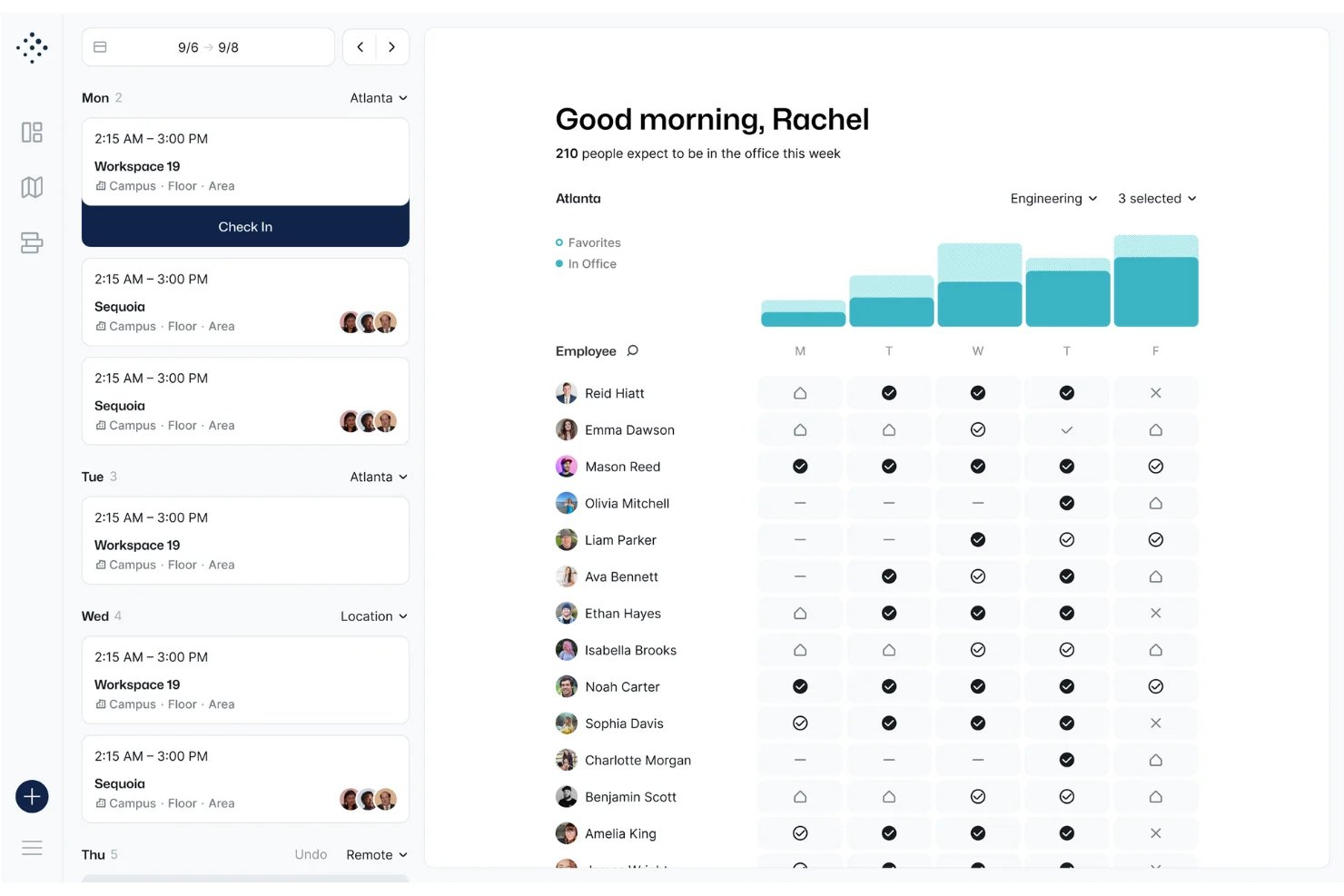
Tactic is a hybrid workplace management platform that combines interactive floor plan-based desk booking, room reservations, visitor management, and occupancy analytics with a built-in AI assistant for natural language booking across web, mobile, and collaboration tools.
Who Is Tactic Best For?
Tactic is a strong fit for workplace experience and facilities managers at midsize to enterprise organizations running hybrid work models across multiple office locations.
Why I Picked Tactic
Tactic earns its spot as one of the best on my shortlist because of how it centers all workplace operations on a single interactive live map. I love that I can see live desk availability, filter by team neighborhood, and locate where specific teammates are sitting without ever leaving the floor plan view. On top of that, Tessa AI handles booking through Slack or Teams in plain language, and auto-release kicks in automatically when someone skips a check-in, keeping the map accurate without any manual cleanup.
Tactic Key Features
- Admin-configurable booking windows: Lets workplace admins set advance windows and limits for desk reservations company-wide or by location.
- Role-based access controls: Manages who can book desks, rooms, or neighborhoods by role, department, or location.
- Automated desk check-in: Supports check-in via Wi-Fi, mobile app, QR code, and Slack or Teams prompt to confirm desk usage.
- Visual occupancy analytics dashboard: Shows desk utilization, booking trends, and peak occupancy stats in real time.
Tactic Integrations
Tactic offers native integrations with Slack, Microsoft Teams, Google Workspace, Outlook, and more, and it provides an API for custom integrations.
Pros and Cons
Pros:
- Broad native ecosystem for enterprise chat apps
- Multi-location management within a single platform
- Real-time spatial tracking on live floor maps
Cons:
- Advanced reporting locked behind higher-tier plans
- Lacks native advanced hardware sensor integrations

elia
Best for integrated service request management
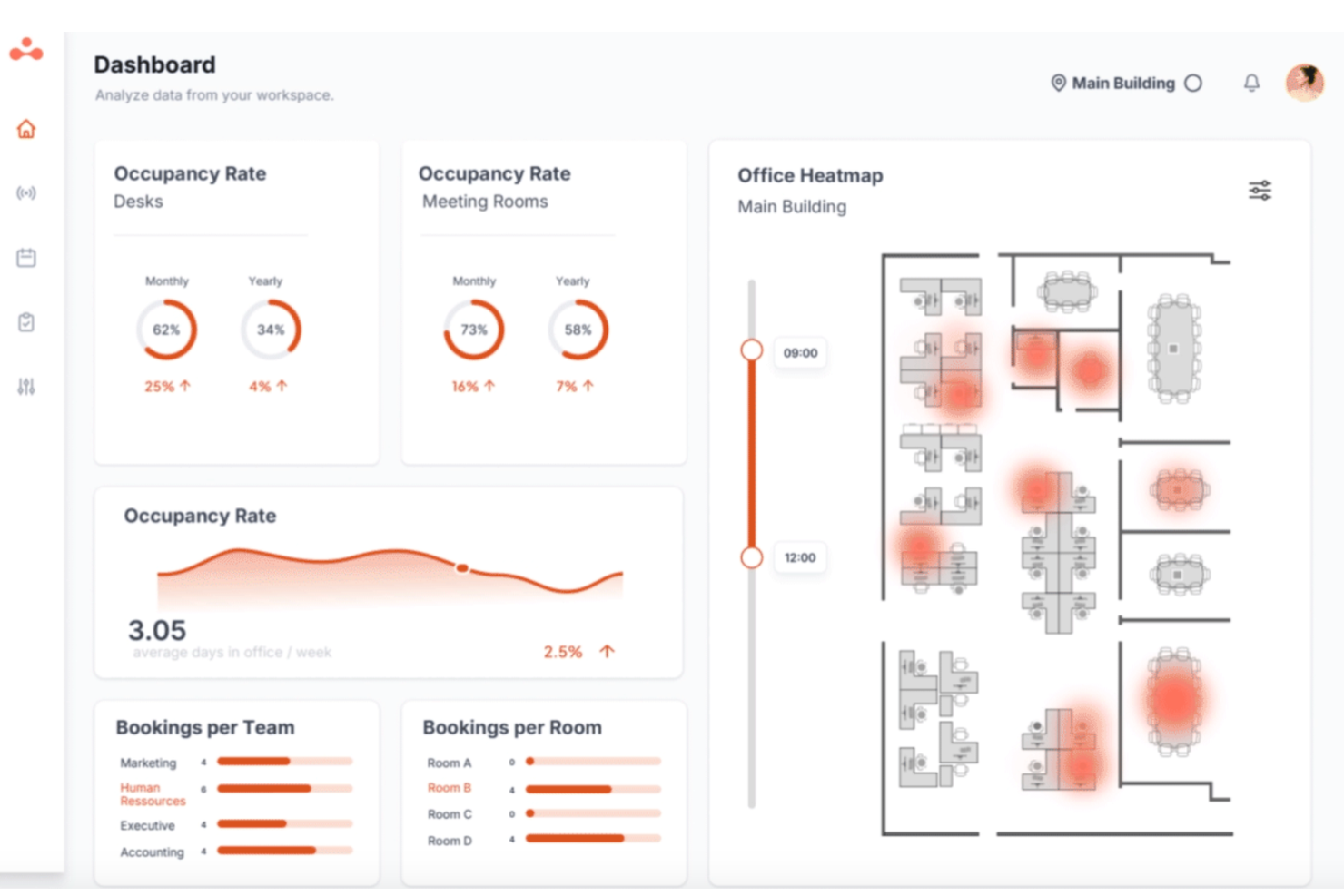
elia is an all-in-one workplace operations platform that brings together desk booking, meeting room reservations, interactive floor plans, visitor management, occupancy tracking, and service request management under a single interface.
Who Is elia Best For?
elia is a strong fit for mid-size to large organizations where facilities, IT, and HR teams share responsibility for managing a hybrid office environment.
Why I Picked elia
I picked elia as one of the best because its service request management is built directly into the floor plan, not bolted on as a separate module. When a team books a meeting room, any linked catering, IT setup, or maintenance requests automatically update if that booking changes. I also like that requests are tied to specific desks and zones, so facilities teams always know exactly where and when something is needed.
elia Key Features
- Interactive floor plans: Users can browse and book available desks and rooms on visual office maps, including filters for zone and location.
- Occupancy analytics dashboard: Facility teams can access real-time and historical data about desk usage and attendance trends.
- Native mobile app: Employees can book desks, check in, and manage reservations directly from their phones with QR code support.
- Microsoft 365 and Google Workspace integration: Sync bookings, calendar events, and user data with leading enterprise productivity platforms.
elia Integrations
elia offers native integrations with Microsoft 365, Google Workspace, Slack, Microsoft Teams, and Outlook. An API is available for custom integrations.
Pros and Cons
Pros:
- Visual floor plan builder with click-to-book
- Occupancy tracking leverages IoT sensor data
- Service request system integrated with bookings
Cons:
- No 3D wayfinding or interactive navigation
- HRIS integrations not natively available
anny
Best for customizable booking permissions
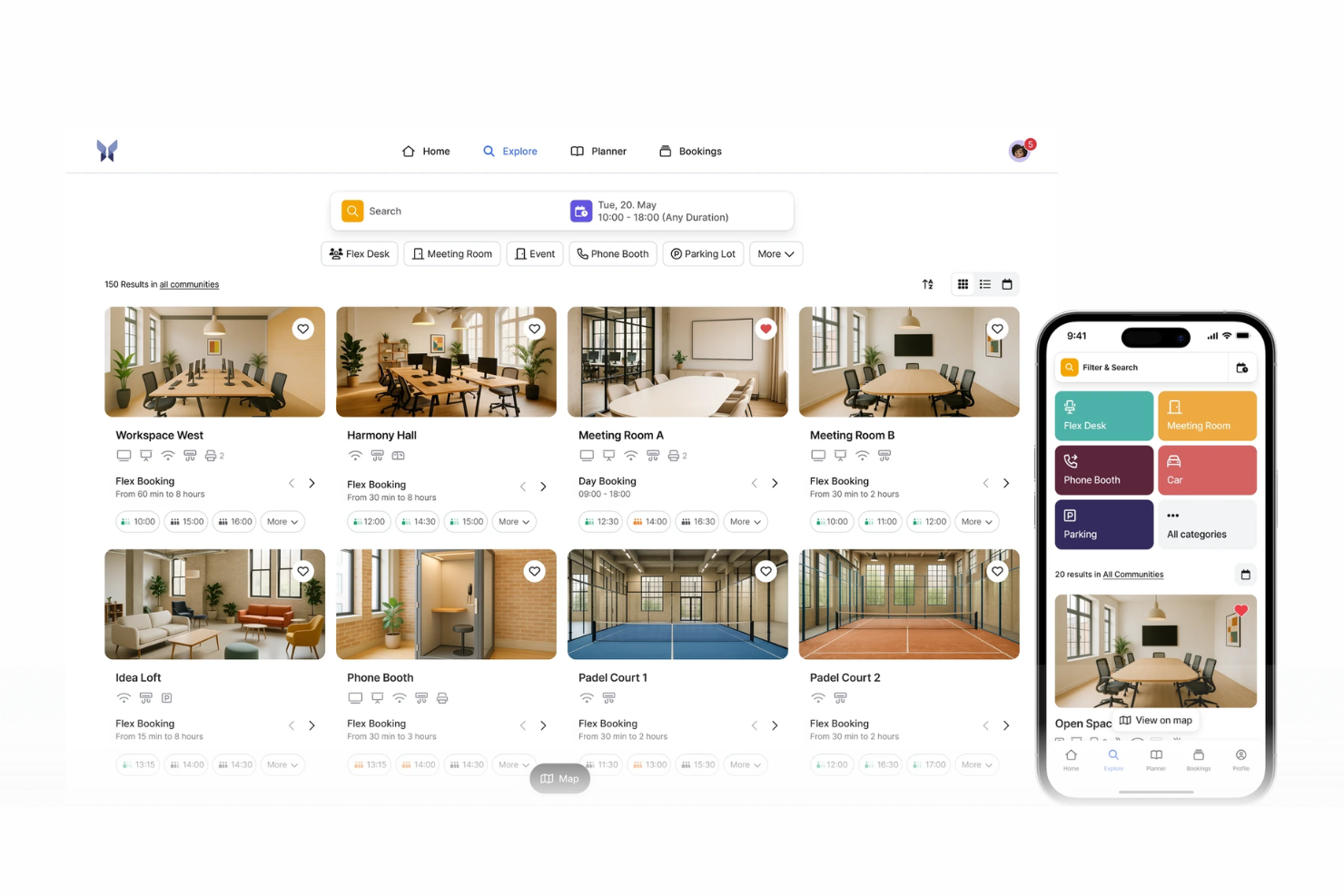
anny is an enterprise workspace booking platform that manages hot desking, room reservations, and office capacity planning with interactive 3D floor maps, SSO, community-based access controls, and a 29-language interface.
Who Is anny Best For?
anny is a good fit for enterprise organizations managing multi-location offices with complex access rules, mixed workspace types, and internationally distributed teams.
Why I Picked anny
anny earns its spot on my shortlist because of the granularity it gives admins over who can book what. Through its Communities feature, you can assign specific desks, floors, or resource types to defined groups, so the Legal team only sees their floor and the Engineering team only sees theirs. You can layer on booking contingents to cap how often a user or group can reserve a resource, giving you tight control without manual oversight.
anny Key Features
- SSO authentication: Connect anny to your existing identity provider so employees log in with their corporate credentials.
- Recurring bookings: Set repeating desk reservations on a daily or weekly basis, without re-booking each time.
- Multi-location management: Use a single admin account to manage bookable resources across multiple office sites.
- Mobile booking app: Reserve desks, check in, and view floor availability from a smartphone.
anny Integrations
anny offers native integrations with Microsoft 365, Outlook, MS Teams, Google Calendar, Google Workspace, Zoom, Personio, HRworks, Stripe, and PayPal, along with several smart lock integrations including Nuki, Salto KS, iLOQ, and dormakaba. It also connects with Make and n8n for no-code workflow automation and provides both an Admin API and a Customer API for custom integrations.
Pros and Cons
Pros:
- Built-in smart lock and access control
- Centralizes desks, rooms, and parking management
- 3D interactive maps for visual desk booking
Cons:
- Mobile app lacks some web features
- Setup requires custom workflows for complex maps
Best for workplace experience analytics
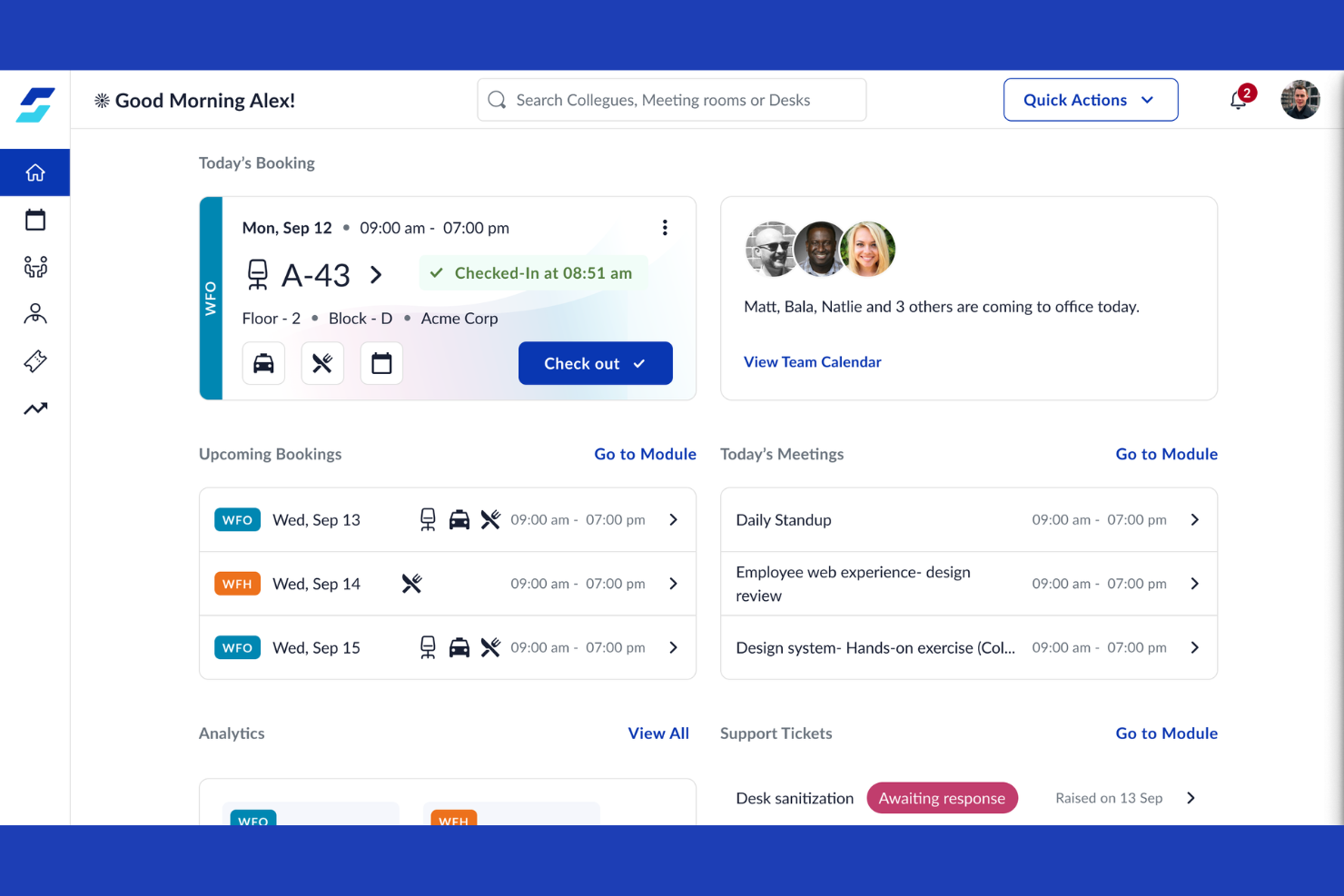
WorkInSync is enterprise desk booking software with automated scheduling, interactive floor plan views, and configurable approval workflows for managing hybrid workspaces and desk reservations.
Who Is WorkInSync Best For?
WorkInSync is ideal for facilities managers and workspace planners at large enterprises who need detailed analytics on desk and space utilization.
Why I Picked WorkInSync
I picked WorkInSync as one of the best because I rely on its advanced analytics and reporting to monitor real-time desk utilization, spot booking trends, and export custom space usage reports for large-location occupancy planning.
WorkInSync Key Features
- Interactive floor plans: View and select available desks directly from an office map.
- Mobile booking app: Reserve desks and manage bookings on the go.
- Approval workflow: Set up customizable approval steps for desk or space reservations.
- Contactless check-in options: Enable QR code-based or sensor-based desk check-ins.
WorkInSync Integrations
WorkInSync offers native integrations with Microsoft Teams, Microsoft Outlook, Microsoft Active Directory, Microsoft Intune, Google Workspace, Google Calendar, Okta, OneLogin, Cisco, and Oracle PeopleSoft.
Pros and Cons
Pros:
- Custom floor plans for office maps
- Auto check-in with Bluetooth sensors
- Real-time heatmaps of desk occupancy
Cons:
- Desk release may need manual intervention
- Overwhelming feature set for smaller teams
Best for sensor-based occupancy insights
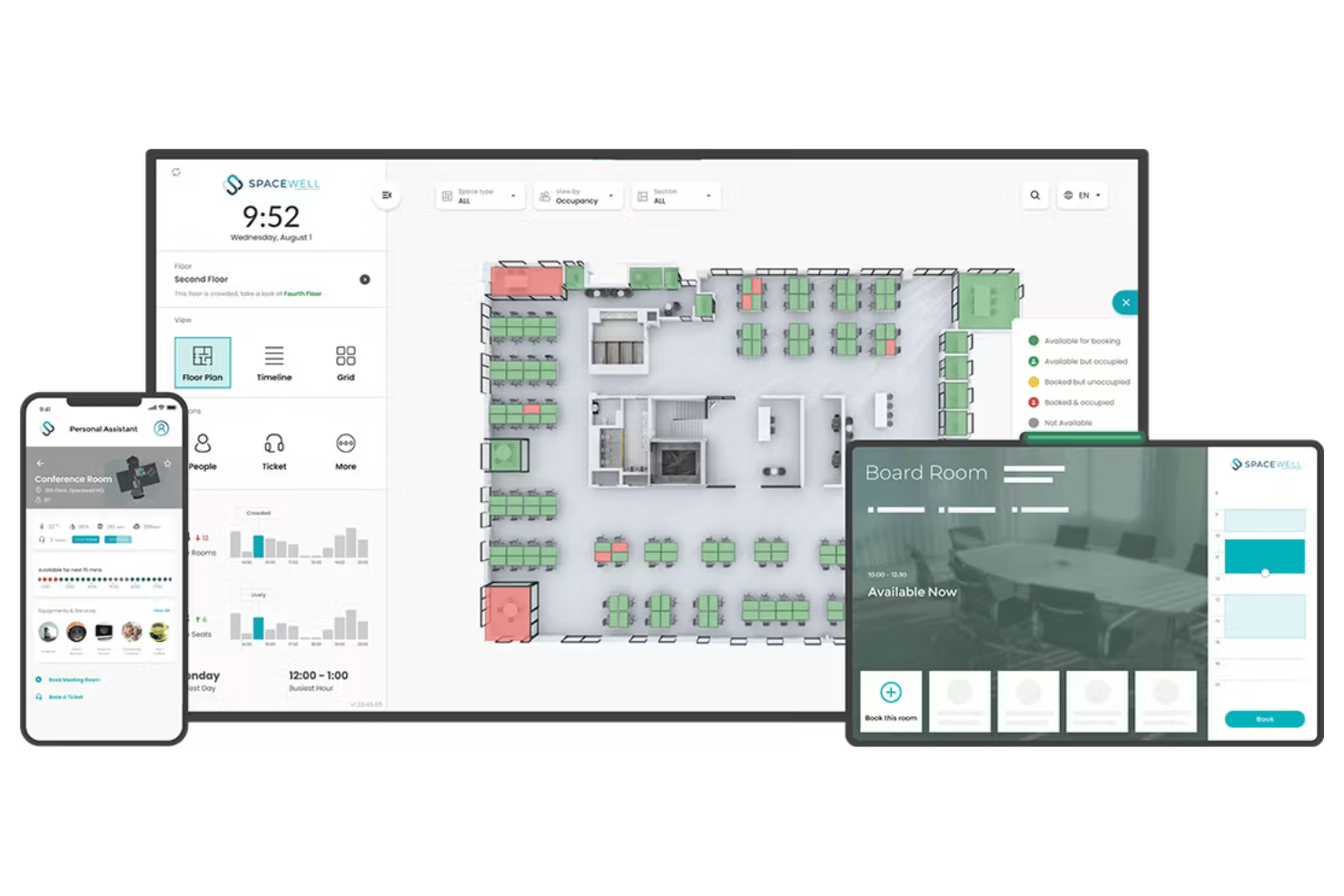
Spacewell is an enterprise hot desk booking platform that brings together real-time sensor data, interactive floor plans, occupancy analytics, and policy controls for managing large-scale flexible office environments.
Who Is Spacewell Best For?
Spacewell is a strong choice for facilities teams at large enterprises managing hybrid offices and multi-location real estate portfolios.
Why I Picked Spacewell
I picked Spacewell as one of the best because I see its sensor-based occupancy insights in action, translating real-time desk usage data into actionable office layouts. My team uses built-in sensor analytics to map actual attendance and eliminate guesswork from space planning.
Spacewell Key Features
- Interactive floor plan booking: Employees reserve desks or rooms directly from visual maps of each office location.
- Role-based booking controls: Admins set permissions, booking windows, and desk access based on job function.
- Multi-location management: Centralized administration for multiple sites, floors, and regions within one dashboard.
- Integration with Microsoft Teams and Outlook: Users can book desks and receive notifications inside existing communication platforms.
Spacewell Integrations
Spacewell offers native integrations with Outlook, Google Calendar, Microsoft Teams, Slack, Okta, Azure Active Directory, Workday, SAP SuccessFactors, and several IoT sensor brands. An open API is also available for custom integrations.
Pros and Cons
Pros:
- Role-based booking policy controls for enterprises
- Interactive booking from detailed floor maps
- Real-time occupancy insights with IoT sensors
Cons:
- Mobile app interface can feel cluttered
- Initial setup complexity for large environments

deskbird
Best for employee-first desk booking
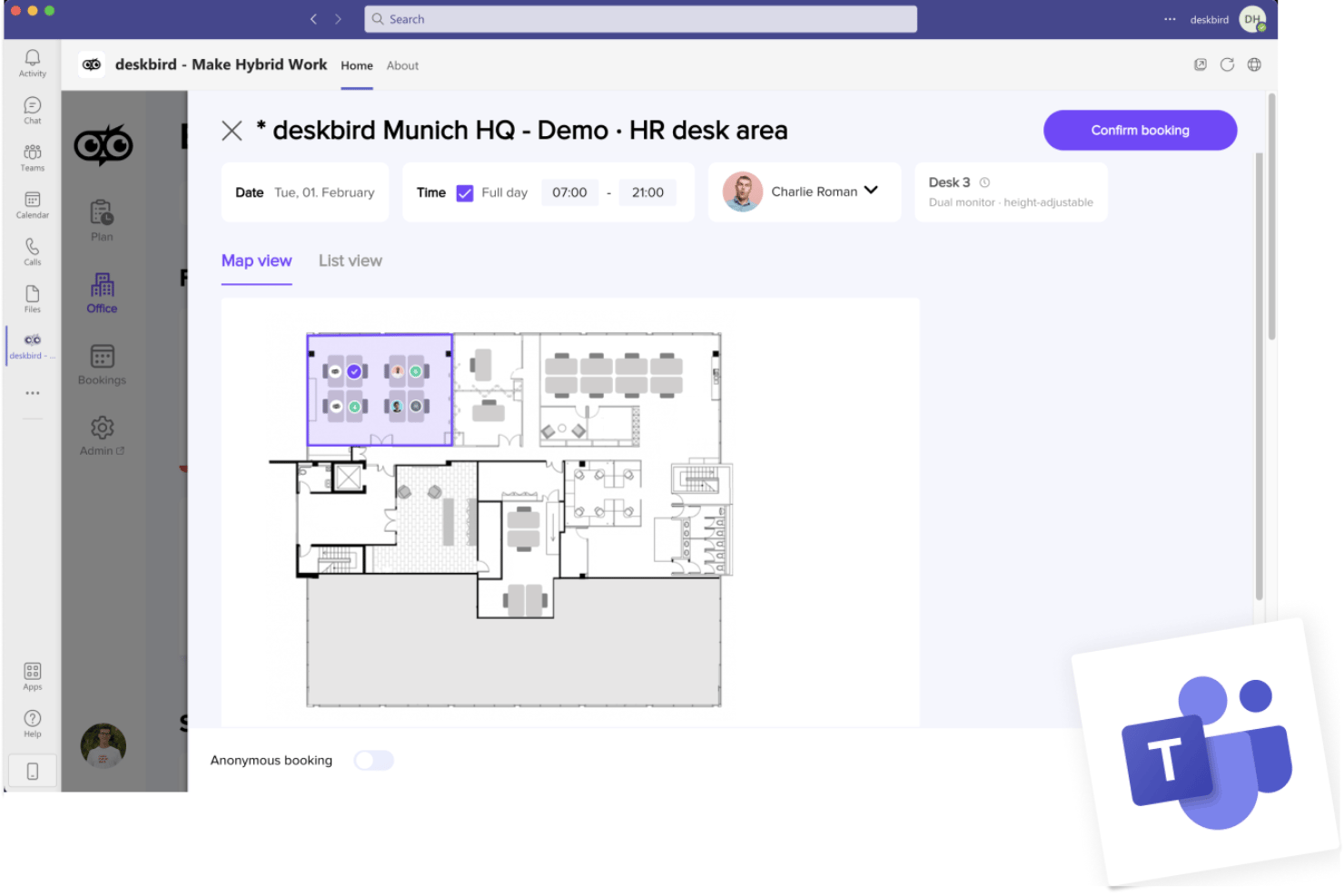
deskbird is an enterprise hot desk booking platform designed for hybrid workplaces, offering interactive floor plans, self-service desk reservations, real-time occupancy analytics, and scalable integration with collaboration and HR systems.
Who Is deskbird Best For?
Designed for large organizations with hybrid or flexible work models looking to manage desk bookings and space utilization across multiple locations.
Why I Picked deskbird
I picked deskbird as one of the best because it puts employee choice first with live interactive floor plans and quick booking from anywhere. I rely on it for point-and-click reservations, QR check-ins, and clear visibility across large hybrid offices.
deskbird Key Features
- Neighborhood zones: Set up work zones and control booking rules by department or team.
- Multi-location management: Configure and manage multiple offices, floors, and regions from a single admin interface.
- Role-based permissions: Set granular access controls for different user types, including guests, admins, and staff.
- Occupancy analytics dashboard: Track desk usage data and export custom reports for occupancy and attendance.
deskbird Integrations
deskbird offers native integrations with Google Workspace, Microsoft 365, Slack, Microsoft Teams, Okta, Azure Active Directory, Personio, Workday, SAP SuccessFactors, and has an API for custom integrations.
Pros and Cons
Pros:
- Customizable booking policies by location or team
- Supports QR-based desk check-in processes
- Interactive floor plans with real-time availability
Cons:
- Sensor integrations require custom setup
- No 3D floor plan visualizations

Robin
Best for managing dynamic team seating
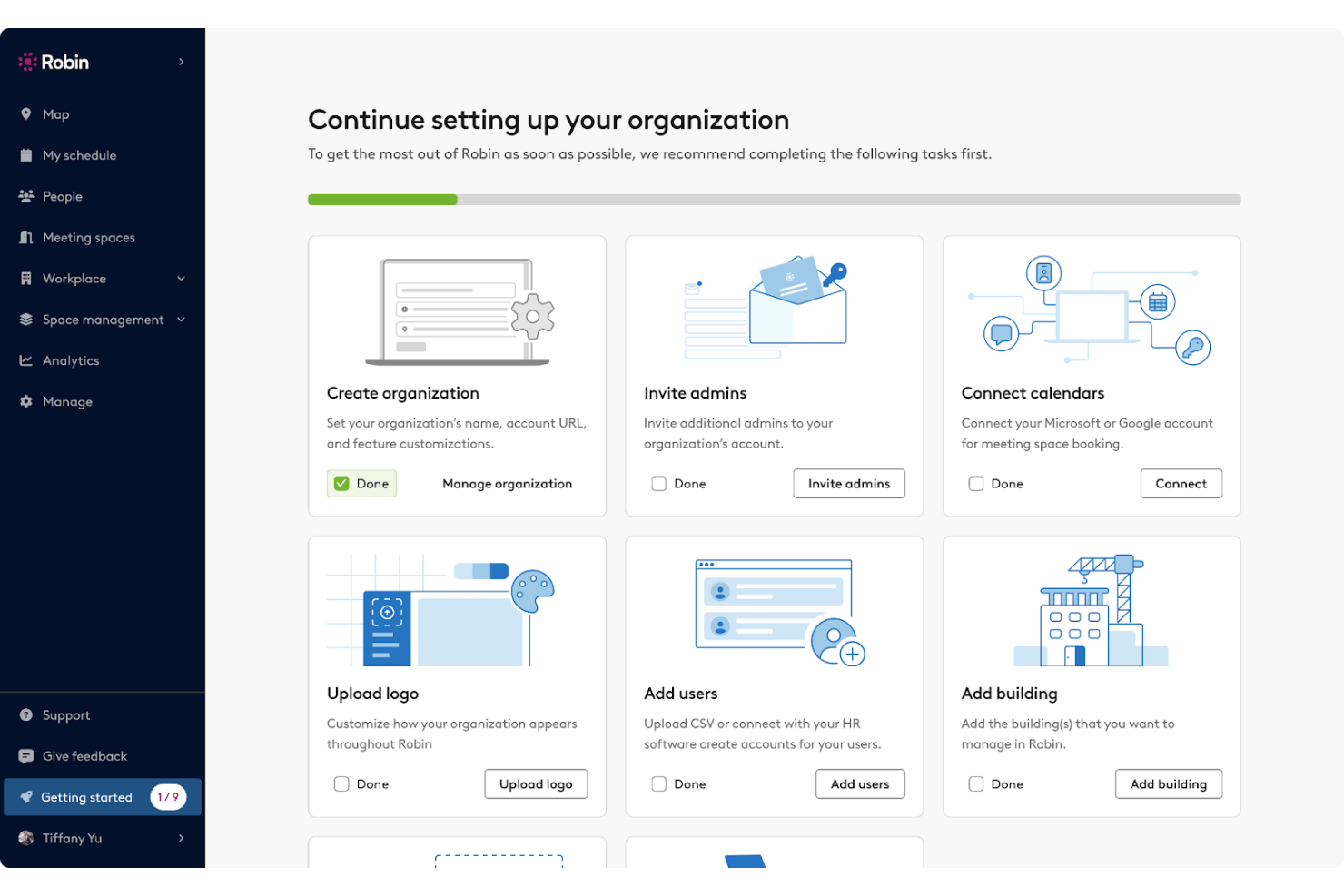
Robin is an enterprise hot desk booking software designed for managing distributed workspaces, offering interactive floor plans, advanced reservation rules, occupancy analytics, and robust integrations for organizations supporting flexible seating arrangements.
Who Is Robin Best For?
Workplace and facilities teams at large enterprises managing flexible, multi-location office environments.
Why I Picked Robin
I picked Robin as one of the best for enterprise hot desk booking because I can easily adjust team seating layouts in real time, assign neighborhoods, and let teams self-select spots using interactive floor plans that visually update as bookings change.
Robin Key Features
- Role-based access controls: Limit or grant booking permissions for users and groups based on role or department.
- Occupancy analytics dashboard: Track space usage trends, booking rates, and attendance data in real time.
- Calendar integrations: Sync desk bookings with Outlook and Google Calendar for unified scheduling.
- Sensor and badge system integrations: Connect with workplace hardware to monitor real occupancy and automate desk check-ins.
Robin Integrations
Robin offers native integrations with Google Workspace, Microsoft 365, Outlook, Slack, Microsoft Teams, Okta, Azure Active Directory, BambooHR, and Cisco Webex. An API is available for custom integrations.
Pros and Cons
Pros:
- Supports occupancy tracking with sensors and badges
- Advanced team and neighborhood seat assignments
- Interactive floor plans update in real time
Cons:
- Waitlist functionality not prominently featured
- Advanced reporting features require higher-tier plans
YAROOMS
Best for AI-powered workplace scheduling
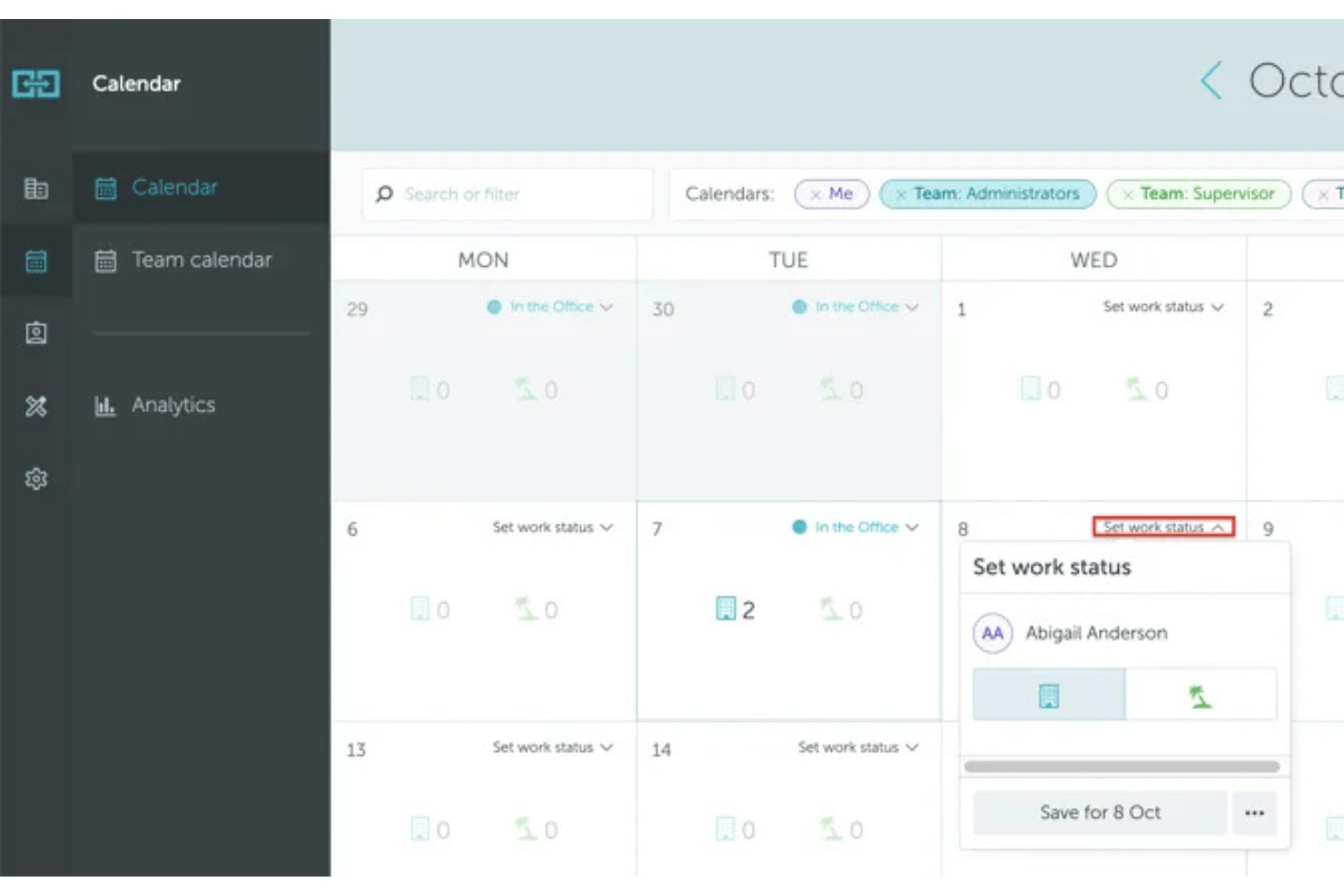
YAROOMS is an enterprise workplace management platform that combines desk booking, meeting room reservations, workplace policies, and occupancy analytics to support hybrid work across multiple office locations.
Who Is YAROOMS Best For?
Enterprises and large organizations managing flexible workspaces across multiple offices and regions.
Why I Picked YAROOMS
I picked YAROOMS because it combines desk booking and workplace management in one platform. I can create flexible booking policies, manage office resources across multiple locations, and monitor workspace utilization through built-in analytics.
YAROOMS Key Features
- Interactive floor plans: Users can view and book available desks directly from a visual office map.
- Role-based booking policies: Admins configure access, booking windows, and quotas by role or department.
- Calendar integrations: Connects with Outlook and Google Workspace for seamless booking and schedule sync.
- Occupancy analytics dashboard: Visualizes usage data and trends by floor, zone, or building.
YAROOMS Integrations
YAROOMS offers native integrations with Outlook, Google Workspace, Microsoft Teams, Slack, Okta, Azure Active Directory, Workday, and BambooHR, and provides an API for custom integrations.
Pros and Cons
Pros:
- Interactive floor plans for multi-location offices
- Built-in workplace occupancy analytics
- Advanced policy and permission management
Cons:
- Sensor integrations require specific hardware partners
- No 3D wayfinding or navigation features

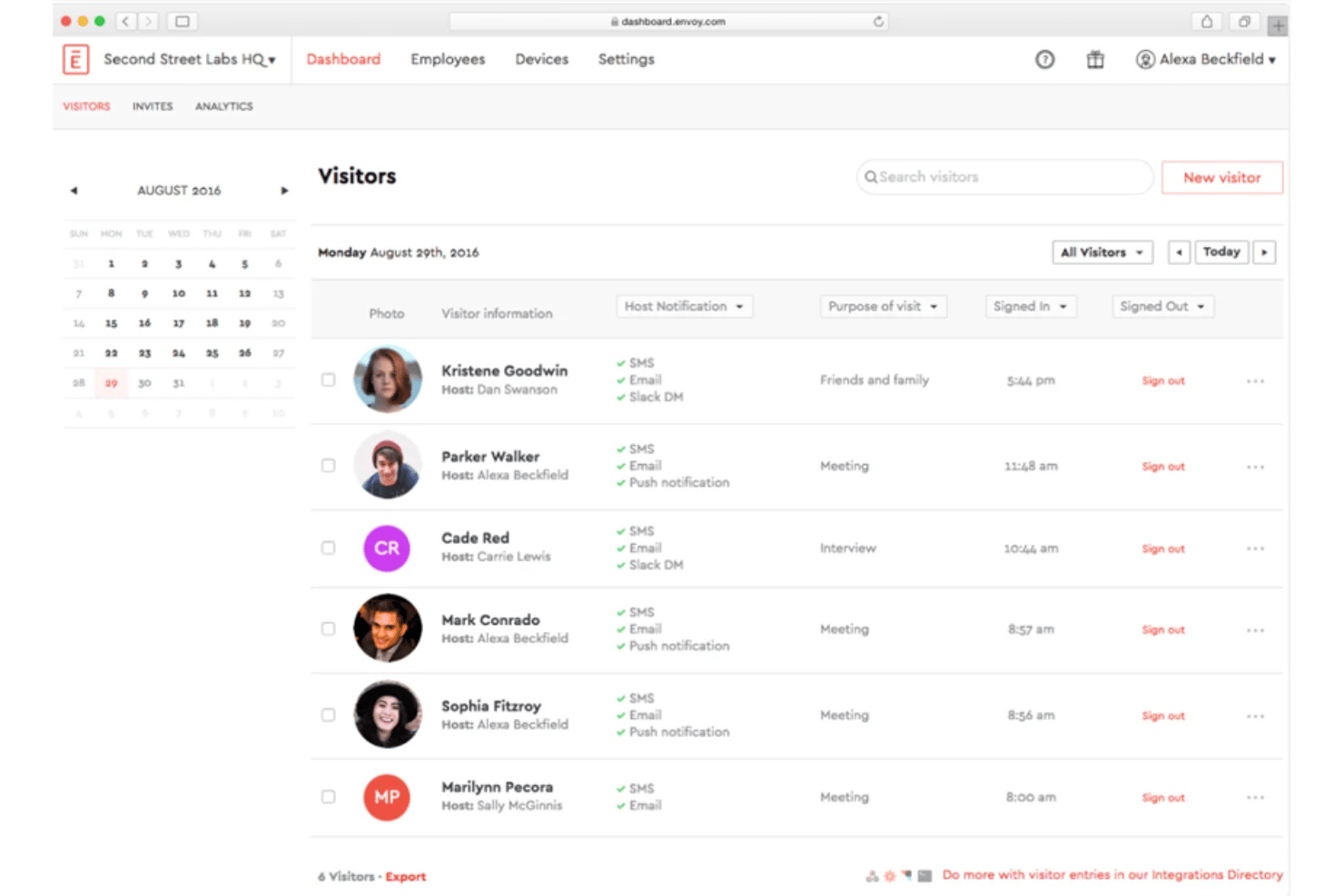
Envoy Workplace is an enterprise hot desk booking platform that enables organizations to manage desk reservations, interactive floor plans, workplace occupancy, and flexible office operations across multiple locations.
Who Is Envoy Workplace Best For?
Large organizations and facilities teams that need to coordinate desk bookings and occupancy data across multiple office locations.
Why I Picked Envoy Workplace
I picked Envoy Workplace as one of the best because its interactive floor plan booking lets my team visualize desk availability in real time, click directly on workspaces to book, and navigate multi-floor offices with detailed, customizable maps.
Envoy Workplace Key Features
- Granular booking policies: Set rules for desk access, time windows, and team or department restrictions.
- Occupancy analytics dashboard: Track real-time usage data and attendance patterns across all office locations.
- Enterprise calendar integration: Sync desk reservations with Google Workspace and Outlook calendars.
- Role-based permissions: Control admin and user access levels to customize who can book, manage, and view spaces.
Envoy Workplace Integrations
Envoy Workplace offers native integrations with Google Workspace, Microsoft 365, Slack, Microsoft Teams, Okta, Azure Active Directory, Workday, BambooHR, Rippling, ADP, and provides an API for custom integrations.
Pros and Cons
Pros:
- Occupancy analytics dashboard for multi-site offices
- Granular booking policies for different user groups
- Interactive floor plans with real-time desk status
Cons:
- Advanced features require higher-tier plans
- Initial setup for multi-location can be complex

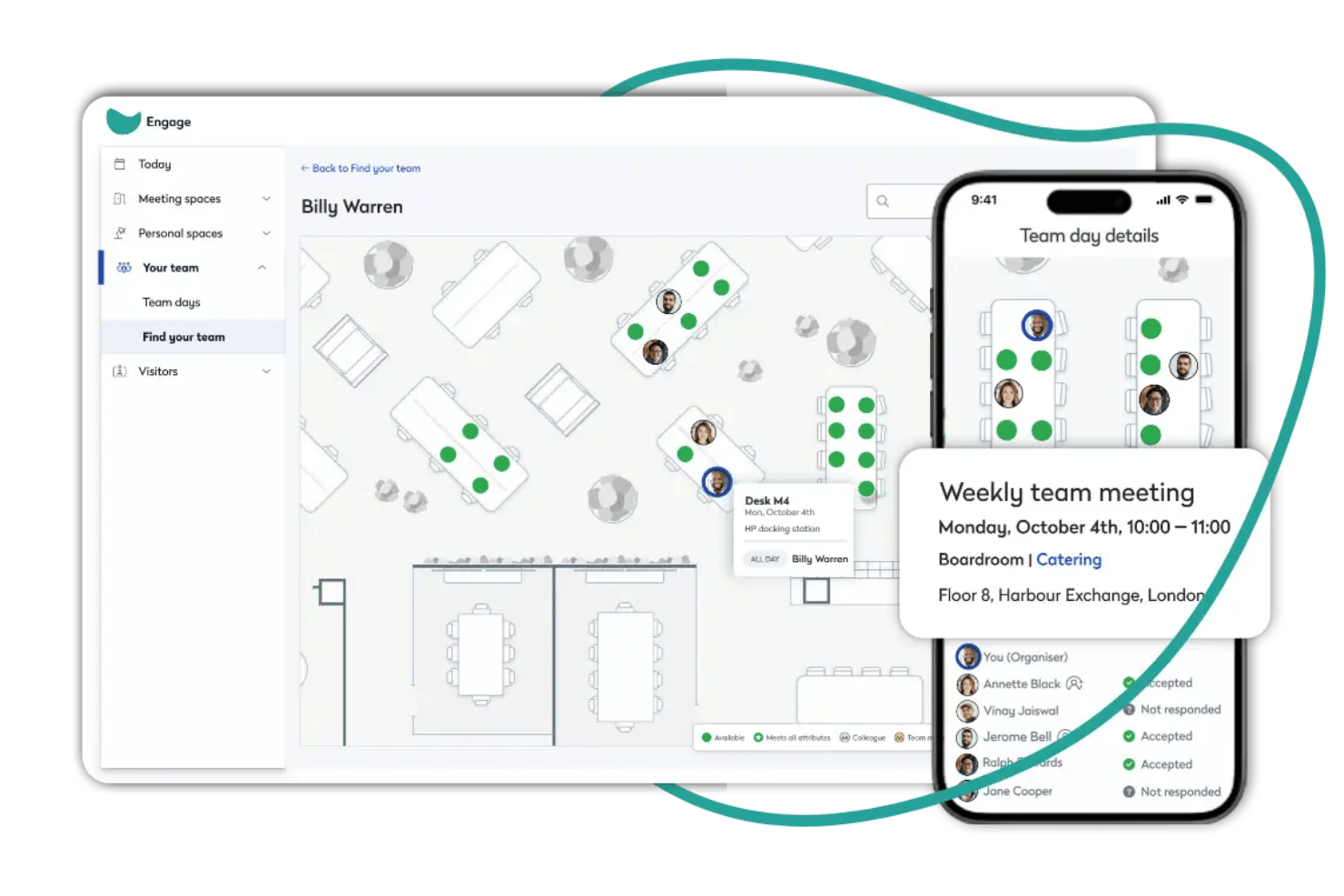
Eptura Workplace is an enterprise hot desk booking platform designed to manage desk reservations, interactive floor plans, policy controls, occupancy analytics, and large-scale workplace integrations across multiple locations.
Who Is Eptura Workplace Best For?
Eptura Workplace is a solid choice for enterprise facilities, HR, and real estate teams managing flexible workspaces across multiple locations.
Why I Picked Eptura Workplace
I picked Eptura Workplace because it lets me configure interactive floor plans, manage complex booking rules for multiple locations, and access deep utilization analytics for large organizations. It’s ideal for enterprise workplace management.
Eptura Workplace Key Features
- Neighborhood zoning: Assign specific desks to departments or teams using customizable workspace neighborhoods.
- Advanced access permissions: Set granular user roles and access levels for administrators, managers, and employees.
- Mobile desk check-in: Allow employees to check in to their reserved desk on arrival using the mobile app.
- Visitor management integration: Register and track workplace visitors directly within the same platform as desk bookings.
Eptura Workplace Integrations
Eptura Workplace offers native integrations with Microsoft 365, Google Workspace, Slack, Microsoft Teams, Okta, Azure Active Directory, and Workday. An API is available for custom integrations.
Pros and Cons
Pros:
- Handles multi-site enterprise deployments smoothly
- Supports advanced booking policy configuration
- Interactive floor plans update in real time
Cons:
- Custom reporting setup can be complex
- Desk sensors require separate system setup
Annen programvare for bestilling av fleksible arbeidsplasser for store virksomheter
Her er noen flere alternativer for programvare for bestilling av fleksible arbeidsplasser for store virksomheter som ikke kom med på kortlisten min, men som likevel er verdt å se nærmere på:
- Dibsido
For real-time desk availability updates
- Envoy
For neighbourhood-based seating assignments
- Smartway2
For team neighborhood booking
- Eptura
For automating workspace check-ins
- GoBright
For occupancy tracking with hardware
- Mapiq
For AI-powered workspace planning
- Zoom Workspace Reservation
For integrating with Zoom environments
- Skedda
For rules-based booking controls
- Archie
For coworking space management
- OfficeSpace
For custom space utilization analytics


How I Evaluate Enterprise Hot Desk Booking Software
I split evaluation into two layers: the booking and policy basics every tool must cover, and differentiators like occupancy analytics and IoT sensor support that matter at enterprise scale.
Core Functionality (Table Stakes for This List)
When I'm selecting tools for my list, I rank each one on a scale from 0 (does not offer the functionality) to 5 (excels in this area) for each core functionality listed below. Then, I calculate the tool's total score into a percentage. Each tool needs to achieve a minimum total score of 65% to be considered for inclusion.
- Desk Reservation System: I look for self-service booking where employees can search, reserve, modify, and cancel desks on their own—including recurring reservations, permanent desk assignments, desk hoteling, and check-in options.
- Interactive Floor Plans: Visual maps that show real-time availability and let people click to book matter a lot, especially for offices with multiple floors and zones.
- Booking Policies & Permissions: I evaluate how well admins can define rules like booking windows, desk neighborhoods, role-based access, and approval workflows across locations.
- Occupancy Analytics: Dashboards that track desk utilization, attendance trends, and peak usage help facilities teams make informed decisions about space planning.
- Enterprise Integrations: Connects with calendars, SSO providers, HRIS platforms, and collaboration tools to streamline workplace management and user provisioning.
- Multi-Location & Scalability: Tools should support per-site configuration across multiple offices and regions, with enterprise-grade SLAs and the ability to handle large employee populations.
Once I have a list of tools that meet the criteria, I consider what sets each platform apart.
Differentiating Factors (What Sets Vendors Apart)
Here's how I compare and contrast different vendors:
Standout Features
Team coordination features are a key differentiator. I also look for room scheduling, meeting room booking, and desk hoteling capabilities that help employees plan office days while keeping teams together. IoT sensor integration matters too, since it validates actual occupancy against bookings and auto-releases no-shows. AI-powered desk recommendations round things out by suggesting spots based on team schedules and past preferences, reducing friction across large campuses.
Beyond Features
Enterprise security is something I always evaluate—SOC 2 Type II certification and SSO/SAML support through providers like Okta or Azure AD are table stakes when you're syncing employee directories across locations. Implementation support also matters more than most buyers expect. Rolling out a booking platform to thousands of employees requires floor plan digitization, admin training, and change management resources to drive adoption.
Slik velger du programvare for bestilling av fleksible arbeidsplasser for store virksomheter
Det er lett å gå seg vill i lange funksjonslister og kompliserte prisstrukturer. For å hjelpe deg med å holde fokus mens du arbeider deg gjennom den unike programvareutvelgelsen din, får du her en sjekkliste over faktorer du bør ha i tankene:
| Faktor | Hva bør vurderes |
|---|---|
| Skalerbarhet | Støtter plattformen det forventede maksimale antallet brukere og flere lokasjoner? Spør leverandørene om dokumenterte kunder med tilsvarende antall ansatte og kontorstruktur. |
| Integrasjoner | Kan programvaren kobles til HRIS, SSO, kalendere og samarbeidsverktøyene deres? Vurder hvordan manglende integrasjoner kan påvirke utrullingen på tvers av avdelinger. |
| Tilpasningsmuligheter | Kan dere angi bestillingsregler, brukerroller og plantegninger slik at de samsvarer med organisasjonens unike regler? Vurder om sonedeling og administratorkontroller faktisk er fleksible. |
| Brukervennlighet | Hvor raskt kan ansatte reservere pulter eller finne kolleger? Test brukerflyter på mobil og datamaskin, og få tilbakemeldinger fra pilotbrukere i ulike roller. |
| Implementering og opplæring | Hvor mye interne ressurser vil kreves til oppsett, digitalisering av plantegninger og opplæring? Leverandørene bør tilby omfattende støtte ved oppstart, utover grunnleggende veiledninger. |
| Kostnad | Tar prismodellene høyde for sesongmessige svingninger i antall ansatte, deltidsansatte eller ubrukte pulter? Sørg for at dere forstår alle kostnader, inkludert tillegg for analyser eller ekstra lokasjoner. |
| Sikkerhetstiltak | Hvilke sertifiseringer og kontroller har plattformen for identitetsstyring, datalagring og personvern? Bekreft SOC 2, ISO-standarder og SSO-funksjoner. |
| Tilgjengelig kundestøtte | Hva slags kundeservice er tilgjengelig i den lokale arbeidstiden deres? Spør om regional kundestøtte og gjennomsnittlige svartider for henvendelser fra større virksomheter. |
Hva er programvare for booking av fleksible arbeidsplasser for større virksomheter?
Programvare for booking av fleksible arbeidsplasser for større virksomheter er en digital plattform som lar ansatte reservere pulter i delte kontorlokaler, administrere hybride arbeidsplaner og støtte store organisasjoner med flere lokasjoner. Disse systemene hjelper drifts-, HR- og arbeidsplassansvarlige med å koordinere fleksible sitteplasser, håndheve bestillingsregler og følge med på beleggsdata for å optimalisere arbeidsplassstrategi og kostnadsstyring.
Funksjoner
Når dere velger programvare for booking av fleksible arbeidsplasser for større virksomheter, bør dere se etter følgende viktige funksjoner:
- System for pultereservasjon: Lar ansatte søke etter, bestille og avbestille arbeidsplasser gjennom selvbetjeningsverktøy, med støtte for gjentakende reservasjoner, deling av pulter, pulthotell og innsjekking.
- Interaktive plantegninger: Viser tilgjengelige pulter i sanntid med klikkbare kontorkart, slik at brukerne visuelt kan velge og reservere pulter i bestemte etasjer eller soner.
- Bestillingsregler og tillatelser: Gjør det mulig for administratorer å håndheve regler som bestillingsvinduer, kvoter, soner og rollebasert tilgang i tråd med virksomhetens og HR-avdelingens krav.
- Beleggsanalyse: Følger med på utnyttelse, oppmøte og andel uteblivelser ved hjelp av oversikter og rapporter, slik at arbeidsplassansvarlige får data til arealplanlegging og strategier for hybrid arbeid.
- Integrasjoner for større virksomheter: Kobles til kalendere, SSO-plattformer, HRIS-systemer og samarbeidsverktøy, slik at pultebooking passer inn i eksisterende arbeidsflyter og IT-infrastruktur.
- Mobil tilgang på farten: Opprinnelige mobilapper for iOS og Android lar brukerne reservere, sjekke inn eller frigi pulter hvor som helst.
- Administrasjon av flere lokasjoner: Støtter konfigurering og administrasjon av flere kontorer, avdelinger eller regioner fra én plattform, noe som gjør løsningen skalerbar for globale organisasjoner.
- Verktøy for teamkoordinering: Gjør det mulig for ansatte å se når kolleger er på kontoret og bestille pulter sammen, noe som støtter samarbeid og planlagte arbeidsdager på kontoret.
- Veifinning og navigasjon: Kan hjelpe brukerne med å finne reserverte pulter, møterom eller fasiliteter i nærheten ved hjelp av interaktive arbeidsplasskart.
- Booking av besøkende og møterom: Administrasjon av besøkende, booking av møterom og romplanlegging finnes ofte sammen med pultebooking, slik at organisasjoner kan administrere arbeidsplassressurser fra én plattform.
Fordeler
Implementering av programvare for booking av fleksible arbeidsplasser for større virksomheter gir flere fordeler for teamet og virksomheten. Her er noen av fordelene dere kan se frem til:
- Optimalisert arealutnyttelse: Sanntidsanalyse og interaktiv booking bidrar til å maksimere bruken av arbeidsplassen og redusere unødvendige eiendomskostnader.
- Støtte for hybrid arbeid: Systemer for pultereservasjon gjør det enkelt å støtte hybride arbeidsmodeller, koordinere kontordager og administrere pulthotell på tvers av distribuerte team.
- Forbedret medarbeideropplevelse: Selvbetjent booking, mobiltilgang og veivisningsverktøy gjør det enklere for medarbeidere å reservere pulter, finne frem på kontoret og administrere bookinger hvor som helst fra, noe som skaper en mer praktisk bookingopplevelse.
- Bedre oversikt over arbeidsplassen: Kapasitetsmåling og dashbord for utnyttelse gir arbeidsplassteam nyttig innsikt for arealplanlegging og kapasitetsbeslutninger.
- Bedre datasikkerhet: Plattformar i bedriftsklasse tilbyr robust samsvar med regelverk, støtte for SSO og alternativer for datalagring i bestemte regioner for å beskytte sensitiv medarbeiderinformasjon.
- Forenklet koordinering: Verktøy for teamkoordinering effektiviserer samarbeidet ved å vise hvem som er på kontoret, og gjøre det mulig for brukere å booke pulter sammen.
- Skalerbar administrasjon: Støtte for flere lokasjoner og sentraliserte administratorkontroller gjør det enkelt å administrere sitteplasser på tvers av globale kontornettverk etter hvert som organisasjonen vokser.
Kostnader og priser
Valg av programvare for booking av fleksible kontorplasser for virksomheter krever en forståelse av de ulike prismodellene og abonnementene som er tilgjengelige. Prisene varierer fra gratis alternativer for booking av fleksible kontorplasser til betalte abonnementer som skalerer basert på funksjoner, teamstørrelse, tillegg og mer. Tabellen nedenfor oppsummerer vanlige abonnementer, gjennomsnittsprisene deres og typiske funksjoner som er inkludert i programvareløsninger for booking av fleksible kontorplasser for virksomheter:
Sammenligningstabell for programvare for booking av fleksible kontorplasser for virksomheter
| Abonnementstype | Gjennomsnittspris | Vanlige funksjoner |
|---|---|---|
| Gratisabonnement | $0 | Grunnleggende booking av pulter, begrenset antall brukere, enkle plantegninger og kundestøtte via e-post. |
| Personlig abonnement | $5-$10/bruker/måned | Selvbetjente reservasjoner, bookingregler, kalenderintegrasjon, grunnleggende analyse og støtte for én lokasjon. |
| Forretningsabonnement | $15-$25/bruker/måned | Administrasjon av flere lokasjoner, interaktive kart, verktøy for teamkoordinering, mobilapp, SSO-integrasjon og avansert rapportering. |
| Virksomhetsabonnement | $30-$50/bruker/måned | Tilpassede SLA-er, HRIS-integrasjon, støtte for IoT-sensorer, dedikert onboarding, ubegrenset antall lokasjoner og full API-tilgang. |
Vanlige spørsmål om programvare for reservasjon av fleksible arbeidsplasser for virksomheter
Her finner du svar på noen vanlige spørsmål om programvare for reservasjon av fleksible arbeidsplasser for virksomheter:
Hvordan håndterer programvare for reservasjon av fleksible arbeidsplasser manglende oppmøte og ubrukte reservasjoner?
De fleste plattformer kan automatisk frigjøre ubrukte arbeidsplasser hvis ansatte ikke sjekker inn, ofte ved hjelp av QR-koder, sensorer eller integrasjoner med adgangskortsystemer. Dette sikrer at arbeidsplasser er tilgjengelige for andre, og hjelper driftsansvarlige med å følge med på faktisk bruk.
Kan programvare for reservasjon av fleksible arbeidsplasser for virksomheter integreres med bedriftens HR-, kalender- eller SSO-systemer?
Ja, mange løsninger tilbyr integrasjoner med HRIS-systemer, Outlook- eller Google-kalendere og SSO-leverandører som Okta eller Azure AD. Dette bidrar til å automatisere brukeradministrasjonen, effektivisere reservasjonsprosessen og støtte sikker tilgang for ansatte.
Hvordan støtter disse verktøyene organisasjoner med flere kontorsteder?
Verktøy for virksomheter gjør det vanligvis mulig å administrere flere lokasjoner sentralt, slik at du kan konfigurere unike reservasjonsregler, plantegninger og rapporter for hvert kontor. Mange plattformer støtter også driftsadministrasjon ved å gi arbeidsplassteam sentral oversikt over arbeidsplasser, møterom og kontorarealer på tvers av flere lokasjoner.
Hvilke sikkerhets- og samsvarsstandarder bør jeg forvente?
Mange plattformer for virksomheter støtter standarder som SOC 2 Type II, ISO 27001, GDPR og SSO/SAML-autentisering. De nøyaktige sertifiseringene varierer fra leverandør til leverandør, så det er lurt å bekrefte at de oppfyller organisasjonens krav til sikkerhet og samsvar før du tar en beslutning.
Er det mulig å administrere både reservasjoner av arbeidsplasser og møterom i ett system?
Ja. Mange plattformer for arbeidsplasser i virksomheter kombinerer reservasjon av arbeidsplasser, romplanlegging, møteromsreservasjoner, besøksadministrasjon og andre arbeidsplassressurser i ett system. Dette reduserer behovet for flere verktøy for arbeidsplassadministrasjon og gir de ansatte ett sted å administrere kontorreservasjoner.
Hvor lang tid tar implementeringen vanligvis?
Tidsplanen for implementeringen varierer avhengig av organisasjonens størrelse, antall kontorlokasjoner og eventuelle integrasjoner du trenger. Mange leverandører tilbyr tjenester for oppstart, oppsett av plantegninger og opplæring for å hjelpe team med å komme raskere i gang.