Los 10 mejores programas de gestión de activos digitales que probé en 2026

10 Selección del mejor software de gestión de activos digitales


El software de gestión de activos digitales (DAM) ayuda a los equipos a organizar, almacenar, recuperar y distribuir contenido digital, como imágenes, vídeos, documentos y activos de marca. Esto te proporciona un centro centralizado para almacenar y recuperar archivos fácilmente. Sin un sistema estructurado, tendrás que buscar entre carpetas, lidiar con problemas de control de versiones o perder tiempo recreando archivos que faltan.
Sin embargo, es difícil elegir uno entre las decenas de herramientas disponibles en el mercado. Por eso, he dedicado horas a probar y evaluar diferentes plataformas DAM para comprobar cómo funcionan realmente en entornos de proyectos del mundo real.
Esta lista incluye herramientas de gestión de activos digitales que, en mi opinión, cuentan con las funciones adecuadas y la capacidad de crecer de forma eficaz en diferentes sectores.
Por qué confiar en nuestras recomendaciones de software
Nuestro equipo lleva probando y evaluando software desde 2012. Como gestores de proyectos, sabemos lo difícil —y lo importante— que es elegir el software adecuado.
Para esta guía, evaluamos las herramientas mediante pruebas prácticas e investigación independiente, puntuando las herramientas según nuestros criterios de selección. También nos basamos en la experiencia de líderes de opinión del sector y de profesionales en activo de la gestión de proyectos.
Nuestras reseñas reflejan nuestro criterio editorial humano, no un discurso de ventas.
Revisores expertos:
Tabla comparativa de software de gestión de activos digitales
Esta tabla comparativa resume los detalles de precios de mis principales selecciones de software de gestión de activos digitales:
| Tool | Best For | Trial Info | Price | ||
|---|---|---|---|---|---|
| 1 | Ideal para organización de activos con IA | Plan gratuito disponible | Desde $10/mes (facturación anual) | Website | |
| 2 | La mejor para búsquedas y colaboración impulsadas por IA | Demostración gratuita | Precios personalizados | Website | |
| 3 | Ideal para transformaciones dinámicas de medios | Plan gratuito disponible | Desde $89/mes (facturado anualmente para 3 usuarios) | Website | |
| 4 | Ideal para coherencia de marca empresarial | Prueba gratuita | Precio a consultar | Website | |
| 5 | Ideal para DAM potenciado por IA con entrega de medios | Plan gratuito para siempre | Desde $9/mes | Website | |
| 6 | Ideal para la colaboración en equipo basada en roles | Plan gratuito disponible | Desde $39/mes (facturado anualmente) | Website | |
| 7 | Ideal para medianas empresas que desean almacenamiento ilimitado | Prueba gratuita de 7 días | Desde $100/mes/usuario | Website | |
| 8 | Ideal por estar certificado por MACH | Prueba gratuita de 14 días | Precios personalizados | Website | |
| 9 | Mejor para DAM y PIM integrados | Prueba gratuita de 14 días | Precio bajo consulta | Website | |
| 10 | Mejor para personalización de marca | 30 días de prueba gratuita | Desde $29/ mes | Website |


Reseñas del mejor software de gestión de activos digitales
A continuación se ofrecen descripciones detalladas que indican para qué es más adecuado cada software, por qué los he seleccionado para formar parte de esta lista y cuáles son sus funciones más destacadas. Esta lista incluye herramientas de gestión de activos digitales que

Air
Ideal para organización de activos con IA
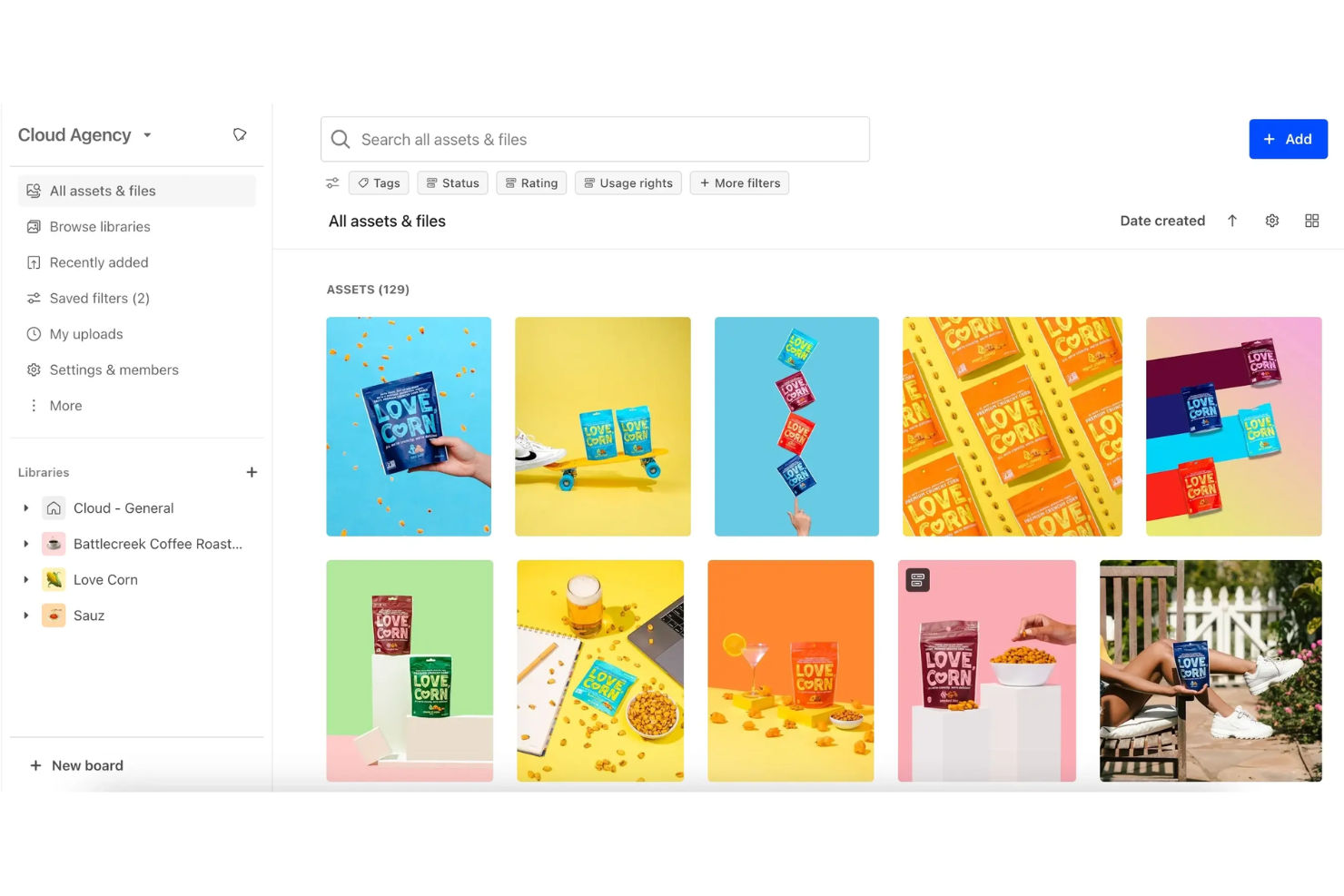
Air es un espacio de trabajo visual y una plataforma de gestión de activos digitales diseñada para equipos creativos. Pensada para equipos en diversos sectores, Air proporciona un entorno visual que se integra perfectamente con tus procesos creativos. Al centrarse en la centralización y en herramientas impulsadas por inteligencia artificial, ayuda a superar obstáculos como activos desorganizados y flujos de trabajo ineficientes, asegurando que tu equipo opere con claridad y precisión.
Por qué elegí Air
Elegí Air porque sus capacidades impulsadas por inteligencia artificial son especialmente adecuadas para la gestión de activos digitales. Las funciones de reconocimiento facial y etiquetado inteligente de la plataforma aseguran que tus archivos sean fácilmente localizables, ahorrando tiempo valioso a tu equipo. Además, su funcionalidad de búsqueda conversacional permite encontrar archivos usando consultas en lenguaje natural, lo que simplifica el proceso de recuperación y mejora la productividad. Estas funciones abordan directamente los desafíos comunes a los que se enfrentan los equipos al organizar y acceder a contenidos digitales.
Características clave de Air
Además de las funciones mencionadas, también encontré particularmente destacables las siguientes:
- Espacio de trabajo visual: Air ofrece un centro centralizado donde tu equipo puede almacenar, organizar y colaborar en activos digitales en un entorno visual e intuitivo.
- Anotaciones: Esta función permite a los miembros del equipo dejar comentarios directamente sobre los archivos, agilizando la comunicación y reduciendo los intercambios habituales en los procesos creativos.
- Control de versiones: Air te ayuda a llevar un seguimiento de las diferentes versiones de tus archivos, asegurando que tu equipo siempre tenga acceso a las actualizaciones más recientes sin perder los datos históricos.
- Seguridad de nivel empresarial: Con robustas medidas de seguridad, Air garantiza que tus activos digitales están protegidos frente a accesos no autorizados y brechas de datos.
Integraciones de Air
Las integraciones incluyen Slack, Adobe Creative Cloud, Google Workspace, Microsoft Office 365, Dropbox, Box, Zapier y más.
Pros and Cons
Pros:
- Búsqueda inteligente para localizar activos rápidamente
- Buenas funciones de retroalimentación y aprobación de archivos
- Interfaz fácil de usar
Cons:
- Carece de una aplicación móvil dedicada
- No es ideal para archivos no visuales
New Product Updates from Air

Air Showcases Introduces Custom Branding, Content Blocks, and Sub-Pages
Air Showcases now support custom branding, content blocks, sub-pages, and saved default layout settings, plus more control over removing items and branding options for Enterprise. For more information, visit Air's official site.
La mejor para búsquedas y colaboración impulsadas por IA

MediaValet es una solución de gestión de activos digitales que ayuda a las organizaciones a gestionar, encontrar y compartir fácilmente sus activos digitales de alto valor (fuente, en proceso y finales). Ayuda a los equipos a mejorar su productividad, aumentar el retorno de inversión de los activos y generar crecimiento en los ingresos.
Recientemente hablé con Hasan Hanif, fundador y CEO de Colour Vistas, sobre cómo su equipo utiliza MediaValet en sus proyectos que implican la creación de recursos para la impresión por sublimación. 'El etiquetado y las capacidades de búsqueda, en particular, fueron muy útiles porque podíamos obtener lo que queríamos en poco tiempo', comenta. También encontró útiles las capacidades de control de versiones: 'Otra cosa que me gustó fue el buen control de versiones, ya que nadie estaba trabajando con un archivo desactualizado', explica.
¿Para quién es mejor MediaValet?
Equipos de marketing y creativos en organizaciones medianas y grandes que necesitan búsqueda asistida por IA y colaboración estructurada en grandes bibliotecas de activos digitales, a menudo en entornos con mucho contenido.
¿Por qué elegí MediaValet?
Esta herramienta tiene una enorme presencia global, estando disponible en 140 países. Además, las funciones avanzadas de búsqueda y etiquetado permiten a los usuarios localizar lo que necesitan en segundos. MediaValet también facilita la creación colaborativa de contenido con IA mediante el etiquetado y la indexación automáticos. Su IA puede reconocer y etiquetar palabras habladas, temas, ubicaciones, personas, objetos y generar transcripciones y subtítulos en más de 60 idiomas, ayudando a los equipos a organizarse y colaborar eficientemente en el contenido.
Con usuarios y administradores ilimitados incluidos en las suscripciones empresariales, MediaValet permite a los equipos de todo el mundo escalar de forma rápida y rentable. Además, la capacitación y el soporte ilimitados aseguran que todos los usuarios se sientan seguros usando el sistema y puedan maximizar su valor.
Características clave de MediaValet
Además de sus capacidades de IA, MediaValet ofrece varias otras funciones para la gestión de activos digitales.
- Permisos de usuario y controles de acceso: Puedes gestionar quién puede ver, editar o compartir activos dentro de tu organización para mantener la integridad y seguridad de los datos.
- Control de versiones: Esto te permite llevar un registro de las revisiones de los activos y asegurarte de que tu equipo siempre tenga acceso a la versión más reciente, lo que minimiza la confusión y los errores.
- Campos de metadatos personalizables: Puedes adaptar los campos de metadatos para ajustarlos a las necesidades específicas de tu organización, lo que mejora la organización y recuperación de los activos.
- Accesibilidad basada en la nube: Puedes acceder a tus activos digitales desde cualquier lugar, lo que proporciona más flexibilidad y comodidad para equipos que trabajan de forma remota o en varias ubicaciones.
Integraciones de MediaValet
Las integraciones incluyen Wrike, Workfront, Slack, Okta, Active Directory, WordPress, Drupal 8, Adobe Creative Cloud, SharePoint, Office 365 y Hootsuite. También puedes acceder a una API abierta para crear integraciones personalizadas con tu stack tecnológico actual.
Pros and Cons
Pros:
- El acceso móvil permite la gestión de activos en cualquier lugar
- Las completas capacidades de búsqueda permiten encontrar activos rápidamente
- Las funciones de seguridad avanzadas mantienen los activos protegidos
Cons:
- Opciones limitadas para personalizar la interfaz de usuario
- Posible curva de aprendizaje para nuevos usuarios

Ideal para transformaciones dinámicas de medios

Cloudinary es una plataforma de gestión de activos digitales (DAM) que te ayuda a gestionar, optimizar y entregar imágenes y videos a través de diferentes canales. Ofrece herramientas para la carga, almacenamiento y personalización de medios sobre la marcha, de modo que tus activos siempre están optimizados para cada dispositivo y plataforma. Su arquitectura basada en la nube la convierte en una excelente opción para equipos que necesitan gestionar grandes volúmenes de contenido visual de manera eficiente.
¿Para quién es mejor Cloudinary?
Equipos de ingeniería y producto digital en empresas medianas y grandes que necesitan infraestructura para la transformación dinámica y entrega de medios.
Por qué elegí Cloudinary
Elegí Cloudinary porque automatiza gran parte del trabajo manual involucrado en la preparación y entrega de activos digitales. Con su motor de transformación dinámica de medios, puedes redimensionar, recortar y formatear instantáneamente imágenes o videos para diferentes tamaños de pantalla y canales, eliminando la necesidad de múltiples versiones de archivos. También me gusta cómo las capacidades de inteligencia artificial de la plataforma aumentan la productividad, etiquetando automáticamente los activos y sugiriendo metadatos para que puedas encontrar lo que necesitas rápidamente.
Para los equipos creativos, las herramientas de automatización de flujo de trabajo con bajo código facilitan la integración de la entrega de medios en los procesos existentes sin grandes esfuerzos de desarrollo.
Características clave de Cloudinary
Cloudinary también ofrece varias otras características que pueden ayudar a mejorar tus procesos de gestión de activos digitales.
- Etiquetado con IA: Esta función puede etiquetar y categorizar automáticamente tus activos multimedia, lo que facilita que tu equipo encuentre archivos específicos rápidamente.
- Control de versiones: Puedes hacer seguimiento de los cambios con el versionado automático y volver a versiones anteriores de tus activos sin complicaciones.
- Optimización de medios: Esto te permite ajustar y optimizar automáticamente imágenes y videos para diferentes dispositivos y anchos de banda, manteniendo el rendimiento óptimo y una excelente experiencia de usuario.
- Herramientas de colaboración: Puedes facilitar el trabajo en equipo con espacios de trabajo compartidos y edición en tiempo real, lo que permite a tu equipo colaborar eficazmente en proyectos de medios.
Integraciones de Cloudinary
Las integraciones incluyen Adobe Creative Cloud, Figma, Salesforce Commerce Cloud, SAP Commerce, Magento (Adobe Commerce), WordPress, commercetools, Zapier y Contentful.
Pros and Cons
Pros:
- Soporta transformaciones dinámicas de medios
- Brinda gestión de medios impulsada por IA
- Ofrece integraciones extensas con terceros
Cons:
- El precio de inicio es relativamente alto
- Requiere configuración para lograr automatización completa
New Product Updates from Cloudinary

Cloudinary Integrates with Klaviyo for Personalized Email Visuals
Cloudinary integrates with Klaviyo to generate personalized images and GIFs from customer and event data. This reduces manual design work for email campaigns. For more information, visit Cloudinary’s official site.
 .
.
Bynder
Ideal para coherencia de marca empresarial

Bynder es una plataforma de gestión de activos digitales que te permite almacenar tus archivos creativos y prevenir el caos de contenido.
Hablé con Michael Pedrotti, cofundador de GhostCap, sobre el uso que su equipo hace de Bynder en proyectos que involucran la construcción y el mantenimiento de servidores de juegos. 'Bynder nos sacó de un completo desorden de archivos... Teníamos 47 variaciones de logotipos y estaban por todos lados', comenta, 'Los miembros del equipo pasaban la mitad de su tiempo de trabajo en carpetas, y lograr que una gráfica básica fuera aprobada tomaba cuatro días. Ahora, los diagramas de servidores se etiquetan automáticamente en Bynder y las revisiones ocurren el mismo día.'
¿Para quién es mejor Bynder?
Equipos empresariales de marca, marketing y operaciones creativas que necesitan una gestión de activos estandarizada y coherencia de marca en diferentes regiones o unidades de negocio.
Por qué elegí Bynder
Ofrece una gestión de activos digitales en la nube a través de una interfaz elegante y limpia. Bynder te ayuda a crear, encontrar y usar activos digitales con colaboración optimizada y un enfoque en la coherencia de marca en todos los mercados y canales. Además, su función Digital Asset Transformation (DAT) conecta tu pila tecnológica actual con el sistema DAM para que puedas modificar activos con funciones como cambio de tamaño, enfoque, recorte y eliminación de fondos.
Al igual que DAT, muchos módulos adicionales complementan esta plataforma de gestión de activos. Estos incluyen un módulo de directrices de marca, flujo de trabajo creativo, análisis, flujo de trabajo de contenido y un estudio de edición de video.
Características clave de Bynder
Existen varias otras funciones que hacen de Bynder una opción destacada para la gestión de activos digitales.
- Bynder AI: Las funciones de IA de Bynder ayudan a mejorar el descubrimiento y la gestión de activos, facilitando que tu equipo localice y utilice rápidamente los recursos adecuados.
- Flujo de trabajo de contenido: Esta función facilita la creación de contenido editorial a gran escala utilizando texto estructurado y activos aprobados, lo que puede ayudar a agilizar el proceso de producción de contenido del equipo.
- Plantillas personalizadas: Permite a personas sin experiencia en diseño personalizar rápidamente plantillas para varios formatos de medios, ampliando las capacidades creativas del equipo.
- Análisis: Bynder ofrece información sobre el rendimiento de los recursos y métricas de uso que ayudan a tomar decisiones basadas en datos para optimizar tu estrategia de contenido.
Integraciones de Bynder
Las integraciones incluyen Slack, Adobe Creative Cloud, Adobe Experience Manager, Sitecore, Sitefinity, BloomReach, Drupal 7, Drupal 8, WordPress, Okta, Google, Hootsuite, Microsoft Active Directory, Collect.io, Shutterstock, SDL Tridion, Templafy y TYPO3.
Pros and Cons
Pros:
- Las funciones de IA mejoran el descubrimiento de activos
- Búsqueda eficiente permite acceso rápido a recursos
- Aprobaciones de activos integradas
Cons:
- Opciones de personalización limitadas para ciertas funcionalidades
- Las funciones de nivel empresarial pueden ser abrumadoras para equipos pequeños

ImageKit
Ideal para DAM potenciado por IA con entrega de medios
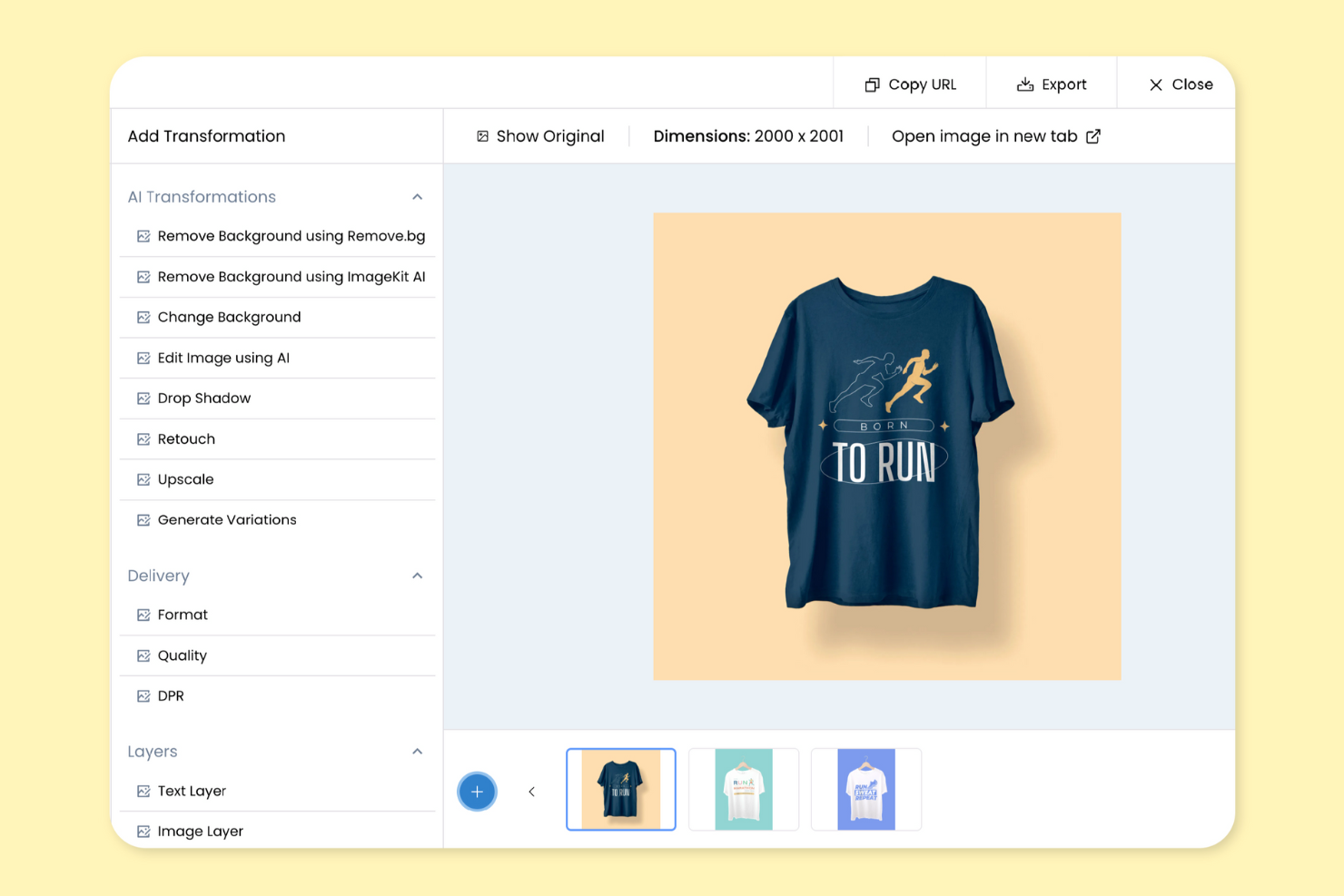
ImageKit es una plataforma de gestión de activos digitales diseñada para equipos que gestionan grandes volúmenes de contenido visual, donde el rendimiento y la entrega son fundamentales. Combina la organización de activos, etiquetado asistido por IA y optimización de medios en tiempo real en un solo sistema. Los equipos de comercio electrónico, medios y viajes lo utilizan para gestionar y distribuir imágenes y videos en canales web y móviles.
¿Para quién es mejor ImageKit?
Equipos de ingeniería, producto y marketing de empresas digitales medianas a grandes que necesitan gestión de activos asistida por IA combinada con entrega optimizada de medios en plataformas web y móviles.
Por qué elegí ImageKit
Elegí ImageKit porque combina la gestión de activos digitales con optimización de medios integrada y entrega global. A diferencia de los DAM tradicionales que solo se centran en el almacenamiento y la organización, ImageKit también gestiona transformaciones de imágenes y videos en tiempo real mediante sus API de Imagen y Video, ayudándote a mantener el rendimiento en el punto de entrega. También me gusta que admite etiquetado asistido por IA y búsqueda visual, lo que facilita mantener bibliotecas fácilmente consultables sin depender completamente de los metadatos manuales. Esto es especialmente útil si gestionas colecciones de activos grandes y que se actualizan con frecuencia.
Características clave de ImageKit
Además de la optimización de imágenes asistida por IA, ImageKit ofrece:
- API de Imagen: Transforma y optimiza imágenes en tiempo real, incluyendo cambio de tamaño, recorte, conversión de formato y compresión para mejorar la carga.
- API de Video: Transcodifica y transmite videos con entrega de bitrate adaptativo para soportar la reproducción web y móvil.
- Etiquetado asistido por IA, extracción de metadatos y búsqueda visual: Genera automáticamente etiquetas estructuradas y metadatos usando IA y localiza imágenes similares para mantener grandes bibliotecas de activos fácilmente consultables.
- Controles de gobernanza y registros de auditoría: Realiza el seguimiento de acciones tanto a nivel de activo como de sistema, a la vez que aplicas reglas como tipos de archivo, convenciones de nombres y metadatos requeridos para mantener la responsabilidad y la coherencia.
Integraciones de ImageKit
Las integraciones incluyen React, Angular, WordPress, Shopify, Adobe Photoshop y Contentful.
Pros and Cons
Pros:
- Capacidades de personalización de medios para la creación dinámica de activos
- Transformaciones confiables que optimizan y comprimen imágenes de forma efectiva
- Procesamiento de medios en tiempo real con opciones extensas de transformación
Cons:
- La disposición y filtrado de la página de analíticas necesita mejoras
- Algunos usuarios informan problemas de resolución en redes sociales

Ideal para la colaboración en equipo basada en roles
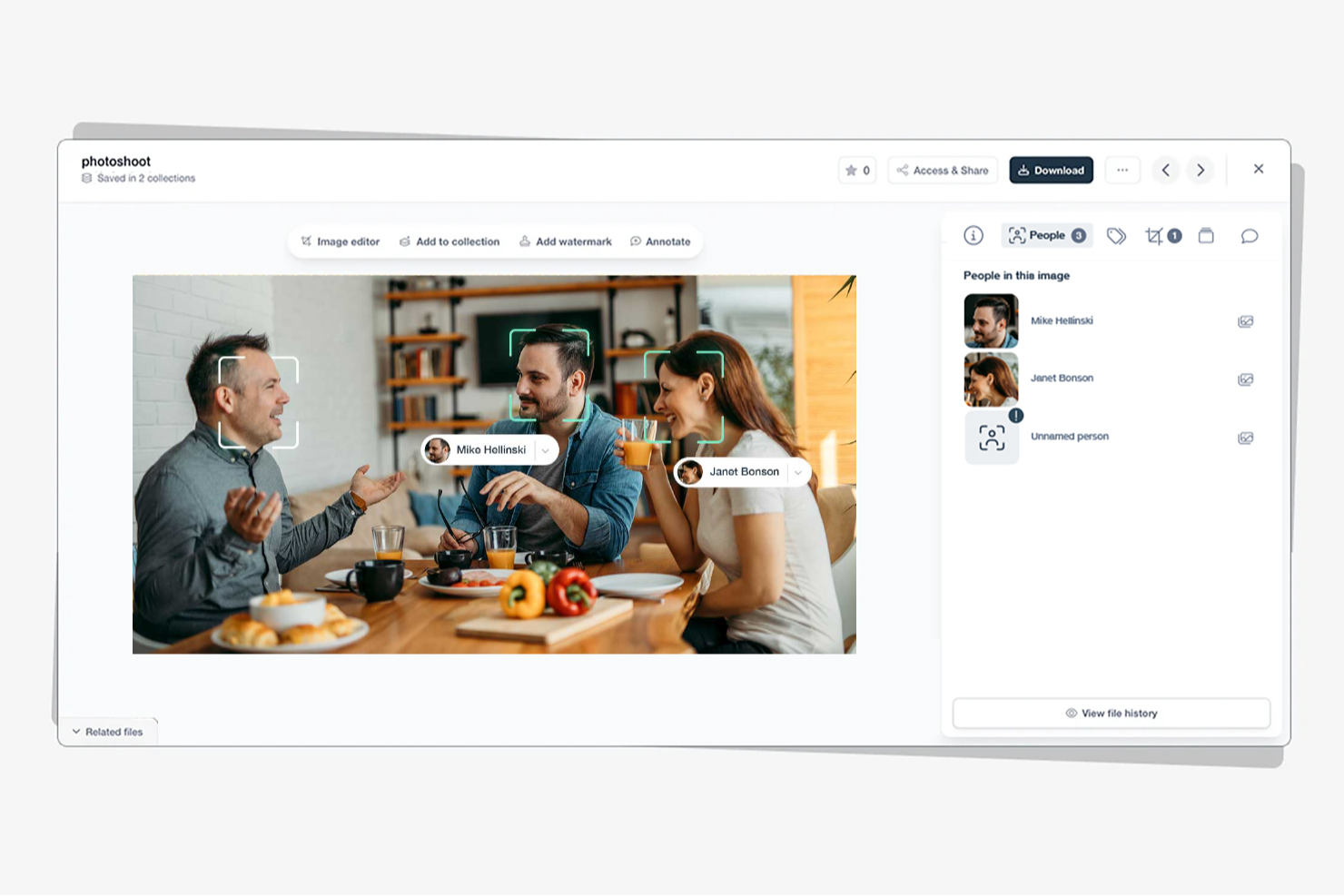
Stockpress es una plataforma de gestión de activos digitales (DAM) diseñada para mejorar la organización, la capacidad de búsqueda, la colaboración y el intercambio de archivos digitales para equipos.
¿Para quién es Stockpress?
Equipos creativos y de marketing en empresas pequeñas y medianas que necesitan acceso estructurado y basado en roles a los recursos de marca y medios compartidos.
Por qué elegí Stockpress
Elegí Stockpress porque está diseñada específicamente para respaldar la colaboración basada en roles en equipos, lo que la convierte en una DAM ideal para organizaciones que necesitan una estructura clara sobre quién puede acceder, editar y gestionar los activos digitales. Su sistema flexible de colecciones permite que los equipos organicen archivos sin duplicidad, mientras asignan roles y permisos para asegurar que cada colaborador tenga el nivel adecuado de acceso. Esto facilita que los gerentes de proyecto, diseñadores, responsables de marketing y socios externos trabajen en conjunto sin comprometer la seguridad ni la claridad del flujo de trabajo.
Características clave de Stockpress
Además, Stockpress ofrece varias otras capacidades que aportan valor en la gestión de activos digitales.
- Etiquetado con IA y personalizado: Ayuda a los equipos a encontrar rápida y precisamente lo que necesitan.
- Metadatos personalizables: Esta función permite añadir campos de metadatos personalizados, lo que facilita que tu equipo clasifique y busque activos según criterios únicos.
- Carga y edición por lote: Puedes optimizar tu flujo de trabajo y ahorrar tiempo cargando varios archivos a la vez y aplicando cambios simultáneamente a varios activos.
- Enlaces de compartición seguros: Puedes compartir activos digitales con socios externos mediante enlaces seguros, lo que brinda tranquilidad al saber que tus datos están protegidos durante la colaboración.
Integraciones de Stockpress
Las integraciones incluyen Webflow, Adobe Illustrator, Adobe InDesign, Adobe Photoshop, Box, Canva, Dropbox, Google Drive, Klaviyo, Mailchimp, Slack y Okta.
Pros and Cons
Pros:
- Permite crear colecciones personalizadas para los activos
- Gestiona grandes volúmenes de activos
- Útiles funciones de etiquetado con IA
Cons:
- Podría ofrecer más integraciones
- El soporte para migración de archivos está limitado al plan empresarial

Pics.io
Ideal para medianas empresas que desean almacenamiento ilimitado
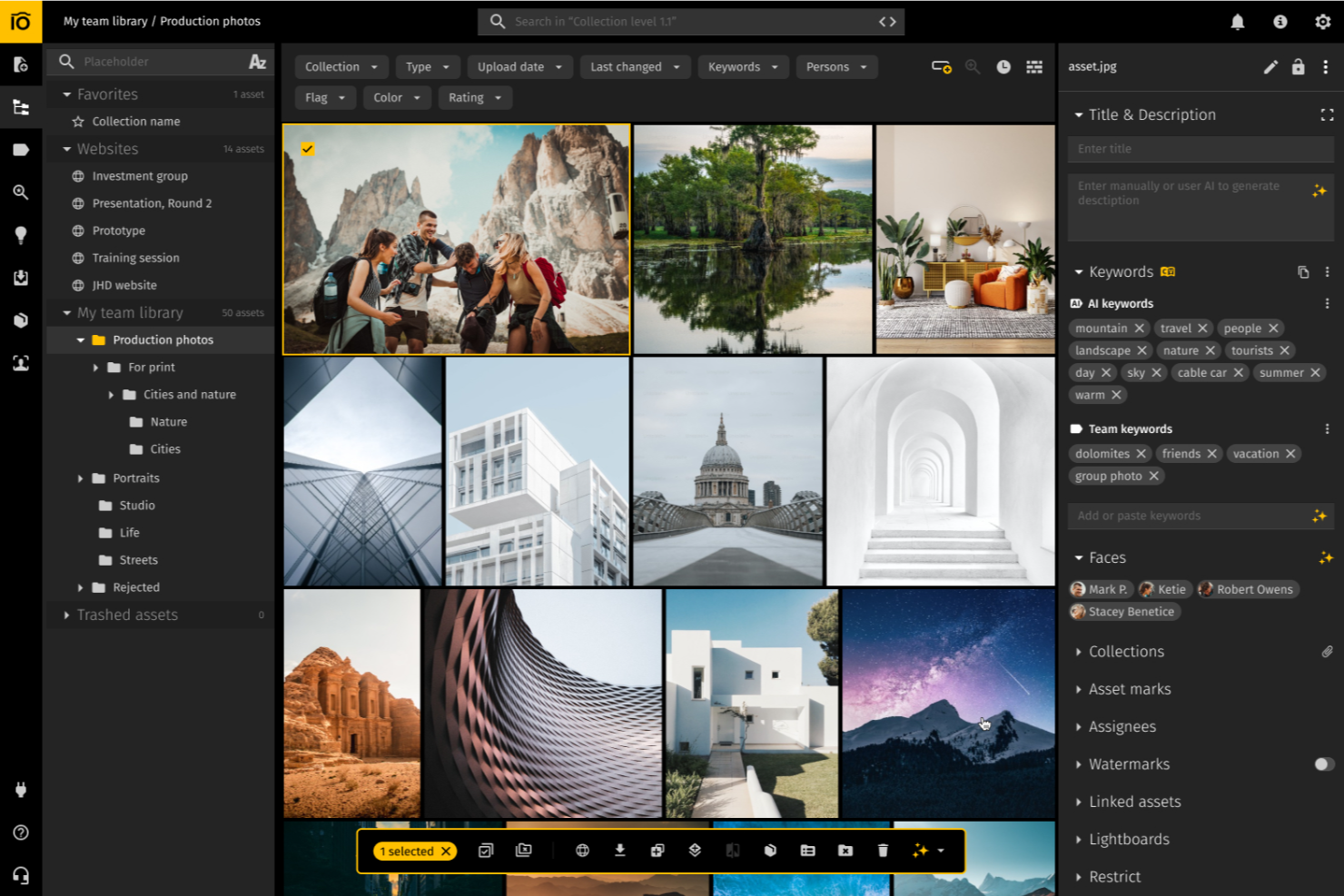
Pics.io es una plataforma de gestión de activos digitales (DAM) diseñada para equipos en crecimiento del segmento medio que necesitan una solución escalable para recopilar, organizar, gestionar y distribuir activos digitales en múltiples formatos. Permite a los usuarios almacenar los activos en una biblioteca centralizada en la nube, donde los usuarios pueden buscar y recuperar archivos fácilmente.
Durante una conversación reciente con Baris Zeven, CEO de Bookyourdata, destacó cómo su equipo utiliza Pics.io para crear eficiencia. 'Las búsquedas específicas de información son posibles gracias a la capacidad de etiquetar los activos con palabras clave particulares, lo que nos ahorra mucho tiempo cuando necesitamos localizar un archivo específico', dice.
También ha incrementado la 'productividad entre equipos, ya que compartir activos digitales comunes se vuelve más sencillo', explica.
¿Para quién es mejor Pics.io?
Equipos de marketing y contenido del segmento medio que buscan una gestión centralizada de activos con almacenamiento escalable y capacidades de colaboración.
Por qué elegí Pics.io
Este software ofrece almacenamiento ilimitado al conectarse directamente a tu propia nube de Google Drive o Amazon S3, por lo que siempre retienes el control total sobre tus activos sin estar atado a un sistema propietario, y evitas pagar por espacio que ya posees. La herramienta soporta una amplia variedad de formatos de archivos, incluyendo imágenes, videos, archivos de audio, documentos e incluso modelos 3D. También puedes crear colecciones para agrupar activos digitales relacionados, usar metadatos para facilitar la búsqueda y organización, y comparar diferentes versiones de archivos.
La función de control de versiones de la herramienta te permite seguir los cambios y volver a versiones anteriores de los archivos. Esto significa que tus enlaces existentes nunca se rompen y siempre muestran la versión más reciente aprobada del archivo. Las funciones de colaboración como comentarios, etiquetado de usuarios y aprobación de activos también están disponibles y facilitan el trabajo en equipo en proyectos digitales. Otras funciones permiten compartir activos con miembros del equipo o partes externas, personalizar la interfaz con tu marca y analizar el uso de los activos con herramientas de informes integradas.
Características clave de Pics.io
Pics.io ofrece una variedad de funciones que pueden ayudarte a gestionar mejor tus activos digitales y flujos de trabajo.
- Acciones por lote: Esta función te permite realizar múltiples acciones sobre los archivos simultáneamente, lo que ahorra tiempo valioso y puede agilizar tu flujo de trabajo.
- Centro de comunicación: Puedes mantener a tu equipo informado con notificaciones sobre cambios a través de correo electrónico, un centro de notificaciones o Slack, para que todos estén al tanto.
- Creación de sitios web: Puedes crear sitios web en línea a partir de tus colecciones usando plantillas personalizables.
- Funcionalidad de búsqueda: Con el potente motor de búsqueda, puedes encontrar fácilmente activos por títulos, palabras clave y metadatos, lo que hace que la recuperación sea rápida y sencilla.
Integraciones de Pics.io
Las integraciones incluyen Google Drive, Dropbox, Amazon S3, Shopify, Slack, Adobe Suite, Figma, Hootsuite, HubSpot, Salesforce, Trello, Zoho CRM, Zapier y otras a través de API.
Pros and Cons
Pros:
- Etiquetado dinámico basado en IA
- Potente función de búsqueda
- La gestión avanzada de metadatos mejora la organización
Cons:
- Los archivos más grandes pueden tardar más en cargarse ocasionalmente
- Algunas funciones de metadatos son complementos de pago
New Product Updates from Pics.io
Pics.io Adds AVIF File Support
Pics.io now supports AVIF files, expanding the image formats you can upload and manage in the platform. This gives teams more flexibility when working with modern image assets. For more information, visit Pics.io’s official site.
 .
.
Ideal por estar certificado por MACH
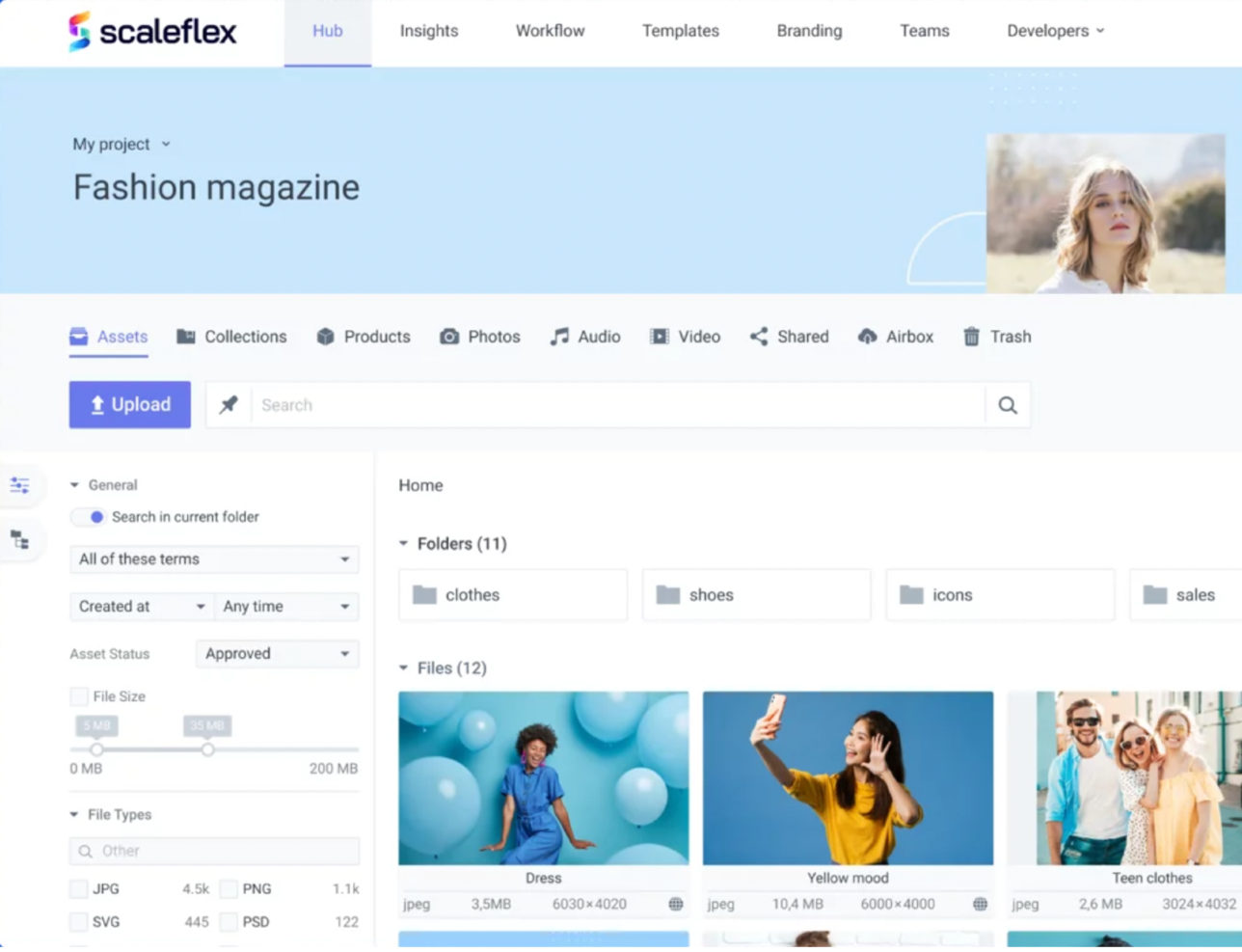
Scaleflex es una plataforma de gestión de activos digitales compatible con el GDPR, independiente del software, que ayuda a los equipos a almacenar, gestionar, optimizar, compartir y acelerar todos los activos digitales y multimedia.
¿Para quién es Scaleflex?
Equipos de tecnología y productos digitales en organizaciones medianas o grandes que requieren una infraestructura alineada con MACH para gestionar y optimizar activos digitales y multimedia.
Por qué elegí Scaleflex
Elegí Scaleflex porque está certificado por MACH y construido sobre una arquitectura moderna alineada con microservicios, API-first, diseño nativo en la nube y sin cabeza para brindar flexibilidad a medida que creces. Sus características incluyen APIs sin cabeza para activos digitales, soporte de widgets y complementos para integrar bibliotecas multimedia, y capacidades de visual-AI como autoetiquetado y transformación de activos. Puedes integrarlo a tu stack existente de modo que el manejo de imágenes y videos se realice mediante APIs y se adapte a tu forma de trabajar.
La interfaz de usuario se ofrece en más de 8 idiomas, lo cual es ideal para equipos globales y remotos. Además, los permisos y roles de usuario personalizados permiten que cada miembro del equipo disfrute de una solución personalizada. Puedes establecer reglas y evitar archivos duplicados en la biblioteca multimedia, así como restaurar versiones anteriores si alguien carga el elemento incorrecto.
Características clave de Scaleflex
Scaleflex también ofrece varias otras características que pueden mejorar la gestión de activos digitales para tu equipo.
- Gestión Visual de Catálogos: Esta función permite ingresar y optimizar grandes volúmenes de activos de manera eficiente y agilizar la organización de tu contenido visual.
- Optimización para Web y Múltiples Dispositivos: Puedes mejorar el rendimiento de los activos en varios dispositivos y canales para asegurar que tus activos luzcan bien en cualquier parte.
- Moderación de Contenido: Puedes moderar fácilmente el contenido visual, lo que es especialmente útil para contenido generado por usuarios y te ayuda a mantener los estándares de calidad y marca.
- Sindicación de Contenido Visual: Esto te permite controlar y aumentar las conversiones mediante una sindicación efectiva de tu contenido visual y llegar a audiencias más amplias mientras mantienes la coherencia.
Integraciones de Scaleflex
Las integraciones incluyen Adobe Creative Cloud, WordPress, Adobe Commerce, Canva, Opencart, Kontent, Pabbly Connect, Sylius, Akeneo, Prismic y Zapier. También hay APIs headless para integraciones personalizadas.
Pros and Cons
Pros:
- Soporta bibliotecas de activos a gran escala
- Se integra bien con varias herramientas
- Capacidades de automatización impulsadas por IA
Cons:
- Los planes de menor nivel están limitados a un solo proyecto
- Algunos usuarios encuentran la interfaz compleja al principio

Mejor para DAM y PIM integrados
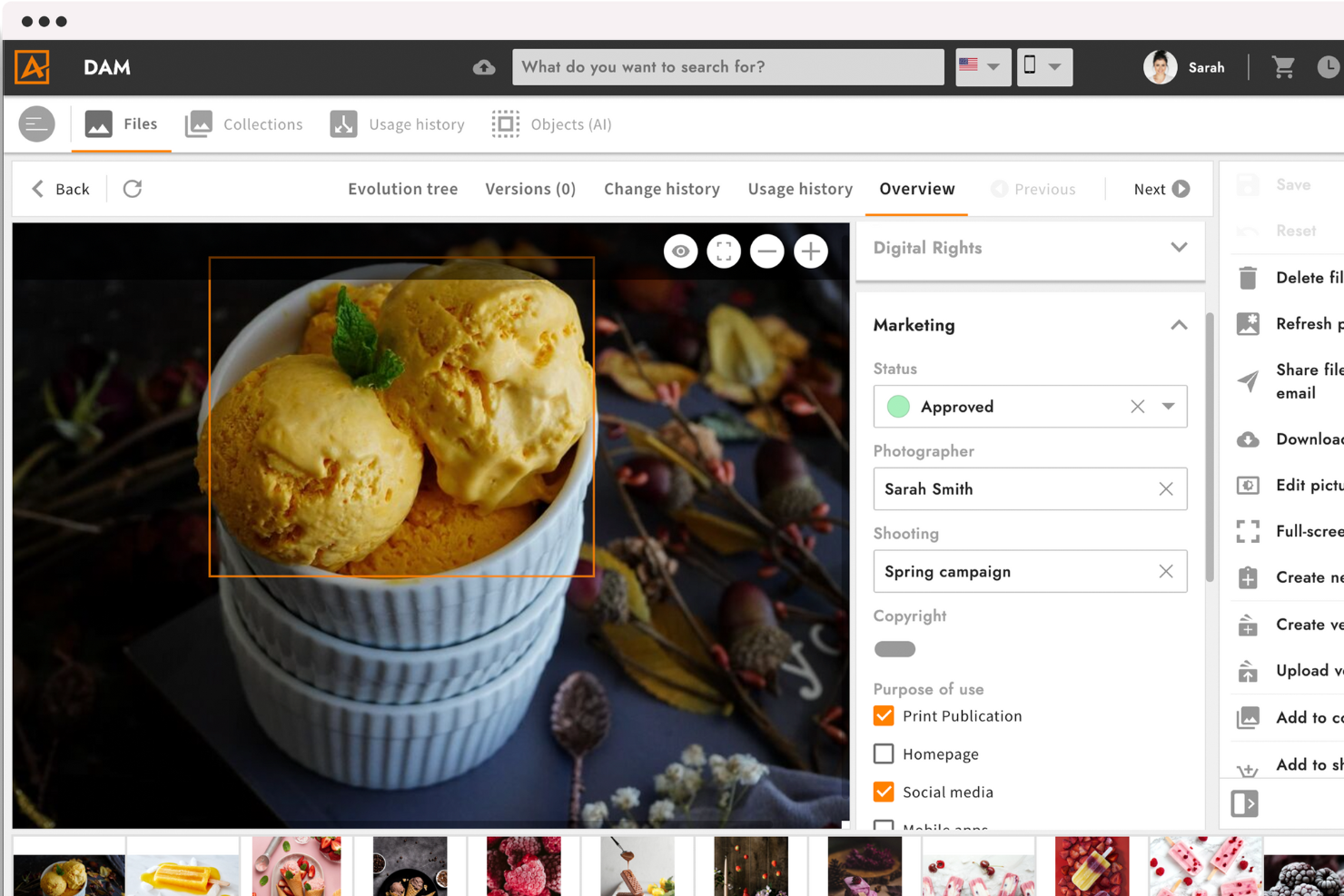
El software de gestión de activos digitales de 4ALLPORTAL está diseñado para ayudar a empresas de todos los tamaños a simplificar la gestión de sus activos digitales, desde el archivado hasta la búsqueda y el intercambio.
¿Para quién es mejor 4ALLPORTAL?
Empresas de manufactura, venta minorista y organizaciones orientadas a productos que necesitan una gestión integrada de activos digitales e información de productos en una sola plataforma.
Por qué elegí 4ALLPORTAL
Me gustan las funciones integradas de DAM y PIM de 4ALLPORTAL, que emplean un modelo de datos único. Los activos digitales, como imágenes de productos, e información del producto, como descripciones, pueden vincularse a productos dentro de 4ALLPORTAL, de modo que cuando editas la imagen o el texto de un producto, los productos relacionados se actualizan automáticamente en todos los canales integrados, como la tienda en línea, el sitio web o los marketplaces.
Este software también ofrece una potente función de búsqueda que permite encontrar archivos más rápidamente, y los usuarios pueden utilizar el sistema de etiquetado para añadir palabras clave y descripciones a cada activo, lo que ayuda a realizar búsquedas dirigidas.
Además, 4ALLPORTAL cuenta con búsqueda de texto completo y Reconocimiento Óptico de Caracteres (OCR) para ayudar a los usuarios a localizar archivos y documentos más rápido. Se puede emplear la función de búsqueda de texto completo para buscar frases específicas, módulos de texto o registros en el stock documental, mientras que el reconocimiento de texto OCR es útil para hacer que los archivos de imagen con contenido textual sean fácilmente localizables según la información que se requiera.
Características clave de 4ALLPORTAL
4ALLPORTAL ofrece una gama de características adicionales que te ayudan a gestionar mejor los activos digitales en tus proyectos.
- Control de versiones: Esta función permite a tu equipo rastrear cambios y acceder a versiones anteriores de los activos para mantener la claridad y prevenir confusiones.
- Permisos de usuario: Con controles de acceso personalizables puedes asegurar datos sensibles y gestionar quién puede ver o editar activos específicos.
- Gestión de flujos de trabajo: Incluye procesos automatizados para optimizar tareas y mejorar la colaboración, ayudando a que tu equipo trabaje de manera más eficiente.
- Funcionalidad de búsqueda avanzada: Puedes utilizar filtros sofisticados para recuperar activos rápidamente, mejorar la productividad y reducir el tiempo de búsqueda.
Integraciones de 4ALLPORTAL
Las integraciones incluyen Adobe Creative Cloud, Active Directory, Chili Publisher, Dropbox, Hootsuite, Jira, Adobe Commerce y Slack. Además, cuenta con una API RESTful que puedes utilizar para conectar manualmente sistemas de terceros.
Pros and Cons
Pros:
- Soporte para traducciones a múltiples idiomas
- Capacidades de automatización de flujos de trabajo
- Escalable según las necesidades de un negocio en crecimiento
Cons:
- Personalizar el portal puede requerir una inversión de tiempo
- La interfaz puede ser difícil de navegar

Filecamp
Mejor para personalización de marca

Filecamp es una plataforma de gestión de activos digitales que ayuda a los profesionales de marketing a obtener más valor de sus recursos creativos.
Hablé con Caspar Matthews de Electcomm Group Electrical & Data, que utiliza Filecamp en sus proyectos. 'Los registros de proyectos en nuestro sector pueden acumularse muy rápido y ser difíciles de controlar... Los portales de clientes personalizados permiten que los clientes accedan a documentos individuales que necesitaban sin que nuestro equipo pase horas enviando archivos de un lado a otro', dice.
Tuvo un gran impacto: 'Esto nos ahorró casi un 30 por ciento del tiempo dedicado a la administración solo en un proyecto comercial de acondicionamiento', afirma.
¿Para quién es mejor Filecamp?
Organizaciones pequeñas y medianas que necesitan portales de activos personalizados para equipos internos o partes interesadas externas sin la complejidad de nivel empresarial.
Por qué elegí Filecamp
Te permite almacenar todas tus imágenes, videos, archivos creativos y presentaciones y encontrarlos fácilmente, gracias a su potente funcionalidad de etiquetado. Puedes cargar archivos y carpetas, etiquetarlos manualmente o utilizar la función de autoetiquetado. Después, filtra, ordena, busca y descarga archivos en su resolución original o en la que elijas.
Si te interesa que tu equipo colabore en recursos creativos, Filecamp incluye un módulo de aprobación donde tu equipo puede conversar sobre entregables, sugerir cambios y seguir los flujos de trabajo de aprobación en un solo lugar. Además, puedes hacer todo esto en un producto de marca blanca que puedes personalizar de una forma que pocas herramientas permiten.
Características clave de Filecamp
Además de excelentes herramientas de organización, Filecamp ofrece una variedad de otras funciones para la gestión de activos digitales.
- Personalización de marca: Permite personalizar tu interfaz de Filecamp con los logotipos y colores de tu empresa para proporcionar una experiencia de marca coherente en todas las interacciones de los usuarios.
- Control de acceso granular: Puedes gestionar quién tiene acceso a archivos y carpetas específicos, de modo que solo los miembros autorizados del equipo puedan ver o editar datos sensibles.
- Control de versiones: Puedes hacer un seguimiento de las diferentes versiones de tus archivos, acceder y restaurar iteraciones anteriores cuando quieras, y mantener la precisión y calidad.
- Búsqueda avanzada: Permite utilizar opciones de etiquetado y filtrado para localizar y recuperar rápidamente los activos digitales, ahorrando tiempo y mejorando la eficiencia del flujo de trabajo.
Integraciones de Filecamp
No se ofrecen integraciones actualmente.
Pros and Cons
Pros:
- Búsqueda y etiquetado avanzados
- Controles de acceso granulares que mejoran la seguridad y la colaboración
- Opciones de personalización de marca para una apariencia profesional
Cons:
- Puede que tengas que pagar por almacenamiento adicional
- Los comentarios están limitados a planes de nivel superior
New Product Updates from Filecamp
Filecamp Adds More Flexible Link Files
Filecamp adds editable Link file targets, new opening options, and support for internal Filecamp destinations. These updates make Link files more flexible for navigation and shortcuts. For more information, visit Filecamp’s official site.
 .
.Otros programas de gestión de activos digitales
Estos son algunos ejemplos de sistemas de gestión de activos que no han entrado en la lista, pero son opciones excelentes para ampliar tu investigación.
- Tagbox.io
Ideal para búsqueda visual impulsada por IA
- ClickUp
Mejor para integraciones de almacenamiento de archivos
- Canto
Ideal para compartir archivos externamente
- Adobe Experience Manager
Mejor para publicaciones de contenido nativas en la nube
- Lingo
Ideal para kits de marca ilimitados
- Brightspot
Mejor para búsquedas inteligentes y filtros
- Wedia
Mejor para experiencia digital
- Artwork Flow by Bizongo
Ideal para diseño de envases
- MarcomCentral
Ideal para el etiquetado de activos asistido por IA
- DemoUp Cliplister
Ideal para control de acceso seguro
- Eagle App
Ideal para la organización de proyectos de diseño
- Frontify
Ideal para directrices de marca en vivo vinculadas a los activos
- Daminion
Ideal para el despliegue dinámico de activos
- Sesimi
Ideal para automatización creativa
- MediaBeacon
Ideal para grandes organizaciones
- monday AI Workspace
Ideal para flujos de trabajo colaborativos
- Acquia DAM (Widen)
Mejor para configuración y personalización
- Smartsheet
Ideal para la gestión de activos de proyectos
- Brandfolder
La mejor opción para la gestión de activos de marca empresarial y análisis de rendimiento
- Papirfly
Ideal para portales de marca centralizados
- StreamWork
Ideal para retroalimentación en tiempo real sobre activos digitales
- Connecter Suite
Ideal para la exploración visual de activos


Reseñas relacionadas de gestión de proyectos
- Software de gestión de proyectos
- Herramientas de gestión de proyectos
- Software de gestión de proyectos de marketing digital
- Sistemas de gestión del aprendizaje
- Sistemas de gestión documental
- Software de control del tiempo
- Herramientas de inteligencia empresarial
- Software DAM para comercio electrónico
- Software de verificación de documentos
Cómo Evalúo el Software de Gestión de Activos Digitales
Divido mi evaluación en dos niveles: lo básico que debe tener un DAM para gestionar activos y canalizar aprobaciones entre equipos creativos, y los diferenciadores que separan a las mejores herramientas del resto.
Funcionalidad Central (Requisitos Fundamentales Para Esta Lista)
Cuando selecciono herramientas para mi lista, califico cada una en una escala del 0 (no ofrece la funcionalidad) al 5 (destaca en esta área) para cada funcionalidad central que se menciona a continuación. Luego, calculo el puntaje total de la herramienta en un porcentaje. Cada herramienta debe lograr un puntaje total mínimo del 65% para ser considerada para la inclusión.
- Biblioteca Centralizada de Activos: Evalúo qué tan bien el repositorio gestiona diferentes tipos de archivos—como PSDs, videos en bruto y presentaciones—con vistas previas ricas y estructuras lógicas de colección.
- Metadatos y Etiquetado: Una buena taxonomía es importante cuando tu biblioteca contiene miles de activos, así que busco esquemas de metadatos personalizados, etiquetado masivo y opciones de búsqueda filtrada.
- Control de Versiones y Aprobaciones: Verifico si los equipos pueden comparar versiones de activos lado a lado y enviar archivos a través de etapas de aprobación estructuradas vinculadas a los hitos del proyecto.
- Permisos y Control de Acceso: Los roles granulares son esenciales cuando contratistas externos y equipos internos comparten un espacio de trabajo, así que evalúo los controles de permisos tanto a nivel de carpeta como de activo.
- Integraciones para la Gestión de Proyectos: Busco conexiones nativas con herramientas como Asana, Jira y Monday.com, además de acceso a API abierta para equipos con necesidades de flujo de trabajo personalizado.
- Compartir y Distribución: Ya sea un portal de marca para clientes o un enlace de uso compartido simple con controles de expiración, evalúo cómo maneja cada herramienta la distribución externa segura.
Una vez que tengo una lista de herramientas que cumplen los criterios, considero qué distingue a cada plataforma.
Factores Diferenciadores (Qué Distingue a los Proveedores)
Así es como comparo y contrasto diferentes proveedores:
Características Destacadas
La búsqueda potenciada por IA es un gran diferenciador—las herramientas que etiquetan activos automáticamente usando visión computacional ahorran a los equipos horas de catalogación manual en bibliotecas cada vez más grandes. También evalúo la automatización del flujo creativo, como el envío automático de archivos al siguiente revisor cuando cambia una etapa del proyecto. El seguimiento de derechos y licencias es importante cuando tu equipo gestiona imágenes de stock o contratos de contribuyentes con fechas de vencimiento fáciles de pasar por alto.
Más Allá de las Características
La transparencia de precios es fundamental—analizo si los proveedores cobran por usuario, por volumen de almacenamiento, o ambos, y si los asientos de revisores invitados suman al costo. También es relevante el soporte para la implementación, especialmente si vas a migrar desde discos compartidos o un DAM heredado. Verifico la existencia de asistencia dedicada para la migración y consultoría en taxonomía. Las certificaciones de seguridad como SOC 2 Tipo II y el cumplimiento de GDPR son importantes de confirmar temprano, especialmente cuando tu biblioteca de activos incluye contenido sensible o legalmente protegido.
Cómo elegir un software de gestión de activos digitales
Con tantas soluciones de software de gestión de activos digitales disponibles, puede resultar complicado decidir qué software de gestión de activos digitales se adapta mejor a tus necesidades. Incluso puede que quieras considerar la creación de una solicitud de propuestas de gestión de activos digitales para ayudarte a comparar tus opciones.
Mientras elaboras tu lista de candidatos, pruebas y seleccionas un software de gestión de activos digitales , ten en cuenta lo siguiente:
- Qué problema intentas resolver - Empieza identificando la carencia de funcionalidades del software de gestión de activos digitales que intentas cubrir para aclarar las características y funciones que el software de gestión de activos digitales debe proporcionar.
- Quién necesitará utilizarlo - Para evaluar los costes y los requisitos, considera quién utilizará el software y cuántas licencias necesitarás. Tendrás que evaluar si solo necesitará acceso el equipo del proyecto o si lo necesitará toda la organización. Cuando esto esté claro, conviene considerar si estás priorizando la facilidad de uso para todos o la velocidad para los usuarios avanzados de tu software de gestión de activos digitales.
- Con qué otras herramientas debe funcionar - Aclara qué herramientas vas a sustituir, cuáles se mantendrán y con qué herramientas necesitarás integrarlo, como software de contabilidad, de gestión de relaciones con los clientes o de recursos humanos. Tendrás que decidir si las herramientas deberán integrarse entre sí o, alternativamente, si puedes sustituir varias herramientas por un único software de gestión de activos digitales consolidado.
- Qué resultados son importantes - Considera el resultado que debe ofrecer la implementación del software DAM para que se considere un éxito. Piensa en qué capacidad quieres obtener o qué quieres mejorar, y en cómo medirás el éxito. Por ejemplo, un resultado podría ser la capacidad de obtener una mayor visibilidad del rendimiento. Podrías comparar las funciones del software de gestión de activos digitales hasta el agotamiento, pero si no estás pensando en los resultados que quieres impulsar, podrías estar desperdiciando mucho tiempo valioso.
- Cómo funcionaría dentro de tu organización - Considera la selección del software junto con tus flujos de trabajo y tu metodología de entrega. Evalúa qué funciona bien y qué áreas están causando problemas que deben abordarse. Recuerda que cada empresa es diferente — no des por sentado que, porque una herramienta sea popular, funcionará en tu organización. Las demostraciones de gestión de activos digitales son una excelente manera de hacerse una idea al respecto.
Si aún te encuentras en la fase de exploración, empezar con una opción de software gratuito de gestión de activos digitales puede ayudarte a adquirir experiencia práctica con funciones como el almacenamiento centralizado, el control de versiones y la colaboración en tiempo real antes de realizar una inversión a largo plazo.
Tendencias del software de gestión de activos digitales
El software de gestión de activos digitales ha evolucionado considerablemente, impulsado por empresas de software de gestión de activos digitales que reconocen la necesidad de que los equipos organicen la información de manera eficiente y aprovechen una base de datos centralizada para acelerar los tiempos de diseño y entrega. Los avances de los proveedores de gestión de activos digitales en este ámbito son cruciales para los gestores de proyectos, especialmente en los sectores creativo y de marketing, donde gestionar una gran variedad de activos digitales es un desafío diario.
Este es un resumen de las tendencias y funciones actuales del mercado de software DAM:
- Eficiencia impulsada por la IA: Las tecnologías de IA, como el etiquetado automático y la extracción de metadatos, evolucionan rápidamente y mejoran la capacidad de búsqueda y la organización de los activos. Herramientas como Wedia y MediaValet incorporan indexación avanzada, metadatos editables y funciones de reconocimiento impulsadas por IA para agilizar los procesos de clasificación y búsqueda.
- Integración y automatización de flujos de trabajo: Las soluciones de software de gestión de contenidos digitales se centran cada vez más en integrarse con otras herramientas y automatizar los flujos de trabajo. Por ejemplo, varias herramientas han comenzado a integrarse con suites creativas como Adobe para permitir que los diseñadores trabajen desde sus herramientas favoritas y guarden y recuperen su trabajo directamente desde el gestor de activos digitales.
- Mayor seguridad y permisos granulares: Con el aumento de las amenazas de ciberseguridad, el software de gestión de activos de datos ofrece ahora protocolos de seguridad avanzados. Amplifi, por ejemplo, proporciona ajustes de permisos granulares y registros de auditoría para ofrecer a los usuarios un mayor control sobre sus activos digitales.
Funciones que evolucionan más rápidamente
- Distribución dinámica de activos: Herramientas como DemoUp Cliplister ofrecen tecnología de imágenes dinámicas y servicios de sindicación de contenido de productos, lo que permite a las marcas compartir contenido directamente con minoristas en línea.
Funciones más importantes y demandadas
- Colaboración en tiempo real y etiquetado automatizado: La posibilidad de colaborar en tiempo real y utilizar el etiquetado automatizado para clasificar rápidamente los activos es muy demandada. Box y MediaValet ejemplifican estas funcionalidades y hacen hincapié en las interfaces fáciles de usar.
Tendencias en declive
- Búsquedas convencionales basadas en carpetas: Con la aparición de las búsquedas basadas en etiquetas y mejoradas mediante IA, el método tradicional de organizar archivos en carpetas es cada vez menos importante.
¿Qué es el software de gestión de activos digitales?
El software de gestión de activos digitales (DAM) es un sistema centralizado para almacenar, organizar y distribuir contenido digital, como imágenes, vídeos, documentos y activos de marca.
Los equipos utilizan el software DAM para gestionar las versiones de los archivos, establecer permisos de acceso y garantizar la coherencia de la marca en todas las campañas. Es especialmente útil para los equipos de marketing, creativos y de contenido que necesitan acceder rápidamente a activos actualizados y colaborar de forma eficiente entre departamentos o con clientes. Sin embargo, las personas ajenas a estos sectores, como los educadores, también pueden aprovechar el potencial de este software mediante el software DAM para universidades.
Características del software de gestión de activos digitales
Al elegir un software de gestión de activos digitales, presta atención a las siguientes características clave.
- Repositorio centralizado de activos: Un único lugar organizado donde puedes almacenar, gestionar y recuperar fácilmente archivos digitales sin tener que buscar entre carpetas dispersas.
- Gestión de metadatos: La posibilidad de añadir, editar y organizar información descriptiva de cada activo, lo que permite categorizar y encontrar archivos en función de palabras clave, fechas o etiquetas personalizadas.
- Funcionalidad de búsqueda avanzada: Herramientas de búsqueda potentes que permiten localizar rápidamente activos mediante filtros, metadatos o incluso coincidencias parciales para ahorrar tiempo y frustraciones.
- Control de versiones: Un sistema integrado para realizar un seguimiento de los cambios, gestionar revisiones y restaurar versiones anteriores de los archivos, de modo que puedas colaborar sin perder actualizaciones importantes.
- Permisos de acceso y roles de usuario: Configuraciones personalizables que permiten controlar quién puede ver, editar o compartir activos para proteger materiales confidenciales y mantener los flujos de trabajo organizados.
- Vista previa y reproducción de activos: Vistas previas instantáneas para distintos tipos de archivos (p. ej., imágenes, vídeos o documentos), para que puedas identificar el archivo correcto de un vistazo sin tener que abrirlos todos.
- Capacidades de integración: Opciones para conectarse con otras herramientas, como plataformas de gestión de proyectos, suites creativas o soluciones de almacenamiento en la nube, con el fin de mejorar el flujo de trabajo y reducir el trabajo manual.
- Automatización de flujos de trabajo: Herramientas para automatizar procesos rutinarios, como las aprobaciones o la distribución de activos, reducir las tareas repetitivas y aumentar la productividad.
- Registros de auditoría e informes: Registros detallados que indican quién hizo qué y cuándo, para proporcionar información sobre el uso de los activos y mejorar la responsabilidad en todo el equipo.
- Carga y gestión masivas: La posibilidad de añadir y organizar varios archivos a la vez y ahorrar tiempo durante proyectos grandes o fases de incorporación.
Características de IA que debes buscar en un software de gestión de activos digitales
Muchas soluciones de software de gestión de activos digitales también incluyen funciones basadas en IA.
- Etiquetado y generación de metadatos automáticos: La IA puede analizar los activos y asignar automáticamente etiquetas relevantes para ahorrar tiempo y mantener la coherencia.
- Reconocimiento de imágenes y vídeos: Las herramientas de reconocimiento avanzado pueden identificar objetos, rostros y escenas en tus archivos multimedia, y facilitar la búsqueda y categorización de archivos.
- Búsqueda y recomendaciones inteligentes: Las capacidades de búsqueda basadas en IA pueden sugerir activos relacionados y mejorar la precisión de las búsquedas según el comportamiento y el contexto del usuario.
- Moderación de contenido: Las herramientas automatizadas pueden señalar contenido inapropiado o duplicado para ayudarte a mantener la calidad y el cumplimiento normativo.
- Transcripción y subtitulado: La IA puede generar transcripciones para archivos de audio y vídeo, y hacer que tus activos sean más accesibles y fáciles de buscar.
- Organización automatizada de archivos: Clasificación y agrupación inteligentes de activos según los patrones de uso, el tipo de contenido o la relevancia para el proyecto.
Beneficios del software de gestión de activos digitales
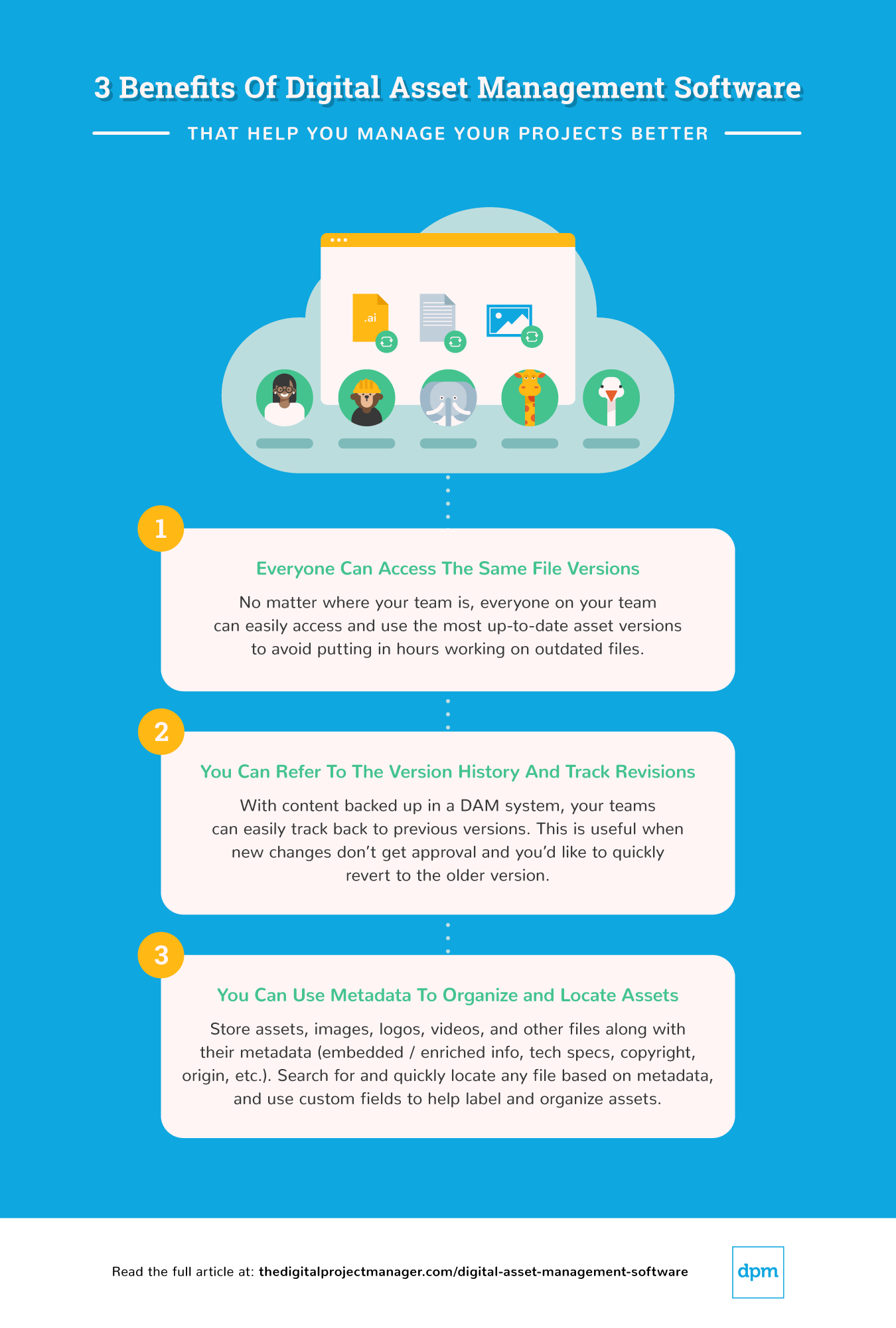
Estos son cinco beneficios importantes que una aplicación de gestión de contenido digital puede proporcionar a sus usuarios y organizaciones:
- Repositorio centralizado de activos: Proporciona una única fuente de información para todos los activos digitales. Contar con una ubicación centralizada para almacenar y acceder a los activos digitales elimina redundancias, reduce el riesgo de utilizar activos obsoletos y ahorra el tiempo que, de otro modo, se dedicaría a buscar activos en varias plataformas.
- Mayor seguridad y control: Ofrece permisos y controles de acceso avanzados. Esta ventaja garantiza que los activos sensibles estén protegidos y solo sean accesibles para usuarios autorizados, lo que mejora la seguridad del contenido digital y reduce el riesgo de acceso o distribución no autorizados.
- Colaboración y uso compartido optimizados: Facilita el uso compartido y la colaboración en activos digitales entre los miembros del equipo. Al simplificar el proceso de compartir y colaborar en activos, así como las aprobaciones, las aplicaciones de gestión de activos pueden ayudar a acelerar los plazos de los proyectos y mejorar la comunicación entre las partes interesadas.
- Mejor localización de los activos: El uso de metadatos, etiquetas y funciones de búsqueda avanzada reduce drásticamente el tiempo necesario para encontrar los activos adecuados, mejora la productividad y garantiza que los proyectos avancen con mayor fluidez y sin retrasos innecesarios.
- Escalabilidad y flexibilidad: Se adapta a las necesidades crecientes de la organización. A medida que aumentan los proyectos y el volumen de activos, las herramientas de software de gestión de activos pueden escalar para satisfacer la creciente demanda, garantizando que las organizaciones puedan gestionar sus activos digitales de forma eficiente, independientemente de su tamaño o complejidad. Estas ventajas son especialmente valiosas para los equipos orientados a una misión que utilizan software de gestión de activos digitales para organizaciones sin ánimo de lucro, donde los presupuestos pueden ser más ajustados, pero la necesidad de una distribución de contenidos eficiente y organizada es igual de fundamental.
¿Cuándo deberías adquirir un software de gestión de activos digitales?
Si tu organización gestiona un número creciente de activos digitales, invertir en soluciones de software de gestión de activos puede ser necesario para mantener la eficiencia. A continuación, he enumerado algunos indicadores clave que sugieren que ha llegado el momento de adoptar un programa de gestión de activos:
- Gestión de activos que requiere muchos recursos: Si la gestión de tus activos digitales empieza a consumir demasiado tiempo y esfuerzo, un software sencillo de gestión de activos puede optimizar su organización, almacenamiento y recuperación.
- Problemas de accesibilidad: Tener dificultades para encontrar y compartir activos entre equipos es un problema habitual. Si la accesibilidad a los activos se está convirtiendo en un problema para tu equipo, las tecnologías de las plataformas de gestión de activos pueden proporcionar un acceso seguro y centralizado, garantizando que tu equipo pueda encontrar y utilizar los activos que necesita.
- Cuellos de botella en la colaboración: Si tus proyectos se retrasan debido a un uso compartido deficiente de los activos y al control de versiones, la integración de DAM puede resolver estos problemas proporcionando acceso en tiempo real y herramientas de colaboración dentro del sistema de gestión de activos.
- Problemas de seguridad: Proteger los activos digitales valiosos es vital para mantener la integridad, confidencialidad y disponibilidad de la información de tu organización. Un software de protección de activos puede ayudar a protegerlos frente al acceso no autorizado o la pérdida de datos, garantizando que tus activos estén seguros dentro de las mejores plataformas de software de seguimiento de activos.
Coste y precios del software de gestión de activos digitales
Para muchas personas, el precio de la gestión de activos digitales es uno de los factores más importantes que deben tenerse en cuenta al tomar una decisión. Estas herramientas suelen ofrecer una variedad de planes para adaptarse a las distintas necesidades y presupuestos de las organizaciones. Sin embargo, la mayoría de los planes también se encuadran en categorías similares, y los proveedores ofrecen planes escalonados que incluyen funciones y precios comparables en cada nivel.
Dada la variedad de opciones disponibles, es importante comprender las distintas estructuras de planes y precios para tomar decisiones informadas. Si conoces las tendencias habituales de precios, puedes asegurarte de no pagar de más por funciones comunes o por funciones que no utilizarás.
A continuación, se desglosan las opciones de planes habituales y sus precios para el software DAM:
Tabla comparativa del software de gestión de activos digitales
| Tipo de plan | Precio medio | Funciones habituales incluidas |
|---|---|---|
| Básico | $0 - $20 por usuario/mes | - Almacenamiento y organización básicos de activos - Funcionalidad de búsqueda básica - Capacidades limitadas para compartir archivos |
| Profesional | $25 - $100 por usuario/mes | - Capacidades de búsqueda avanzada - Mayor capacidad de almacenamiento - Control de versiones - Opciones básicas de integración |
| Empresarial | Precios personalizados | - Flujos de trabajo personalizables - Almacenamiento ilimitado - Opciones de integración integrales - Funciones de seguridad avanzadas |
| Opción gratuita | $0 | - Almacenamiento limitado de activos - Capacidades básicas de búsqueda y filtrado - Uso compartido de archivos con algunas restricciones |
Al elegir un plan, es importante tener en cuenta el tamaño de su organización, el volumen de activos que se gestionarán y el nivel de colaboración necesario. Además, el mejor software de gestión de activos multimedia no solo debe adaptarse a sus necesidades actuales, sino también crecer junto con su organización. Por ello, comprender tanto el plan exacto que desea como sus opciones para ampliar el software es esencial para tomar la decisión correcta.
Por ejemplo, los planes básicos o gratuitos son perfectos para particulares o equipos pequeños con necesidades de gestión de activos digitales basada en la web. Los planes estándar son adecuados para empresas que necesitan informes detallados e integración de software. Los planes profesionales ofrecen funciones amplias para equipos más grandes que gestionan proyectos complejos. Los planes prémium o empresariales están dirigidos a grandes organizaciones que necesitan funciones avanzadas de seguridad y cumplimiento normativo.
Entre las etapas habituales en las que su empresa puede querer actualizar su plan de precios se incluyen:
- Aumento del volumen de activos digitales: A medida que crece el contenido digital, las funciones avanzadas de organización y almacenamiento se vuelven fundamentales para una gestión eficaz.
- Necesidades avanzadas de flujo de trabajo y colaboración: A medida que los proyectos se vuelven más complejos, los equipos pueden buscar una automatización del flujo de trabajo más sofisticada, control de versiones y herramientas de colaboración.
- Ampliación de la base de usuarios: A medida que se amplía la base de usuarios del DAM, los equipos pueden necesitar más licencias de usuario y permisos más detallados.
- Requisitos reforzados de seguridad y cumplimiento normativo: Las funciones de seguridad sólidas y las certificaciones de cumplimiento son fundamentales para las empresas que se enfrentan a estándares más estrictos a medida que crecen.
- Integración con otros sistemas empresariales: A medida que crece el conjunto de tecnologías de la empresa, integrar la herramienta DAM con otros sistemas se vuelve necesario para agilizar las operaciones.
Preguntas frecuentes sobre el software de gestión de activos digitales
Estas son las respuestas a algunas preguntas básicas sobre el software de gestión de activos digitales.
¿Cómo se relaciona el DAM con la gestión de proyectos?
Si eres gestor de proyectos en un sector como el marketing, los medios de comunicación, el comercio minorista o la atención sanitaria, es probable que tu organización utilice un sistema DAM como herramienta central para la colaboración, la comunicación y el intercambio de archivos. Así es como podrías utilizar una herramienta de software DAM como gestor de proyectos.
- Organización de recursos: Las herramientas DAM te ayudan a organizar y gestionar todos los activos digitales implicados en un proyecto. Proporcionan un acceso rápido y sencillo a los recursos necesarios, como imágenes, documentos, vídeos, etc., para ahorrar tiempo y reducir el número de activos extraviados o perdidos.
- Colaboración: Los sistemas DAM permiten a los miembros del equipo acceder a los activos digitales, compartirlos y editarlos desde una ubicación central. Esto aumenta las oportunidades de colaboración y de recibir comentarios entre los miembros del equipo y los clientes. También puedes reducir la duplicación del trabajo y asegurarte de que todo el mundo trabaja con la versión más actualizada.
- Eficiencia: Al mantener todos los activos en un solo lugar, tu equipo ya no tiene que buscar archivos en distintas ubicaciones. Esto aumenta la eficiencia de los flujos de trabajo de tu proyecto y reduce los retrasos.
- Control y seguridad: El DAM te permite controlar quién tiene acceso a determinados recursos, proteger la información confidencial y mantener la seguridad.
- Gestión de costes: El software DAM puede ayudarte a evitar la duplicación del trabajo y ahorrar tiempo a los miembros del equipo, lo que permite reducir costes.
¿Puedo utilizar Google Drive, Dropbox y Sharepoint como DAM?
No, Google Drive, Dropbox y Sharepoint no deben utilizarse como herramientas de software DAM. Aunque estas herramientas comparten similitudes con los sistemas DAM, las verdaderas herramientas DAM ofrecen funcionalidades adicionales que los gestores de proyectos considerarán necesarias, entre ellas:
- La posibilidad de revisar y aprobar contenido
- Cambiar el tamaño de las imágenes con unos pocos clics y cambiar los formatos de vídeo para distintas necesidades de exportación
- Compartir archivos mediante integraciones, incluido el envío de archivos directamente a tus diseñadores en Photoshop o en su software preferido
- Etiquetado avanzado de metadatos
¿Cuál es la diferencia entre un CMS y un DAM?
La diferencia entre un sistema de gestión de contenidos (CMS) y una herramienta de gestión de activos digitales es que un CMS almacena los archivos y la información utilizados en un sitio web específico, mientras que el software DAM almacena cualquier activo digital que se utilice en tu empresa.
Esto incluye los activos de tu sitio web, así como materiales de marketing, propuestas y otra documentación de proyectos, o imágenes para firmas de correo electrónico, por citar algunos ejemplos.
¿Cuáles son algunas prácticas recomendadas para organizar activos en un software DAM?
Estas son algunas prácticas recomendadas para organizar tus activos en un sistema DAM:
- Convenciones de nomenclatura coherentes: Utiliza una convención de nomenclatura clara y descriptiva para tus archivos. Esto facilita la búsqueda y la identificación rápida de los activos.
- Utiliza metadatos: Etiqueta los activos con información relevante, como palabras clave, creador, derechos de uso y nombres de proyectos, para mejorar la capacidad de búsqueda y la organización.
- Estructuras de carpetas: Desarrolla una estructura de carpetas lógica que refleje el flujo de trabajo o las fases del proyecto de tu equipo. Esto ayuda a mantener el orden y simplificar la navegación.
- Control de versiones: Realiza un seguimiento de las revisiones y actualizaciones para evitar confusiones sobre cuál es la versión más reciente.
- Auditorías periódicas: Programa revisiones periódicas de los activos de tu herramienta DAM. Elimina los activos obsoletos y reorganiza las carpetas según sea necesario.
¿Cómo gestiona el software DAM los metadatos?
Este es un breve resumen de cómo funciona la gestión de metadatos en el software DAM. Cuando subes un activo, el software puede extraer automáticamente datos como el tamaño del archivo, la fecha de creación y el formato.
También puedes crear campos de metadatos personalizados para adaptarlos a las necesidades específicas de tu proyecto, por ejemplo, campos para nombres de campañas, derechos de los activos o códigos de proyecto. La mayoría de las herramientas también permiten la edición masiva. Asegúrate de crear y aplicar un sistema de metadatos claro. Si organizas y utilizas los metadatos de forma eficaz, podrás encontrar rápida y fácilmente los activos que necesitas.
¿Cuál es la diferencia entre el software de gestión de activos digitales SaaS y el instalado en las instalaciones?
El software DAM SaaS está basado en la nube: puedes iniciar sesión desde cualquier lugar y las actualizaciones se realizan automáticamente. El DAM instalado en las instalaciones se ejecuta localmente en los servidores de tu organización. Esto ofrece un mayor control y seguridad, pero necesitarás recursos de TI para la configuración y el mantenimiento.
¿Cómo puedo asegurarme de que mi equipo adopte realmente nuestro software DAM?
Empieza con un plan de implantación claro y ofrece sesiones de formación prácticas. Fomenta los comentarios del equipo y ajusta la estructura de carpetas o los permisos a medida que avances. Celebra los pequeños logros, como que el equipo pueda encontrar y actualizar rápidamente los activos del proyecto. Designa «superusuarios» del DAM en el equipo para impulsar la adopción y ayudar al resto del equipo.
¿Qué opciones de asistencia y formación son importantes al incorporar a tu equipo al software DAM?
Busca proveedores de DAM que ofrezcan asistencia por chat en directo o teléfono, seminarios web de incorporación, tutoriales en vídeo y un centro de ayuda con función de búsqueda. Es útil que el proveedor ofrezca formación para el equipo o un responsable de éxito del cliente dedicado para facilitar la adopción, especialmente si tus flujos de trabajo son complejos.