

2026’da İncelenen En İyi 10 Yapay Zekâ Belge Yönetimi Yazılımı

En İyi AI Belge Yönetimi Yazılımları Kısa Listesi


AI belge yönetimi yazılımı; sürüm kontrolünü, etiketlemeyi, izinleri ve aramayı otomatikleştirerek proje yöneticilerinin dosyaları daha verimli şekilde düzenlemesine, depolamasına ve bulmasına yardımcı olur. Belgeleri aramak veya erişimi manuel olarak yönetmek için zaman kaybetmek yerine bu araçlar, ekiplerin proje yaşam döngüsü boyunca dosyaları ele alma biçimini kolaylaştırmak için yapay zekâ kullanır.
Yoğun çalışan proje ekiplerinin hayatını gerçekten kolaylaştıran araçları belirlemek için önde gelen AI destekli belge yönetimi araçlarını test edip inceledim. Otomatik etiketleme ve OCR'dan akıllı aramaya ve iş akışı otomasyonuna kadar her araç, sürtüşmeyi azaltmak ve üretkenliği artırmak için değerli bir özellik sunuyor.
Why Trust Our Software Recommendations
Our team has been testing and reviewing software since 2012. As project managers ourselves, we know how difficult—and important—it is to choose the right software.
For this guide, we evaluated tools using hands-on testing and independent research, scoring tools using our selection criteria. We also draw on insights from industry thought leaders and practicing project management experts.
Our reviews reflect our human editorial judgment, not a sales pitch.
Expert reviewers:
AI Belge Yönetimi Yazılımları Karşılaştırma Tablosu
Bu karşılaştırma tablosu, en iyi AI belge yönetimi yazılımı seçimlerim için fiyatlandırma ayrıntılarını özetlemektedir:
| Tool | Starting Price | Website | |
|---|---|---|---|
| Best for automated script enhancement | — | $40/month 10-day free trial + free demo available | Website |
| Best for multilingual document handling | 4.8 out of 5 | Pricing upon request Free demo available | Website |
| Best for AI-assisted document collaboration | 4.5 out of 5 | $19.99/user/month 7-day free trial | Website |
| Best for secure file sharing | 4.3 out of 5 | CAD$21/user/month 14-day free trial | Website |
| Best for metadata-driven organization | 4.4 out of 5 | $65/user/month Free demo available | Website |
| Best for hybrid cloud solutions | 4.1 out of 5 | $22/user/month Free demo + 15-day free trial available | Website |
| Best for AI-based document processing | — | Pricing upon request Free trial available | Website |
| Best for cloud-based document analysis | — | $30 per 1,000 pages Free demo available | Website |
| Best for enterprise content management | — | Pricing upon request Free consultation available | Website |
| Best for OCR technology | — | Pricing upon request Free demo available | Website |
En İyi AI Belge Yönetimi Yazılımı İncelemeleri
Aşağıda, kısa listeme giren en iyi AI belge yönetimi yazılımlarına ilişkin ayrıntılı özetlerimi bulabilirsiniz. İncelemelerim, size en uygun aracı bulmanıza yardımcı olmak için her aracın temel özelliklerine, artılarına ve eksilerine, entegrasyonlarına ve ideal kullanım alanlarına ayrıntılı bir bakış sunuyor.


TruPeer lands on my list for how it automates and elevates document scripts using AI. When I need a tool to enhance repetitive or template-driven documentation quickly, this is where I go. I appreciate that TruPeer generates dynamic summaries and automates versioning based on context, which saves a lot of context-switching. It's a smart fit for teams who want to reduce the grunt work of updating process docs or onboarding materials.
TruPeer’s Best For
- Teams automating document processes and workflow scripts
- Organizations needing AI-based enhancements to documentation
TruPeer’s Not Great For
- Teams who need industry-specific document compliance features
- Users seeking deep customization of document storage structure
What sets TruPeer apart
TruPeer approaches document management by using AI to automate the updating and enhancement of scripts and standardized docs. Instead of relying on manual edits like you would in Google Workspace or Dropbox Paper, it generates, summarizes, and refines content based on your inputs. This works well when you need documents that stay current as processes shift, but you don’t want to set up complex templates or tracking systems.
Tradeoffs with TruPeer
TruPeer is optimized for dynamic automation, but you lose some control over custom document organization and compliance workflows as a result. This means teams that need strict taxonomy or audit-friendly controls might need something different.
Pros and Cons
Pros:
- Includes enterprise-grade SSO security
- Supports over 65 languages
- AI-generated documentation from screen recordings
Cons:
- AI output may require editing
- Limited free plan functionality
Doxis
Best for multilingual document handling
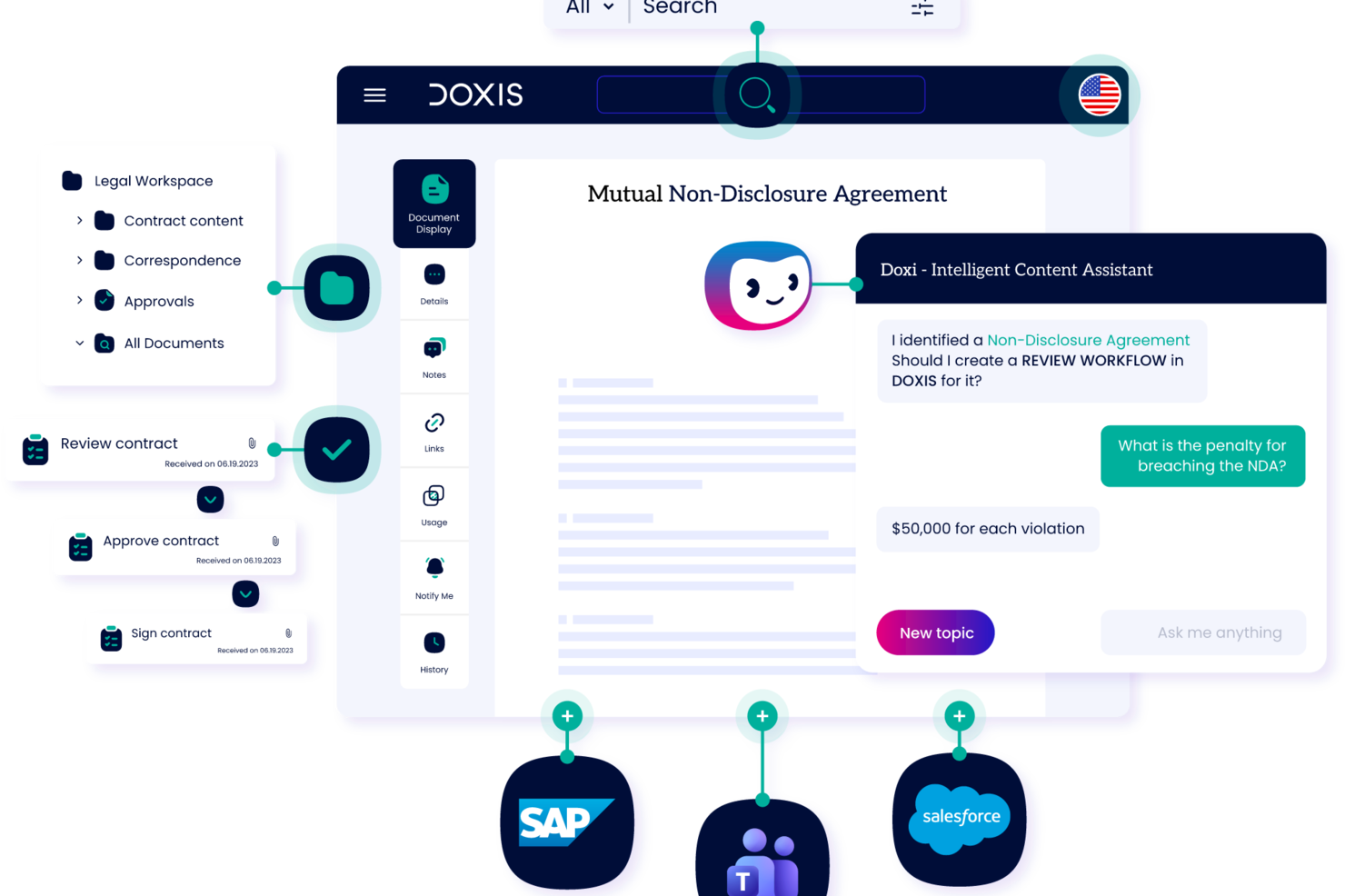
Built for enterprises, Doxis is an AI document management platform that uses intelligent content automation to capture, classify, process, and archive documents with version tracking and lifecycle controls.
Who Is Doxis Best For?
Doxis is ideal for large organizations with records management or legal teams that need clear, defensible proof of every document action.
Why I Picked Doxis
I've included Doxis in my top picks because its AI document processing engine handles over 100 languages natively, which is rare at this level of accuracy. I like that Doxis AI.dp doesn't just store multilingual documents but actively reads, classifies, and extracts structured metadata from them regardless of language. In practice, that means my team can route a German invoice and a French contract through the same automated workflow without any manual pre-sorting. The enterprise search also lets you filter results by language, which is a genuine time-saver across a large, mixed-language repository.
Doxis Key Features
- Intelligent content assistant: Doxi, Doxis' built-in AI assistant, delivers contextual answers and surfaces relevant documents within your workspace.
- No-code app builder: Doxis Business Studio lets you build custom content apps and document processes without writing any code.
- Automated retention management: The platform applies and enforces document retention periods based on configurable rules.
- Audit-proof archiving: Completed documents are locked into an immutable, read-only state at the end of each workflow.
Doxis Integrations
Doxis offers certified native integrations with SAP, Salesforce, and the Microsoft ecosystem, including Microsoft 365, Microsoft Teams, Microsoft Outlook, Microsoft SharePoint, and Microsoft Dynamics 365. It uses vendor-independent connectors for ERP, CRM, HR, CAD, and email/groupware systems, along with an event-condition-action (ECA) framework for cross-system process automation. An API is available for custom integrations. Zapier support is not documented.
Pros and Cons
Pros:
- AI-driven automated filing and metadata capture
- Flexible product that adapts to organizational needs
- Covers document management, workflows, and automation on one platform
Cons:
- Sales team tends to overpromise during selection
- Complex customizations often require support coordination

Best for AI-assisted document collaboration
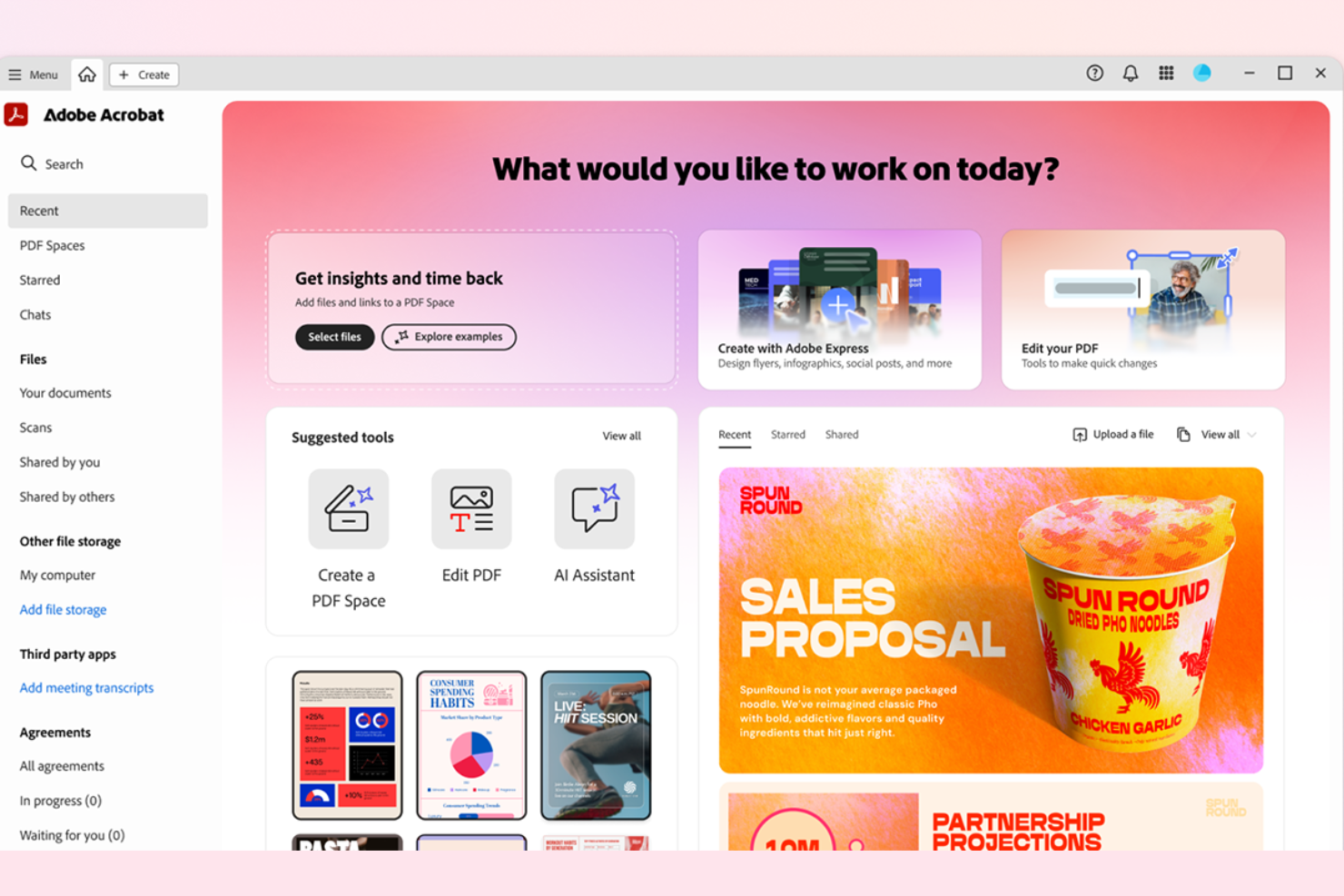
Adobe Acrobat earns its spot on my list because it lets teams collaborate on documents in real time, with generative AI helping summarize and organize feedback across versions. In practice, I see teams use the AI Assistant to extract action items and refine document drafts during complex review cycles.
What stands out for me is how the AI ties comments, tasks, and file changes together, so you always have a live, context-rich view of who did what and why.
Adobe Acrobat's Best For
- Teams handling document collaboration and review at scale
- Organizations centralizing feedback, file changes, and approvals
Adobe Acrobat's Not Great For
- Teams that need advanced content management features
- Workflows focused on records retention or strict compliance archiving
What sets Adobe Acrobat apart
Adobe Acrobat anchors everything around document control and collaborative markup. Unlike Google Workspace, which assumes lightweight co-editing, Adobe Acrobat builds on granular permissioning, version history, and formal review cycles. I find it suits organizations that track changes, comments, and handoffs tightly and want audit trails to stay central to each document.
Tradeoffs with Adobe Acrobat
Acrobat optimizes for managed review and approval, but you give up broader workflows and content lifecycle management. This means teams needing end-to-end records management or robust automation might hit limits.
Pros and Cons
Pros:
- Centralized template and document library management
- Advanced redaction and sensitive data protection tools
- AI-powered document search and summarization
Cons:
- Some e-signature transaction limits depend on plan
- Occasional lag with large or complex PDFs

Box
Best for secure file sharing

Box earns a spot on this list because it’s one of the only tools I trust for handling documents that need airtight security in cloud environments. When I see organizations moving sensitive contracts, financial records, or research to the cloud, Box’s granular access controls, document watermarking, and custom retention policies stand out.
What I appreciate here is the ability to set file-level permissions and compliance options for teams with strict data requirements.
Box’s Best For
- Organizations handling confidential files or regulated data
- Teams needing detailed access controls and retention policies
Box’s Not Great For
- Teams needing document creation or editing in-app
- Small groups that rarely share sensitive information
What sets Box apart
Box is set up for organizations that want to treat document storage and sharing as a security-first process rather than as basic cloud file storage. Unlike Google Drive, which prioritizes fast sharing and collaboration, Box expects you to plan out who has access and how files are handled. In practice, this makes it a strong fit for compliance-focused industries where strict governance matters.
Tradeoffs with Box
Box optimizes for security and control, but that means in-app collaboration and editing tools are limited. You’ll need separate apps for live document editing.
Pros and Cons
Pros:
- Wide range of integrations
- Customizable workflow options
- Strong security measures
Cons:
- Requires internet access
- Initial setup complexity

M-Files
Best for metadata-driven organization

M-Files is on this list because its metadata-driven approach completely changes how you organize and retrieve information. Instead of relying on folders, you tag documents by what they are, which lets you surface content in whatever context makes sense.
I like how AI-assisted metadata suggestions help keep tagging consistent and accurate, especially for teams dealing with messy, complex document libraries. This works best when you're managing regulated files or need to satisfy strict audit requirements.
M-Files' Best For
- Teams managing regulated documents with strict audit requirements
- Organizations needing context-based, metadata-driven search and classification
M-Files' Not Great For
- Teams that prefer simple folder-based organization
- Small businesses with minimal compliance or metadata needs
What sets M-Files apart
M-Files shifts your focus from organizing files by location to organizing by what each document is and means. Unlike Google Drive or Dropbox, you don’t browse through nested folders. You add metadata that describes documents, then search or filter them by purpose, status, or project. This works well when things are moving fast and files need to show up in any workflow context, not just one place.
Tradeoffs with M-Files
M-Files optimizes for structure and consistency, but that means setup and maintenance take extra effort, especially when you just want to toss documents in a simple folder and move on.
Pros and Cons
Pros:
- Strong compliance features
- Flexible deployment options
- Metadata-driven search
Cons:
- Requires training for users
- Initial setup complexity

Egnyte
Best for hybrid cloud solutions

Egnyte made my list because it’s the first place I look when hybrid cloud is a non-negotiable for document management. I see teams that manage both sensitive internal content and need external collaboration gravitate to Egnyte because it lets you set clear controls over where files live and who can access them.
What I like here is the way Egnyte’s file lifecycle automation and granular permissions really simplify compliance—especially for organizations with regulatory needs or split infrastructure.
Egnyte’s Best For
- Organizations with hybrid IT environments or strict compliance needs
- Teams managing external sharing plus internal, permission-based content
Egnyte’s Not Great For
- Businesses that want only public cloud storage
- Small teams with simple, low-security document needs
What sets Egnyte apart
Egnyte is built for those who expect their files to cross between cloud and on-premise, all under granular access control. Compared to Google Workspace, Egnyte doesn't assume all your content can safely live in the public cloud. This tool leans into hybrid storage, letting you keep regulated data in-house while collaborating offsite.
In practice, I see it work best when compliance and split infrastructure are required, not optional.
Tradeoffs with Egnyte
Egnyte optimizes for hybrid deployment and detailed compliance. That extra control means setup and ongoing administration are heavier, especially for teams hoping to avoid managing storage policies.
Pros and Cons
Pros:
- Handles large files well
- Strong compliance capabilities
- Flexible storage options
Cons:
- Initial learning curve
- Requires stable internet connection


Azure AI Document Intelligence lands on this list for how it automates classification and data extraction from complex documents using trainable AI models. When I've tried this with large contracts and multi-form invoices, the prebuilt and custom models handled tricky layouts way better than standard OCR tools.
I like how it supports extraction from both structured and unstructured files, making it easy for teams dealing with diverse document types to bring everything into a searchable, manageable system.
Azure AI Document Intelligence’s Best For
- Teams automating extraction from contracts, forms, and invoices
- Organizations processing large volumes of diverse document types
Azure AI Document Intelligence’s Not Great For
- Small teams that only need basic OCR capabilities
- Businesses needing built-in document editing or collaboration features
What sets Azure AI Document Intelligence apart
Azure AI Document Intelligence takes a model-driven approach to parsing and interpreting documents. Instead of focusing on manual tagging or rule-based extraction like legacy tools, it expects you to use trained AI models to classify and extract content. I tend to see it used in organizations processing large batches of invoices and contracts, where templates and simple OCR just do not hold up.
Unlike something basic like Adobe Acrobat, Azure targets scenarios where structure varies and manual document prep does not scale.
Tradeoffs with Azure AI Document Intelligence
It optimizes for automation at scale, but you give up some flexibility when you need hands-on editing or collaborative review of the documents themselves.
Pros and Cons
Pros:
- Suitable for diverse industries
- Scalable cloud infrastructure
- Flexible model customization
Cons:
- Requires technical expertise
- Initial setup complexity


Google Document AI stands out for cloud-based document analysis, especially if you're dealing with massive document volumes that need automated extraction. I like how it reliably handles complex file types (invoices, contracts, unstructured PDFs) and pulls out structured data using custom-trained models. Teams who need scalable OCR, form parsing, and custom document workflows really benefit when accuracy and speed matter.
Google Document AI’s Best For
- Organizations processing high volumes of unstructured or scanned documents
- Teams needing automated data extraction from varied document types
Google Document AI’s Not Great For
- Smaller teams with basic document storage needs
- Situations where extensive manual review or editing is required
What sets Google Document AI apart
Google Document AI approaches document management differently from traditional DMS solutions like SharePoint. It assumes you want to automate data capture and classification rather than just store and organize files. In practice, this works best when you deal with high volumes of invoices, contracts, or forms and absolutely need accurate, scalable extraction—especially if you want a cloud-native workflow.
Tradeoffs with Google Document AI
It optimizes for automation and advanced extraction, but you give up easy, manual document editing and folder-based control common in standard repositories. If you need hands-on document management, you may run into friction.
Pros and Cons
Pros:
- Cloud-based accessibility
- Pre-trained models available
- Efficient for large-scale processing
Cons:
- May need technical knowledge
- Requires internet connectivity


Xerox DocuShare is on this list because its content management capabilities can handle demanding document control, indexing, and workflow automation at scale. I think it's best for organizations with complex governance and security requirements who need to manage millions of files across different teams or business units.
What I appreciate is how DocuShare's automation features support high-volume capture, intelligent categorization, and retention policies. This fits well for teams who must balance compliance and information accessibility without a lot of manual oversight.
DocuShare’s Best For
- Enterprises with complex document compliance and governance needs
- Organizations handling high-volume, multi-department content management
DocuShare’s Not Great For
- Small teams with basic document storage needs
- Anyone needing simple, lightweight file sharing or collaboration
What sets DocuShare apart
DocuShare is designed with enterprise-level governance in mind, where document lifecycle management and strict compliance are the priority.
Unlike Google Workspace, which favors everyday collaboration, DocuShare is built for regulated environments that need formal processes for capturing, handling, and retaining documents. In practice, this platform works best when you need granular control, centralized policies, and automation around secure document handling.
Tradeoffs with DocuShare
DocuShare optimizes for compliance and high-volume control, but that adds complexity and can slow down simple collaboration or quick sharing between smaller teams.
Pros and Cons
Pros:
- Customizable user permissions
- Scalable for large enterprises
- Strong compliance features
Cons:
- May need user training
- Requires initial setup time


ABBYY makes the cut because its OCR technology is in a class of its own for document management at scale. If you deal with large volumes of scanned paper or image-based files, ABBYY extracts structured data and metadata more accurately than any platform I’ve tested. I like that you can automate multi-language document capture and recognition, which is rare at this level.
ABBYY’s Best For
- Organizations processing high volumes of scanned documents
- Teams needing advanced multilingual OCR and data capture
ABBYY’s Not Great For
- Simple document management without OCR requirements
- Small teams with mostly digital, text-based files
What sets ABBYY apart
ABBYY is built for organizations that depend on extracting text and structured information from paper or image-based files at scale. Where Google Workspace and Microsoft SharePoint focus on digital file management, ABBYY expects you to start with physical documents, receipts, or PDFs that aren’t natively searchable. In practice, this works best when document capture and data extraction are core to your workflow, not an afterthought.
Tradeoffs with ABBYY
ABBYY puts high accuracy and advanced OCR first, but this means you give up lightweight collaboration and built-in editing features you’d expect from broader document platforms.
Pros and Cons
Pros:
- Handles diverse document types
- Supports multiple languages
- High accuracy in data capture
Cons:
- Requires training for optimal use
- Initial setup complexity
Diğer AI Belge Yönetimi Yazılımları
İşte kısa listeme giremeyen ancak yine de göz atmaya değer bazı ek AI belge yönetimi yazılımı seçenekleri:
- Rossum.ai
For invoice data extraction
- Document360
For knowledge base creation
- OpenText
For enterprise-grade content management
- Affinda
For resume parsing and analysis


How I Evaluate AI Document Management Software
Every tool on this list needs to deliver real AI value—not just slap a chatbot onto a basic file repository and call it intelligent. I split my evaluation into two layers: the core functionality a tool must have to qualify (like AI classification, smart search, and extraction) and the differentiating factors that separate good options from great ones for project teams.
Core Functionality (Table Stakes For This List)
When I'm selecting tools for my list, I rank each one on a scale from 0 (does not offer the functionality) to 5 (excels in this area) for each core functionality listed below. Then, I calculate the tool's total score into a percentage. Each tool needs to achieve a minimum total score of 65% to be considered for inclusion.
- AI Document Classification: I look for tools that auto-tag and categorize uploads—like sorting incoming SOWs, change orders, and meeting notes into the right project folders without manual effort.
- Intelligent Search & Retrieval: A project manager hunting for a specific clause in a 90-page contract should be able to ask a question in plain language and get a precise result, not hundreds of keyword matches.
- AI Summarization & Extraction: I evaluate whether the tool can pull out deadlines, deliverables, and action items from documents like project briefs or vendor agreements automatically.
- Centralized Document Repository: The platform needs structured, permission-based storage where project teams can organize files by workspace, phase, or workstream with clear access controls.
- Version Control & Workflow Automation: I check for automated versioning and configurable approval workflows—for example, routing a revised project plan through sequential sign-offs before it's finalized.
- Project Management Integrations: Tools that connect with platforms like Jira, Asana, or Monday let teams link documents directly to tasks and milestones, which I consider essential for real adoption.
Once I have a list of tools that meet this criteria, I consider what sets each platform apart.
Differentiating Factors (What Sets Vendors Apart)
Here's how I compare and contrast different vendors:
Standout Features
A built-in generative AI assistant adds serious value when project managers can ask questions across their entire document library instead of opening files one by one. I also look for cross-document insights—AI that surfaces dependencies between linked SOWs, change orders, and schedules saves hours of manual cross-referencing. Automated risk detection is another differentiator, especially tools that flag missing clauses or version conflicts in contracts before they become problems downstream.
Beyond Features
Security and AI data handling policies matter a lot here—I check whether vendors train models on customer data and whether they offer private deployment options. For project teams scaling across multiple portfolios, I also evaluate how flexible the licensing model is, since per-user pricing can get expensive fast for large PMOs. Implementation support is another factor I weigh. Tools that offer migration assistance and document import tooling make the switch far less painful than platforms that leave you to figure it out alone.
AI Belge Yönetimi Yazılımı Nasıl Seçilir?
Uzun özellik listeleri ve karmaşık fiyatlandırma yapıları içinde kaybolmak kolaydır. Kendinize özgü yazılım seçme süreciniz boyunca odaklanmanıza yardımcı olmak için aklınızda bulundurmanız gereken faktörleri içeren bir kontrol listesi hazırladım:
| Faktör | Dikkat Edilmesi Gerekenler |
|---|---|
| Ölçeklenebilirlik | Yazılım işletmenizle birlikte büyüyebilir mi? Desteklediği maksimum kullanıcı sayısını ve belge hacmini göz önünde bulundurun. Ölçeği büyüttükçe ek maliyetler ortaya çıkıyor mu? |
| Entegrasyonlar | Zaten kullandığınız araçlarla çalışıyor mu? Gelecekte sorun yaşamamak için CRM, ERP veya e-posta sistemleri gibi mevcut yazılımlarınızla uyumluluğunu kontrol edin. |
| Özelleştirilebilirlik | Yazılımı iş akışlarınıza uyacak şekilde uyarlayabilir misiniz? Kontrol panellerini, raporları ve belge şablonlarını ekibinizin süreçlerine uyacak şekilde özelleştirme seçeneklerini arayın. |
| Kullanım Kolaylığı | Yazılım ekibiniz için sezgisel mi? Dik bir öğrenme eğrisi benimsemeyi yavaşlatabilir. Kullanıcı dostu arayüzler arayın ve fikir edinmek için kullanıcı yorumlarını okuyun. |
| Uygulama ve Kullanıma Alma | Yazılımın çalışır duruma gelmesi ne kadar sürer? Eğitim kaynaklarının bulunabilirliğini, kurulum sırasında sunulan desteği ve mevcut belgeleri taşımanın karmaşıklığını göz önünde bulundurun. |
| Maliyet | Fiyatlandırma bütçenize uygun mu? Gizli ücretleri araştırın ve eklentiler veya yükseltmeler dahil olmak üzere zaman içindeki toplam sahip olma maliyetini değerlendirin. |
| Güvenlik Önlemleri | Yazılım verilerinizi nasıl koruyor? Güvenliği sağlamak için şifreleme standartlarını, erişim kontrollerini ve veri koruma düzenlemelerine uyumluluğu kontrol edin. |
AI Belge Yönetimi Yazılımı Nedir?
Yapay zekâ belge yönetimi yazılımı, dijital belgelerin düzenlenmesini, depolanmasını ve alınmasını otomatikleştirmek için yapay zekâ kullanan bir araçtır. Bu araçlar genellikle finans, sağlık ve hukuk gibi sektörlerdeki profesyoneller tarafından kullanılır; verimliliği artırarak ve manuel veri girişini azaltarak değer sağlar.
Veri çıkarma, otomatik iş akışları ve güvenli erişim gibi özellikler, büyük miktarda belgenin yönetilmesine ve uyumluluğun sağlanmasına yardımcı olur. Genel olarak bu araçlar, belge işlemlerini kolaylaştırır ve üretkenliği artırır.
Yapay Zekâ Belge Yönetimi Yazılımının Özellikleri
Yapay zekâ belge yönetimi yazılımı seçerken aşağıdaki temel özelliklere dikkat edin:
- Veri çıkarma: Belgelerdeki ilgili verileri otomatik olarak alarak manuel veri girişini ve hataları azaltır.
- Otomatik iş akışları: Görevleri doğru kişilere veya sistemlere yönlendirerek belge işleme süreçlerini kolaylaştırır.
- Güvenli erişim: Yalnızca yetkili kullanıcıların belgeleri görüntüleyebilmesini veya düzenleyebilmesini sağlayarak hassas bilgileri korur.
- Sürüm denetimi: Değişiklikleri izler ve önceki sürümleri saklayarak belge geçmişine kolayca erişilmesini sağlar.
- Özelleştirilebilir şablonlar: Belirli iş ihtiyaçlarınıza uygun belge biçimleri oluşturmanıza olanak tanır.
- Entegrasyon özellikleri: Diğer araçlara ve yazılımlara bağlanarak genel üretkenliği artırır.
- Ölçeklenebilirlik: İşletmeniz büyüdükçe artan belge ve kullanıcı sayılarını destekler.
- Çok dilli destek: Belgeleri birden fazla dilde işleyerek küresel ekipler için fayda sağlar.
- Analiz araçları: Belge kullanımı ve performansı hakkında içgörüler sunarak süreçlerin iyileştirilmesine yardımcı olur.
- Bulut tabanlı depolama: Belgelere her yerden kolayca erişilmesini sağlayarak uzaktan çalışmayı kolaylaştırır.
Yapay Zekâ Belge Yönetimi Yazılımının Faydaları
Yapay zekâ belge yönetimi yazılımını uygulamak, ekibiniz ve işletmeniz için çeşitli faydalar sağlar. Faydalanabileceğiniz bazı avantajlar şunlardır:
- Artan verimlilik: Veri çıkarma ve belge yönlendirme gibi tekrarlanan görevleri otomatikleştirerek ekibinizin zaman kazanmasını sağlar.
- Geliştirilmiş doğruluk: Otomatik veri işleme özellikleriyle manuel veri girişi hatalarını azaltır.
- Gelişmiş güvenlik: Güvenli erişim denetimleri ve şifreleme ile hassas bilgileri korur.
- Daha iyi iş birliği: Birden fazla kullanıcının belgelere aynı anda erişmesine ve belgeleri düzenlemesine olanak tanıyarak ekip çalışmasını destekler.
- Ölçeklenebilirlik: İşletmenizle birlikte büyüyerek gerektiğinde daha fazla belge ve kullanıcıyı destekler.
- Maliyet tasarrufu: Fiziksel depolama ve manuel iş gücü ihtiyacını azaltarak işletme maliyetlerini düşürür.
- Bilgiye dayalı karar verme: Belge kullanımı hakkında analizler ve içgörüler sunarak iş stratejilerinin yönlendirilmesine yardımcı olur.
Yapay Zekâ Belge Yönetimi Yazılımının Maliyetleri ve Fiyatlandırması
Yapay zekâ belge yönetimi yazılımı seçmek, mevcut çeşitli fiyatlandırma modellerinin ve planların anlaşılmasını gerektirir. Maliyetler özelliklere, ekip büyüklüğüne, eklentilere ve diğer unsurlara göre değişir. Aşağıdaki tablo, yapay zekâ belge yönetimi yazılımı çözümlerinde yaygın olan planları, ortalama fiyatlarını ve genellikle sunulan özellikleri özetlemektedir:
Yapay Zekâ Belge Yönetimi Yazılımı İçin Plan Karşılaştırma Tablosu
| Plan Türü | Ortalama Fiyat | Yaygın Özellikler |
|---|---|---|
| Ücretsiz Plan | $0 | Temel belge depolama, sınırlı veri çıkarma ve basit iş birliği araçları. |
| Kişisel Plan | $5-$25/kullanıcı/ay | Gelişmiş veri işleme, güvenli erişim denetimleri ve sürüm geçmişi takibi. |
| İşletme Planı | $25-$50/kullanıcı/ay | İş akışı otomasyonu, gelişmiş güvenlik özellikleri ve özelleştirilebilir şablonlar. |
| Kurumsal Plan | $50-$100+/kullanıcı/ay | Ölçeklenebilir depolama çözümleri, entegrasyon özellikleri ve kapsamlı analiz araçları. |
Yapay Zekâlı Belge Yönetimi Yazılımı SSS
Yapay zekâlı belge yönetimi yazılımı hakkında sık sorulan soruların bazı yanıtları aşağıda yer almaktadır:
Yapay zekâlı belge yönetimi iş akışı verimliliğini nasıl artırır?
Yapay zekâlı belge yönetimi yazılımı, veri çıkarma ve sınıflandırma gibi tekrarlayan görevleri otomatikleştirerek ekibinizin daha stratejik faaliyetlere odaklanmasını sağlar. Mevcut iş akışlarıyla entegre olarak manuel hataları azaltır, belge işleme sürecini hızlandırır ve genel üretkenliği artırır.
Yapay zekâlı belge yönetimi sistemlerinde hangi güvenlik özellikleri bulunur?
Bu sistemler, verilerinizi korumak için şifreleme, erişim denetimleri ve düzenlemelere uyumluluk gibi özellikler sunar. Hassas belgelere yalnızca yetkili kullanıcıların erişebilmesini sağlamak için denetim izleri ve iki faktörlü kimlik doğrulama sunan yazılımları tercih edin.
Yapay zekâlı belge yönetimi yazılımı mevcut sistemlerle entegre olabilir mi?
Evet, yapay zekâlı belge yönetimi çözümlerinin çoğu CRM, ERP ve bulut depolama hizmetleri gibi yaygın araçlarla entegrasyon sunar. Sorunsuz bir iş akışı sağlamak ve uygulama sırasında kesintileri önlemek için mevcut sistemlerinizle uyumluluğu kontrol edin.
Yapay zekâlı belge yönetimi çözümleri ne ölçüde özelleştirilebilir?
Bu çözümler, özel ihtiyaçlarınıza uyacak şekilde genellikle özelleştirilebilir şablonlar, iş akışları ve gösterge panelleri sunar. Yazılımı iş süreçlerinize uyacak şekilde ne kadar kolay uyarlayabileceğinizi ve ihtiyaçlarınız değiştikçe uyum sağlayacak esnekliğe sahip olup olmadığını değerlendirin.
Yeni kullanıcılar için tipik işe alıştırma süreci nasıldır?
İşe alıştırma süreci genellikle eğitim oturumlarını, ürün tanıtımlarını ve web seminerleri ile belgeler gibi destek kaynaklarına erişimi içerir. İyi bir işe alıştırma süreci, ekibinizin yeni sisteme hızla uyum sağlamasını ve uzun bir öğrenme süreci yaşamadan avantajlarından yararlanmaya başlamasını sağlar.
Yapay zekâlı belge yönetimi yazılımı uyumluluk gerekliliklerini nasıl ele alır?
Bu araçlar genellikle HIPAA veya GDPR gibi uyumluluk standartlarını karşılamanıza yardımcı olan özellikler içerir. Belge yönetimi uygulamalarınızın düzenleyici gerekliliklerle uyumlu olmasını sağlamak ve uyumsuzluk riskini azaltmak için güvenli erişim denetimleri ile denetim izleri sunarlar.