

10 beste alternativer til Flock for teamchat i 2026

Kortliste over alternativer til Flock


Et godt alternativ til Flock tilbyr pålitelige direktemeldinger, enkelt teamsamarbeid og integrasjoner som passer arbeidsflyten din. Hvis du ser etter alternativer til Flock, leter du sannsynligvis etter verktøy som støtter rask intern kommunikasjon, fleksibel prosjektkoordinering og kompatibilitet med plattformene teamet ditt allerede bruker.
Med så mange tilgjengelige alternativer er det vanskelig å vite hvilken løsning som faktisk vil effektivisere prosessene og bryte ned kommunikasjonssiloer.
Denne listen hjelper deg med å sammenligne de beste alternativene til Flock for 2026, slik at du trygt kan velge riktig plattform for teamets behov.
Hva er Flock?
Flock er en meldingsapp og samarbeidsapp utviklet for å hjelpe team med å kommunisere, håndtere fillagring og administrere oppgaver på ett sted.
Den tilbyr gruppe- og direktemeldinger, video- og taleanrop, søkbar chathistorikk og integrasjoner med populære arbeidsverktøy. Flock brukes av team som trenger et sentralisert sted for samtaler og for å fremme samarbeid, spesielt i hektiske digitale miljøer der rask kommunikasjon og oppfølging av oppgaver er avgjørende.
Sammenligningstabell for alternativer til Flock
Tabellen nedenfor sammenligner prisopplysninger for mine beste alternativer til Flock.
Score legend (out of 5)
- Excellent 4.5–5
- Good 4–4.4
- Average 3–3.9
- Below average 2–2.9
- Poor 1–1.9
| Tool | Starting Price | Website | |||||||
|---|---|---|---|---|---|---|---|---|---|
| Best for async topic-based team chat | 3.7 out of 5 | 4 | 4 | 2 | 5 | 3 | 4 | $6.67/user/month Free plan + free demo available | Website |
| Best for meeting-centered team collaboration | 3.8 out of 5 | 3 | 3 | 5 | 4 | 3 | 5 | $14.16/user/month Free plan available | Website |
| Best for low-cost Flock migration to team chat | 4.0 out of 5 | 4 | 4 | 4 | 4 | 4 | 4 | $3/user/month Free plan + free demo available | Website |
| Best for Zoho ecosystem integration | 3.8 out of 5 | 4 | 4 | 4 | 4 | 3 | 4 | $16.20/month 14-day free trial + free plan + free demo available | Website |
| Best for Microsoft 365 integration | 3.8 out of 5 | 4 | 4 | 4 | 4 | 3 | 4 | $4/user/month Free plan + 1-month free trial available | Website |
| Best for self-hosted team chat deployment | 3.5 out of 5 | 4 | 3 | 3 | 4 | 3 | 4 | Pricing upon request Free plan + free demo available | Website |
| Best for frontline worker communication | 3.5 out of 5 | 4 | 4 | 2 | 3 | 4 | 4 | $3.75/user/month 14-day free trial + free demo | Website |
| Best for chat-to-task conversion | 3.7 out of 5 | 4 | 3 | 4 | 4 | 3 | 4 | $69/month Free plan + 15-day cloud trial + 30-day On-Premise trial + free demo available | Website |
| Best for secure, self-hosted team messaging | 3.8 out of 5 | 4 | 4 | 2 | 4 | 4 | 5 | Pricing upon request 30-day free trial | Website |
| Best for Google Workspace-connected chat | 3.7 out of 5 | 4 | 4 | 3 | 4 | 3 | 4 | $4.60/month 14-day free trial available | Website |
Hvorfor du kan stole på våre programvareanbefalinger
Teamet vårt har testet og anmeldt programvare siden 2012. Vi er selv prosjektledere, så vi vet hvor vanskelig og hvor viktig det er å velge riktig programvare.
I denne guiden har vi vurdert verktøyene gjennom praktisk testing og uavhengig research og gitt dem poeng ut fra våre utvelgelseskriterier. Vi bygger også på innsikt fra ledende eksperter i bransjen og erfarne prosjektledere.
Anmeldelsene våre bygger på vår egen redaksjonelle vurdering. De er ikke et salgsargument.
Ekspertanmeldere:
Anmeldelser av alternativer til Flock
Nedenfor finner du mine detaljerte sammendrag av alternativene til Flock som kom med på kortlisten. Anmeldelsene mine gir en detaljert gjennomgang av funksjonene, integrasjonene og de beste bruksområdene for hver plattform, slik at du kan finne den beste løsningen for deg.
Zulip
Best for async topic-based team chat
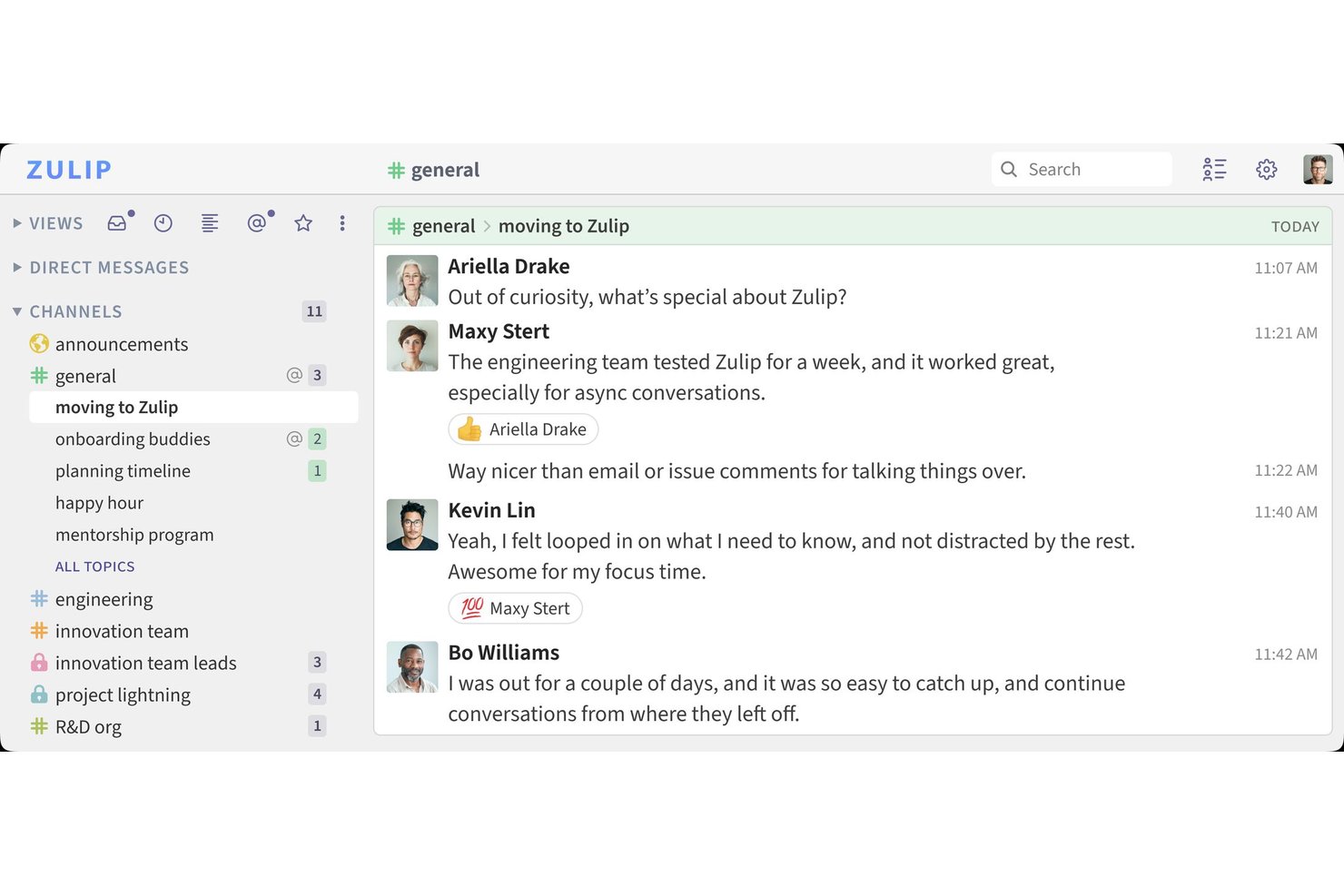
Built for product and engineering teams, Zulip is a team chat platform that helps distributed groups keep project conversations organized and make decisions easier to track.
Who Is Zulip Best For?
Zulip suits teams with many ongoing workstreams, such as software and open-source projects, that need conversations organized into searchable topics.
Why I Picked Zulip
I picked Zulip because it’s best for async topic-based team chat. I like how streams group work by project while topics keep separate discussions, such as bug triage and release planning, from getting tangled in one channel. Searchable topic threads help my team return to decisions without digging through unrelated chat.
Zulip Key Features
- Markdown formatting: Format messages with code blocks, links, lists, and text styling.
- Emoji reactions: Add emoji reactions to messages.
- File uploads: Attach files to messages for teammates to access.
- Integrations: Connect Zulip with external tools through integrations and bots.
Zulip Integrations
Zulip offers 130+ native integrations, including GitHub, GitLab, Jira, Asana, Linear, and Trello; it also connects with Zapier and IFTTT and provides a REST API for custom integrations.
Pros and Cons
Pros:
- Self-hosting gives teams control over chat data
- Searchable history keeps decisions easy to retrieve
- Topic threads separate parallel project discussions
Cons:
- Mobile experience feels less fluid than desktop
- Streams and topics confuse newcomers

Zoom
Best for meeting-centered team collaboration
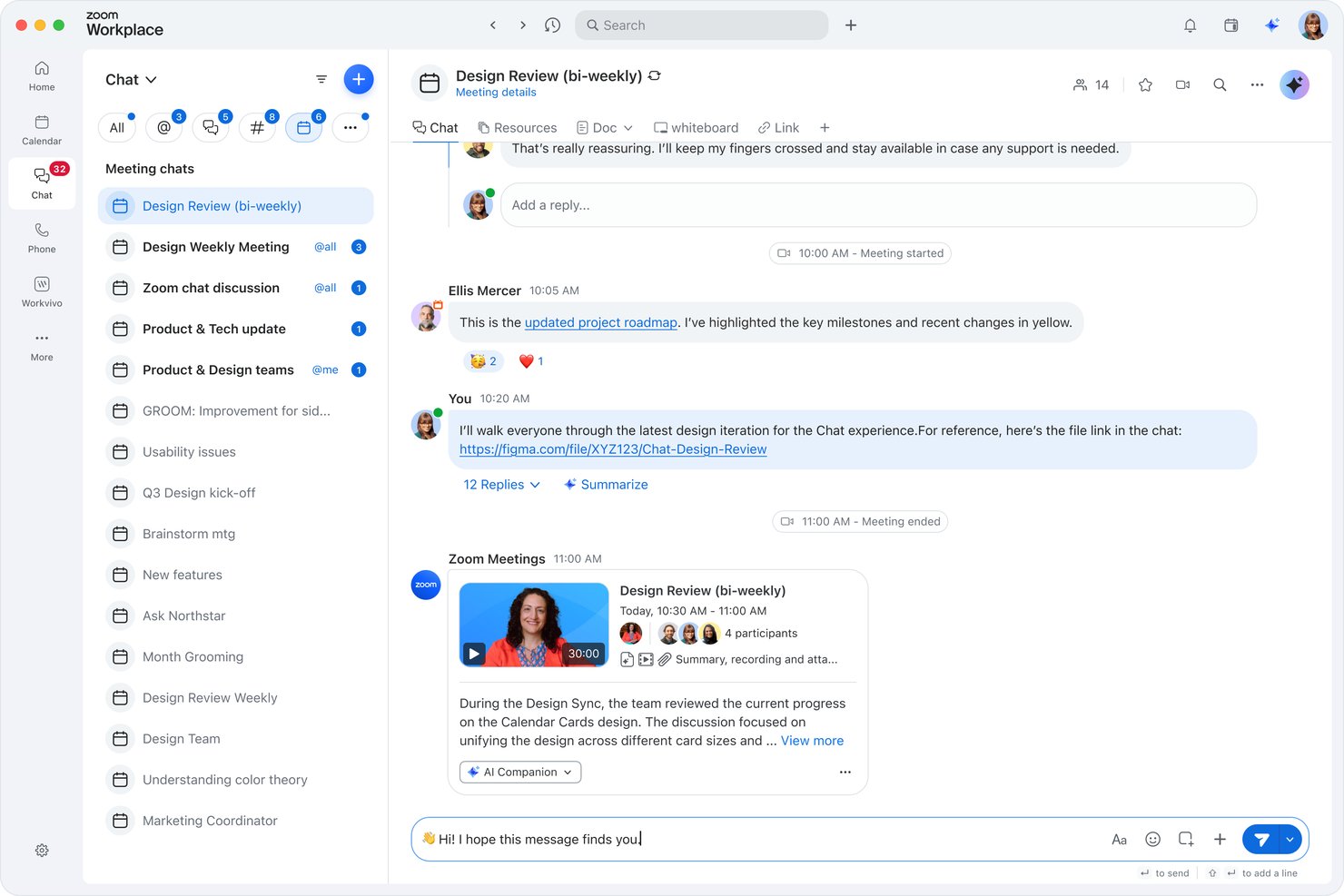
Zoom is a collaboration platform for distributed project and product teams, bringing video meetings, chat, and shared workspaces together to help teams align stakeholders and keep decisions visible.
Who Is Zoom Best For?
Product and engineering project managers can use Zoom to coordinate stakeholder reviews, planning sessions, and decisions across remote or hybrid teams.
Why I Picked Zoom
I picked Zoom for Best for meeting-centered team collaboration because it brings project decisions into live conversations. I use screen sharing to walk stakeholders through prototypes and meeting chat to share links during reviews.
Zoom Key Features
- Team Chat channels: Create persistent channels for project discussions, file sharing, and team updates.
- Zoom Whiteboard: Build and edit visual boards together with sticky notes, shapes, and templates.
- Zoom Docs: Create and co-edit documents, tables, and project plans.
- Zoom Clips: Record and share short video messages for asynchronous updates.
Zoom Integrations
Zoom documents integrations with Google Calendar, Office 365, Exchange, Slack, Microsoft Teams, Salesforce, Dropbox, Box, and Microsoft OneDrive. It also supports Zapier and offers REST APIs, a Desktop SDK, and MobileRTC for custom integrations.
Pros and Cons
Pros:
- Meetings pair with whiteboards and recordings
- External guests join without account friction
- Reliable calls with clear screen sharing
Cons:
- Project tracking remains limited for ongoing work
- In-meeting chat history can disappear

Chanty
Best for low-cost Flock migration to team chat
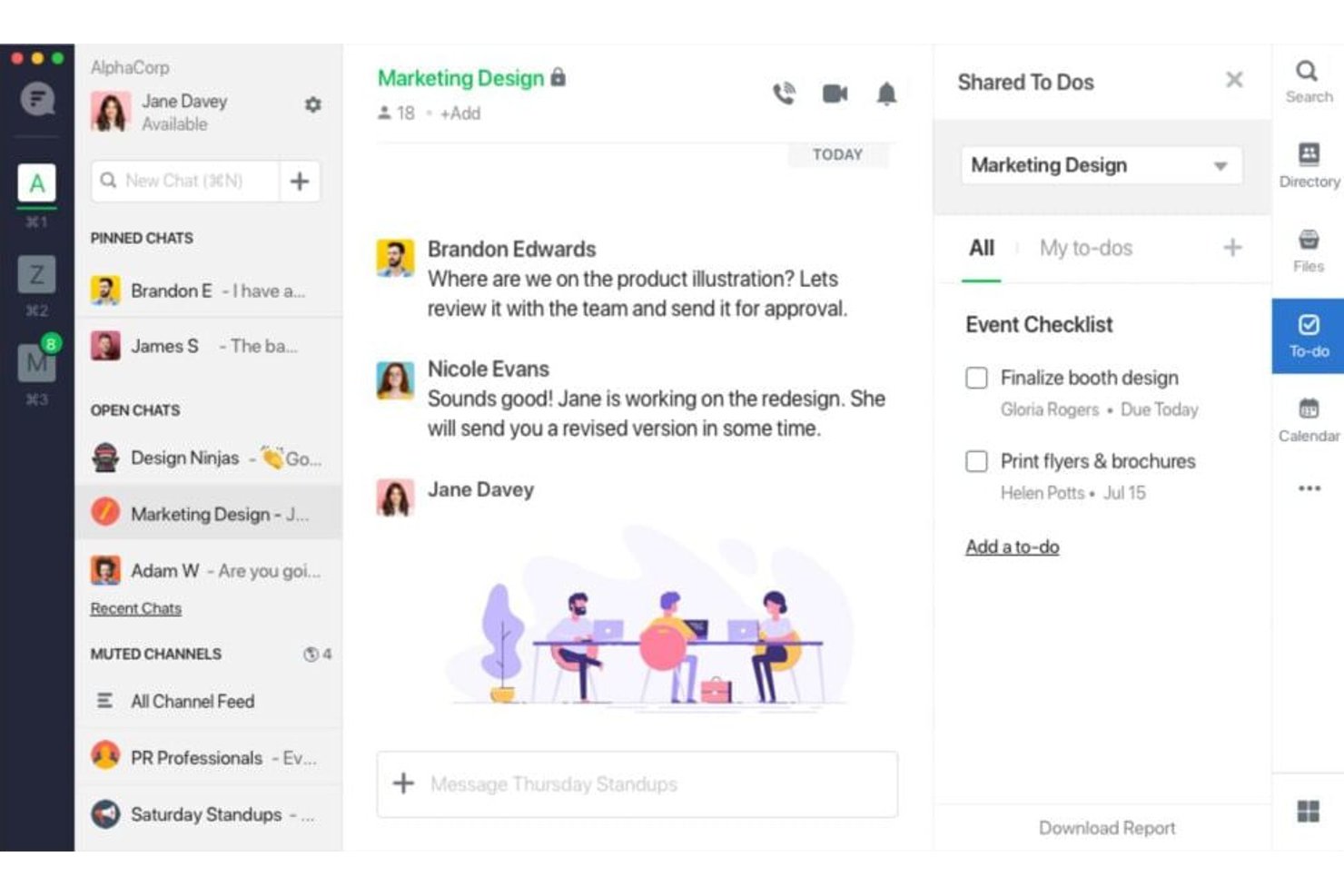
Chanty combines team messaging, searchable conversations, file sharing, and task tracking in one workspace, helping product and engineering teams coordinate decisions and keep follow-ups visible.
Who Is Chanty Best For?
Chanty suits budget-conscious small teams moving from Flock that need a straightforward tool for day-to-day team chat.
Why I Picked Chanty
I picked Chanty as a low-cost Flock migration option because it keeps team chat connected to follow-up work. Searchable conversations help me find past decisions, while file sharing and task tracking keep project handoffs in the same workspace. My team can keep daily coordination and related work together.
Chanty Key Features
- Audio and video calls: Start voice or video calls with teammates.
- Guest groups: Organize external guests separately from internal teams.
- Permission controls: Set access rules for chats, guest invites, and other actions.
- Desktop and mobile apps: Access Chanty on web, macOS, Windows, iOS, and Android.
Chanty Integrations
Chanty lists app integrations with Jira, Trello, Asana, ClickUp, monday.com, GitHub, GitLab, Bitbucket, Google Drive, and Dropbox. It also connects with Zapier.
Pros and Cons
Pros:
- Voice messages support asynchronous handoffs
- Turn chat decisions into assigned tasks
- Message search surfaces past team decisions
Cons:
- Windows calls and screen sharing can glitch
- Task views fall short for complex projects

Best for Zoho ecosystem integration
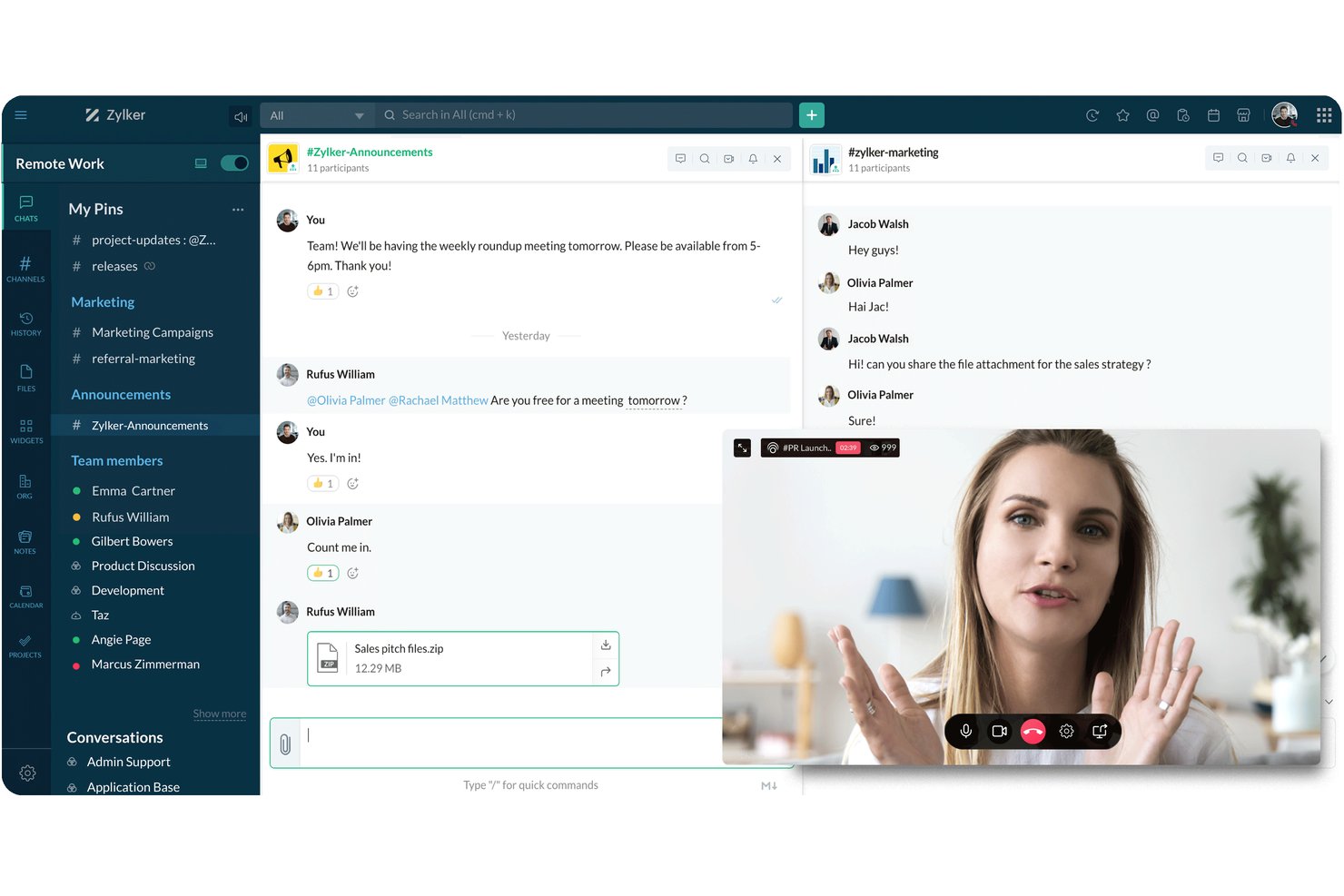
Zoho Cliq gives distributed product and operations teams a shared place for channel discussions, direct messages, and calls, helping keep project decisions and quick questions from getting lost across inboxes.
Who Is Zoho Cliq Best For?
Zoho Cliq is a good fit for project and operations teams that already use Zoho apps and want communication connected to that ecosystem.
Why I Picked Zoho Cliq
I picked Zoho Cliq as a Flock alternative and “Best for Zoho ecosystem integration” because its Zoho Projects connection brings real-time project notifications and task updates into chat. I like how teams can discuss a changed task in a channel while keeping project activity close at hand.
Zoho Cliq Key Features
- Channels: Create topic-based spaces for team discussions.
- Threaded discussions: Reply to a message in a dedicated thread.
- Audio and video calls: Start calls and meetings from Cliq.
- File sharing: Share files directly in conversations.
Zoho Cliq Integrations
Zoho Cliq offers marketplace integrations with Zoho Projects, Zoho CRM, Zoho Desk, GitHub, GitLab, Google Drive, Asana, and Trello. It provides a REST API for custom integrations and connects with Zapier.
Pros and Cons
Pros:
- Screen sharing supports client walkthroughs
- Threaded channels keep project decisions contextual
- Meeting chats persist after calls
Cons:
- Calls can freeze or feel less polished
- Notifications sometimes arrive late or go missing

Best for Microsoft 365 integration
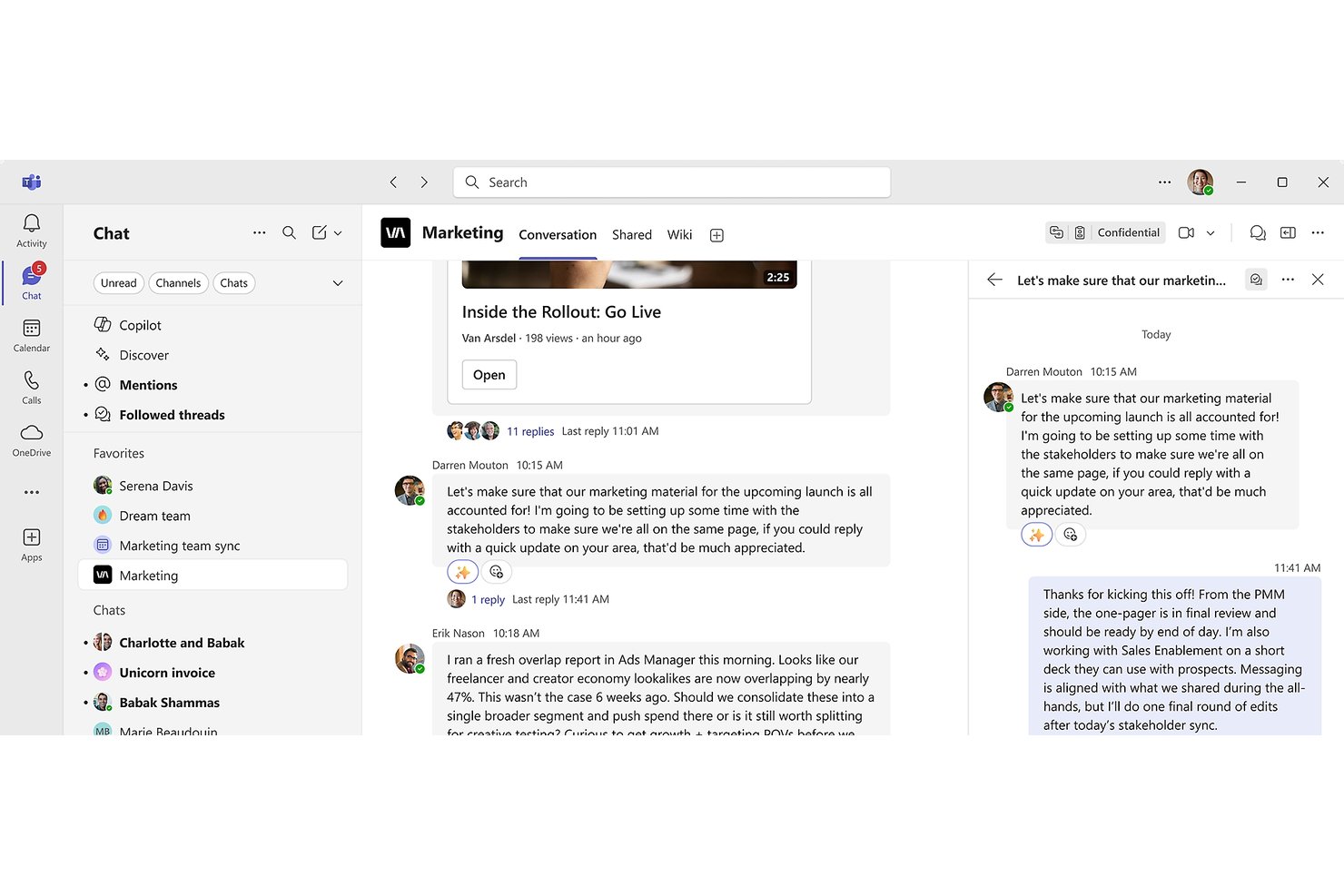
Microsoft Teams gives product, engineering, and design teams a shared space for chat, calls, meetings, and file collaboration, helping keep project discussions and decisions connected.
Who Is Microsoft Teams Best For?
Project managers and cross-functional teams already working in Microsoft 365 can coordinate project discussions and meetings within tools they already use.
Why I Picked Microsoft Teams
I picked Microsoft Teams because its Microsoft 365 integration keeps project coordination close to the tools teams already use. I use channels to organize workstream discussions and share project files alongside the conversation, while meetings and calls keep decisions connected to the same team space. That helps me keep updates and the documents teams need to review together.
Microsoft Teams Key Features
- Private and group chats: Start one-to-one conversations or chat with multiple colleagues.
- Message reactions: Respond to chat messages with emoji reactions.
- Message editing: Edit messages after sending them.
- Chat search: Find messages and narrow results by sender.
Microsoft Teams Integrations
Microsoft Teams has native integrations across the Microsoft ecosystem, including Microsoft 365, Outlook, SharePoint, and OneDrive. It also supports apps from the Teams app store, connects with Zapier, and offers Microsoft Graph APIs for custom integrations.
Pros and Cons
Pros:
- Teams can co-edit project documents in context
- Meetings support recordings, captions, and screen sharing
- Channels keep project discussions and files together
Cons:
- Desktop app can lag and consume substantial resources
- Search often misses older messages and files

Best for self-hosted team chat deployment
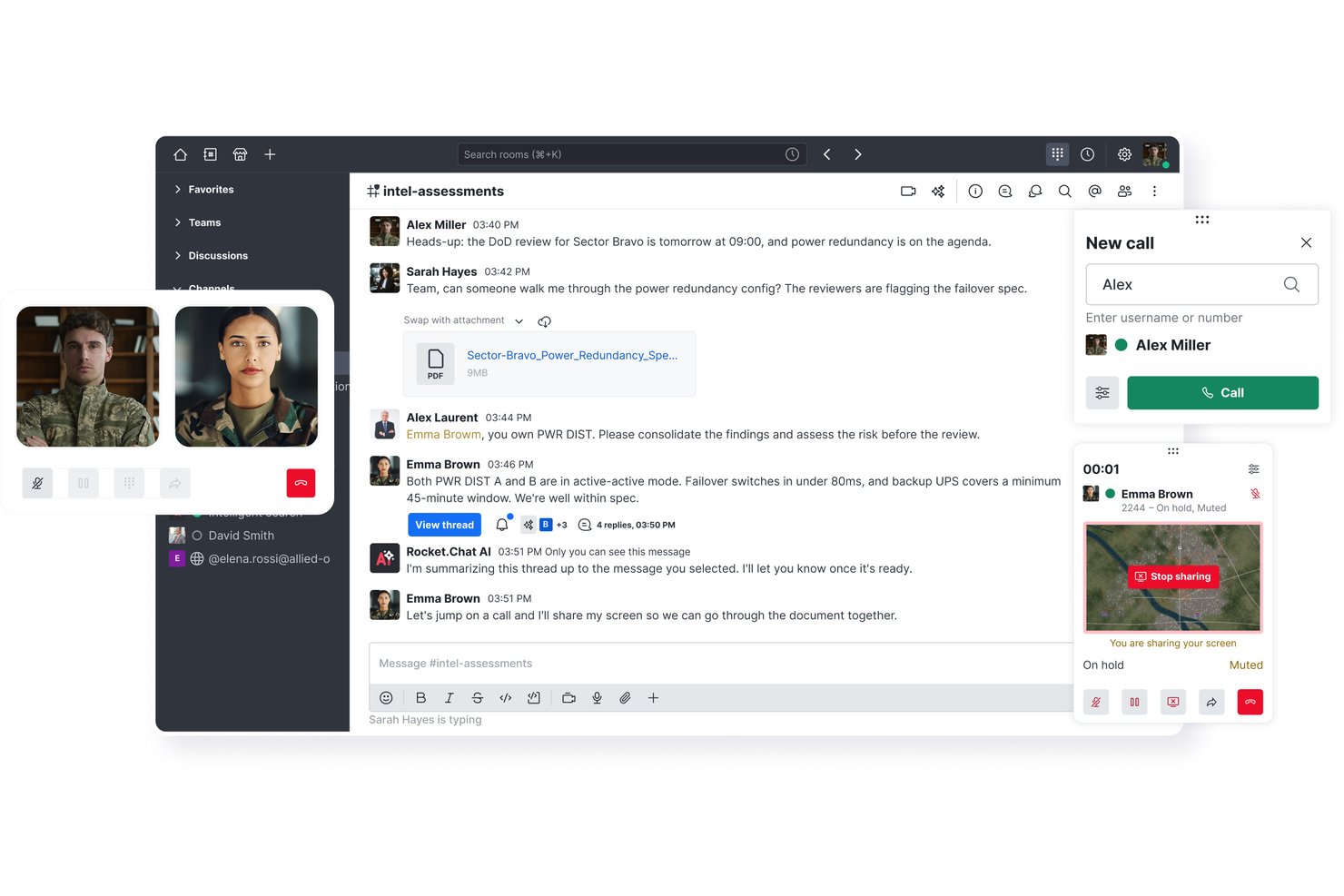
Rocket.Chat brings channel-based messaging, direct chats, and integrations together for product and engineering teams that need to coordinate decisions and keep project conversations organized.
Who Is Rocket.Chat Best For?
Rocket.Chat suits IT and platform teams that want to host team chat on their own infrastructure and manage its deployment directly.
Why I Picked Rocket.Chat
I picked Rocket.Chat as a Flock alternative because it’s Best for self-hosted team chat deployment, letting teams run chat on infrastructure they manage. I like how product and engineering teams can organize release discussions in channels, then use direct chats to resolve specific decisions while keeping conversations within their own deployment.
Rocket.Chat Key Features
- Message threads: Reply to a specific message to keep follow-up discussion grouped.
- File sharing: Upload and share files directly in conversations.
- Audio and video calls: Start voice or video calls from Rocket.Chat.
- Message search: Search conversation history to find messages and shared files.
Rocket.Chat Integrations
Rocket.Chat offers Marketplace apps for integrations including GitHub, Jira Cloud, Google Drive, Trello, HubSpot CRM, and Zapier. It also supports custom integrations through its API and incoming and outgoing webhooks.
Pros and Cons
Pros:
- Air-gapped deployment supports sensitive team communications
- Channels and threads keep project decisions grouped
- Self-hosting keeps project conversations under your control
Cons:
- Some deployments report intermittent performance slowdowns
- Admin guides can be difficult to follow
Blink
Best for frontline worker communication
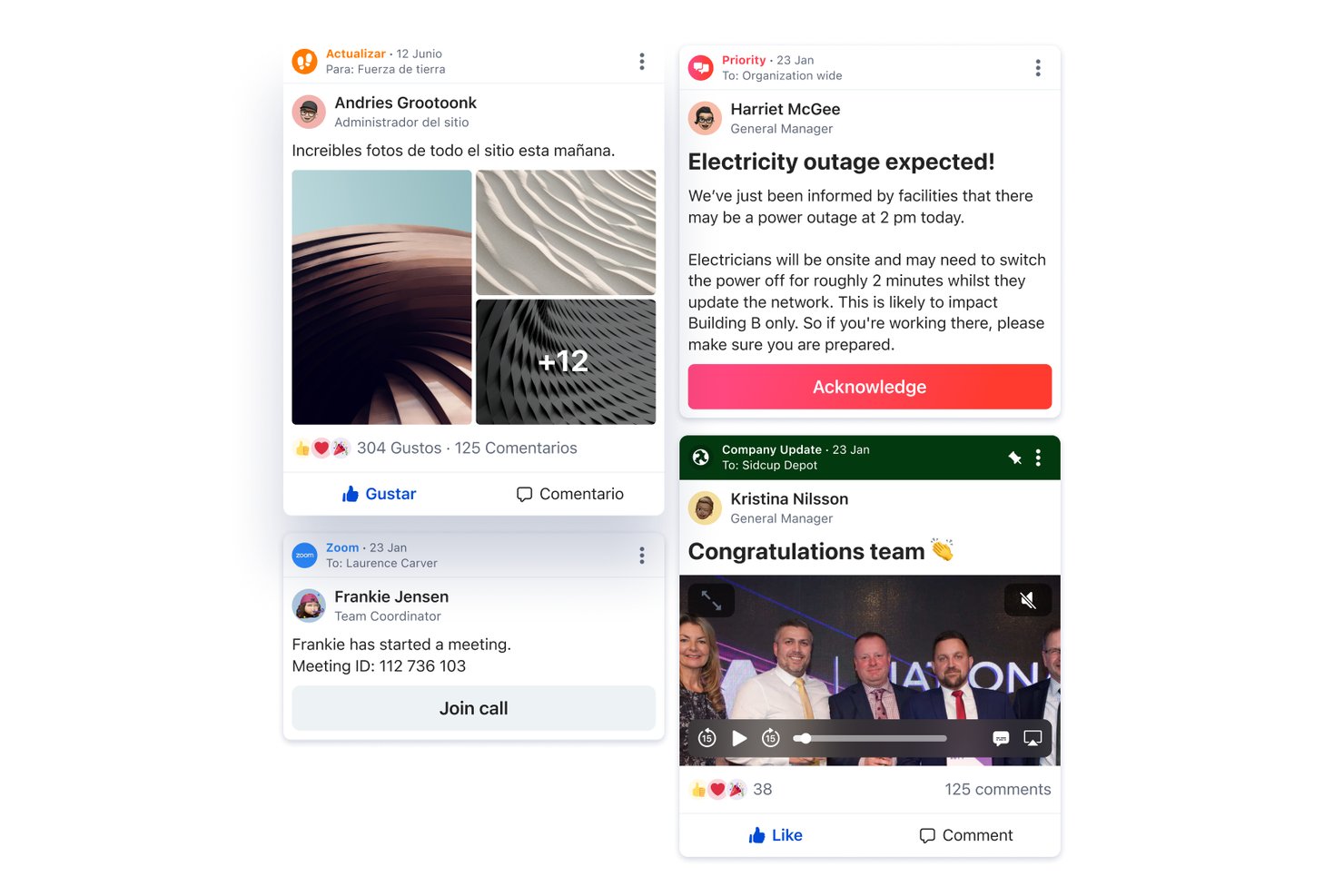
Blink is a mobile employee communication platform for organizations with deskless and distributed teams, bringing messaging, company updates, and work tools together so staff can stay informed without relying on email or scattered apps.
Who Is Blink Best For?
Operations and HR teams at organizations with frontline staff can use Blink to share updates and keep employee communication accessible beyond email.
Why I Picked Blink
I picked Blink as a Flock alternative for “Best for frontline worker communication.” I like its story-style shift briefs for sharing safety bulletins and route updates, plus chat and voice or video for follow-up between shifts.
Blink Key Features
- Employee feed: Share posts with reactions and employee recognition.
- Surveys and polls: Collect employee feedback through in-app questions.
- Digital forms: Replace paper-based processes with mobile forms.
- Knowledge management: Make policies, procedures, and guidance available to employees.
Blink Integrations
Blink’s App Marketplace lists 37 integrations, including Workday, ADP, Microsoft 365, Google, Salesforce, ServiceNow, Jira, Dropbox, Okta, and Zoom. Blink also provides an API for custom integrations.
Pros and Cons
Pros:
- Forms and policy hub replace scattered resources
- Feed posts support updates and recognition
- Mobile-first access connects deskless teams
Cons:
- Hub document organization can feel awkward
- Busy feeds make older posts harder to find
Bitrix24
Best for chat-to-task conversion
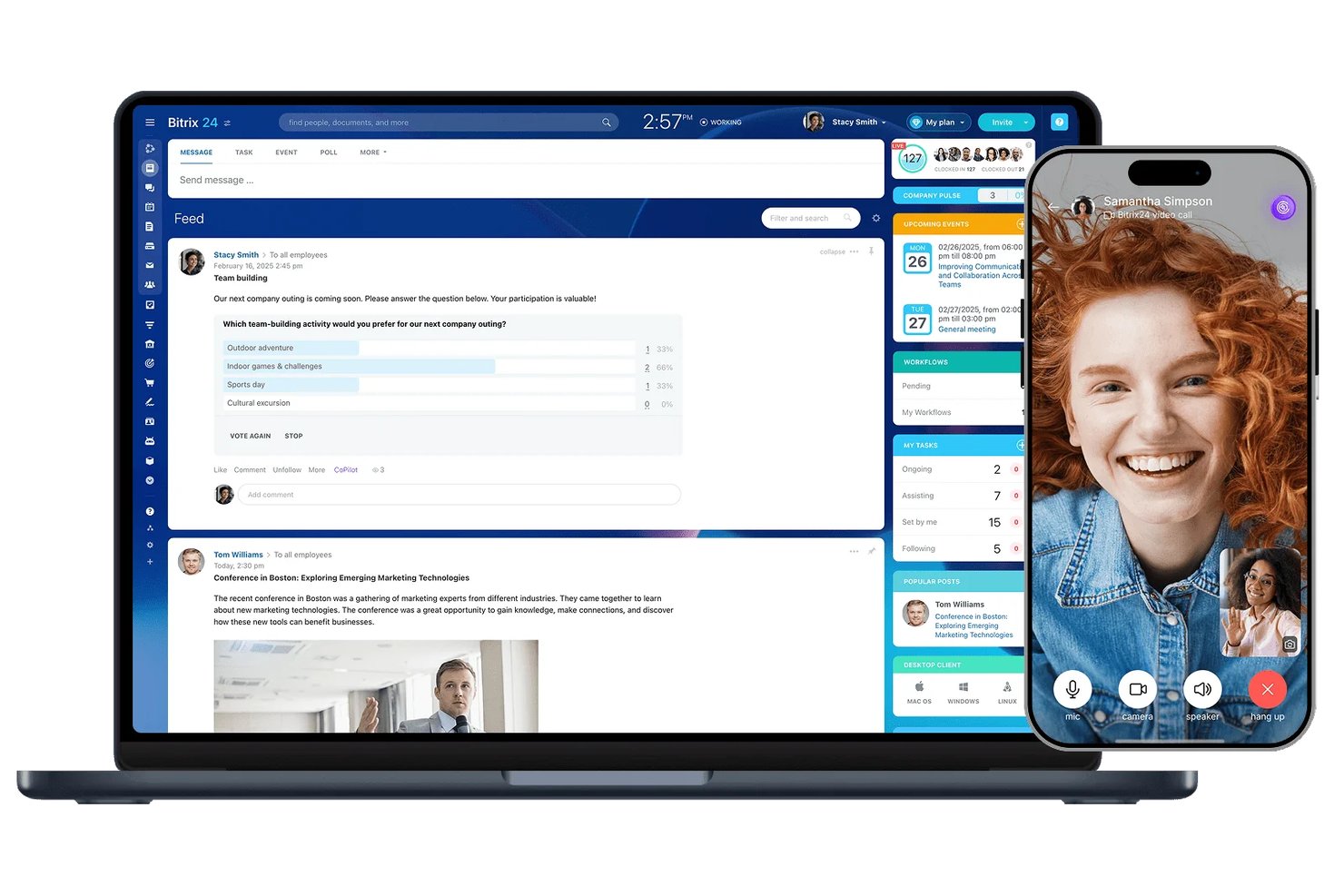
Bitrix24 combines team chat with project and business tools, giving cross-functional teams one workspace to coordinate work and keep communication connected to ongoing projects.
Who Is Bitrix24 Best For?
Bitrix24 suits project coordinators and team leads who need to turn team conversations into assigned tasks and follow-up work.
Why I Picked Bitrix24
I picked Bitrix24 as a Flock alternative for its chat-to-task conversion: I can turn a message about a blocked release into a task without losing the discussion behind it. I like that I can assign an owner and deadline, keeping follow-up tied to the conversation.
Bitrix24 Key Features
- One-to-one and group chats: Start private conversations or group discussions.
- Public and private chats: Set chat visibility for the intended audience.
- Chat history search: Find past messages with the built-in search.
- Video calls: Start calls from chats, tasks, or events.
Bitrix24 Integrations
Bitrix24 Market offers 500+ apps, including marketplace integrations for Jira, Google Drive, and Zoom. Bitrix24 also supports Zapier and provides a REST API for custom integrations.
Pros and Cons
Pros:
- Chat, calls, and project work coexist
- Task follow-up stays tied to discussion
- Chat threads can become assigned tasks
Cons:
- Mobile app can load slowly or crash
- Crowded interface obscures everyday chat and tasks

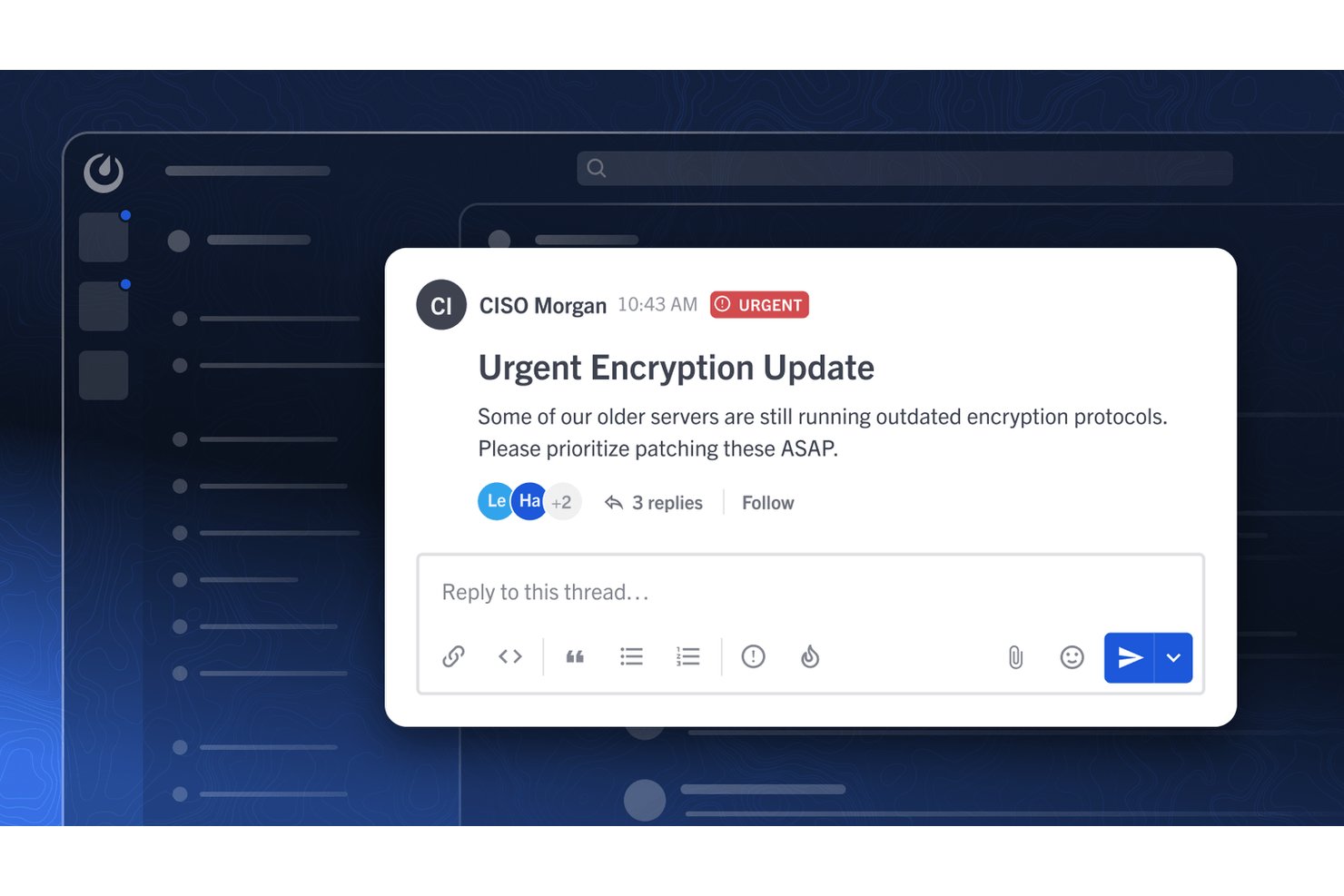
Mattermost is a team messaging platform for engineering, operations, and other technical teams that need focused conversations to coordinate projects, respond to incidents, and keep cross-functional work moving.
Who Is Mattermost Best For?
Mattermost suits engineering and operations teams that need to coordinate incident response and project work through self-hosted messaging.
Why I Picked Mattermost
I picked Mattermost as a Flock alternative for secure, self-hosted team messaging. I like that teams can run it in their own environment and use channels to coordinate incident response. Its Playbooks help teams follow repeatable response steps and keep status updates visible as work progresses.
Mattermost Key Features
- Direct and group messaging: Send messages to individuals or group conversations.
- Audio calls and screen sharing: Start calls and share your screen with teammates.
- File and link sharing: Share files, images, and links with previews.
- Threaded discussions: Reply to a message in a thread to keep the conversation organized.
Mattermost Integrations
Mattermost offers pre-built App Marketplace integrations with GitHub, GitLab, Jira, Zoom, Microsoft 365, Microsoft Teams, Outlook, and Microsoft Calendar. It also supports Zapier and a REST API for custom integrations.
Pros and Cons
Pros:
- Playbooks guide repeatable incident response steps
- Channels and threads keep incident context organized
- Self-hosted deployment keeps data under your control
Cons:
- Mobile push notifications can arrive late
- Self-hosting adds upgrade and backup workload

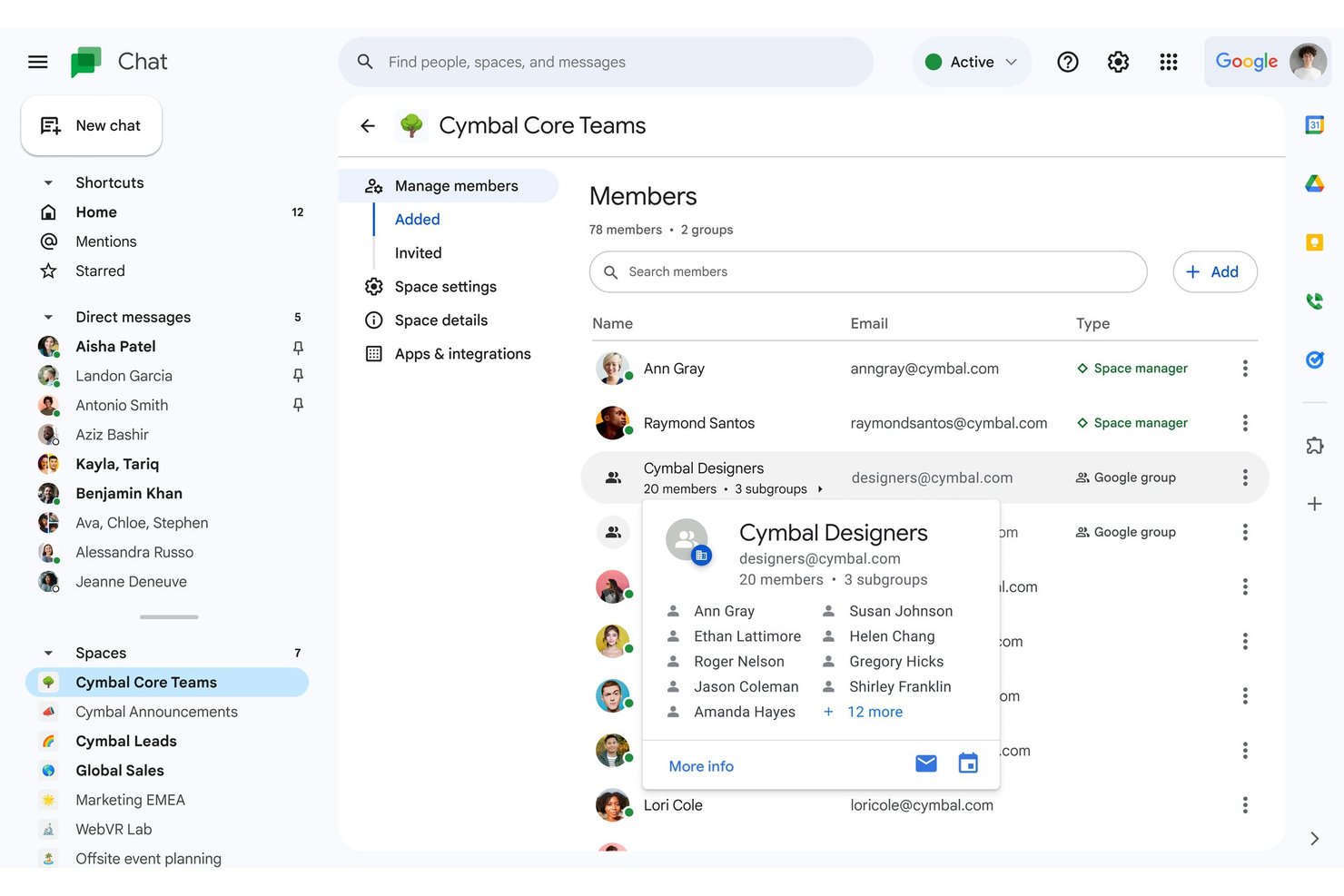
Google Chat is a team messaging app for tech and digital teams that helps keep project discussions, decisions, and cross-functional coordination in one place.
Who Is Google Chat Best For?
Project managers on teams built around Gmail, Drive, and other Google Workspace apps can use Google Chat for day-to-day project coordination.
Why I Picked Google Chat
I picked Google Chat as a Flock alternative for “Best for Google Workspace-connected chat.” Its Spaces organize project discussions, and threaded replies keep decisions tied to the right conversation. I also like sharing Drive files in a Space, where product and engineering can review the same project brief.
Google Chat Key Features
- Direct and group messages: Send one-to-one messages or start group conversations.
- Google Meet calls: Start a Meet video call from a chat.
- Message search: Search conversations to find past messages.
- Message formatting: Use bold, italics, lists, and code formatting.
Google Chat Integrations
Google Chat connects with Google Drive and Google Meet, and supports Chat apps for Asana, GitHub, Jira, PagerDuty, Salesforce, Workday, and Zendesk. It connects with Zapier and provides the Google Chat API for custom integrations.
Pros and Cons
Pros:
- Message search helps retrieve past decisions
- Threaded replies keep decisions with conversations
- Spaces separate project conversations from direct messages
Cons:
- Large teams get limited workflow organization
- Notifications can be missed or duplicated
Andre alternativer til Flock
Her er noen flere alternativer til Flock som ikke kom med på kortlisten min, men som likevel er verdt å sjekke ut:


How I Evaluate Flock Alternatives
I split my evaluation into three parts. First, core functionality: an alternative needs to handle real-time messaging reliably and support channel-based organization by team or topic—this carries the most weight. Second, I look for standout features like AI-powered summarization or threaded task conversion. Third, I consider what's beyond the feature set: migration support, pricing transparency, and security controls.
Core Functionality (Table Stakes For This List)
When I'm selecting tools for my list, I score each one on a scale from 0 (does not offer the functionality) to 5 (excels in this area) for each core functionality listed below. I then convert the total into a percentage to help assess each tool's overall fit, with extra weight on any functionalities I’ve deemed essential.
- Real-Time Messaging (Essential): I look for reliable direct and group chats, with threads or reactions that help teams resolve questions without losing project context.
- Channels (Essential): I check whether teams can organize conversations by project or topic, with public or private settings suited to the people involved.
- Voice And Video Calls: I assess whether teams can hold one-to-one and group calls, share screens, and discuss urgent dependencies without switching apps.
- File Sharing And Search: I look for straightforward file sharing and search that helps teammates retrieve a decision, document, or update from an earlier conversation.
- Third-Party Integrations: I consider how the tool connects with calendars, storage, and project trackers, such as when a chat needs to link to assigned work.
- Desktop, Web, And Mobile: I check whether core messaging and collaboration features work consistently across devices for distributed teams.
Once I have a list of tools that meet the criteria, I consider what sets each platform apart.
Differentiating Factors (What Sets Vendors Apart)
Here's how I compare and contrast different vendors:
Standout Features
I look for threaded task conversion—the ability to turn a chat message into a tracked task with an assignee and due date. This bridges the gap between a decision made in conversation and actual follow-through. I also evaluate workflow automation builders, checking whether teams can set up no-code triggers for approvals or status updates without leaving the chat. Tools like Slack and Microsoft Teams handle this differently, so I compare how much setup each requires for a real recurring workflow.
Beyond Features
I check whether a vendor publishes clear per-user pricing tiers and offers flexible guest seats—agencies that bring clients into project channels need predictable costs as headcount shifts. Migration support matters just as much: some platforms provide dedicated onboarding specialists and channel-history imports, while others leave you to rebuild from scratch. I also evaluate vendor roadmap momentum, because a tool that hasn't shipped meaningful updates in months is a risk for any team choosing a daily-driver communication platform.
Hvorfor se etter et alternativ til Flock?
Selv om Flock er et godt alternativ, finnes det flere grunner til at noen brukere ser etter andre løsninger. Det kan hende du ser etter et alternativ til Flock fordi …
- Du trenger mer avanserte integrasjoner med andre verktøy
- Teamet ditt er avhengig av arbeidsflyter som er utviklet først og fremst for mobile enheter, eller som brukes av ansatte uten fast arbeidsplass
- Du ønsker flere tilpasningsmuligheter for varsler og meldinger
- Du trenger bedre støtte for store eller distribuerte team
- Du trenger funksjoner som er skreddersydd for bestemte bransjer
- Du ønsker mer fleksible pris- eller faktureringsalternativer
Hvis noe av dette høres kjent ut, har du kommet til rett sted. Listen min inneholder flere alternativer til Flock som passer bedre for team som møter disse utfordringene med Flock og ser etter andre løsninger.
Viktige funksjoner i Flock
Her er noen av de viktigste funksjonene i Flock, slik at du kan sammenligne hva alternative løsninger tilbyr:
- Direkte meldinger og gruppemeldinger
- Innebygd videokonferanse
- Fildeling og lagring
- Søkbar meldingshistorikk
- Delte gjøremålslister og påminnelser
- Kanalbaserte samtaler
- Avstemninger og spørreundersøkelser
- Innebygde integrasjoner med produktivitetsverktøy
- Tilgang for gjestebrukere
- Kunngjøringskanaler for teamet