

10 Melhores Softwares Empresariais de Gestão de Reuniões em 2026

10 Melhor seleção de software empresarial de gestão de reuniões


O software empresarial de gestão de reuniões ajuda as grandes organizações a planear, coordenar e documentar reuniões entre várias equipas e partes interessadas. Se procura ferramentas capazes de gerir agendamentos complexos, documentação segura, acompanhamento de tarefas e integração com a sua infraestrutura tecnológica, sabe o que está em jogo — decisões claras, registos de auditoria e alinhamento em toda a empresa.
Este guia compara os melhores softwares em 2026, para que possa encontrar a opção mais adequada às necessidades de segurança, conformidade e colaboração da sua organização.
Why Trust Our Software Recommendations
Our team has been testing and reviewing software since 2012. As project managers ourselves, we know how difficult—and important—it is to choose the right software.
For this guide, we evaluated tools using hands-on testing and independent research, scoring tools using our selection criteria. We also draw on insights from industry thought leaders and practicing project management experts.
Our reviews reflect our human editorial judgment, not a sales pitch.
Expert reviewers:
Tabela comparativa de software empresarial de gestão de reuniões
Esta tabela comparativa resume os detalhes de preços das minhas principais escolhas de software empresarial de gestão de reuniões:
| Tool | Best For | Trial Info | Price | ||
|---|---|---|---|---|---|
| 1 | Best real-time voting for decision making | Free trial + free demo available | Pricing upon request | Website | |
| 2 | Best offline access for remote participation | Free demo available | Pricing upon request | Website | |
| 3 | Best deep integration with Microsoft 365 | Free plan + 1-month free trial available | From $4/user/month (billed annually) | Website | |
| 4 | Best enterprise-level compliance features | Free demo available | Pricing upon request | Website | |
| 5 | Best secure document distribution for directors | Free demo available | Pricing upon request | Website | |
| 6 | Best collaborative note sharing for teams | Free plan available | From $7/user/month (billed annually) | Website | |
| 7 | Best action item tracking for follow-ups | Free demo available | Pricing upon request | Website | |
| 8 | Best advanced meeting minutes templating | 30-day free trial + free demo available | From $4.60/user/month | Website | |
| 9 | Best agenda planning for recurring sessions | 14-day free trial + free plan + free demo available | From $14/user/month (billed annually) | Website | |
| 10 | Best centralized documentation management | Free trial available | Pricing upon request | Website |
Avaliações do melhor software empresarial de gestão de reuniões
Apresento abaixo os meus resumos detalhados do melhor software empresarial de gestão de reuniões que integrou a minha seleção. As minhas avaliações oferecem uma análise detalhada das funcionalidades, integrações e melhores casos de utilização de cada plataforma, para o ajudar a encontrar a opção mais adequada para si.
OnBoard
Best real-time voting for decision making
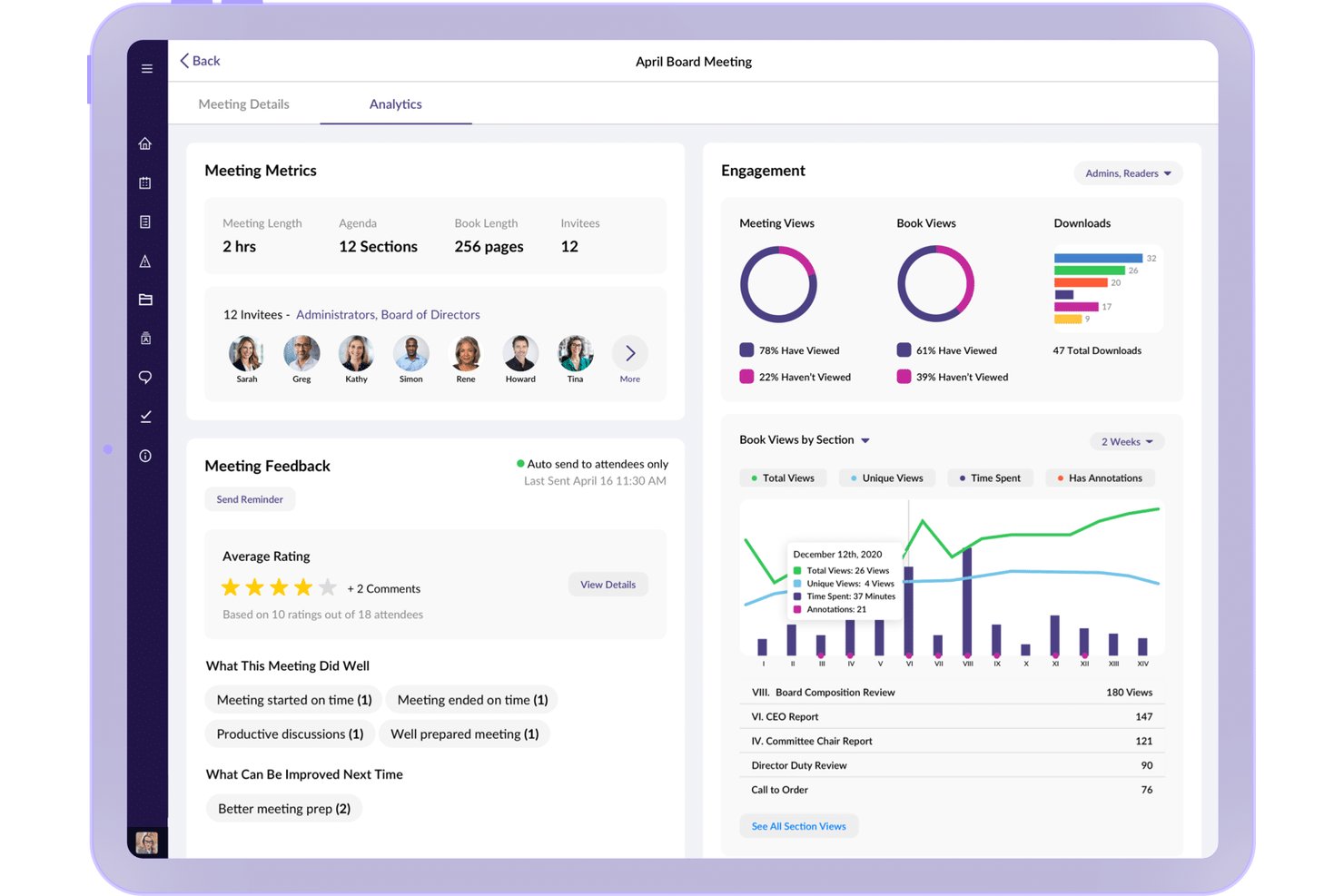
OnBoard is a board portal and governance platform that brings together agenda building, minutes capture, document management, voting and approvals, and board assessments into a single secure environment for boards and steering committees.
Who Is OnBoard Best For?
OnBoard is a strong fit for governance leads, corporate secretaries, and executives managing board or steering committee meetings in regulated industries.
Why I Picked OnBoard
I picked OnBoard as one of the best because its real-time Voting & Approvals module genuinely changes how boards make decisions between scheduled meetings. Rather than waiting for the next quarterly session, I can push a motion to board members for a live vote directly inside the platform, with outcomes automatically captured and tied to the meeting record. The Minutes Builder then pulls those decisions into a formal document, so there's no manual reconciliation after the fact.
OnBoard Key Features
- Agenda builder: Create structured, time-bound agendas with templates and collaborative editing.
- Task management: Assign, track, and manage action items across meetings within the platform.
- Microsoft 365 integration: Edit Word, Excel, and PowerPoint files natively inside OnBoard.
- Secure document library: Organize board materials in a centralized, permission-controlled repository.
OnBoard Integrations
OnBoard offers native integrations with Zoom, Microsoft Teams, DocuSign, Microsoft 365, Okta, and OneLogin. An API is available for custom integrations.
Pros and Cons
Pros:
- Centralized document access and annotation
- Detailed agenda and minutes builder
- Real-time board voting and approvals
Cons:
- Primarily focused on formal board processes
- Limited customization of meeting templates
iBabs
Best offline access for remote participation
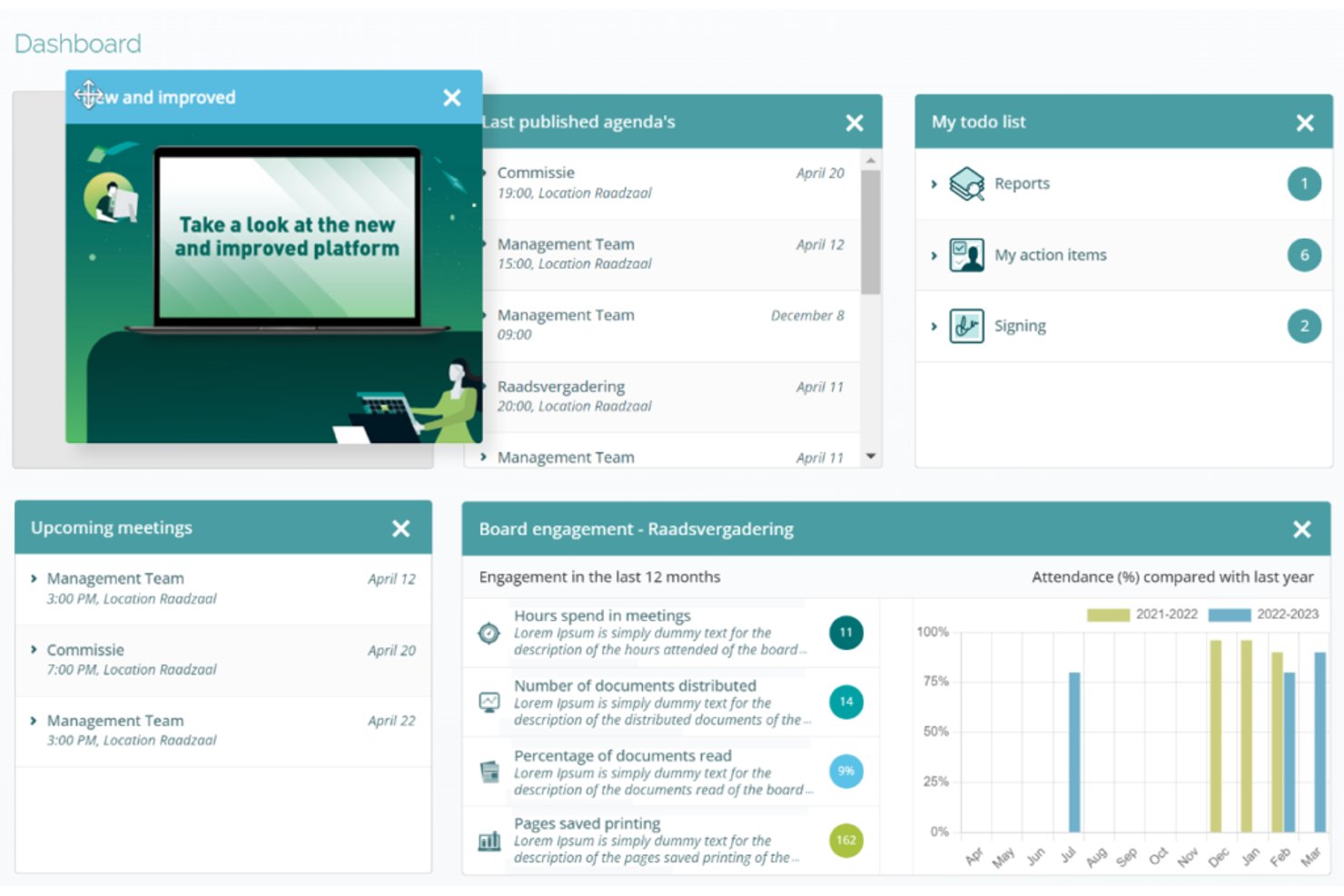
iBabs is a board portal and meeting management platform built for governance-heavy meetings, combining structured agenda creation, document distribution, minutes, voting, digital signatures, and AI-assisted transcription.
Who Is iBabs Best For?
iBabs is a strong fit for public-sector organizations, councils, healthcare bodies, and enterprises that run formal board or steering committee meetings with strict governance requirements.
Why I Picked iBabs
iBabs earns its spot as one of the best on my shortlist because of how well it handles offline access for board members who participate remotely. The native iOS, Android, and Windows apps automatically sync meeting dossiers before a session, so participants can read documents, annotate pages, and cast votes without an active internet connection. I particularly like that this extends to anonymous voting and approval routing, not just passive document review.
iBabs Key Features
- Structured agenda builder: Create detailed, time-allocated agendas for formal meetings and distribute them securely to all participants.
- AI-generated minutes and summaries: Use iBabs Debrief to produce AI-powered transcripts and speaker-attributed minutes.
- Voting and decision logging: Enable manual, live, or anonymous voting and automatically log decisions in meeting records.
- Digital signatures and secure document management: Sign documents within the platform and manage sensitive files with granular access controls.
iBabs Integrations
iBabs offers native integrations with Microsoft 365 (including Outlook and SharePoint), Microsoft Entra ID, Google Workspace, Okta, and SURFconext.
Pros and Cons
Pros:
- AI-generated meeting transcripts and minutes
- Secure voting and digital signature workflows
- Offline access for meetings on all devices
Cons:
- Limited project team meeting features
- No two-way task sync with PM platforms

Best deep integration with Microsoft 365
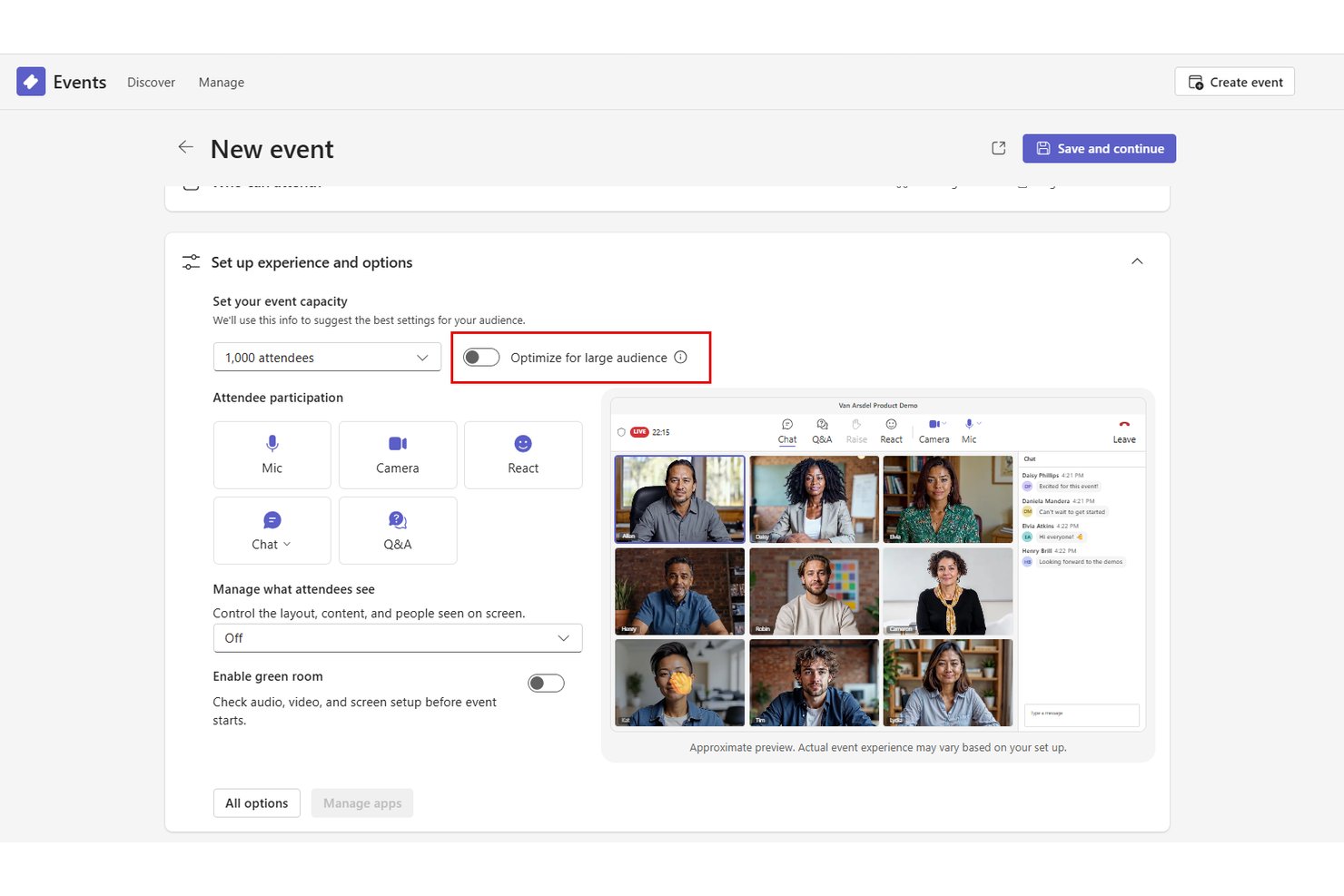
Microsoft Teams is an enterprise collaboration platform that combines video conferencing, AI-powered meeting summaries, action item capture, and scheduling within a channel-based workspace designed to keep meetings connected to ongoing project work.
Who Is Microsoft Teams Best For?
Teams is a strong fit for large enterprises already standardized on Microsoft 365 that want meeting management built into their existing productivity stack.
Why I Picked Microsoft Teams
I picked Microsoft Teams as one of the best because of how tightly its meeting experience is wired into Microsoft 365. Running a steering committee meeting inside a Teams channel means the agenda, shared files, and Planner tasks all live alongside every prior discussion, with no context-switching required. Teams Premium's Intelligent Recap then generates AI-powered summaries and assigned action items automatically after each call.
Microsoft Teams Key Features
- Live translation and interpretation: Participants can access real-time translation for multilingual meetings at scale.
- Room and desk booking: Teams Rooms and Microsoft Places enable workspace and meeting room reservations directly from the app.
- Sensitivity labels and watermarking: Advanced meeting protection options secure confidential content with labels and visible watermarks.
- Microsoft Loop integration: Collaborative pages and task lists can be embedded into meetings for real-time editing and tracking.
Microsoft Teams Integrations
Microsoft Teams has native integrations across the Microsoft ecosystem, including Microsoft 365 and Azure, and also connects with Jira, Trello, Asana, ServiceNow, Zoom, Salesforce, and Slack. An API is available for custom integrations.
Pros and Cons
Pros:
- Real-time collaborative editing with Microsoft Loop
- Advanced enterprise security and compliance controls
- AI-powered meeting transcripts and summaries
Cons:
- Relies heavily on Microsoft 365 adoption
- Agenda templates and approval workflows missing

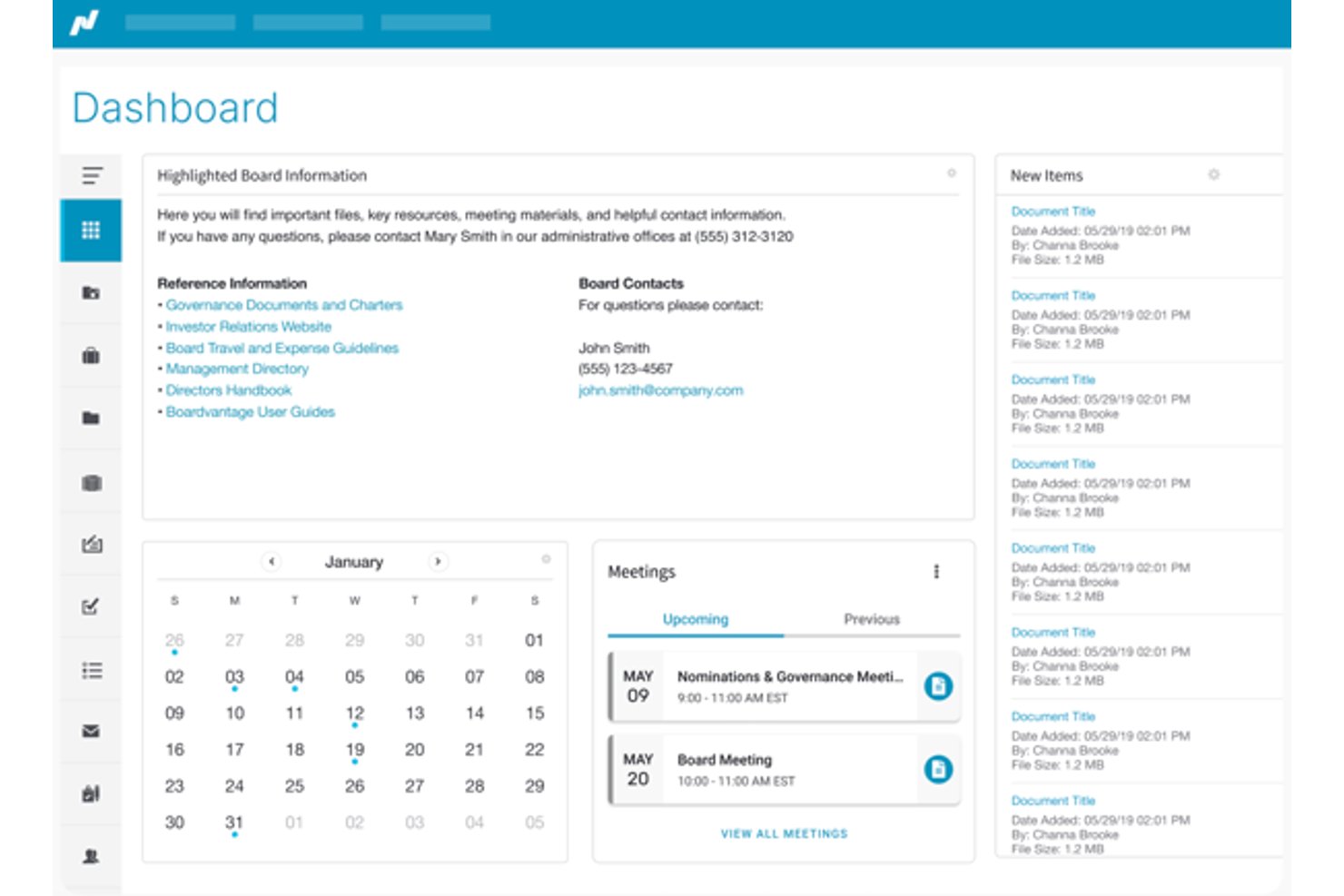
Nasdaq Boardvantage is a board portal built for enterprise governance, combining meeting preparation, secure document distribution, board book assembly, digital approvals, e-signatures, and compliance questionnaires in a single platform.
Who Is Nasdaq Boardvantage Best For?
It's a strong fit for large enterprises and publicly traded companies where corporate secretaries and legal teams manage board and committee meeting governance.
Why I Picked Nasdaq Boardvantage
Nasdaq Boardvantage earns its spot on my shortlist because its compliance infrastructure is genuinely built for high-stakes governance meetings. I'm particularly impressed by the combination of SOC 2 auditing, ISO 27001 certification, granular access controls, and full audit trails, which together cover what most enterprise security teams require before approving a board-level tool. I also find the built-in conflict of interest questionnaires and digital compliance workflows valuable, since those typically require a separate tool or manual process in competing platforms.
Nasdaq Boardvantage Key Features
- Board portal dashboard: Lets users organize meetings, board books, and key documents in a centralized online hub.
- In-app notes and annotations: Directors and admins can annotate board materials and add secure private notes for reference.
- Digital board book assembly: Upload, order, and build complete digital board books for distribution before meetings.
- DocuSign integration: Enables legally binding electronic signatures for board approvals and resolutions directly within the platform.
Nasdaq Boardvantage Integrations
Nasdaq Boardvantage offers native integrations with DocuSign, Microsoft Outlook, and Google Drive.
Pros and Cons
Pros:
- Built-in digital signature and approval flows
- Advanced document permission and access controls
- Board book assembly and distribution workflow
Cons:
- Lacks recurring meeting agenda features
- No real-time meeting collaboration tools

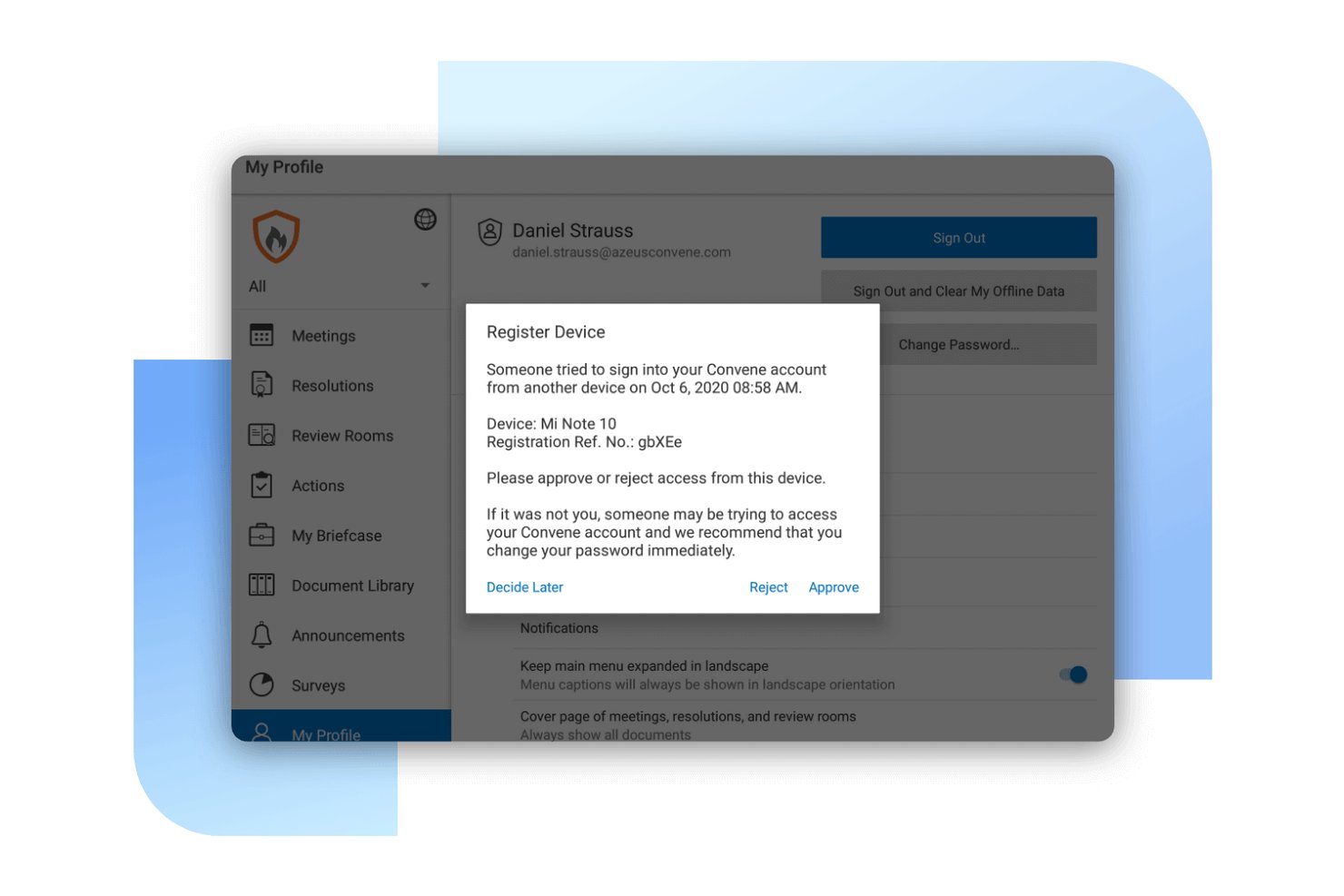
Convene is a board portal and meeting management platform built for governance-focused organizations, combining agenda building, AI-assisted minutes, secure document distribution, voting, and audit-ready compliance tools.
Who Is Convene Best For?
Convene is a strong fit for enterprise organizations running board and steering committee meetings where document security, governance, and compliance are non-negotiable.
Why I Picked Convene
I picked Convene as one of the best because its approach to document security goes well beyond standard access controls. Board packs are decrypted on-the-fly, meaning documents never sit unencrypted on a director's device. Per-document settings let you disable screenshots, restrict downloads, and apply custom watermarks, each tracked in a full audit trail. ISO 27001 certification and SOC 2 Type II compliance back all of this up at the infrastructure level.
Convene Key Features
- Smart agenda builder: Create structured agendas with templates, time allocations, and attachments for each agenda item.
- AI-powered meeting minutes: Automatically capture, summarize, and organize minutes using built-in AI.
- Integrated voting and approvals: Enable directors to vote, sign, and approve documents securely within meetings.
- Cross-platform access: Access meetings and documents from Windows, Mac, iOS, and Android devices.
Convene Integrations
Convene offers native integrations with Outlook, Google Calendar, Zoom, Microsoft Teams, SharePoint, OneDrive, Google Drive, Dropbox, DocuSign, and Adobe Sign. An API is available for custom integrations.
Pros and Cons
Pros:
- Built-in tools for digital meeting minutes
- Role-specific access controls for directors
- AES-256 encrypted document distribution
Cons:
- Occasional delays when syncing offline changes
- Limited flexibility for permission configurations

Fellow
Best collaborative note sharing for teams
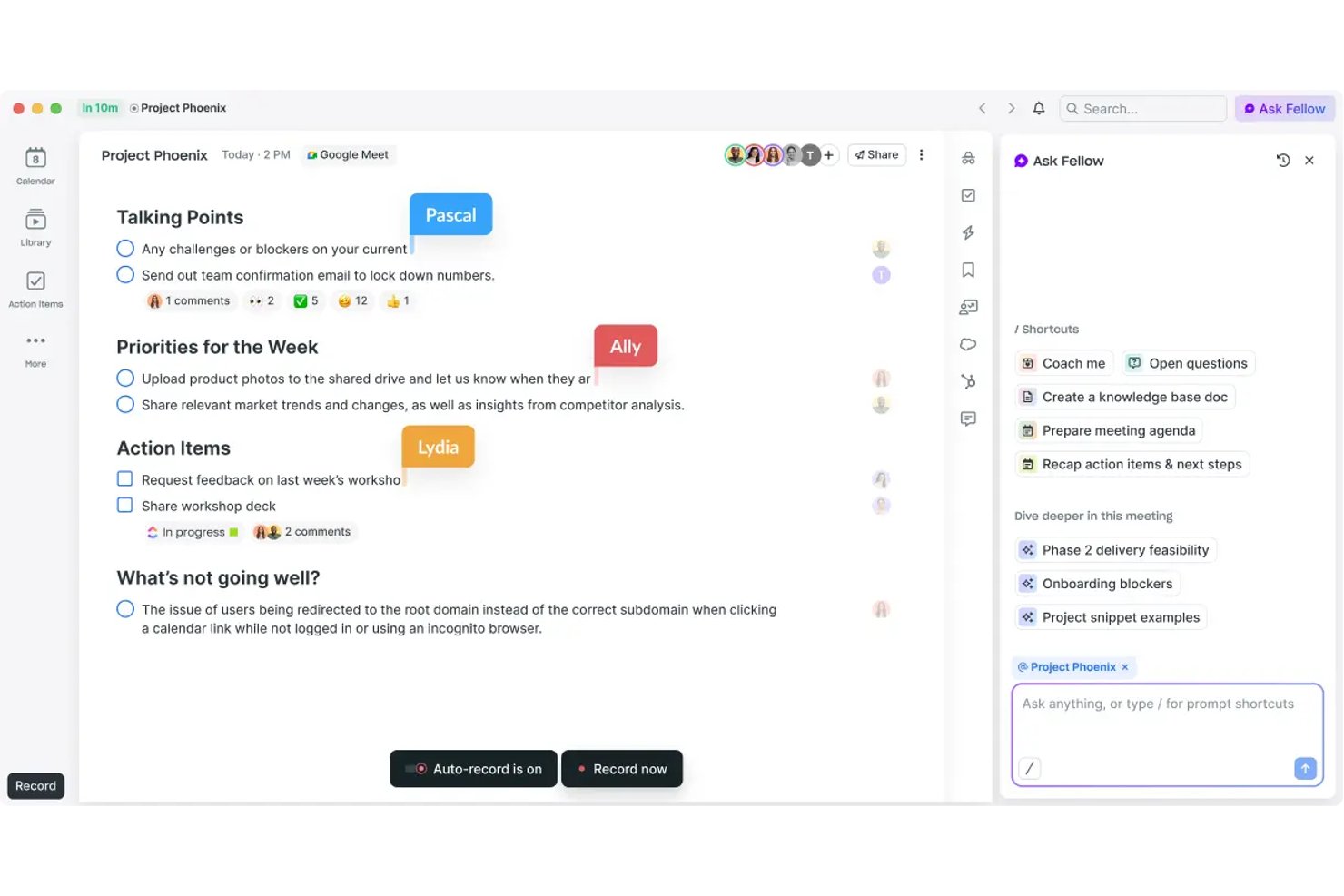
Fellow is an AI meeting management platform that pairs collaborative agenda creation and real-time transcription with action item tracking, 500+ meeting templates, and enterprise-grade security controls across Zoom, Google Meet, and Microsoft Teams.
Who Is Fellow Best For?
Fellow is a strong fit for mid-size to enterprise teams in regulated industries like finance, healthcare, and legal, where meeting compliance and documentation controls are non-negotiable.
Why I Picked Fellow
Fellow earns its spot as one of the best on my shortlist because the collaborative note-taking experience is built for teams, not just individuals. Multiple contributors can edit agendas and notes before, during, and after a meeting. Note locking and version history give you an audit trail of what changed and when. AI-generated summaries and action items pull from the shared transcript, keeping attribution intact across the full meeting record.
Fellow Key Features
- AI meeting assistant: Automatically records, transcribes, and summarizes meetings across Zoom, Teams, and Google Meet.
- Project management integrations: Syncs action items with Asana, Jira, Monday, Linear, and ClickUp.
- Enterprise compliance controls: Provides SOC 2 Type II, HIPAA, GDPR, audit trails, and role-based permissions.
- Recording library: Stores and manages meeting recordings with granular access and retention policies.
Fellow Integrations
Fellow offers 50+ native integrations, including Zoom, Microsoft Teams, Google Meet, Asana, Jira, Monday, Salesforce, HubSpot, Slack, and Notion. API access is available for custom integrations.
Pros and Cons
Pros:
- SOC 2 Type II and HIPAA compliance controls
- AI-generated meeting summaries and action items
- Real-time collaborative agenda and note editing
Cons:
- Limited support for highly structured board meetings
- No built-in meeting scheduling tools

adam.ai
Best action item tracking for follow-ups
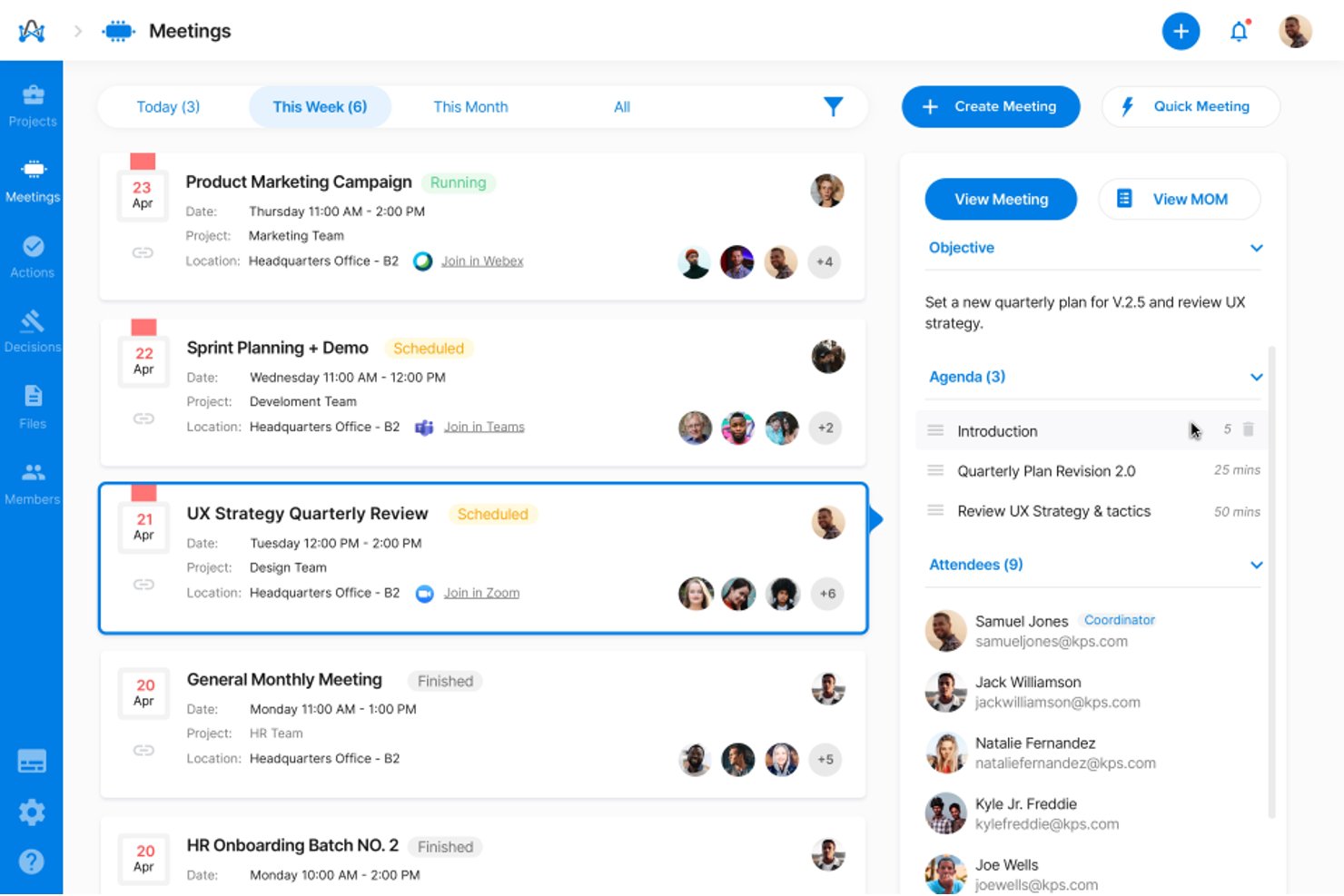
adam.ai is a governance-focused meeting management platform built for enterprise teams, covering agenda building, AI-assisted minutes capture, action item tracking, document management, and board and committee meeting workflows.
Who Is adam.ai Best For?
It's a strong fit for PMO directors and governance leads at mid-to-large enterprises managing board, committee, and steering group meetings with formal oversight requirements.
Why I Picked adam.ai
adam.ai earns its spot on my shortlist because its action tracking goes well beyond a simple task list. I like that you can assign owners and due dates directly inside the meeting, then monitor status across every subsequent session from a dedicated dashboard. iAdam, the built-in AI assistant, automatically surfaces action items from the transcript so nothing gets buried in notes after the call ends.
adam.ai Key Features
- Structured agenda builder: Create, edit, and share detailed agendas with time allocations for recurring meetings.
- Minutes approval workflow: Route meeting minutes for approval and maintain official records with version control.
- Document management: Upload, organize, and reference documents directly within meetings for centralized access.
- Multi-platform integrations: Connect with tools like SharePoint, Confluence, and major video conferencing platforms for unified meeting workflows.
adam.ai Integrations
adam.ai offers native integrations with Microsoft Teams, Zoom, Webex, Google Meet, and more. It connects with Zapier and provides an API for custom integrations.
Pros and Cons
Pros:
- Formal project and board governance support
- Built-in minutes approval and audit workflow
- Tracks action items across recurring meetings
Cons:
- Meeting scheduling less advanced than competitors
- Participant caps on lower tier plans
Beenote
Best advanced meeting minutes templating
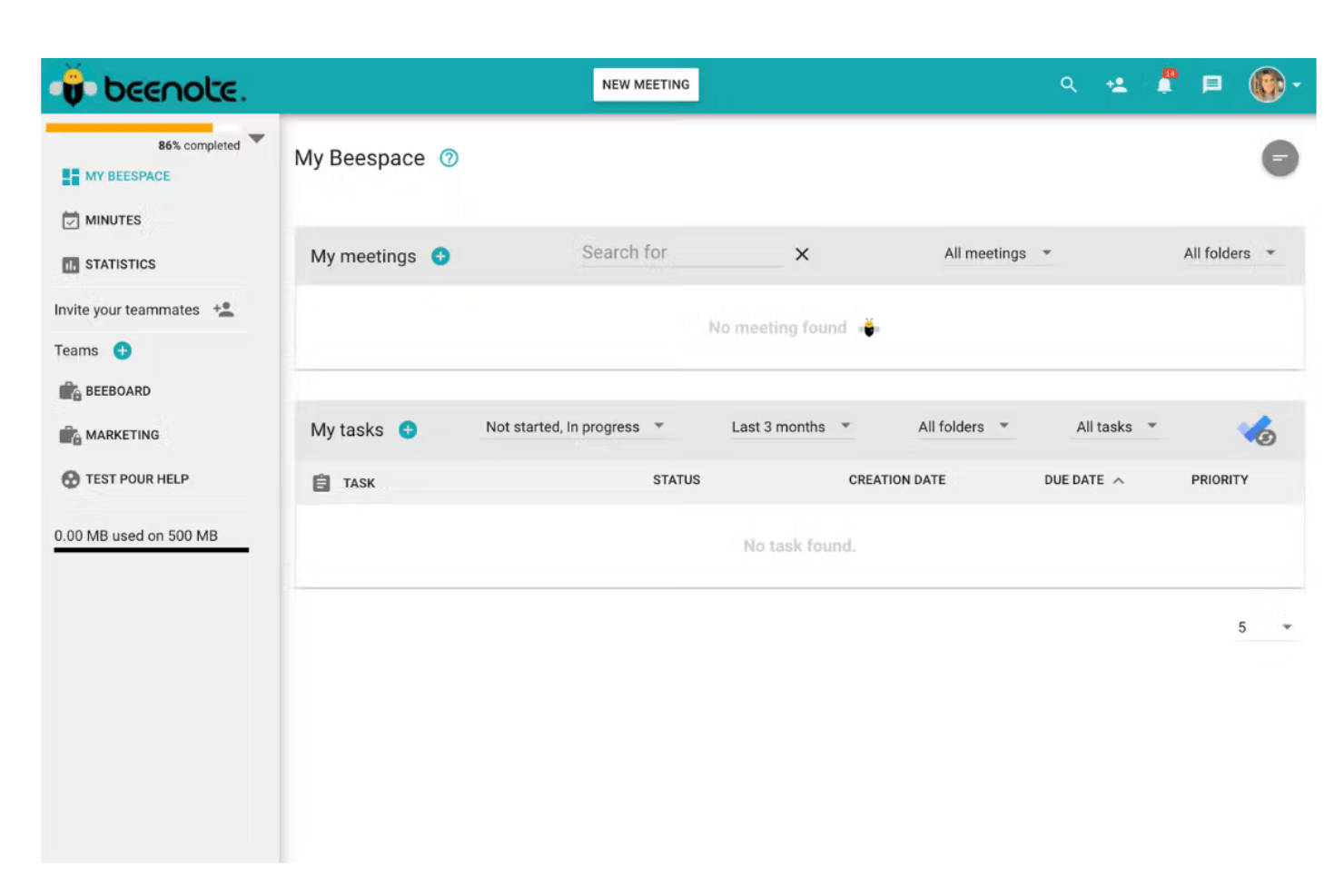
Beenote is a meeting governance platform built around structured agenda creation, real-time collaborative note-taking, automated minutes generation, and decision and action item tracking across teams, committees, and boards of directors.
Who Is Beenote Best For?
Beenote is a natural fit for nonprofits, associations, and mid-market organizations that run formal board meetings, executive committees, or governance-driven project reviews.
Why I Picked Beenote
I picked Beenote as one of the best because its agenda-to-minutes pipeline is genuinely impressive. When you build an agenda in Beenote, that structure becomes the skeleton of your minutes automatically, so by meeting's end, up to 80% of the document is already written. I also like the reusable templates with topic carry-over, which let governance teams run recurring board or committee meetings without rebuilding the agenda from scratch each time.
Beenote Key Features
- Task and decision registers: Track tasks and record decisions across meetings in searchable, persistent registers.
- Electronic voting and advance voting: Enable participants to securely vote on resolutions or decisions within meetings or ahead of time.
- Secretary and private note-taking modes: Allow designated note-takers or board secretaries to keep confidential or internal notes during sensitive sessions.
- Microsoft 365 and Google Workspace integrations: Sync calendars, tasks, and meeting data with leading productivity platforms.
Beenote Integrations
Beenote offers native integrations with Microsoft 365, Microsoft Teams, Outlook, Google Workspace, Google Calendar, Google Tasks, Microsoft To Do, and Antidote.
Pros and Cons
Pros:
- Includes dedicated governance and board modules
- Supports real-time collaborative note editing
- Agenda links automatically to minute-taking
Cons:
- Lacks granular reminder and escalation options
- Does not support bulk document export
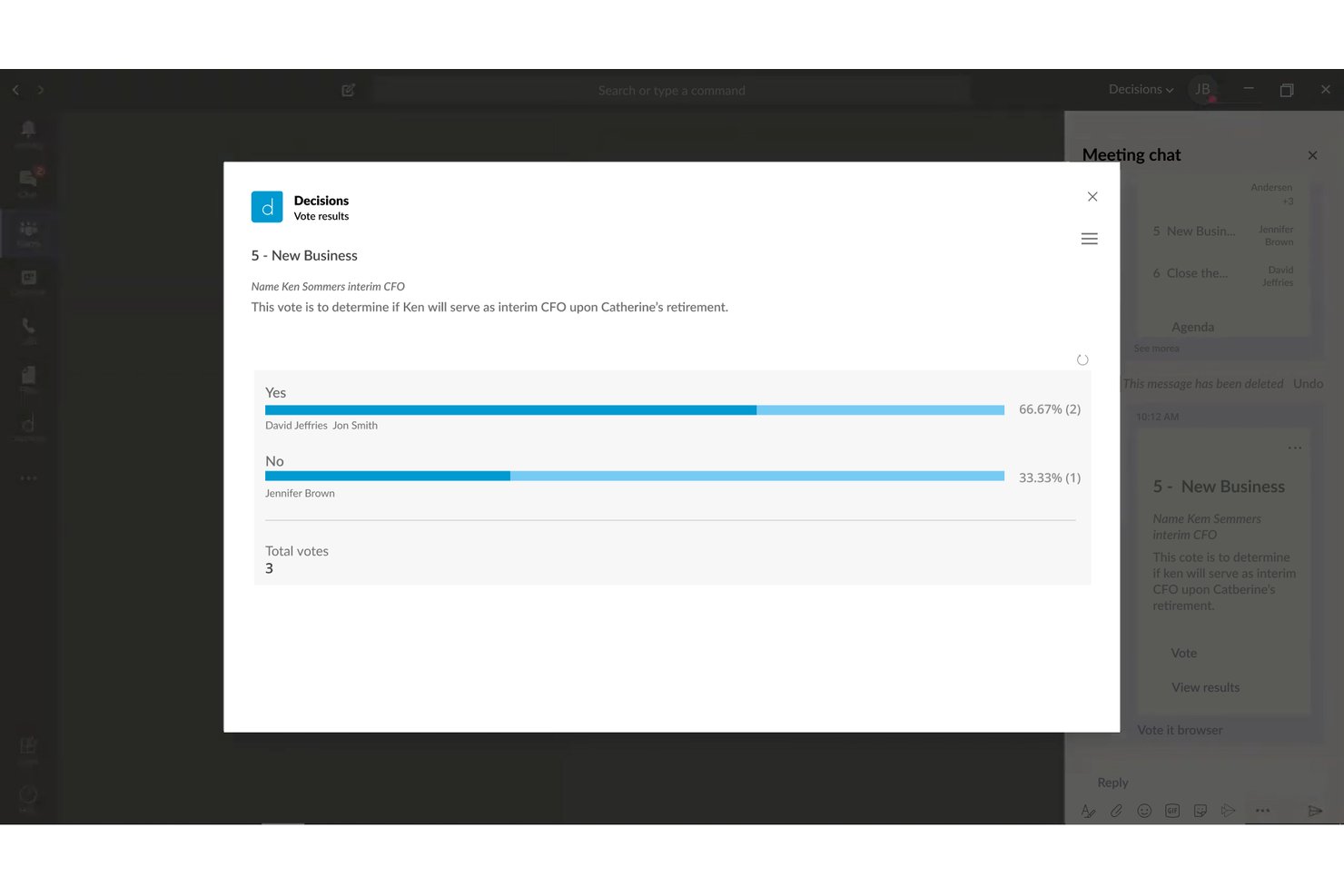
Decisions is a Microsoft 365-native meeting management platform that brings structured agenda building, AI-assisted minutes, decision logging, and action item tracking into Microsoft Teams.
Who Is Decisions Best For?
Decisions is a strong fit for enterprise teams already standardized on Microsoft 365 that need governed, structured meeting processes across PMO and steering committee functions.
Why I Picked Decisions
I've included Decisions in my top picks because of how it handles recurring meeting agendas at the structural level. The AI Agenda Builder generates draft agendas in seconds, and agenda items carry over automatically from session to session, so standing committees or weekly PMO cadences don't start from scratch each week. I also like that attendees can contribute agenda topics before the meeting, which means by the time the call starts, priorities are already aligned.
Decisions Key Features
- AI meeting recap: Summarizes meeting discussions and decisions using intelligent text recognition.
- In-meeting secure voting: Lets participants securely vote on motions or issues during meetings within Teams.
- Microsoft Planner integration: Syncs captured tasks and action items automatically to Microsoft Planner for ongoing tracking.
- SOC 2 and ISO 27001 compliance: Supports enterprise-grade data security, audit trails, and governance standards.
Decisions Integrations
Decisions has native integrations across the Microsoft ecosystem, including Microsoft 365, Teams, Outlook, SharePoint, Planner, OneDrive, Word, Excel, PowerPoint, OneNote, Azure, and more.
Pros and Cons
Pros:
- Secure in-meeting voting and e-signatures
- AI-powered meeting minutes and recaps
- Recurring agendas carry over automatically
Cons:
- No native support for non-Microsoft tools
- Requires license for every attendee
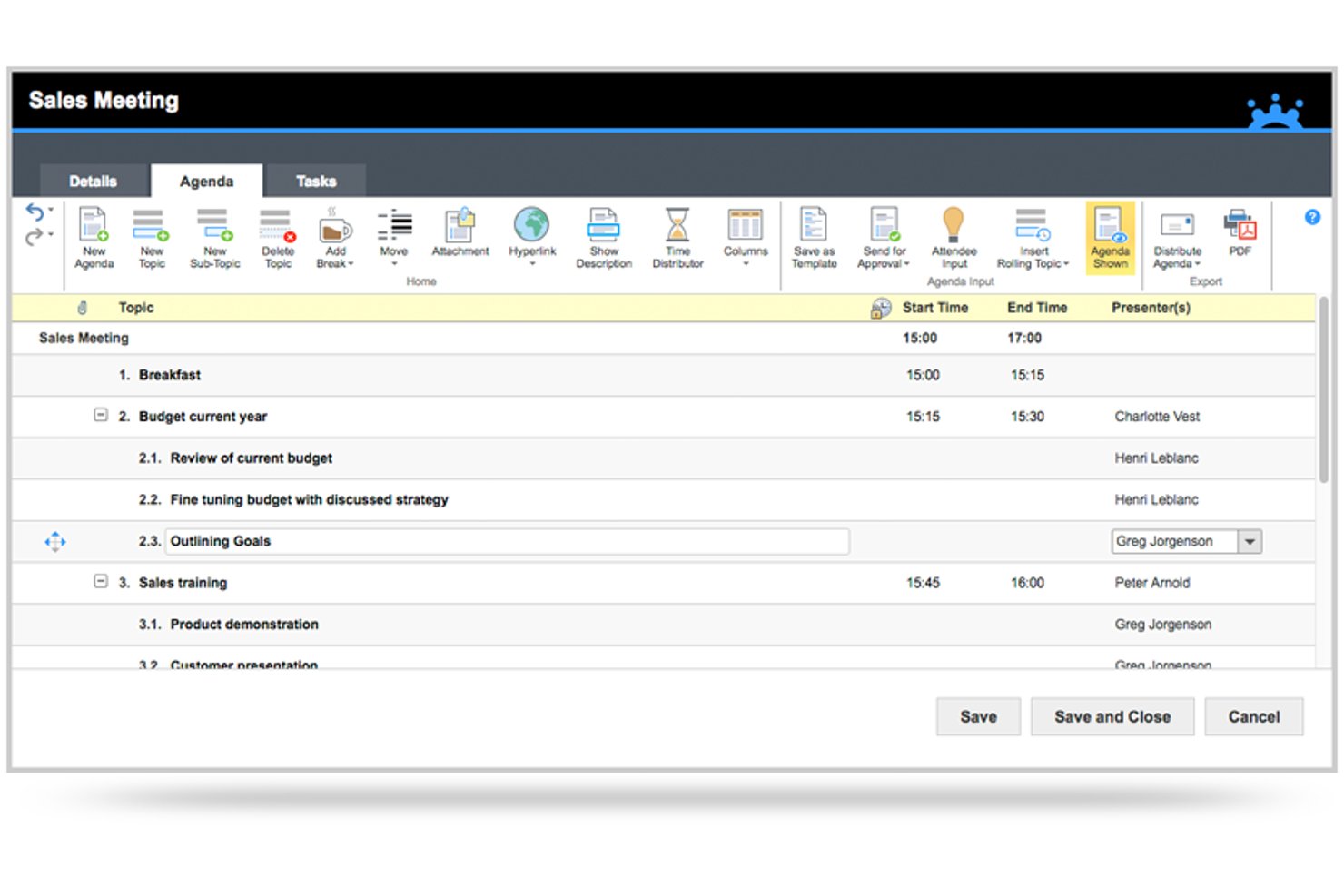
MeetingBooster is an enterprise meeting management platform built around a structured workflow of agenda creation, in-meeting note-taking, auto-generated minutes, task tracking, and meeting series management.
Who Is MeetingBooster Best For?
MeetingBooster is a strong fit for enterprise and mid-market organizations with formal governance requirements, including PMO teams, steering committees, and compliance-driven departments.
Why I Picked MeetingBooster
I picked MeetingBooster as one of the best because no other tool I've used pulls every meeting artifact into a single, structured record the way it does. From the dedicated Agenda Module through to auto-generated, formatted minutes, every decision and action item ends up in one archived document. The Premium approval workflow adds version-controlled sign-off on both agendas and minutes, which is exactly what steering committee records require.
MeetingBooster Key Features
- Meeting analytics dashboard: Track attendance, meeting costs, and task status with built-in reports.
- Meeting series management: Group and organize recurring meetings for boards or committees.
- Microsoft Teams integration: Access agendas and archived minutes directly inside Teams.
- Active Directory synchronization: Manage users and security roles through enterprise directory integration.
MeetingBooster Integrations
MeetingBooster offers native integrations with Outlook, Microsoft Teams, Google Calendar, Office, Lotus Notes, and Yahoo Calendar. Web hooks are available for connecting to external task management systems, and Active Directory synchronization is supported.
Pros and Cons
Pros:
- Outlook and Teams integration for meeting management
- Archiving and approval workflows for minutes
- Dedicated agenda builder with timeboxing
Cons:
- Limited flexibility in task and action item tracking
- No AI-powered transcription or summary tools
Outro software empresarial de gestão de reuniões
Eis algumas opções adicionais de software empresarial de gestão de reuniões que não integraram a minha seleção, mas que ainda vale a pena conhecer:
- Board Intelligence
For customizable reporting for executives
- Fireflies.ai
For voice-driven search across meeting records
- Govenda
For director engagement tools for boards
- Otter.ai
For automated live transcription for meetings
- Ideals Board
For secure document sharing for enterprises
- Spinach AI
For AI-powered summaries for team meetings
- BoardPro
For workflow automation for board meeting tasks
- AgreeDo
For agenda-to-action item tracking integration


How I Evaluate Enterprise Meeting Management Software
I split my evaluation into baseline requirements—like structured agenda templates and audit trails for steering committees—and differentiators that separate the best from the rest.
Core Functionality (Table Stakes For This List)
When I'm selecting tools for my list, I rank each one on a scale from 0 (does not offer the functionality) to 5 (excels in this area) for each core functionality listed below. Then, I calculate the tool's total score into a percentage. Each tool needs to achieve a minimum total score of 65% to be considered for inclusion.
- Agenda Management: I check whether a tool supports reusable agenda templates with timeboxing—especially for recurring cadences like weekly standups or monthly steering committees.
- Minutes & Notes Capture: Real-time collaborative notes with attendee attribution and version history matter here, since official meeting records need clear audit trails.
- Action Item Tracking: I evaluate how each tool assigns, tracks, and reports on action items across meetings, including owner visibility, due dates, and status dashboards.
- Enterprise Scheduling: Large stakeholder groups spread across time zones need more than a calendar link. I look for multi-calendar coordination and delegation support.
- Integrations With PM Tools: Connecting meetings to project work is where these tools earn their keep. I look for native sync with platforms like Jira, Asana, or Microsoft Project.
- Governance & Security: For PMO directors and governance leads, I evaluate SSO/SAML support, granular role-based permissions, audit logs, and relevant certifications like SOC 2 or ISO 27001.
Once I have a list of tools that meet the criteria, I consider what sets each platform apart.
Differentiating Factors (What Sets Vendors Apart)
Here's how I compare and contrast different vendors:
Standout Features
AI-powered transcription with speaker identification cuts post-meeting documentation time, especially for program managers running back-to-back sessions. Board and governance workflows also matter. Tools like Diligent Boards and OnBoard include voting modules and secure director portals that governance leads depend on. Analytics dashboards round out the picture, showing meeting time trends by team so you can spot overloaded schedules before they stall delivery.
Beyond Features
Security and compliance posture is where I start. I check for certifications like SOC 2 Type II or ISO 27001 and data residency options, since steering committee records often contain sensitive strategic data. Integration depth matters just as much—open APIs and native connectors to tools like SharePoint, Slack, and Okta determine how well a platform fits your existing stack. I also evaluate licensing flexibility, looking at whether vendors let you mix user types like executives, contributors, and view-only guests to keep costs predictable.
Como escolher software empresarial de gestão de reuniões
É fácil perder-se em listas extensas de funcionalidades e estruturas de preços complexas. Para o ajudar a manter o foco enquanto analisa o seu processo específico de seleção de software, apresentamos uma lista de verificação com os fatores a ter em conta:
| Fator | O que considerar |
|---|---|
| Escalabilidade | O software consegue suportar as equipas atuais e futuras, um grande número de utilizadores e vários departamentos sem abrandamentos ou custos ocultos adicionais à medida que cresce? |
| Integrações | Será integrado com as ferramentas de projetos, calendários e plataformas de comunicação existentes na sua organização, com uma interrupção mínima ou sem conectores dispendiosos? |
| Personalização | Os fluxos de trabalho, modelos, permissões e elementos de marca são suficientemente flexíveis para se adaptarem às políticas de reuniões e aos requisitos de governação estabelecidos? |
| Facilidade de utilização | Os executivos ocupados, assistentes e equipas distribuídas conseguirão adotar rapidamente a ferramenta e gerir todo o ciclo de vida das reuniões — desde agendas e notas até tarefas — sem meses de formação ou um apoio informático significativo? |
| Implementação e integração inicial | Quanto tempo demorará a configuração? Terá o apoio, a formação e os recursos necessários para garantir a adesão e não perturbar o ritmo dos projetos? |
| Medidas de segurança | A ferramenta está alinhada com as suas políticas internas e com os requisitos relativos aos dados dos clientes? Procure plataformas certificadas, com controlos de acesso granulares e registos de auditoria transparentes. |
| Custo | Consegue prever os custos totais com base na dimensão da sua equipa e na utilização? Tenha atenção às taxas adicionais relacionadas com armazenamento, integrações ou licenças de administrador. |
| Requisitos de conformidade | Precisa de cumprir normas como SOC 2, ISO 27001 ou GDPR? Confirme as opções de residência dos dados e a disponibilidade do fornecedor para apoiar auditorias ou fornecer relatórios de conformidade. |
O que é software empresarial de gestão de reuniões?
O software de gestão de reuniões empresariais consiste em plataformas completas concebidas para ajudar grandes organizações a organizar, documentar e acompanhar reuniões entre equipas e partes interessadas distribuídas. Estas ferramentas simplificam os fluxos de trabalho das reuniões ao centralizarem agendas, atas, decisões e itens de ação, proporcionando simultaneamente notificações, controlos de governação e acesso seguro aos membros da equipa.
Muitas plataformas suportam videochamadas, colaboração através de quadros brancos digitais, funcionalidades de check-in e outras funcionalidades de colaboração para melhorar o trabalho em equipa, tanto em reuniões remotas como presenciais. Incluem frequentemente uma aplicação móvel, integram-se com sistemas de gestão de projetos e ajudam as organizações a otimizar os resultados das reuniões, proporcionando simultaneamente uma melhor experiência de utilização. Muitos fornecedores disponibilizam também recursos de formação, como webinars, para ajudar as equipas a começar.
Funcionalidades do software de gestão de reuniões empresariais
Ao selecionar software de gestão de reuniões empresariais, procure as seguintes funcionalidades essenciais:
- Gestão de agendas: Permite às equipas criar, partilhar e reutilizar agendas de reuniões estruturadas, com alocação de tempo, anexos e contributos de vários participantes.
- Registo de atas e notas: Oferece a tomada colaborativa de notas, com atribuição aos participantes, marcas temporais, histórico de versões e armazenamento seguro dos registos oficiais das reuniões.
- Acompanhamento de itens de ação: Atribui, monitoriza e atualiza itens de ação ou decisões, com responsáveis claros, datas-limite e relatórios de estado em tempo real entre equipas.
- Agendamento empresarial: Suporta o agendamento inteligente para grupos grandes e distribuídos, calendários entre diferentes fusos horários e integração com calendários organizacionais, como o Outlook ou o Google.
- Controlos de acesso e segurança: Disponibiliza permissões de utilizador granulares, acesso baseado em funções, SSO/SAML e registos de auditoria detalhados para proteger conteúdos sensíveis das reuniões.
- Fluxos de trabalho de conformidade e governação: Permite às organizações gerir processos ao nível do conselho de administração, votações, aprovações e requisitos de assinatura eletrónica, tendo em conta a conformidade regulamentar.
- Integração com ferramentas de gestão de projetos: Liga de forma integrada os dados das reuniões a plataformas como o Jira, o Asana ou o Microsoft Teams, sincronizando tarefas e decisões para proporcionar um contexto completo.
- Análises avançadas: Fornece informações sobre a frequência das reuniões, padrões de participação e resultados acionáveis para ajudar a melhorar a produtividade e a responsabilização organizacionais.
- Distribuição automatizada de atas: Automatiza a partilha das atas de reuniões aprovadas com as partes interessadas, com acompanhamento das confirmações de leitura e do seguimento.
- Suporte para vários idiomas: Dá resposta às necessidades das organizações globais ao disponibilizar interfaces, transcrição e ferramentas de comunicação em vários idiomas.
Benefícios do software de gestão de reuniões empresariais
A implementação de software de gestão de reuniões empresariais proporciona vários benefícios à sua equipa e à sua empresa. Eis alguns dos benefícios que pode esperar:
- Maior responsabilização nas reuniões: A atribuição de itens de ação e o acompanhamento dos responsáveis garantem que o seguimento fica documentado e visível entre equipas.
- Governação e conformidade simplificadas: A manutenção segura de registos, as aprovações e os registos de auditoria ajudam a cumprir os requisitos do conselho de administração, regulamentares e de privacidade dos dados.
- Documentação centralizada das reuniões: As agendas, atas e decisões estão todas acessíveis num único local, reduzindo a confusão e o acompanhamento manual.
- Agendamento mais eficiente: As integrações inteligentes com calendários e o suporte para fusos horários simplificam a organização de reuniões para partes interessadas distribuídas.
- Melhor colaboração entre equipas: A tomada de notas em tempo real e as integrações com ferramentas de projetos colmatam as lacunas entre departamentos e mantêm todos alinhados.
- Análises acionáveis das reuniões: Os painéis e relatórios fornecem informações sobre o retorno do investimento das reuniões, o tempo despendido e a participação, para um melhor planeamento de recursos.
- Escalabilidade para o crescimento empresarial: As capacidades multi-inquilino e a implementação flexível suportam a expansão entre equipas globais e unidades de negócio.
Custos e preços do software de gestão de reuniões empresariais
A seleção de software de gestão de reuniões empresariais exige uma compreensão dos vários modelos de preços e planos disponíveis. Os custos variam consoante as funcionalidades, o tamanho da equipa, os complementos e outros fatores. A tabela abaixo resume os planos comuns, os respetivos preços médios e as funcionalidades normalmente incluídas nas soluções de software de gestão de reuniões empresariais:
Tabela de comparação de planos de software de gestão de reuniões empresariais
| Tipo de plano | Preço médio | Funcionalidades comuns |
|---|---|---|
| Plano gratuito | $0 | Criação básica de agendas, tomada de notas simples, armazenamento limitado de reuniões e acesso para um pequeno número de utilizadores. |
| Plano pessoal | $5-$15/utilizador/mês | Agendamento individual, modelos de agendas reutilizáveis, integrações essenciais, anexos de ficheiros e acompanhamento para um único utilizador. |
| Plano empresarial | $15-$40/utilizador/mês | Agendamento de equipas, registo colaborativo de notas, atribuição de tarefas, integrações avançadas e relatórios em painéis. |
| Plano empresarial avançado | $40-$90/utilizador/mês | SSO/SAML, registos de auditoria, fluxos de trabalho de conformidade, personalização da marca, suporte prioritário, acesso à API e armazenamento ilimitado. |
Perguntas frequentes sobre software empresarial de gestão de reuniões
Eis algumas respostas a perguntas comuns sobre software empresarial de gestão de reuniões:
Em que difere o software empresarial de gestão de reuniões das aplicações básicas de reuniões?
O software empresarial de gestão de reuniões disponibiliza funcionalidades avançadas, como fluxos de trabalho de governação, permissões baseadas em funções, acompanhamento da conformidade e integrações profundas com sistemas de gestão de projetos e de segurança, que não estão presentes nas aplicações básicas de reuniões.
O software empresarial de gestão de reuniões pode integrar-se com a nossa infraestrutura tecnológica existente?
Sim, a maioria das soluções disponibiliza conectores para ferramentas como o Google Workspace, o Microsoft 365, o Slack, o Salesforce e plataformas de gestão de projetos, além de APIs abertas para integrações personalizadas — para que as possa integrar nos seus fluxos de trabalho atuais.
Que medidas de segurança devo esperar destas plataformas?
Procure funcionalidades como certificação SOC 2 ou ISO 27001, autenticação SSO/SAML, controlos de residência dos dados, permissões granulares, registos de auditoria e encriptação de conteúdos de reuniões sensíveis.
É possível acompanhar a eficácia ou a participação nas reuniões com estas ferramentas?
Sim, muitas plataformas incluem painéis de análise que mostram a participação, a conclusão de tarefas e as tendências relativas ao tempo de reunião, ajudando-o a avaliar e melhorar o retorno do investimento das reuniões.
Podemos gerir reuniões do conselho de administração e processos de conformidade na mesma plataforma?
Sim, as principais plataformas suportam fluxos de trabalho para reuniões do conselho de administração, incluindo aprovação de agendas, assinaturas eletrónicas, resoluções, votações e acesso seguro dos administradores — facilitando bastante o acompanhamento da conformidade.