


Recensione Lucid Visual Collaboration Suite 2026: Pro, Contro e Funzionalità



Every distributed team knows the quiet cost of misalignment; the duplicated work, the "wait, I thought we agreed on this" moments, the ideas that never quite make it out of someone's head. A good visual collaboration platform promises to close that gap, and the Lucid Visual Collaboration Suite is one of the names that keeps coming up.
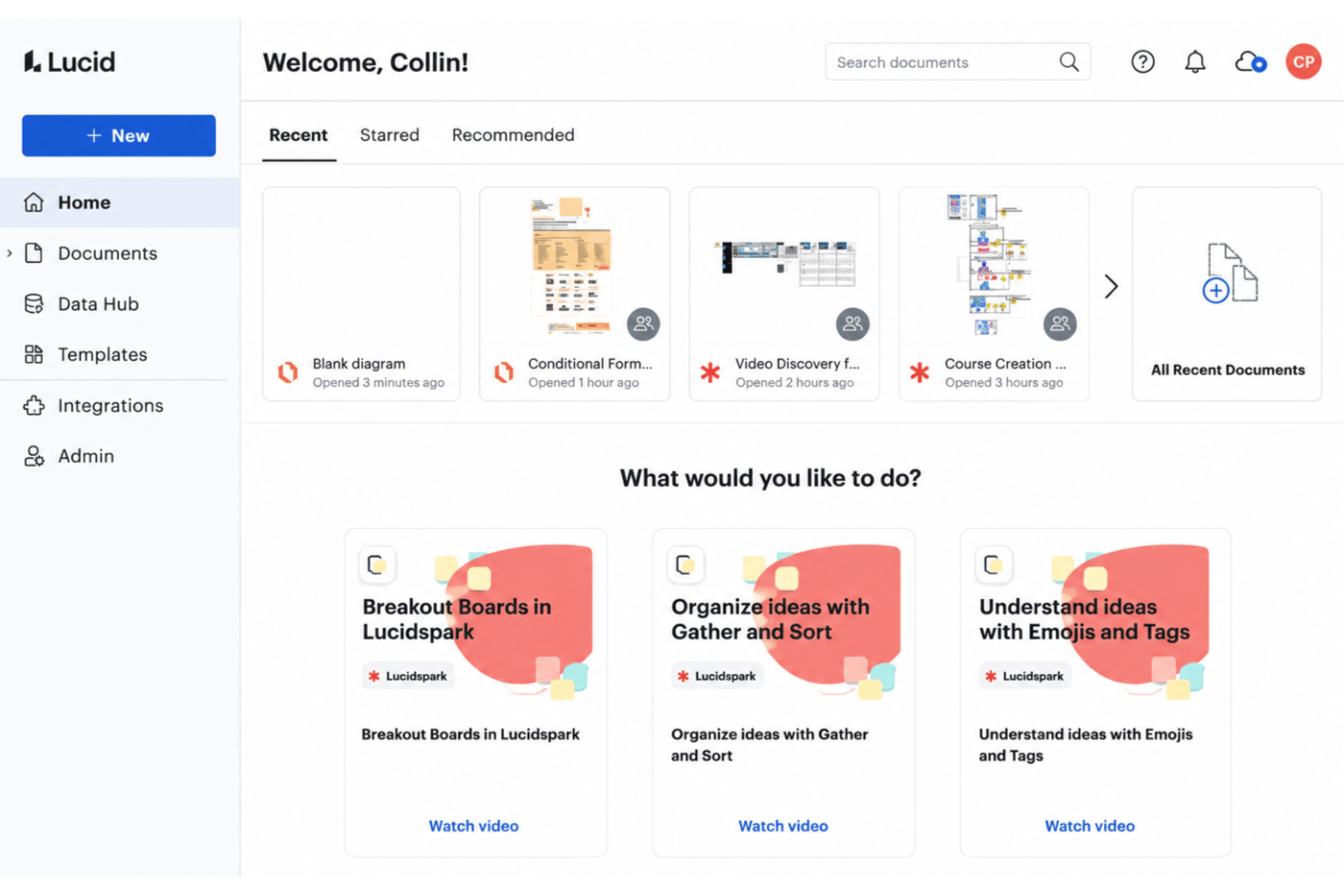
Lucid is a work acceleration and visual collaboration platform designed for teams who need fast, clear ways to map out ideas, processes, and technical systems together. The suite pairs Lucidchart, Lucid’s intelligent diagramming tool, with Lucidspark, its virtual whiteboard for brainstorming and working sessions. When shifting requirements, remote workflows, and distributed teams create project friction, Lucid helps you keep everyone aligned and moving forward
In this review, I break down Lucid’s features, use cases, strengths, trade-offs, and pricing—so you can decide if it’s the right fit for your project delivery needs.
Lucid Evaluation Summary
- From $15/month (billed annually)
- Free trial + free plan available
Perché fidarsi dei nostri consigli sui software
Il nostro team testa e recensisce software dal 2012. In quanto project manager noi stessi, sappiamo quanto sia difficile — e importante — scegliere il software giusto.
Per questa guida, abbiamo valutato gli strumenti attraverso test pratici e ricerche indipendenti, assegnando un punteggio agli strumenti in base ai nostri criteri di selezione. Ci basiamo inoltre sulle competenze di leader di pensiero del settore e di professionisti attivi nella gestione dei progetti.
Le nostre recensioni riflettono il nostro giudizio editoriale umano, non un discorso di vendita.
Revisori esperti:
Lucid Overview
I think Lucid stands out for its universal canvas which lets work flow seamlessly between Lucidspark and Lucidchart, its flexible integration options, and advanced diagramming features that make judging process flows and technical systems a breeze. While pricing trends higher and onboarding complex diagrams can require extra learning, I’d pick Lucid for large or cross-functional teams who need interactive whiteboarding, real-time collaboration, and granular permissions. In my experience, it outperforms the competition for technical mapping, though less so for those seeking lightweight, visual note-taking. If you’re comparing tools for robust team diagramming with strong support, Lucid is worth serious consideration.
pros
-
Real-time collaboration supports remote and hybrid teams well
-
Advanced diagramming tools for technical and business workflows
-
Version history enables easy rollback to previous states
cons
-
Tapping the full toolset means moving between Lucidchart and Lucidspark
-
More advanced data features are reserved for the Enterprise plan
-
Limited offline access for users without internet connection
Is Lucid Right For Your Needs?
Who Would be a Good Fit for Lucid?
Lucid works best for teams that need real-time diagramming and advanced visual collaboration across technical, product, or business roles. It’s especially valuable in industries where process mapping, architecture, or strategic planning are daily activities; software development, SaaS, consulting, education, healthcare, financial services, and even the public sector, where Lucid’s FedRAMP and IRAP credentials carry real weight. Organizations looking for flexible templates, cloud-based access, and strong admin controls will find it a solid choice.
-
Product Management Teams
Lucid enables rapid user journey mapping, roadmapping, and workflow visualization for cross-functional project work.
-
Software Engineering
UML diagrams, system architectures, and data flow mapping are easy to build and share with real-time collaboration.
-
Enterprise IT Departments
Complex process mapping, network diagrams, and documentation can be maintained at scale with admin controls and access management.
-
Consulting Firms
Facilitates collaborative client workshops, value stream mapping, and dynamic presentations for stakeholder alignment.
-
Higher Education
Offers collaborative whiteboarding for faculty and students, encouraging interactive learning and group project work.
-
Large Enterprises
Lucid's scalability, advanced security, and integration options match large organizations' governance and compliance requirements.
Who Would be a Bad Fit for Lucid?
Lucid isn’t ideal for teams that need tooling deeply specialized to a single industry, or for nonvisual workflows where collaborative diagrams aren’t central to the work. Teams that work primarily offline may not get enough value to justify the investment, and detailed UX design is better served by dedicated design tools. Organizations with restricted tech stacks or minimal need for cloud-based collaboration should look elsewhere.
-
Highly Specialized industries
Fields that demand custom symbols, advanced simulation, or industry-certified modeling will outgrow a general-purpose canvas like Lucid’s.
-
Offline-Only Teams
With limited offline functionality, Lucid requires internet access for real-time collaboration and cloud saving.
-
Budget-Constrained Nonprofits
Subscription costs and extensive features may outweigh the needs of organizations with limited budgets and simple workflows.
-
Manual Labor Operations
Teams in fields like manufacturing or on-site construction may not need advanced digital diagrams for daily operations.
-
Small Local Businesses
Businesses focused on basic workflows and non-collaborative tasks will see limited day-to-day benefit from Lucid’s advanced capabilities.
La nostra metodologia di recensione
Come testiamo e valutiamo gli strumenti
Abbiamo passato anni a costruire, perfezionare e migliorare il nostro sistema di test e valutazione dei software. Il nostro schema è progettato per cogliere tutte le sfumature della scelta di un software e ciò che rende uno strumento efficace, ponendo l’accento sugli aspetti critici del processo decisionale. Qui sotto puoi vedere esattamente come funziona il nostro test e la nostra valutazione su sette criteri. Questo ci consente di offrire una valutazione imparziale del software basata su funzionalità fondamentali, caratteristiche distintive, facilità d’uso, onboarding, assistenza clienti, integrazioni, recensioni dei clienti e rapporto qualità-prezzo.
Funzionalità principali (25% della valutazione finale)
Il punto di partenza della nostra valutazione è sempre la funzionalità principale dello strumento. Ha le funzioni e le caratteristiche di base che un utente si aspetterebbe di trovare? Alcune di queste funzionalità sono limitate ai piani premium? In sostanza, ci aspettiamo che uno strumento sia all’altezza delle capacità di base dei suoi concorrenti.
Caratteristiche distintive (25% della valutazione finale)
Successivamente valutiamo le funzioni distintive, non comuni, che vanno oltre la semplice funzionalità di base normalmente presente in strumenti simili. Un punteggio elevato riflette funzionalità specializzate o uniche che rendono il prodotto più rapido, efficiente o che offrono un valore aggiunto all’utente. Valutiamo anche la facilità d’integrazione con altri strumenti comunemente presenti nel tech stack per ampliare la funzionalità e l’utilità del software. Gli strumenti che offrono molte integrazioni native, connessioni di terze parti e accesso API per creare integrazioni personalizzate ottengono il punteggio più alto.
Facilità d’uso (10% della valutazione finale)
Consideriamo quanto sia semplice e rapido eseguire le attività definite dalla funzionalità principale tramite lo strumento. Gli strumenti con un punteggio elevato sono ben progettati, intuitivi, offrono app mobili, propongono modelli e rendono semplici anche le attività più complesse.
Onboarding (10% della valutazione finale)
Sappiamo quanto sia importante che il team adotti rapidamente una nuova piattaforma, quindi valutiamo quanto sia facile imparare e utilizzare uno strumento con poca formazione. Valutiamo quanto velocemente un membro del team possa iniziare a utilizzare lo strumento senza esperienza. Le soluzioni con un punteggio alto indicano che è richiesto poco o nessun supporto.
Supporto clienti (10% della valutazione finale)
Recensiamo la rapidità e semplicità nel trovare aiuto tramite telefono, chat live o knowledge base. Gli strumenti e le aziende che forniscono supporto in tempo reale ottengono i punteggi migliori, mentre i chatbot i più bassi.
Recensioni dei clienti (10% della valutazione finale)
Oltre ai nostri test e valutazioni, consideriamo il net promoter score dei clienti attuali e passati. Valutiamo la loro probabilità, qualora fosse possibile, di scegliere nuovamente lo strumento per le sue funzionalità di base. Un software con un punteggio elevato riflette un alto net promoter score da clienti attuali o passati.
Rapporto qualità-prezzo (10% della valutazione finale)
Infine, prendendo in considerazione tutti gli altri criteri, analizziamo il prezzo medio dei piani base confrontandolo con le funzionalità principali e valutando il valore degli altri criteri. I software che offrono di più, spendendo meno, ottengono punteggi più alti.
Core Features
Infinite Canvas
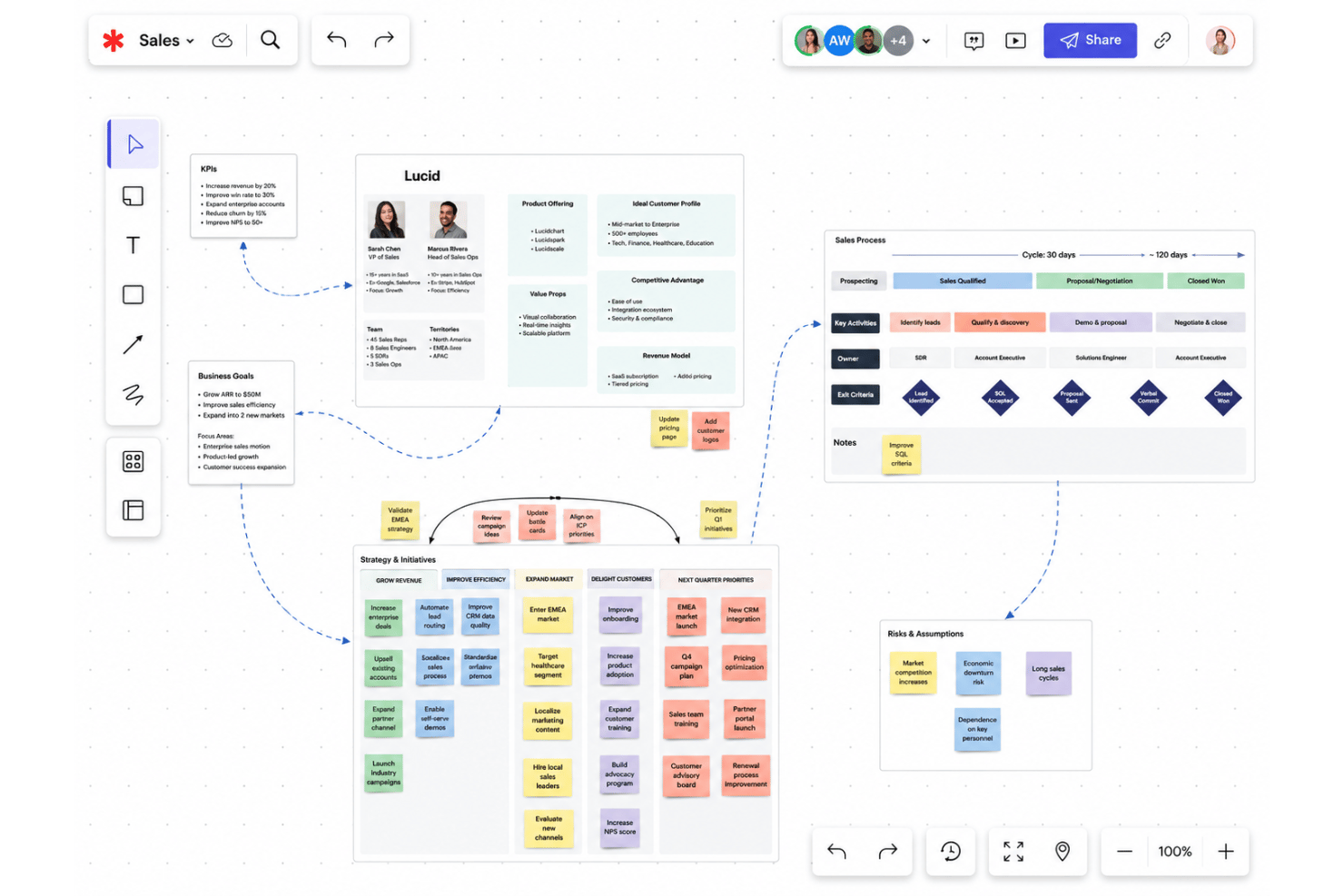
Map processes, brainstorm, and build with no space limitations. Teams can visualize complex projects without running out of workspace.
Real-Time Collaboration
Multiple users co-create, edit, and comment simultaneously. Changes update instantly, so feedback and alignment happen live in meetings.
Shape and Template Libraries
Access a vast catalog of industry-standard shapes and prebuilt templates. Quickly start network diagrams, flowcharts, or journey maps without starting from scratch.
Version History
Track every change and restore previous diagram versions instantly. Audit trails make it easy to manage project revisions and collaboration accountability.
Conditional Formatting
Apply rules to shapes and connectors for clear visual cues. Highlight status, ownership, or metrics automatically to focus attention.
Presentation Mode
Turn working documents into clean, shareable slide decks in one click. Guide stakeholders through diagrams without exporting or leaving the platform.
Standout Features
Data Linking
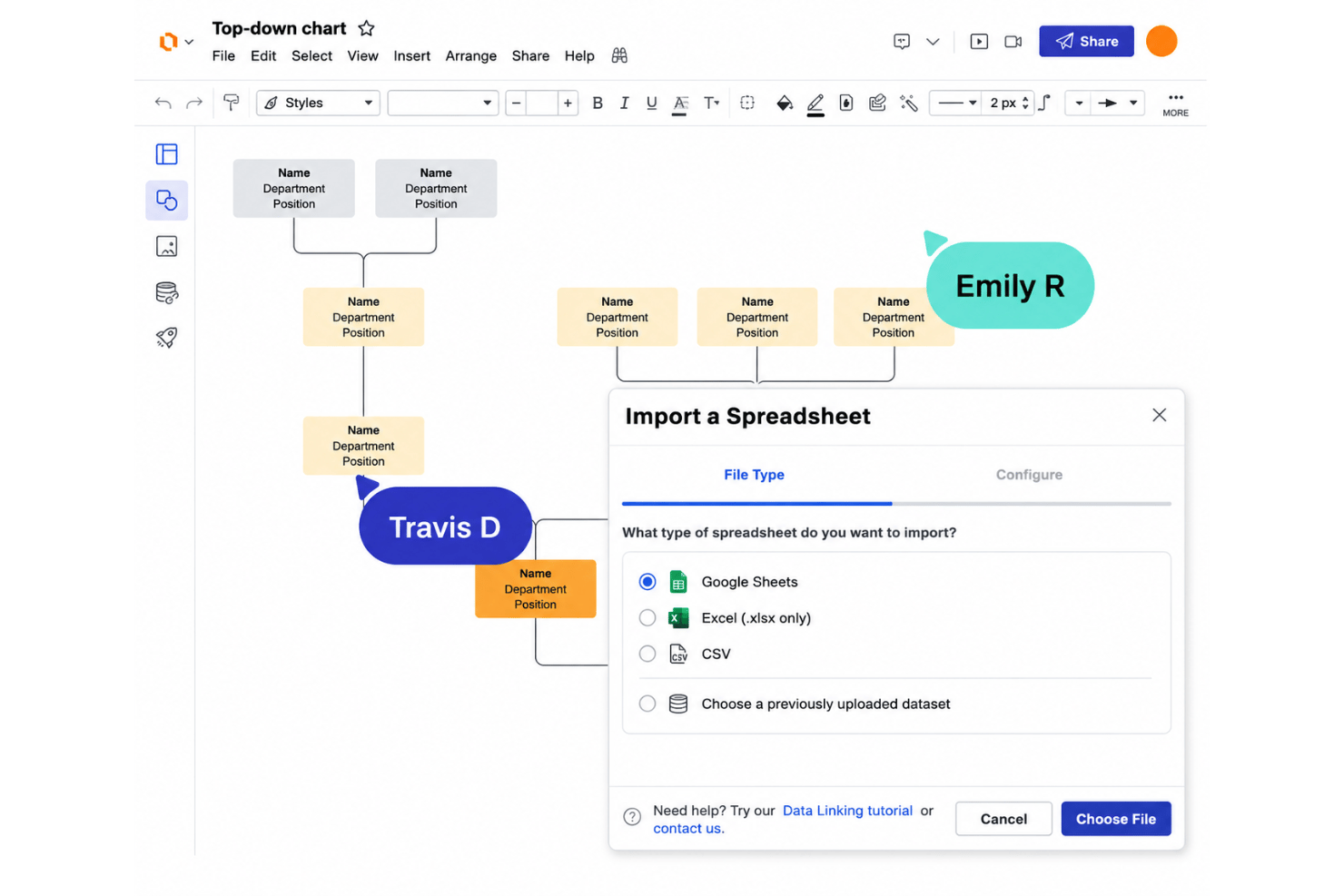
Connect live data from spreadsheets, Salesforce, or an HR system directly to diagrams, and generate org charts, ERDs, and account maps automatically. Google Sheets data syncs on its own, so visuals stay accurate as the source changes.
Lucid AI
Generate diagrams, boards, and documentation from AI prompts: flowcharts, ERDs, mind maps, and more, then sort and summarize ideas after a brainstorm. Speed up requirements mapping without manual shape placement or formatting.
Universal Canvas
Lucidchart and Lucidspark share one canvas, so a sticky-note brainstorm can become a polished process map without exporting or redrawing anything. It’s the glue that makes the suite feel like a single product.
Visual Activities
Participants rank, vote on, and react to ideas while Lucid aggregates the results to show where the group actually agrees—handy for retrospectives, planning sessions, and workshops.
Ease of Use
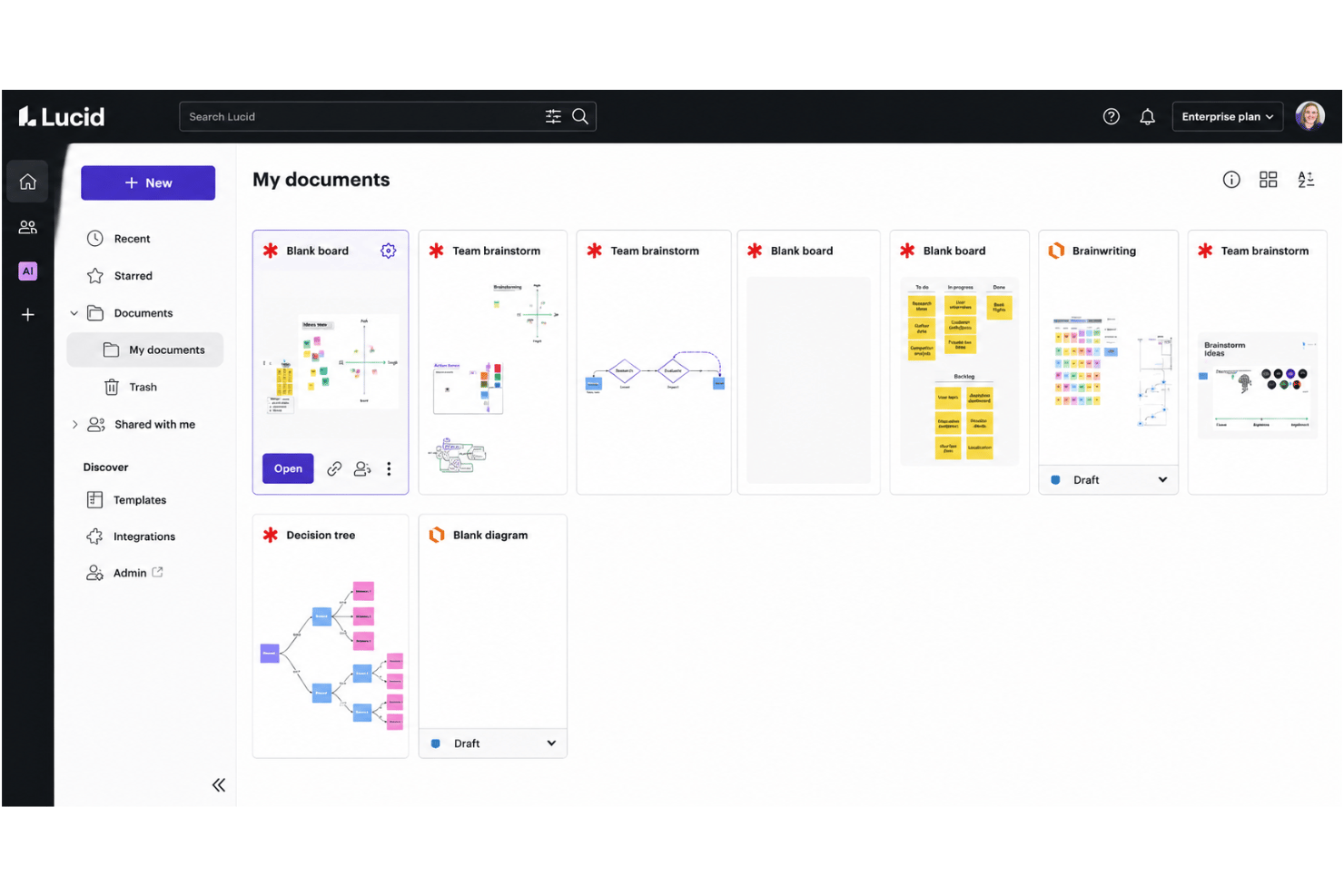
Lucid’s usability sets it apart, thanks to drag-and-drop editing, a wide array of searchable templates, and intuitive navigation that make building even complex diagrams feel approachable. Users frequently praise the fast onboarding and logical layout, though heavy authoring is best on a desktop—the mobile app is geared toward viewing diagrams and adding comments on the fly. Overall, I think most teams will find Lucid both inviting and efficient for collaborative work.
Onboarding
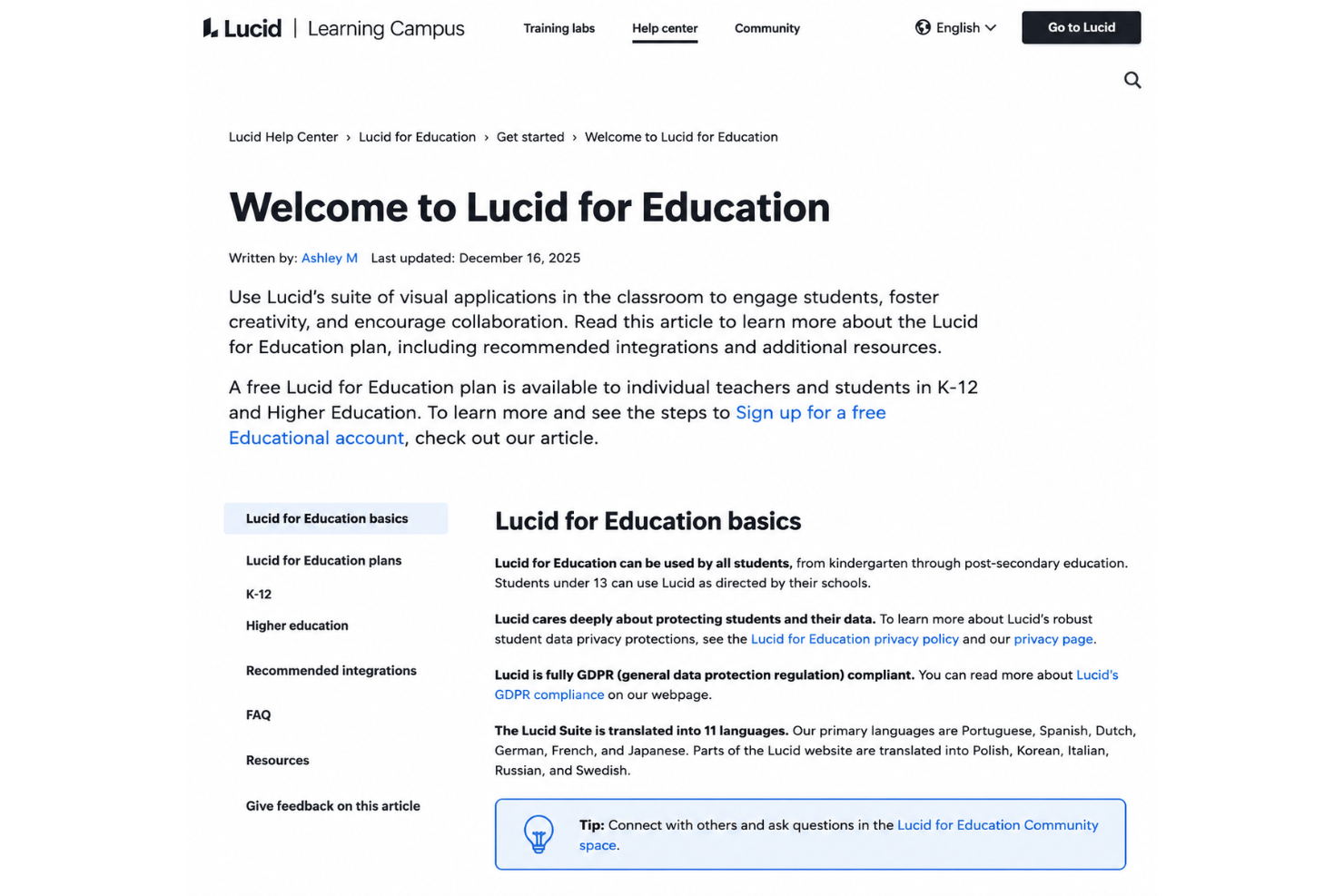
Lucid’s onboarding stands out with a guided email flow for every new user, template suggestions, and in-app tips that shorten the learning curve. New users also get a searchable help center, Lucid Training Labs for tutorials, and a vibrant user community for troubleshooting. Enterprise accounts can add professional services—including white-glove setup and a migration package for teams moving from competing tools.
Customer Support
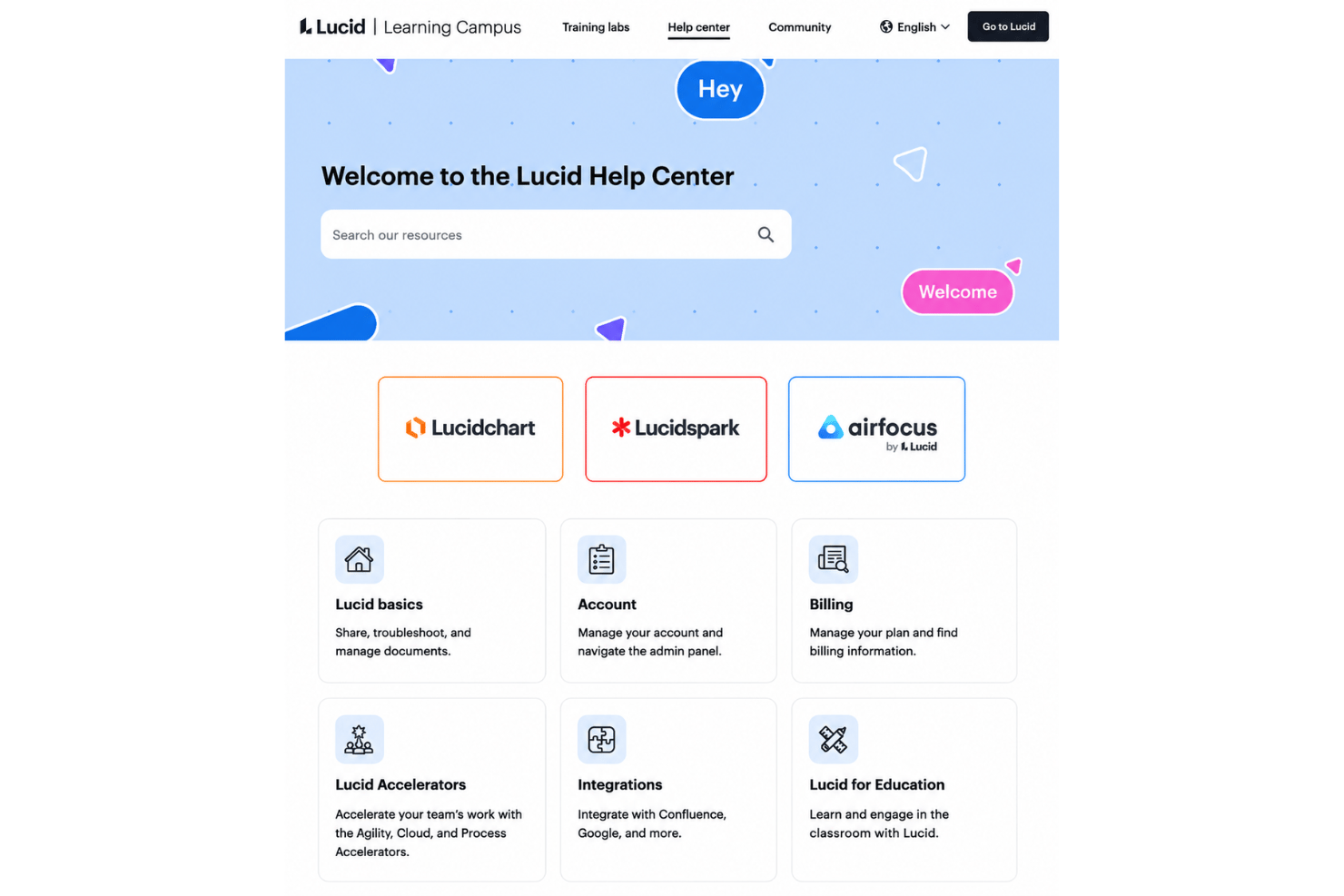
Lucid backs users with a well-organized help center, Lucid Training Labs for tutorials, and an active community for more specific questions. Most standard issues can be resolved through these self-service resources, while Enterprise customers can purchase professional services for hands-on coaching and support. In my experience, the documentation is strong enough that most teams resolve day-to-day questions without much delay.
Integrations
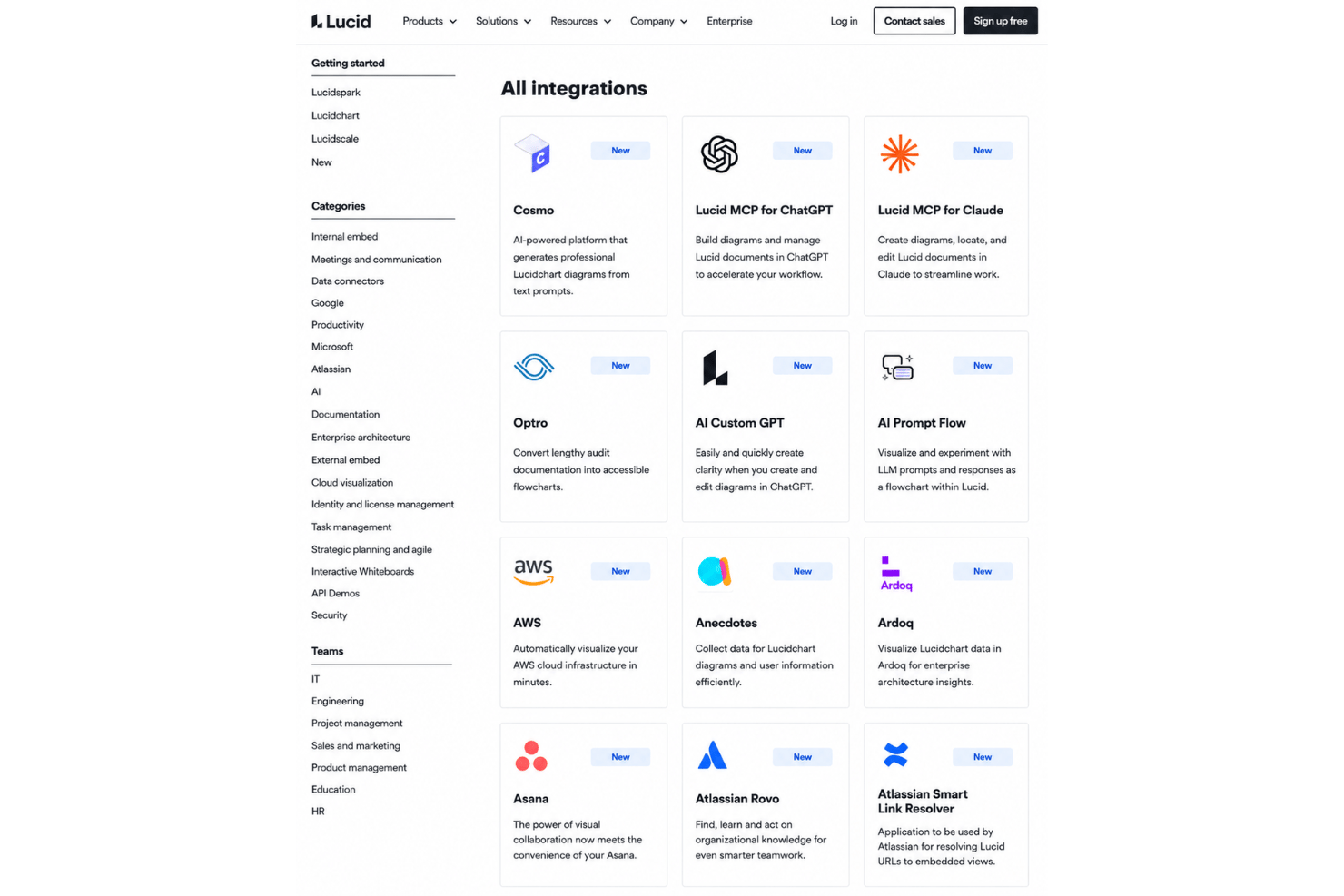
Lucid integrates with Google Workspace, Microsoft 365, Slack, Jira, Confluence, Salesforce, Ardoq, LeanIX, and AWS, among others, through its integration marketplace.
Lucid also offers a REST API, a developer platform, and an MCP server that connects Lucid to AI tools such as ChatGPT and Claude.
Value for Money
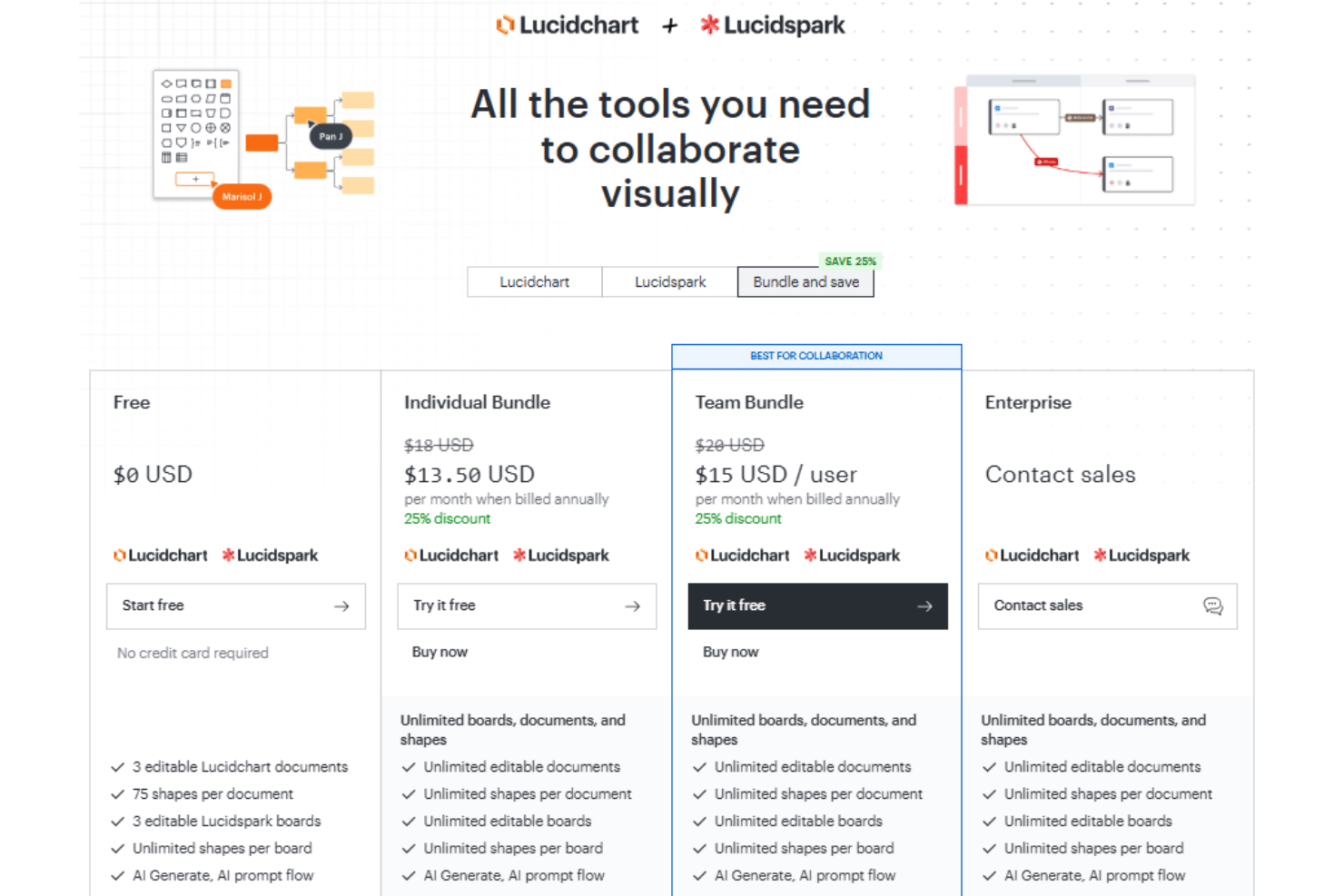
Lucid’s pricing is reasonable for the breadth of features, enterprise security, and scalability it offers. Because the suite covers everything from brainstorming to technical diagramming, many teams can also reduce costs by consolidating other tools, while larger organizations may find the advanced functionality well worth the investment.
- Free: Includes access to Lucidchart and Lucidspark, 75 shapes per document, 3 boards, and access to AI Generate.
- Individual Bundle: Adds unlimited documents, shapes, and boards.
- Team Bundle: Offers password protected publishing, admin controls, data syncing,a nd voting.
- Enterprise: Provides data overlays, Salesforce Schema import, and premium integrations.
Lucid Specs
- 2-Factor Authentication
- Access Management
- Anti-Virus
- API
- Audit Trail
- Bug Tracking
- Calendar Management
- Customer Management
- Dashboard
- Data Export
- Data Import
- Data Visualization
- Email Integration
- External Integrations
- File Sharing
- File Transfer
- Firewall
- Google Apps Integration
- Inventory Tracking
- Malware Protection
- Multi-User
- Network Device Performance Monitoring
- Network Traffic Monitoring
- Network Visualization
- Notifications
- Project Management
- Remote Access
- Risk Assessment
- SAP Integration
- Scheduling
- Software Integration
- Third-Party Plugins/Add-Ons
- Ticket Management
Lucid FAQs
How easy is it to onboard a cross-functional team to Lucid?
Can I control who has access to Lucid diagrams?
How does Lucid support real-time collaboration for distributed teams?
Is Lucid compliant with common industry security standards?
Does Lucid integrate with my project management and productivity tools?
What happens if I accidentally delete a diagram or need to restore an old version?
How scalable is Lucid for larger organizations or growing teams?
Is there a way to automate or dynamically update diagrams with external data?
What’s the difference between Lucidchart and Lucidspark?
Lucid Company Overview & History
Lucid Software is headquartered in South Jordan, Utah, with offices in Raleigh, Amsterdam, Melbourne, and Hamburg. Co-founded in 2010 by Ben Dilts and Karl Sun, it’s best known for Lucidchart and Lucidspark and now serves more than 100 million users across over 180 countries, with customers including Google, GE, and NBC Universal. Alongside the suite, Lucid offers airfocus, an AI-powered product management and roadmapping platform, and ranks as the most used work acceleration platform among the Fortune 500.
Lucid Major Milestones
- 2010: Company founded and Lucidchart launched.
- 2016: Lucidchart surpasses 10 million users worldwide.
- 2020: Lucidspark released to expand the visual collaboration suite.
- 2022: Lucid passes $100 million in annual recurring revenue.
- 2025: Lucid acquires airfocus and folds cloud visualization into the new Cloud Accelerator add-on.
- 2026: Lucid extends its AI platform with an MCP server connecting Lucid to AI tools such as ChatGPT and Claude.