

10 beste Basecamp-Alternativen und Wettbewerber im Jahr 2026

10 Die besten Basecamp-Alternativen in der engeren Auswahl


Die besten Alternativen zu Basecamp bieten Ihnen eine fortschrittlichere Aufgabenverwaltung, detailliertere Berichte und umfassendere Integrationen. Wenn Sie über die Einfachheit von Basecamp hinausgewachsen sind oder mehr Kontrolle darüber wünschen, wie Sie Projekte organisieren, hilft Ihnen das richtige Tool dabei, Projekte besser zu planen und zu verfolgen, abrechenbare Stunden im Blick zu behalten und die Ressourcennutzung zu überwachen.
Ich habe meine mehr als 15-jährige Erfahrung im Projektmanagement genutzt, um Alternativen zu Basecamp zu testen und die besten Optionen zu ermitteln, mit denen Sie mit Kunden in Kontakt bleiben, Arbeitsabläufe an Ihre Bedürfnisse anpassen und Projekte mit messbaren Ergebnissen umsetzen können. Im Folgenden stelle ich Stärken und wichtige Unterschiede, Vor- und Nachteile sowie ideale Einsatzmöglichkeiten vor.
Was sind Alternativen zu Basecamp?
Alternativen zu Basecamp sind Projektmanagement- und Tools für die Zusammenarbeit, die Teams dabei helfen, ihre Arbeit zu organisieren, Aktualisierungen zu teilen und Aufgaben im Blick zu behalten. Sie bieten ähnliche Funktionen wie Basecamp, verfügen aber möglicherweise über eine benutzerfreundlichere Oberfläche, zusätzliche Funktionen, die Basecamp fehlen, oder mehr Anpassungsmöglichkeiten, um Ihren Anforderungen gerecht zu werden.
Alternativen zu Basecamp sind bei Projektmanagern, Geschäftsinhabern und Remote-Teams beliebt, die einfache Möglichkeiten zur Verwaltung von Projekten und zur Kontaktpflege suchen und weniger Zeit damit verbringen möchten, zwischen verschiedenen Apps zu wechseln.
Warum Sie unseren Software-Empfehlungen vertrauen können
Unser Team testet und bewertet Software seit 2012. Als Projektmanager wissen wir selbst, wie schwierig – und wichtig – es ist, die richtige Software auszuwählen.
Für diesen Leitfaden haben wir Tools mithilfe von praktischen Tests und unabhängiger Recherche bewertet und dabei unsere Bewertungskriterien angewendet. Zudem greifen wir auf Erkenntnisse von Branchenvordenkern und praktizierenden Projektmanagement-Experten zurück.
Unsere Bewertungen spiegeln unser menschliches redaktionelles Urteilsvermögen wider, keine Verkaufsstrategie.
Expertenprüfer:
Vergleichstabelle der Basecamp-Alternativen
Diese Vergleichstabelle fasst die Preisdetails meiner bevorzugten Alternativen zu Basecamp zusammen.
| Tool | Best For | Trial Info | Price | ||
|---|---|---|---|---|---|
| 1 | Am besten für wachsende Unternehmen geeignet | 14 Tage kostenlos testen | Ab $9.80/Nutzer/Monat | Website | |
| 2 | Am besten für individuelle Anpassungen geeignet | 14 Tage kostenlos testen | Ab $6/Nutzer/Monat | Website | |
| 3 | Am besten geeignet für den einfachen Umstieg von Basecamp | 10 Tage kostenlos testen. Keine Kreditkarteninformationen erforderlich. | Ab $4 pro Nutzer/Monat bei jährlicher Abrechnung. Außerdem gibt es eine kostenlose Version für bis zu 3 Nutzer und 2 Projekte. | Website | |
| 4 | Am besten geeignet für mehrere Projekt- und Aufgabenansichten | 14 Tage kostenlos testen | Ab $12/Nutzer/Monat | Website | |
| 5 | Beste Lösung für die Integration von Ideenfindung und Aufgabenmanagement | Kostenloser Tarif verfügbar | Ab $13/Benutzer/Monat (jährliche Abrechnung) | Website | |
| 6 | Bestes kostenloses Paket als Basecamp-Alternative | Kostenloser Tarif + kostenlose Demo verfügbar | Für immer kostenlos, kostenpflichtige Pakete ab $5/Nutzer/Monat | Website | |
| 7 | Am besten geeignet für einfache Bedienung & Zusammenarbeit mit Kunden | 14-tägige kostenlose Testphase verfügbar, keine Kreditkarte erforderlich | Bezahlpläne ab nur $5/Nutzer/Monat | Website | |
| 8 | Am besten geeignet für kostengünstiges Projektmanagement | 14 Tage kostenlos testen | Ab $1.49/Benutzer/Monat | Website | |
| 9 | Beste Basecamp-Alternative für Open-Source-Lösungen und flexible Datenbanken | Kostenlose Testphase + kostenloser Tarif verfügbar | Ab $10/Nutzer/Monat (jährliche Abrechnung) | Website | |
| 10 | Beste Basecamp-Alternative für Softwareentwicklung | 30 Tage kostenlos testen | Ab 35/Monat | Website |


Bewertungen der besten Basecamp-Alternativen
Hier finden Sie meine ausführlichen Zusammenfassungen jeder Alternative zu Basecamp und der Gründe, warum sie gute Alternativen darstellen.
Wrike
Am besten für wachsende Unternehmen geeignet
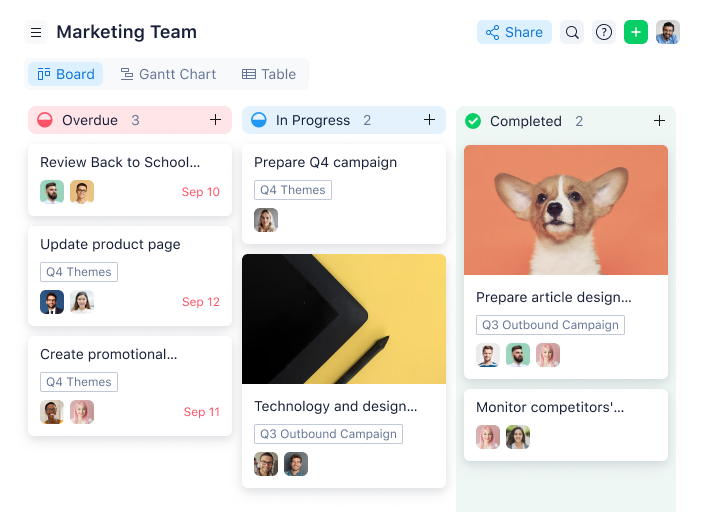
Wrike ist eine preisgekrönte, benutzerfreundliche Projektmanagement-Software, der weltweit über 20.000 Organisationen vertrauen. Dieses Projektplanungstool eignet sich für Teams von fünf bis zu einer unbegrenzten Anzahl von Teammitgliedern. Es ist äußerst anpassbar und ermöglicht es Benutzern, Workflows, wiederkehrende Aufgaben, Dashboards, Berichte, Anfrageformulare und mehr individuell zu gestalten.
Die einfache Oberfläche von Wrike erlaubt es Anwendern, zwischen Kanban-Boards, Gantt-Diagrammen mit nur einem Klick und traditionellen Auslastungsansichten zu wechseln, sodass sie selbst auswählen können, wie sie ihre Prioritäten visualisieren möchten. Wrike verfügt zudem über Funktionen wie Projektvorlagen, Aufgabenlisten, Unteraufgaben, Abhängigkeiten, Kalender, geteilte Workflows, Dateifreigabe, Bild-, Video- und Web-Freigabe zum Gegenzeichnen sowie die Zusammenarbeit in Echtzeit. Mit Tools für Leistungsberichte, Ressourcenverwaltung und -zuweisung, Zeiterfassung und mehr erhalten Sie tiefgehende Einblicke.
Wrike bietet eine benutzerfreundliche, intuitive Oberfläche und Navigation mit separaten Bereichen für jeden Ordner und jede Aufgabenliste. Die Verwaltung von Projekten ist ganz einfach, indem Sie einfach vom Startbildschirm zu Stundenzetteln, Dashboards, Kalendern, Berichten und dem Aktivitäts-Stream für Benachrichtigungen und Nachrichten wechseln.
Diese Projektmanagement-Lösung bietet außerdem je nach Team- oder Organisationsart eine Vielzahl unterschiedlicher und spezifischer Funktionen – egal ob Sie ein Kreativteam, ein Marketingteam oder ein Team im Bereich professionelle Dienstleistungen sind.
Wrike bietet über 400 vorinstallierte native Integrationen, darunter die beliebtesten Dateiverwaltungsprogramme von Microsoft, Google und Dropbox sowie Vertriebs- und Marketingsoftware wie Salesforce und Marketo.
New Product Updates from Wrike

Wrike Adds Quick Search to Table View
Wrike adds Quick Search to Table View with full-table search across titles, descriptions, and fields, plus highlighted matches. This helps users find tasks faster in large tables. For more information, visit Wrike’s official site.

Am besten für individuelle Anpassungen geeignet
monday AI Workspace ist eine visuelle Projektmanagement-Plattform, die sich für Teams eignet, die den Rahmen einfacher Tools gesprengt haben und eine Mehransichten-Projektverfolgung, Workflow-Automatisierung und KI-unterstützte Ausführung alles an einem Ort benötigen.
Für wen eignet sich monday AI Workspace am besten?
Es ist besonders geeignet für Operationsteams und Projektmanager, die Arbeit über mehrere Abteilungen oder Funktionen hinweg koordinieren müssen, ohne alles von Grund auf neu zu erstellen.
Warum monday AI Workspace eine gute Basecamp-Alternative ist
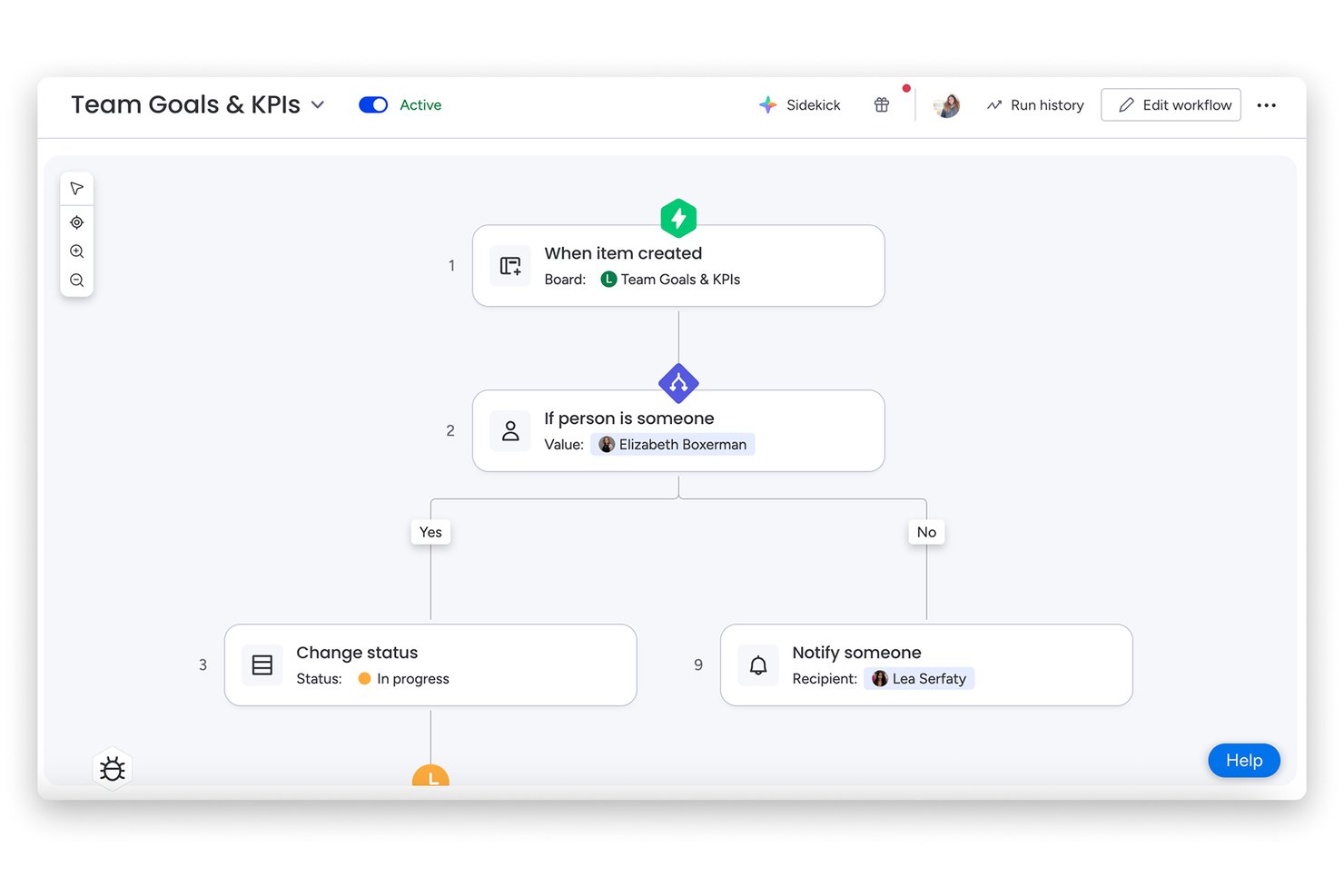
Ich habe monday AI Workspace in diese Liste aufgenommen, weil die Anpassungsmöglichkeiten weit über Spaltennamen und Farbthemen hinausgehen. Man kann Automatisierungsauslöser an benutzerdefinierte Spaltentypen ketten, sodass beim Statuswechsel auf einem Board verknüpfte Boards automatisch aktualisiert werden. Der KI-Workflow-Builder erweitert dies noch weiter und ermöglicht es mir, intelligente Aufgabenweiterleitungen basierend auf Live-Board-Daten zu konfigurieren, ohne eine einzige Codezeile zu schreiben.
Wichtige Funktionen von monday AI Workspace
- KI-gestützter Assistent: Erstellen Sie Aufgaben, Zusammenfassungen, Besprechungsnotizen und Projektupdates direkt aus Ihren Boards.
- Visuelle Zeitachsen- und Gantt-Ansichten: Verwalten Sie Fristen, Meilensteine und Abhängigkeiten auf interaktiven Projektplänen.
- Multi-Produkt-Suite (Work Management, CRM, Entwicklung, Service): Wechseln Sie zwischen verschiedenen Modulen, um unterschiedliche Geschäftsprozesse zu steuern.
- Gast- und Kundenzugriff: Laden Sie externe Nutzer mit kontrollierten Berechtigungen zur Projektzusammenarbeit und für Feedback ein.
monday AI Workspace Integrationen
monday AI Workspace bietet Hunderte von nativen Integrationen über die integrierten Integrationen und den Marktplatz, einschließlich Slack, Salesforce, HubSpot, Google Workspace, Outlook, Microsoft Teams, GitHub, Jira, Dropbox und Zoom. Es unterstützt auch Zapier und bietet eine API für eigene Integrationen.
Pros and Cons
Pros:
- Hochgradig anpassbare Boards, Felder und Workflows
- KI-Aufgabenerstellung beschleunigt die Projekteinrichtung
- Mehrere Projektansichten einschließlich Gantt und Zeitachse
Cons:
- Kann sich für sehr kleine Teams überwältigend anfühlen
- Der kostenlose Plan beschränkt Automatisierung und erweiterte Funktionen
New Product Updates from monday AI Workspace
monday AI Workspace Adds Human Approval Routing
monday AI Workspace adds a human-in-the-loop approval block to AI Workflows, sending approval requests and routing workflow paths based on responses. For more information, visit monday AI Workspace's official site.

Am besten geeignet für den einfachen Umstieg von Basecamp
Wenn Sie nach einer benutzerfreundlichen, aber dennoch funktionsreichen Alternative zu Basecamp suchen, ist Zoho Projects eine hervorragende Option. Sollten Sie bereits Basecamp-Nutzer sein, ermöglicht Zoho Projects den direkten Import Ihrer Daten aus Basecamp. Dank individueller Anpassungen und umfassender Berichtsfunktionen ist dieses Tool der logische nächste Schritt.
Planen Sie Arbeitsaufgaben einzeln und weisen Sie ihnen Termine zu oder nutzen Sie die intuitive Drag-and-Drop-Oberfläche des Gantt-Diagramms. Gehen Sie über reine Zeitplanung hinaus und analysieren Sie Zeitachsen mithilfe von kritischem Pfad und Basislinie. Das integrierte soziale Feed, Chaträume und Foren bieten zahlreiche Möglichkeiten, um Diskussionen zu starten. Hinzu kommt das Dokumentenmodul, das Dateifreigabe, Versionshistorie und gemeinsames Erstellen von Dateien unterstützt. Zoho Projects ist eines der wenigen PM-Tools, mit denen Sie Abhängigkeiten zwischen Projekten erstellen können.
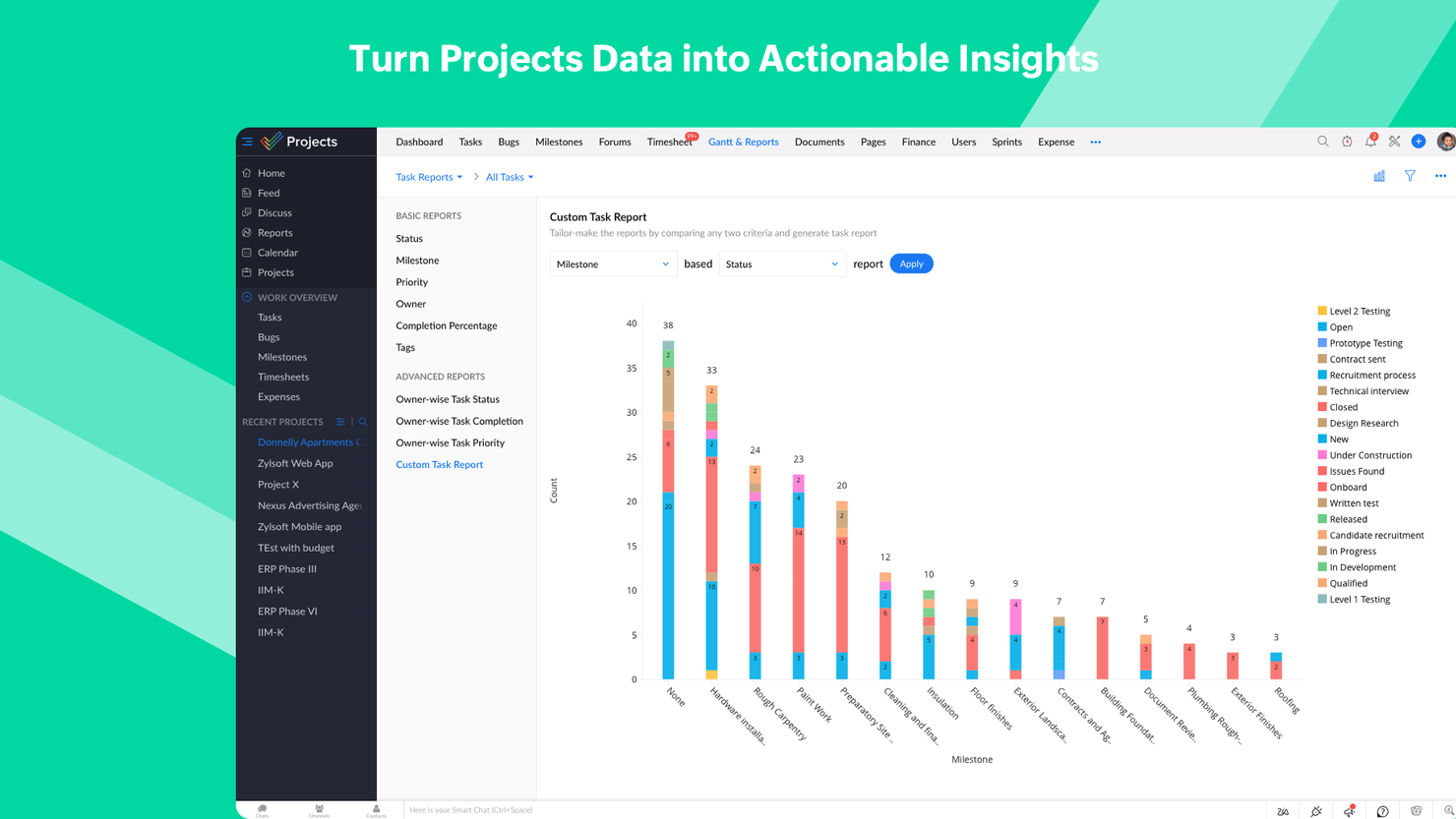
Passen Sie die Dashboards vollständig an Ihre Bedürfnisse an. Integrieren Sie Zoho Analytics und erstellen Sie über 50 verschiedene Diagramm- und Berichtstypen. Exportieren Sie Gantt-Diagramme als PDF und Aufgaben als XLS/CSV. Die Oberfläche und die Module sind äußerst anpassbar. Alle Aspekte der Benutzeroberfläche, von den Themenfarben bis zur Anordnung und Sichtbarkeit der verschiedenen Module, können individuell nach Ihren Präferenzen gestaltet werden. Zoho Projects bietet zudem eine kostenlose Einführung für seine Kunden und einen umfassenden Online-Hilfebereich für alle Nutzer.
Da Zoho Projects Teil des Zoho-Ökosystems ist, kann es mit vielen weiteren Zoho-Diensten wie Zoho Books, Zoho CRM und Zoho Finance Suite verbunden werden. Der neue Zoho Marketplace ermöglicht außerdem Integrationen von Drittanbietern. Auch Zapier-Verbindungen werden unterstützt. Besonders punktet Zoho Projects, wenn mehrere Teamübergaben im Projektablauf notwendig sind. Es ist besonders beliebt bei IT-Unternehmen, Beratern und Bildungseinrichtungen.
Preise ab $4 pro Nutzer/Monat bei jährlicher Abrechnung. Ebenfalls gibt es eine kostenlose Version für bis zu 3 Nutzer und 2 Projekte sowie eine 10-tägige kostenlose Testphase. Eine Eingabe von Kreditkartendaten ist nicht erforderlich.
New Product Updates from Zoho Projects
Zoho Projects Adds CodeX Scripts for Custom Modules
Zoho Projects now supports CodeX Scripts for custom modules, enabling conditional logic and rules for creating, updating, and deleting records. For more information, visit Zoho Projects' official site.
 .
.
Hive
Am besten geeignet für mehrere Projekt- und Aufgabenansichten
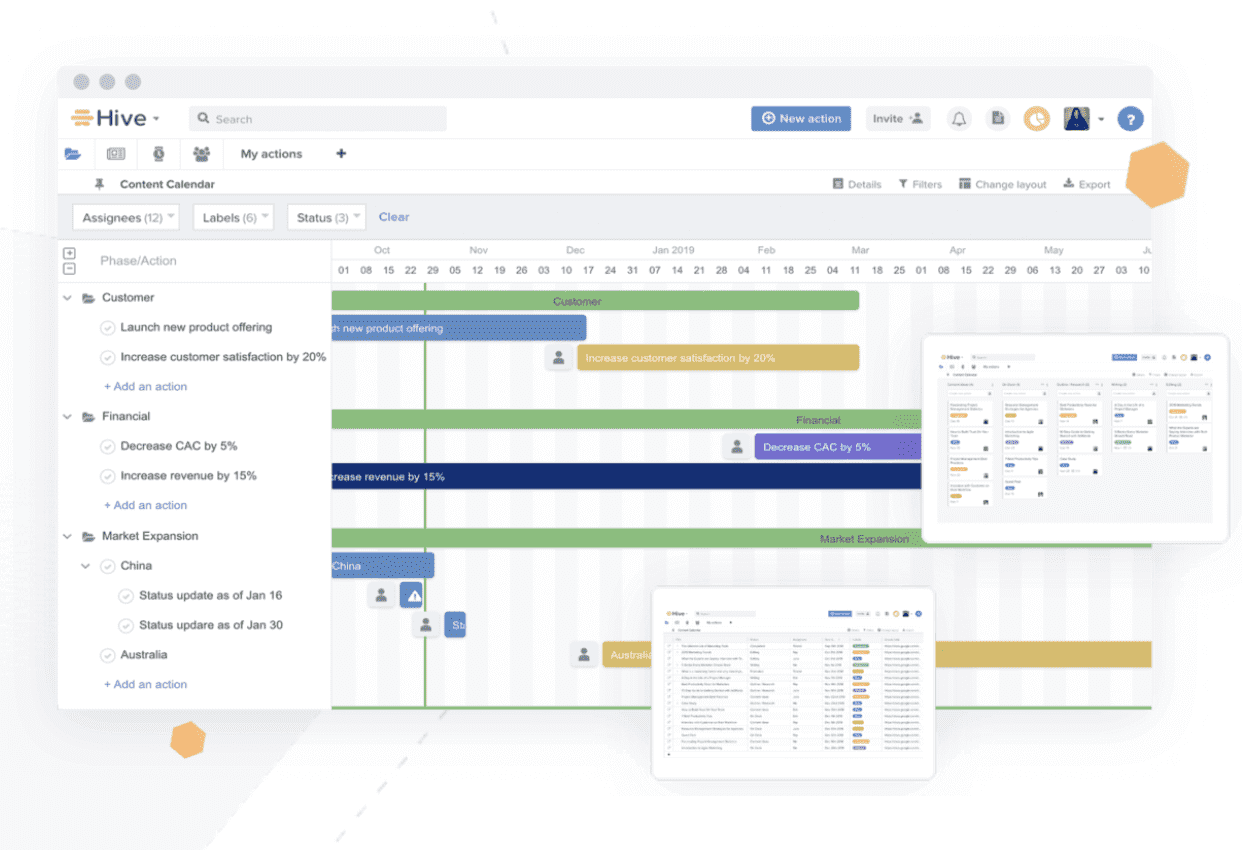
Hive ist ein leistungsstarkes Tool für Projektmanagement, Zusammenarbeit und flexible Aufgabenkoordination, das Basecamp in den Schatten stellt. Nutzer können Projekte als Gantt-Diagramm, Kanban-Board, Tabelle oder Kalender organisieren und problemlos zwischen den einzelnen Ansichten wechseln – je nach bevorzugtem Kommunikationsstil. Aktualisierungen werden in allen Projektansichten übernommen, sodass das gesamte Team sofort informiert ist, sobald Änderungen vorgenommen werden.
Hive ermöglicht eine mühelose Zusammenarbeit, indem Nachrichten direkt an Einzelpersonen oder Gruppen gesendet werden – mit einem wesentlich ansprechenderen Postfach als bei Basecamp. Müssen Sie ein Dokument teilen? Laden Sie es direkt einer Aufgabe, einem Projekt oder einer Nachricht hinzu. Mit der Forms-Funktion von Hive entfällt das ständige Versenden von E-Mails und alle erforderlichen Informationen können über einfache Ausfüllformulare gesammelt werden.
Wenn Sie von einem anderen Tool zu Hive wechseln, können Sie Aufgaben aus Tools wie Asana, Trello, Basecamp, Smartsheet und einigen weiteren importieren.
Hive lässt sich mit Google Drive, Salesforce, Jira, Dropbox, Slack, Zoom, One Drive, Box und über Zapier mit mehr als tausend weiteren Tools integrieren.
Hive kostet ab $12/Nutzer/Monat.
Beste Lösung für die Integration von Ideenfindung und Aufgabenmanagement
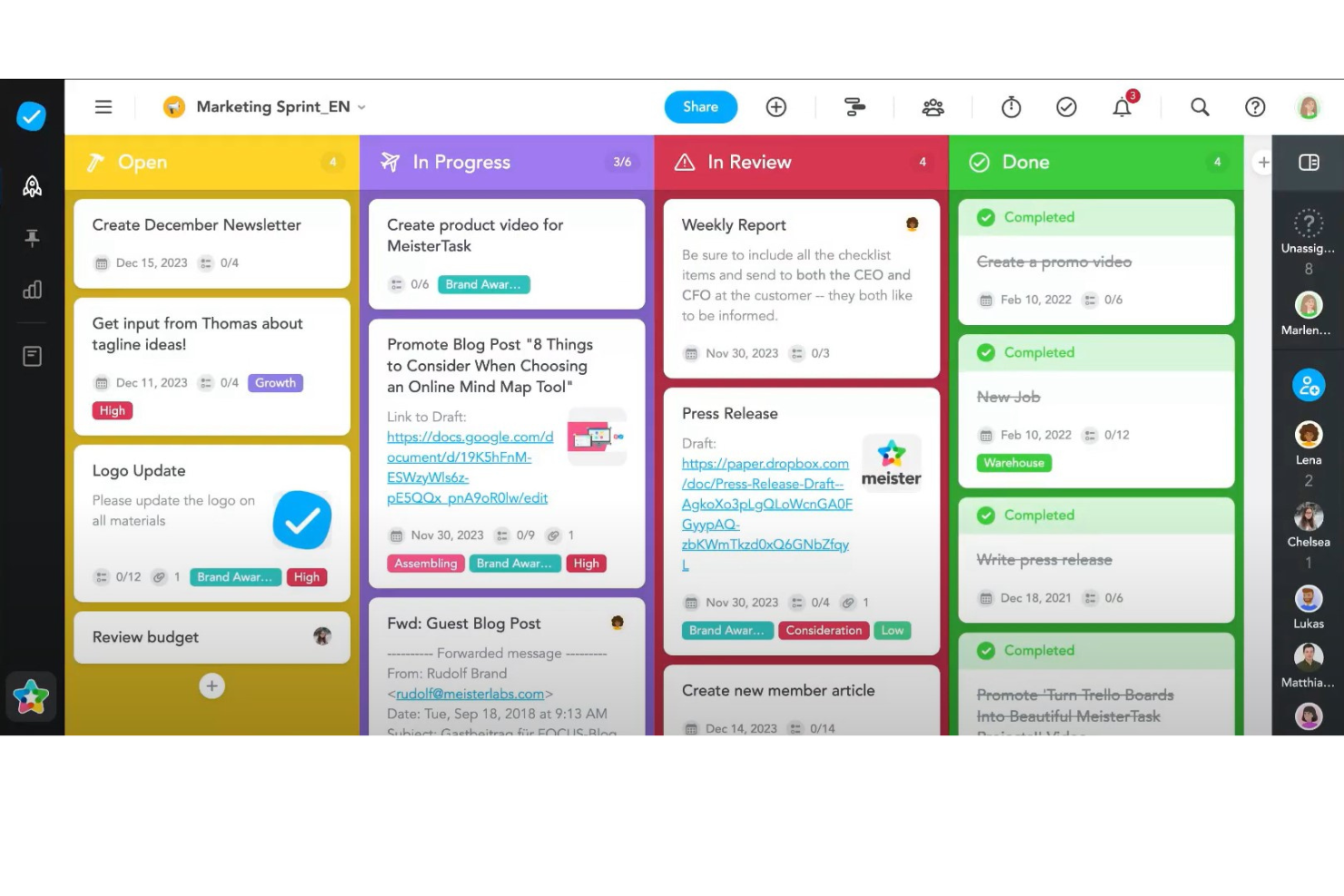
MeisterTask behauptet sich als starker Konkurrent zu Basecamp auf dem Markt für Projektmanagement-Software durch seine einzigartige Kombination aus ansprechendem Design, intuitiver Bedienbarkeit und innovativen Funktionen, die speziell darauf ausgelegt sind, die Teamproduktivität und den Projektworkflow zu verbessern. Im Gegensatz zu Basecamp, das einen eher schlichten, listenbasierten Ansatz für das Projektmanagement verfolgt, bietet MeisterTask eine dynamische, Kanban-basierte Benutzeroberfläche, die ein visuell orientiertes und flexibleres Aufgabenmanagement ermöglicht.
Ein herausragendes Merkmal von MeisterTask ist die tiefe Integration mit MindMeister, einem Online-Tool für Mindmapping. Diese Integration ermöglicht einen nahtlosen Übergang von der anfänglichen Ideensammlung und Planung direkt hin zu umsetzbaren Aufgaben und Projekten innerhalb von MeisterTask. Dieses Feature ist im Bereich des Projektmanagements besonders, da es Teams eine einheitliche Plattform für Ideengenerierung und Umsetzung bietet. Gerade für kreative und strategische Planungen, bei denen der Weg von der Idee zur Ausführung häufig nicht linear verläuft, ist eine flexible, integrierte Werkzeugpalette zur effektiven Steuerung unerlässlich.
MeisterTask legt großen Wert auf Automatisierung mit Funktionen, die darauf ausgelegt sind, wiederkehrende Aufgaben und Prozesse zu vereinfachen. Dies reduziert nicht nur den manuellen Aufwand, sondern stellt auch sicher, dass Projekte reibungslos und effizient voranschreiten. Die Automatisierungsfunktionen von MeisterTask gehen über einfache Aufgabenverteilung und Fälligkeitserinnerungen hinaus und bieten individuelle Regelkonfigurationen, mit denen auf Basis bestimmter Kriterien eine Reihe von Aktionen ausgelöst werden können.
MeisterTasks Engagement für Sicherheit und Datenschutz zeigt sich durch die Einhaltung der DSGVO sowie durch Ende-zu-Ende-Verschlüsselung für Aufgabenkommentare und Diskussionen. Dieser Fokus auf Datenschutz ist ein entscheidender Faktor für Unternehmen in sensiblen Branchen oder für diejenigen, die besonderen Wert auf Datensicherheit legen. Während auch Basecamp Privatsphäre und Sicherheit schätzt, bietet MeisterTask durch transparente Richtlinien und robuste Sicherheitsmaßnahmen ein zusätzliches Maß an Sicherheit und ist so eine attraktive Option für Teams, die hohe Anforderungen an Datenschutz in Verbindung mit leistungsstarken Projektmanagement-Funktionen stellen.

ClickUp
Bestes kostenloses Paket als Basecamp-Alternative
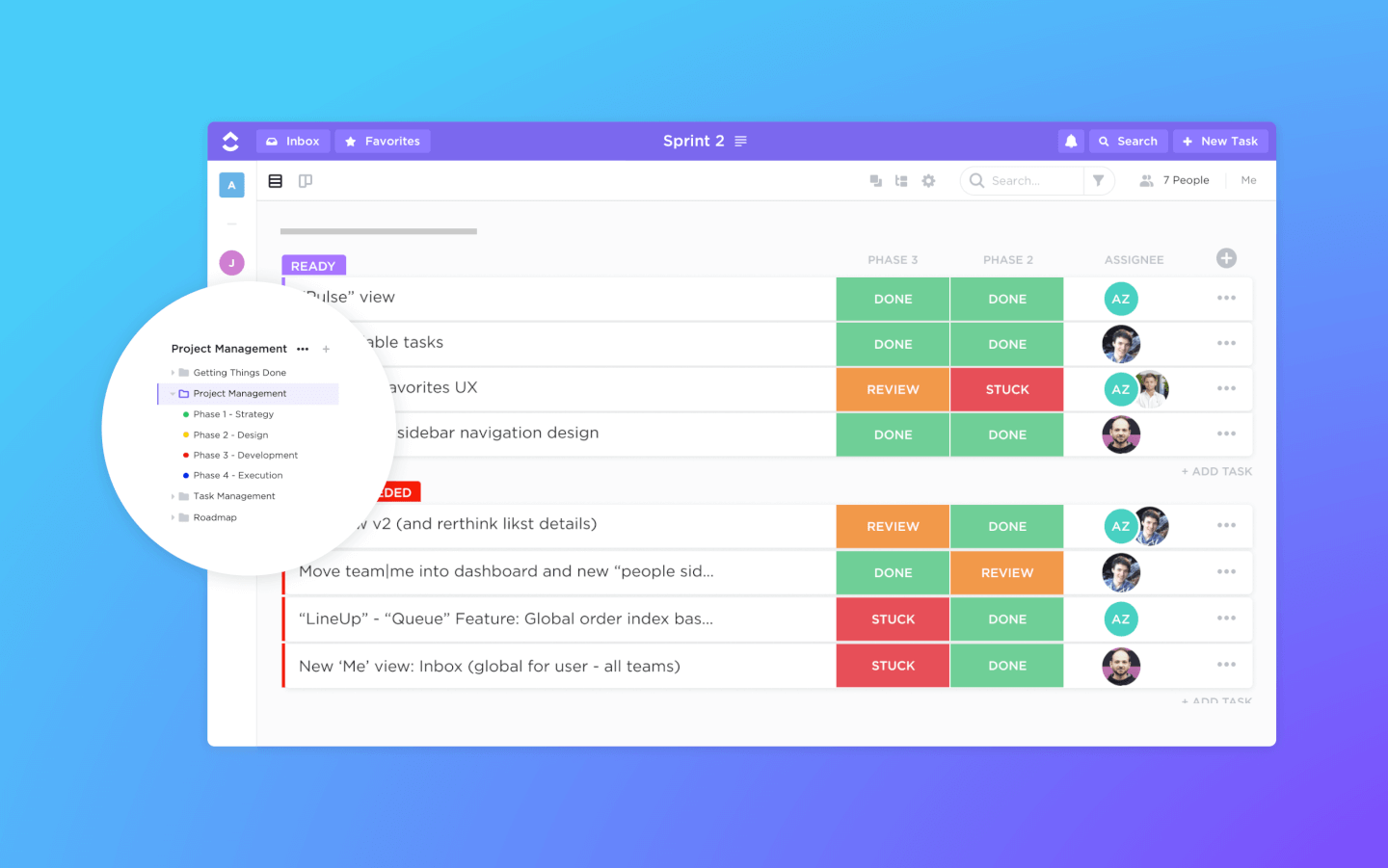
ClickUp ist ein Projektmanagement-Tool mit leistungsstarken Funktionen zur Verwaltung und zum Abschluss aller Projekte Ihres Teams auf einer Plattform. Nutzer können Projekte planen, Aufgaben terminieren und Ressourcen in einem zentralen Arbeitsbereich verwalten sowie mit Teammitgliedern und Gästen kommunizieren und zusammenarbeiten.
Zu den Funktionen für die Projektplanung gehören Gantt-Diagramme, Kalender und Zeitpläne zur Visualisierung von Aufgaben. Nutzer können außerdem Zeit und Aufgaben planen, Fristen verfolgen, Zeitschätzungen festlegen und die aufgewendete Zeit nachverfolgen.
ClickUp bietet zudem Funktionen zum Erstellen, Teilen und gemeinsamen Bearbeiten von Wikis und Dokumenten. Nutzer können Dokumente und Aufgaben kommentieren, Kommentare zuweisen und mit anderen Teammitgliedern chatten, um die Kommunikation und Zusammenarbeit zu erhöhen. Zu den Reporting-Funktionen gehört die Möglichkeit, benutzerdefinierte Dashboards zu erstellen sowie sechs integrierte Berichtstypen für Teamberichte zu nutzen.
ClickUp bietet native Integrationen mit Slack, G Suite, Dropbox und vielen weiteren Tools sowie über 1.000+ Integrationen über Zapier. Der kostenlose Tarif von ClickUp ist umfangreich und enthält alle Hauptfunktionen. Der Unlimited-Tarif beginnt bei $5 pro Monat und Nutzer und bietet zusätzliche Funktionen.
New Product Updates from ClickUp
ClickUp Adds Meetings Hub, Super Agent Templates, and ZoomInfo Integration
ClickUp adds a searchable Meetings Hub, new ways to clone and template Super Agents, and a ZoomInfo integration through the App Center. These updates improve meeting retrieval, agent reuse, and access to sales intelligence. For more information, visit ClickUp’s official site.
Nifty
Am besten geeignet für einfache Bedienung & Zusammenarbeit mit Kunden
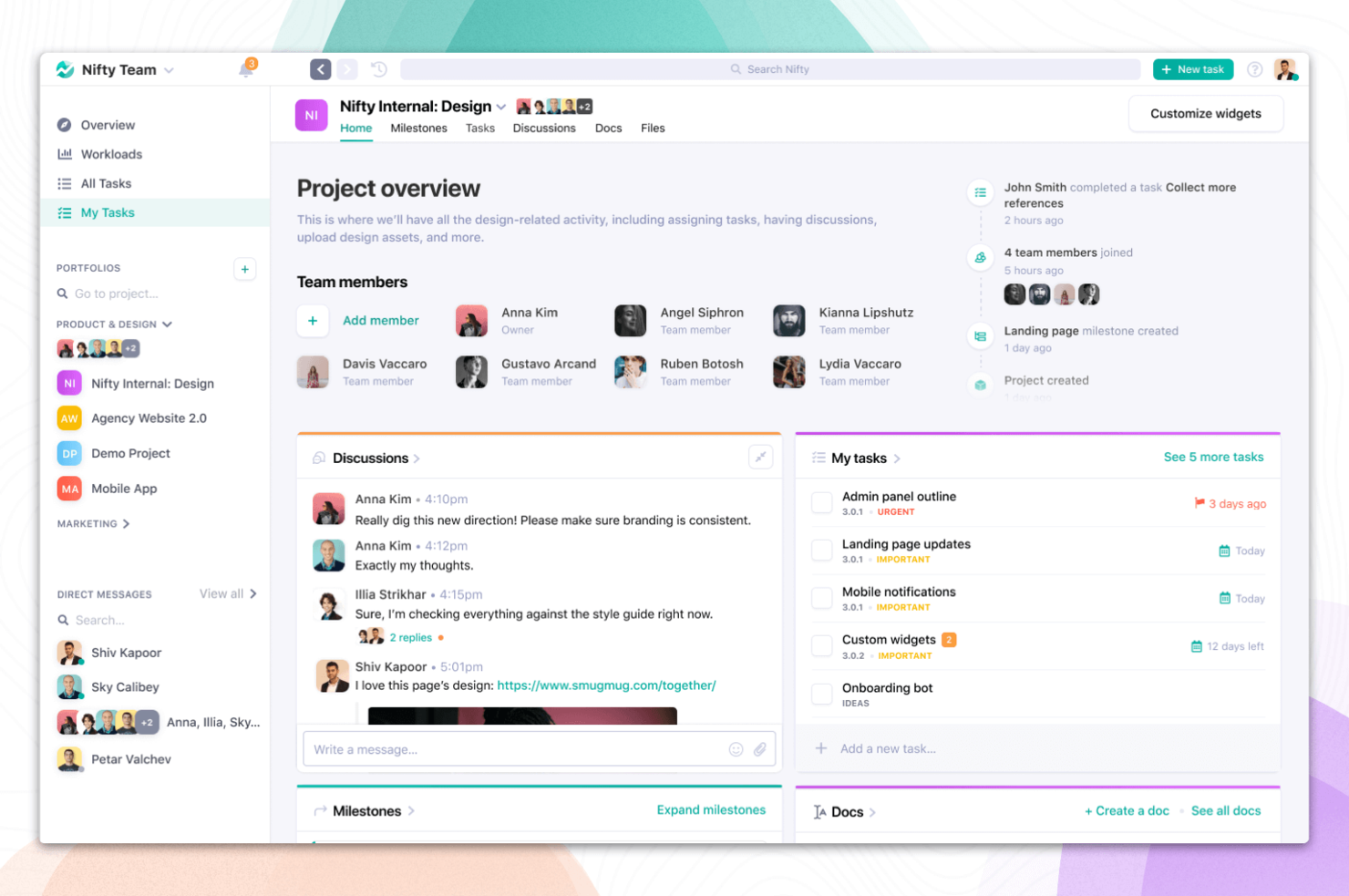
Nifty ist ein Projektmanagement- und Kollaborations-Hub, der Teams dabei unterstützt, Projekte zu planen, zu verfolgen und umzusetzen. Nifty bietet zahlreiche Funktionen für die Projektplanung wie Diskussionen, Meilensteine, Aufgabenabhängigkeiten, Dokumente und Dateien, damit Projektmitglieder und Stakeholder auf die Projektziele abgestimmt sind. Das Tool beinhaltet zudem Direktnachrichten, die die teamweite Kommunikation von der Planung bis zur Umsetzung erleichtern. Niftys integriertes Reporting bietet einen globalen Überblick über Projektstatus und Arbeitslasten der Teammitglieder, sodass Ihre Entscheidungen mit Ihrem Geschäftsplan abgestimmt sind.
Nifty ermöglicht den Import bestehender Daten aus Basecamp sowie aus CSV- und Excel-Dateien, sodass Sie Ihren Workflow schnell in Nifty etablieren können. Nifty bietet außerdem integrierte Schnittstellen zu Google Docs, Tabellen und Präsentationen. Eigene Einbettungen von Drittanbieter-Projekten und Workflow-Automatisierungen sind ebenso möglich wie Anbindungen an über 1000 weitere Anwendungen über Zapier.
Nifty startet bei $39/Monat.

Am besten geeignet für kostengünstiges Projektmanagement
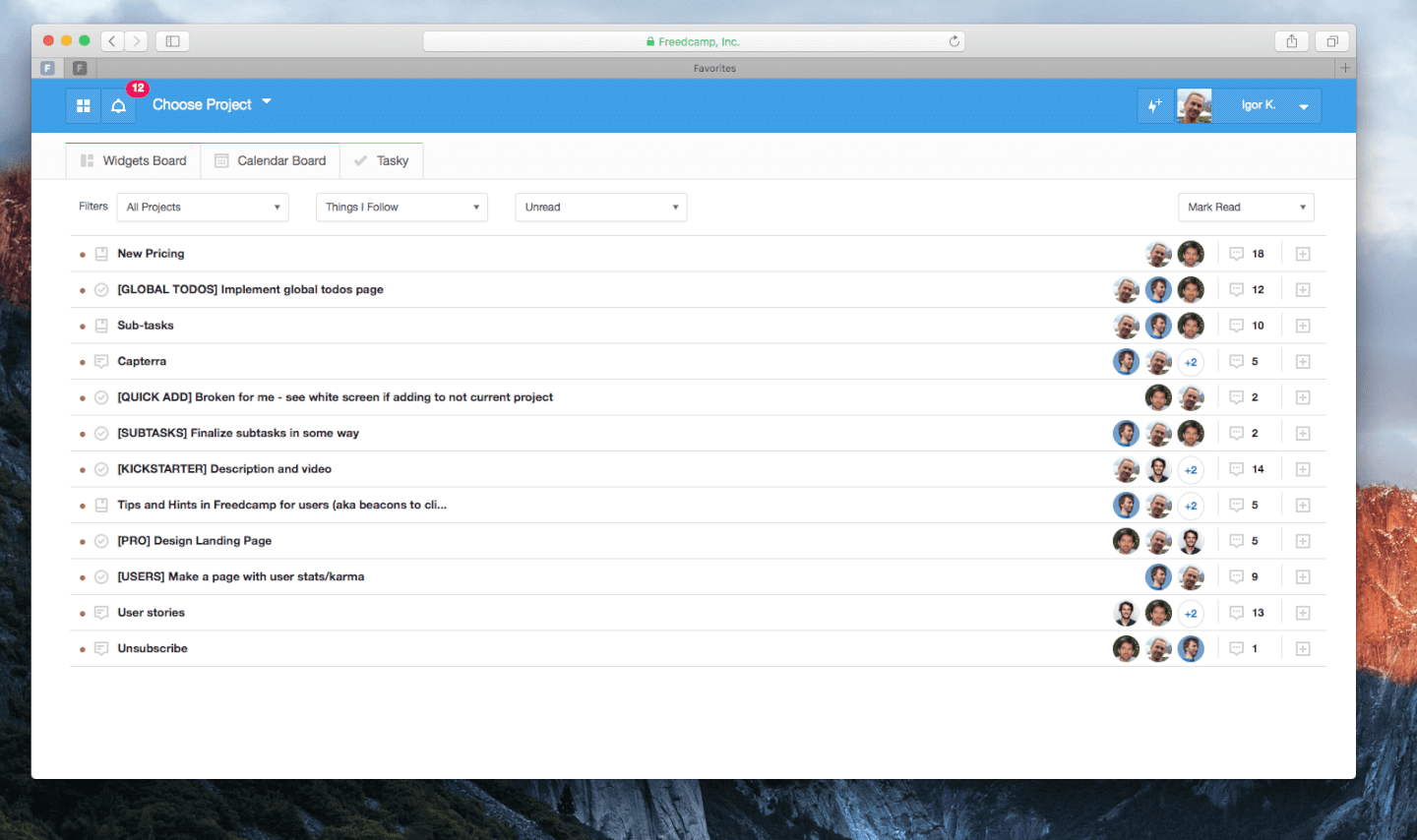
Freedcamp ist eine großartige Alternative zu Basecamp und bietet nützliche Kollaborationsfunktionen über eine einfache visuelle Oberfläche. Die App ermöglicht es Ihnen, Ihre Aufgaben zu verfolgen, zu kennzeichnen und im Blick zu behalten, indem Sie ein Kanban-Board und ein interaktives Gantt-Diagramm nutzen. Sie bietet die Möglichkeit, Aufgaben danach zu kategorisieren, wer sie macht, wann und wie sie erledigt werden.
Mit den Nachrichten- und Aufgabenübersichtstafeln von Freedcamp können Sie Mitglieder zuweisen, ihnen notwendige Dateien bereitstellen, Fristen setzen und Unteraufgaben hinzufügen. Der integrierte Kalender ermöglicht es, Ereignisse, Aufgaben und Meilensteine zu erstellen und individuell anzupassen. Außerdem verfügt Freedcamp über ein allgemeines Diskussionsforum.
Die Integrationen von Freedcamp umfassen alle Standarddienste: Jira, Slack, Trello, GitHub und viele mehr. Es lässt sich zudem problemlos mit dem gesamten Google-Ökosystem synchronisieren, sodass Sie Ihren Google-Kalender mit dem integrierten Kalender von Freedcamp abgleichen können, um Ihre Updates plattformübergreifend einheitlich zu halten und weitere Berichtsmöglichkeiten zu schaffen.
Freedcamp kostet ab $3.49/Benutzer/Monat.
Baserow
Beste Basecamp-Alternative für Open-Source-Lösungen und flexible Datenbanken
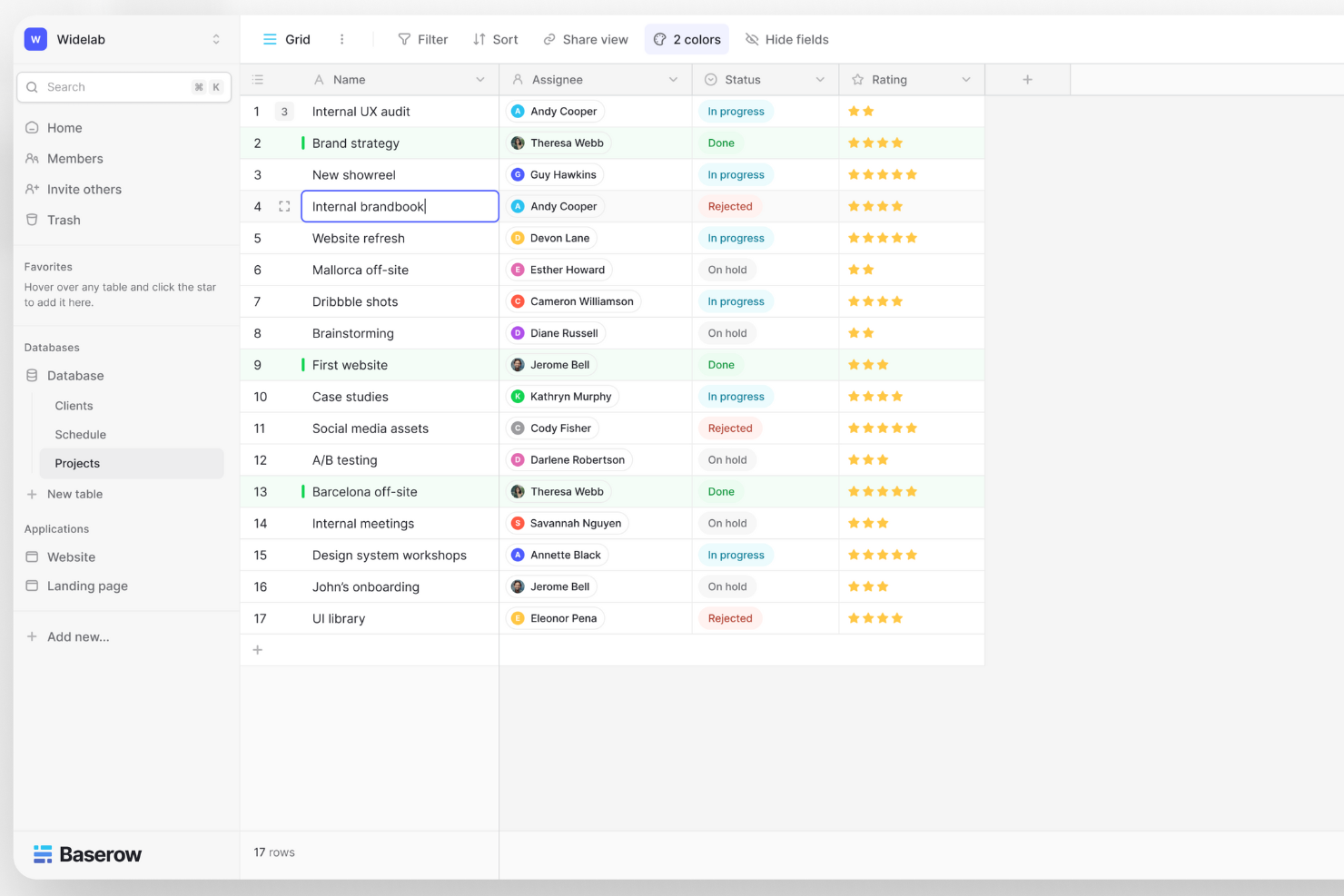
Baserow ist eine Open-Source-No-Code-Datenbankplattform, die für Einfachheit und Flexibilität im Datenmanagement entwickelt wurde. Sie bietet eine benutzerfreundliche, tabellenähnliche Oberfläche für die Zusammenarbeit in Echtzeit, anpassbare Vorlagen und API-First-Integration und richtet sich sowohl an nicht-technische Anwender als auch an Entwickler, die effiziente, anpassungsfähige Lösungen zur Organisation und Verwaltung von Daten suchen.
Baserow zeichnet sich durch seinen No-Code-Ansatz zur Datenbankanpassung aus, der es Nutzern ohne technischen Hintergrund ermöglicht, einfach und unkompliziert Datenbanken zu erstellen und zu verwalten. Dieses Merkmal ist besonders einzigartig, da es das Datenbankmanagement demokratisiert und Anwendern erlaubt, Datenbanken nach ihren individuellen Anforderungen zu erstellen und anzupassen – ganz ohne Programmierkenntnisse.
Im Gegensatz zu vielen Wettbewerbern ist Baserow Open Source und bietet Transparenz sowie gemeinschaftsgetriebene Weiterentwicklungen. Zudem ermöglicht es Self-Hosting, wodurch Nutzer die volle Kontrolle über ihre Daten erhalten und die Flexibilität haben, die Software an ihre spezifischen Anforderungen anzupassen – ein Feature, das insbesondere für Organisationen mit besonderen Vorgaben in Bezug auf Datenschutz oder Governance attraktiv ist.
Baserow startet ab $5/Nutzer/Monat und bietet einen kostenlosen Tarif an.
Backlog
Beste Basecamp-Alternative für Softwareentwicklung
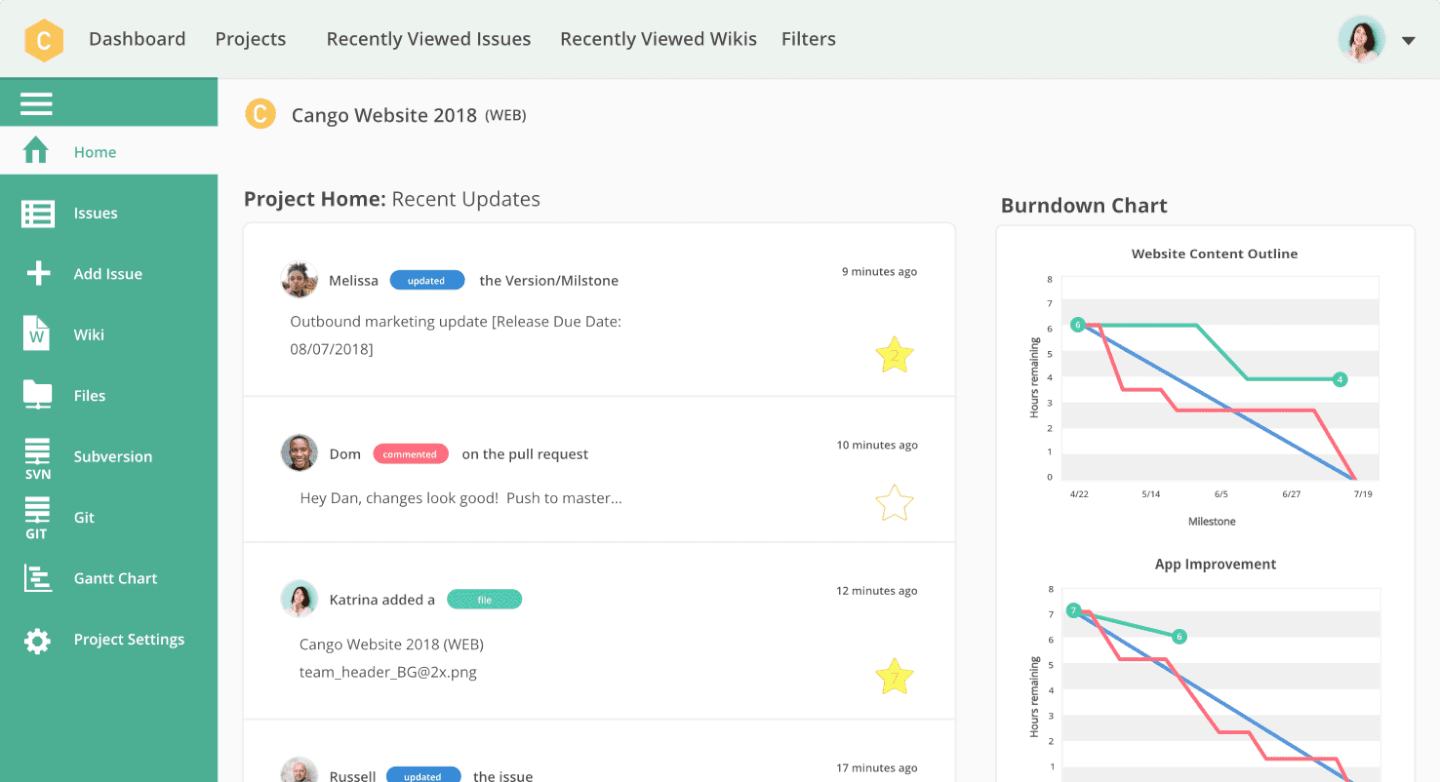
Backlog ist ein cloudbasiertes Projektmanagement-Tool mit besonderem Fokus auf kollaborative Werkzeuge für Entwickler. Backlog bietet nützliche Funktionen für die Zusammenarbeit wie Aufgabenmanagement (einschließlich Unteraufgaben, Checklisten und benutzerdefinierte Felder), Meilensteine, Dateiverwaltung, Wikis und mehr. Aber Backlog ist mehr als nur eine Projektmanagement-App: Es ist auch ein Bug-Tracker und ein Versionskontrollsystem in einem.
Für die Zusammenarbeit am Code bietet Backlog SVN- und Git-Repositories, einen Unterschiedsbetrachter und Inline-Kommentare sowie Pull Requests, Merge Requests und Branches. Für schnelle visuelle Berichte stellt die App Burndown-Diagramme, Git-Grafen, Kanban-Boards und Gantt-Diagramme bereit, sodass Projektmanager und Nutzer den Status von Projekten auf einen Blick erfassen können.
Obwohl es keinen Eins-zu-eins-Chat gibt, können Nutzer direkt an den Aufgaben zusammenarbeiten und kommentieren, indem sie ausgewählte Teammitglieder auf wichtige Aktivitäten und Aktualisierungen aufmerksam machen. Nulab – die Entwickler von Backlog – bieten zudem ihre eigene Chat-App namens Typetalk an, die sich nahtlos mit Backlog integriert und Ihnen die benötigten Kommunikationsmöglichkeiten direkt neben den Projektmanagement-Tools liefert.
Backlog eignet sich für unterschiedliche Teamgrößen. Es gibt ein kostenloses Konto für Teams mit bis zu 10 Mitgliedern sowie eine selbstgehostete Enterprise-Option für größere Unternehmen. Außerdem gibt es eine mobile App für iOS und Android, sodass Sie auch unterwegs zusammenarbeiten können. Es integriert sich mit den anderen Apps von Nulab und bietet sowohl Redmine- als auch Jira-Importfunktionen.
Mit Backlog können Sie Aufgaben zuweisen, verfolgen und veröffentlichen – alles in einer App und dabei Transparenz und Verantwortlichkeit im gesamten Team gewährleisten. Wenn Sie ein Tool für das Management von Entwicklungsprojekten oder für die enge Zusammenarbeit mit Entwicklerteams suchen, ist dies die richtige App für Sie.
Backlog ist für bis zu 10 Nutzer mit einigen Funktionsbeschränkungen kostenlos oder kostet $35/Monat für bis zu 30 Nutzer. Für $100/Monat erhält Ihr Team unbegrenzte Nutzer, das heißt, den Standard-Plan.
Weitere Alternativen zu Basecamp
Hier sind einige weitere Alternativen zu Basecamp, die es nicht in meine engere Auswahl geschafft haben, aber dennoch einen Blick wert sind:
- Workzone
Am besten geeignet für personalisierte Onboarding-Unterstützung
- Shortcut
Am besten für agile Frameworks
- Avaza
Am besten geeignet für Zusatzfunktionen wie Zeiterfassung und Ausgabenverwaltung
- Teamwork.com
Am besten für die Zusammenarbeit an Inhalten
- Bonsai Agency Software
Ideal für die Verwaltung von Projekten, Kunden und Finanzen an einem Ort
- Nutcache
Am besten geeignet, um Aufgaben visuell zu organisieren
- Yanado
Am besten geeignet für Gmail-Nutzer
- Intervals
Am besten für kleine Teams und kleine Unternehmen
- Ravetree
E Basecamp-Alternative für Agenturen
- Pneumatic Workflow
Am besten geeignet zur Optimierung digitaler Projekte
- Stackfield
Am besten für Datenschutz und Compliance in der EU geeignet
- ReptonPOD
Am besten für geführten Phasenfortschritt
- Quire
Am besten für das Work-in-Progress-Management geeignet


Cómo evalúo las alternativas a Basecamp
Evalúo las alternativas a Basecamp en dos niveles: las funciones esenciales de gestión de tareas y colaboración sin las que una agencia o una PMO no puede funcionar, y los elementos diferenciadores que determinan cuál es la opción más adecuada.
Funcionalidad principal (requisitos básicos de esta lista)
Al seleccionar herramientas para mi lista, califico cada una en una escala del 0 (no ofrece la funcionalidad) al 5 (sobresale en esta área) para cada una de las funciones principales que se indican a continuación. Después, calculo la puntuación total de la herramienta y la convierto en un porcentaje. Cada herramienta debe alcanzar una puntuación total mínima del 75 % para ser considerada.
- Gestión de tareas y proyectos: Busco varias vistas de proyectos, como tableros, listas y cronogramas, para que los equipos puedan planificar un sprint en Kanban mientras las partes interesadas supervisan el mismo trabajo en un diagrama de Gantt.
- Colaboración y mensajería del equipo: Ya se trate de debates encadenados sobre un entregable o de un mensaje rápido para un grupo, compruebo que las conversaciones permanezcan vinculadas al contexto del proyecto.
- Intercambio de archivos y almacenamiento de documentos: Los equipos necesitan un lugar central para almacenar y organizar los recursos de cada proyecto. Evalúo cómo gestiona cada herramienta el control de versiones, la búsqueda de archivos y las estructuras de carpetas.
- Programación y seguimiento de hitos: Analizo cómo gestiona cada herramienta los calendarios, las fechas límite y los marcadores de hitos, para que el responsable de un equipo pueda detectar que una fecha de lanzamiento se está retrasando antes de que descarrile el trabajo posterior.
- Colaboración con clientes y externos: En el caso de agencias y consultorías, evalúo los controles de acceso para invitados. La herramienta adecuada permite compartir un proyecto con un cliente sin exponer notas internas ni presupuestos.
- Integraciones con terceros: Compruebo si existen conexiones nativas con herramientas como Slack, Google Workspace, GitHub y Figma, además de una conectividad más amplia mediante Zapier, Make o una API abierta.
Una vez que tengo una lista de herramientas que cumplen estos criterios, analizo qué diferencia a cada plataforma.
Factores diferenciadores (qué distingue a los proveedores)
Así es como comparo y contrasto los distintos proveedores:
Funciones destacadas
La automatización sin código es uno de los primeros aspectos que evalúo. Una herramienta que puede asignar tareas automáticamente cuando cambia un estado o activar una notificación de Slack cuando se alcanza un hito ahorra a los gestores de proyectos horas de seguimiento manual cada semana. También analizo el seguimiento nativo del tiempo con tarifas facturables, algo importante para que las agencias concilien las horas registradas con los presupuestos de los clientes. Los paneles personalizados completan mi evaluación: los directores de PMO necesitan vistas de cartera en tiempo real que puedan compartir con la dirección sin exportar una hoja de cálculo.
Más allá de las funciones
El modelo de precios es muy importante al comparar alternativas a Basecamp. Algunas herramientas cobran por usuario, lo que puede encarecerse rápidamente para un equipo de 50 personas, mientras que otras ofrecen planes de tarifa fija que mantienen los costes predecibles. También considero si el tamaño del equipo es adecuado: una herramienta diseñada para PMO empresariales puede resultar abrumadora para una empresa emergente de 10 personas, y viceversa. La incorporación también merece atención. Analizo si una plataforma ofrece asistencia para la migración, plantillas prediseñadas y una configuración guiada, para que el equipo no tenga que pasar semanas recreando proyectos desde cero.
Warum nach einer Alternative zu Basecamp suchen?
Basecamp ist zwar eine gute Wahl für Projektmanagement und die Zusammenarbeit im Team, es gibt jedoch eine Reihe von Gründen, warum manche Nutzer nach alternativen Lösungen suchen. Sie suchen möglicherweise nach einer Alternative zu Basecamp, weil …
- Sie fortschrittliche Funktionen zur Aufgabenverwaltung wie Abhängigkeiten oder Unteraufgaben benötigen
- Sie mehr Integrationen mit den anderen Tools wünschen, die Ihr Team bereits verwendet
- Sie bessere Berichte oder Analysen benötigen, um den Projektfortschritt zu verfolgen
- Sie ein anderes Preismodell bevorzugen, etwa eine Abrechnung pro Nutzer
- Sie bessere Möglichkeiten zur Zeiterfassung oder Rechnungsstellung benötigen
- Sie mehr Anpassungsmöglichkeiten für Arbeitsabläufe und Berechtigungen wünschen
Die wichtigsten Funktionen von Basecamp
Hier sind einige der wichtigsten Funktionen von Basecamp, damit Sie die Angebote alternativer Lösungen gegenüberstellen und vergleichen können:
- Aufgabenlisten: Erstellen Sie Aufgaben und weisen Sie sie Teammitgliedern zu, legen Sie Fälligkeitstermine fest und verfolgen Sie den Fortschritt, damit jeder seine Verantwortlichkeiten kennt.
- Nachrichtenforen: Veröffentlichen Sie Ankündigungen, stellen Sie Ideen vor oder starten Sie Diskussionen an einem zentralen Ort, um die gesamte Teamkommunikation organisiert und zugänglich zu halten.
- Gruppenchats: Führen Sie Echtzeit-Gruppenchats für kurze Fragen oder spontane Gespräche, um lange E-Mail-Verläufe zu vermeiden.
- Terminpläne: Verwalten Sie Projektzeitpläne, indem Sie Meilensteine, Fristen und Ereignisse festlegen, damit Ihr Team den Überblick behält und wichtige Termine einhält.
- Dokumente & Dateien: Laden Sie Dokumente und Dateien an einem zentralen Ort hoch, speichern und teilen Sie sie dort, damit jeder Zugriff auf die neuesten Versionen hat.
- Automatische Statusabfragen: Richten Sie wiederkehrende Fragen ein, um Statusaktualisierungen von Ihrem Team zu sammeln und alle auf dem Laufenden zu halten, ohne zusätzliche Besprechungen zu planen.
- Fortschrittsdiagramme: Visualisieren Sie den Projektfortschritt, um potenzielle Hindernisse zu erkennen und sicherzustellen, dass die Aufgaben planmäßig vorankommen.
- Kundenzugriff: Laden Sie Kunden zu bestimmten Projekten ein, damit sie den Fortschritt anzeigen, Feedback geben und direkt in Basecamp zusammenarbeiten können.
- Berichte: Gewinnen Sie Einblicke in die Projektleistung, verfolgen Sie überfällige Aufgaben und überwachen Sie die Teamaktivitäten, um Verantwortlichkeit und Transparenz zu gewährleisten.
- Integrationen: Verbinden Sie Basecamp mit anderen von Ihrem Team verwendeten Tools, etwa Zeiterfassungs- oder Buchhaltungssoftware, um einen einheitlicheren Arbeitsablauf zu schaffen.