

I 18 migliori software RFP nel 2026

Shortlist Software RFP


Il software RFP è uno strumento digitale che ti aiuta a gestire, automatizzare e monitorare i processi di richiesta di proposta del tuo team dall’inizio alla fine. Se stai cercando il miglior software RFP è probabile che tu voglia risparmiare tempo, ridurre il lavoro manuale e concludere più affari, anche mentre i requisiti e i cicli di revisione continuano ad evolversi.
Qui sotto troverai un elenco selezionato di strumenti che aiutano project manager e team di proposta a gestire requisiti complessi, mantenere allineati gli stakeholder e presentare proposte vincenti più rapidamente. Usa questa guida per confrontare le tue opzioni e scegliere il miglior software RFP per il flusso di lavoro unico del tuo team.
Perché fidarsi dei nostri consigli sui software
Il nostro team testa e recensisce software dal 2012. In quanto project manager noi stessi, sappiamo quanto sia difficile — e importante — scegliere il software giusto.
Per questa guida, abbiamo valutato gli strumenti attraverso test pratici e ricerche indipendenti, assegnando un punteggio agli strumenti in base ai nostri criteri di selezione. Ci basiamo inoltre sulle competenze di leader di pensiero del settore e di professionisti attivi nella gestione dei progetti.
Le nostre recensioni riflettono il nostro giudizio editoriale umano, non un discorso di vendita.
Revisori esperti:
Riepilogo del Miglior Software RFP
Questa tabella comparativa riepiloga i dettagli sui prezzi delle mie migliori selezioni di software RFP per aiutarti a trovare il software più adatto alle tue esigenze di budget e aziendali.
| Tool | Best For | Trial Info | Price | ||
|---|---|---|---|---|---|
| 1 | Il migliore con rilevamento automatico dei conflitti | Demo gratuita disponibile | Prezzo su richiesta | Website | |
| 2 | Ideale per librerie di contenuti IA a manutenzione zero | Garanzia di rimborso di 30 giorni con condizioni; demo gratuita disponibile | A partire da $899/mese (fatturati annualmente) | Website | |
| 3 | Ideale per il controllo del brand incentrato sul design | Prova gratuita di 14 giorni + demo gratuita disponibile | Da $19/utente/mese (fatturato annualmente) | Website | |
| 4 | Ideale per workflow di progetto aziendali complessi | Demo gratuita disponibile | Prezzo su richiesta | Website | |
| 5 | Ideale per l'intero ciclo di vita documentale | Prova gratuita di 14 giorni + demo gratuita disponibile | Da $19/postazione/mese (fatturato annualmente) | Website | |
| 6 | Ideale per la qualificazione delle trattative integrata al CRM | Workshop gratuito di 90 minuti + demo gratuita disponibile | Prezzo su richiesta | Website | |
| 7 | Ideale per la stesura narrativa generativa end-to-end | Demo gratuita disponibile | Prezzo su richiesta | Website | |
| 8 | Ideale per la redazione automatica senza libreria | Prova gratuita di 30 giorni + demo gratuita disponibile | Da $899/mese (fatturato annualmente) | Website | |
| 9 | Ideale per la raccolta della conoscenza tribale guidata dagli agenti | Demo gratuita disponibile | Prezzi su richiesta | Website | |
| 10 | Ideale per l'automazione della conoscenza integrata a Slack | Prova gratuita + piano gratuito + demo gratuita disponibili | Da $300/mese | Website |
Recensioni Software RFP
Qui di seguito trovi i miei riepiloghi dettagliati dei migliori software RFP selezionati nella mia shortlist. Le mie recensioni offrono uno sguardo dettagliato alle funzionalità, alle integrazioni e ai migliori casi d’uso di ciascuna piattaforma per aiutarti a trovare il software che funziona meglio per te.

Il migliore con rilevamento automatico dei conflitti
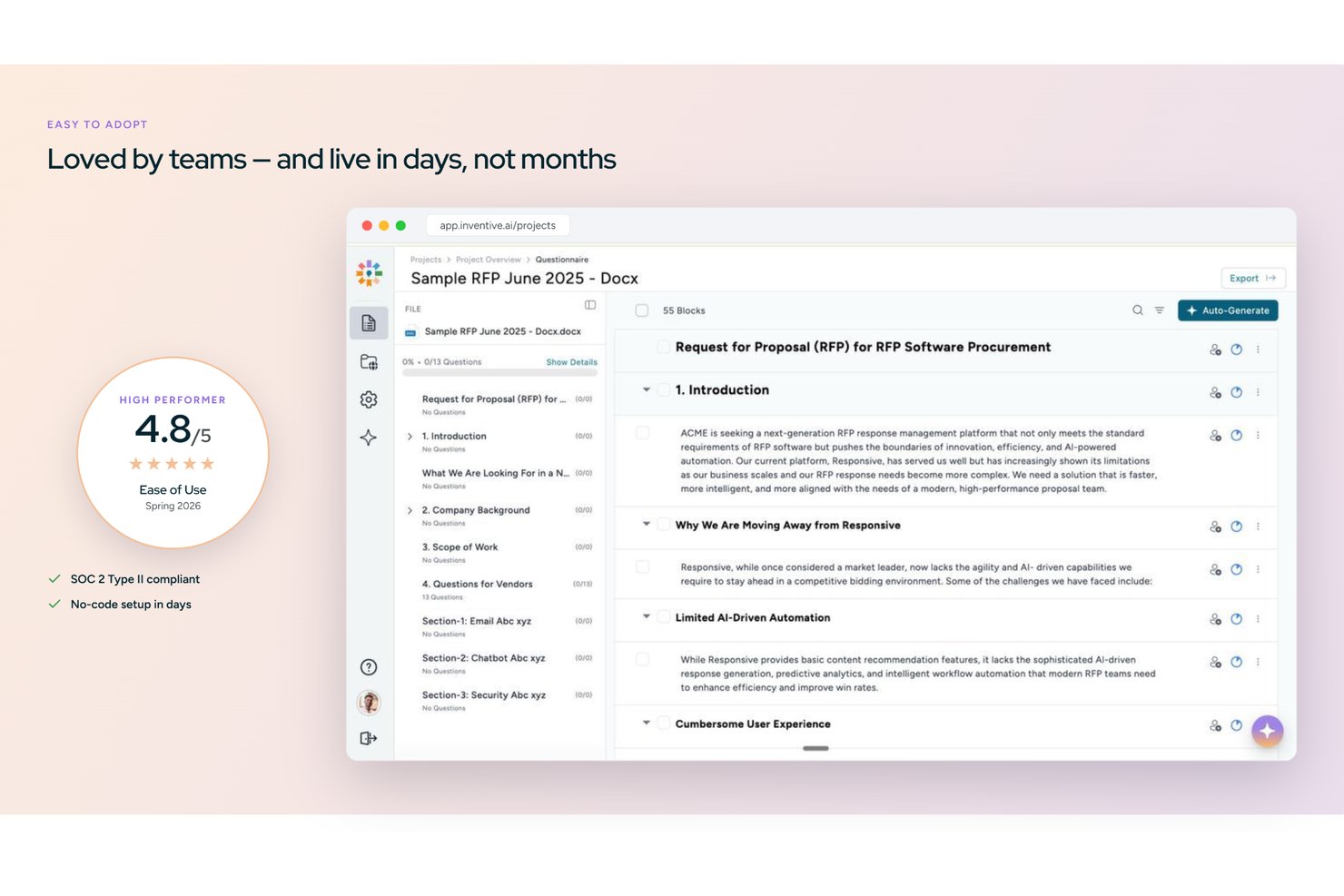
Inventive AI è una piattaforma nativa di intelligenza artificiale per la risposta a RFP che automatizza la generazione di bozze su RFP, RFI, DDQ e questionari di sicurezza utilizzando un hub di conoscenza centralizzato, rilevamento dei conflitti e import/export in più formati.
Per chi è più indicato Inventive AI?
Inventive AI è particolarmente adatto a team di proposta e pre-vendita di aziende di medie e grandi dimensioni che gestiscono un elevato volume di RFP, RFI e questionari di sicurezza.
Perché ho scelto Inventive AI
Ho scelto Inventive AI come uno dei migliori perché il suo AI Content Manager rileva attivamente informazioni contrastanti tra le fonti collegate prima che venga inviata qualsiasi risposta. Se una pagina prezzi e una presentazione prodotto forniscono risposte diverse alla stessa domanda RFP, la piattaforma lo segnala direttamente. Mi piace anche l'Analyzer Agent, che esegue un controllo di conformità sulle bozze completate, verificando che ogni requisito sia soddisfatto e che il tono rimanga coerente in tutte le sezioni.
Funzionalità principali di Inventive AI
- Hub di conoscenza unificato: Centralizza le coppie di domande/risposte aziendali, documenti di prodotto e precedenti RFP per la generazione di risposte guidate dall'AI.
- Analyzer Agent: Esegue cicli di revisione per confermare che ogni requisito RFP sia soddisfatto e verifica la coerenza del tono nelle bozze.
- Esportazione in più formati: Consente l'esportazione delle risposte completate in Word, Excel, PDF, CSV e modelli personalizzati con brand.
- Integrazione con Jira e Salesforce: Sincronizza i dati delle proposte e dei progetti direttamente con sistemi di project management e CRM.
Integrazioni di Inventive AI
Inventive AI offre integrazioni native con Salesforce, Jira, Slack, Microsoft 365, Google Workspace e HubSpot. È disponibile un'API per integrazioni personalizzate.
Pros and Cons
Pros:
- Il rilevamento dei conflitti individua automaticamente contenuti contraddittori nella proposta
- L'AI redige risposte tra RFP e DDQ
- L'hub di conoscenza segnala e aggiorna risposte obsolete
Cons:
- Piattaforma più recente con una comunità di utenti ridotta
- I report analitici sono meno maturi rispetto ai concorrenti affermati
Ideale per librerie di contenuti IA a manutenzione zero
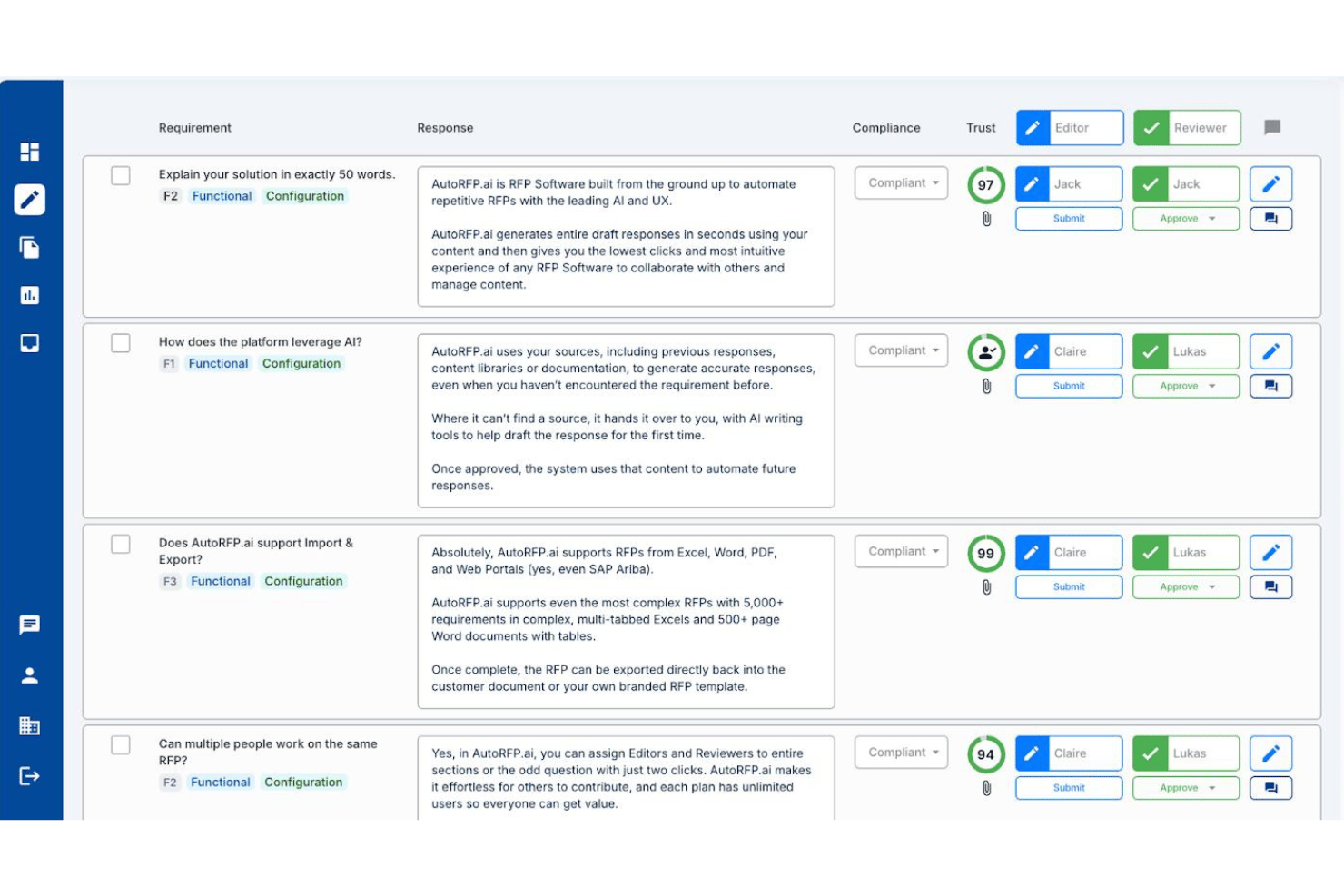
AutoRFP.ai è una piattaforma nativa dell'IA per le risposte alle RFP che automatizza la generazione delle prime bozze, gestisce i flussi di lavoro degli esperti in materia interfunzionali e mantiene una libreria di contenuti che si autoalimenta tra RFP, DDQ e questionari di sicurezza.
Per chi è più adatto AutoRFP.ai?
AutoRFP.ai è adatto ai team che si occupano di proposte e hanno bisogno che l'IA gestisca automaticamente l'aggiornamento della libreria di contenuti, senza che nessuno debba mantenere manualmente un database di domande e risposte.
Perché ho scelto AutoRFP.ai
AutoRFP.ai è entrato nella mia rosa di candidati perché è l'unico strumento per RFP che ho visto in grado di eliminare davvero l'onere della manutenzione della libreria di contenuti. Invece di curare manualmente un database di domande e risposte, la piattaforma apprende da ogni risposta approvata e si sincronizza automaticamente con fonti come SharePoint, Confluence e Notion. Mi piacciono anche i punteggi di affidabilità associati a ogni bozza generata dall'IA, che indicano i livelli di confidenza e citano le fonti, così i revisori non devono indovinare la qualità delle risposte.
Funzionalità principali di AutoRFP.ai
- Analisi Sì/No: analizza i documenti RFP in arrivo alla ricerca di elementi decisivi e automatizza le decisioni di partecipazione o non partecipazione prima che il team impegni risorse.
- Agente del portale con estensione del browser: risponde direttamente all'interno di portali di approvvigionamento come SAP Ariba, Coupa e Workday tramite un'estensione per Chrome o Edge, senza dover ricreare i documenti.
- Flusso di lavoro con menzioni tramite Slack e Teams: consente ai responsabili delle proposte di menzionare gli esperti in materia direttamente in Slack o Microsoft Teams per raccogliere risposte senza coinvolgere i collaboratori in una piattaforma separata.
- Supporto alle risposte multilingue: redige e localizza le risposte in oltre 44 lingue, inclusa la localizzazione automatica tra inglese statunitense e inglese britannico.
Integrazioni di AutoRFP.ai
AutoRFP.ai pubblicizza oltre 18 integrazioni, tra cui Salesforce, SharePoint, Confluence, Notion, Slack, Microsoft Teams, Drata e Vanta. Supporta inoltre API REST, webhook e connessioni al server MCP per flussi di lavoro personalizzati.
Pros and Cons
Pros:
- La libreria di contenuti IA non richiede manutenzione
- Avvio rapido con prime bozze in 48 ore
- Punteggi di affidabilità e citazioni per ogni risposta
Cons:
- Nessun diagramma di Gantt o integrazione con strumenti di gestione dei progetti
- L'analisi dei risultati non monitora la qualità delle vittorie e delle sconfitte

Ideale per il controllo del brand incentrato sul design

Proposify è una piattaforma per la creazione e la gestione di proposte rivolta a team che necessitano di controllo sul design, librerie di contenuti, modelli brandizzati, firme elettroniche e monitoraggio in tempo reale in uno stesso spazio di lavoro.
Per chi è ideale Proposify?
Proposify è adatto a team di vendita creativi e ad agenzie che richiedono un controllo accurato del branding e un design personalizzato delle proposte su diversi progetti per clienti.
Perché ho scelto Proposify
Ho scelto Proposify come uno dei migliori perché ho bisogno di totale controllo sulla brandizzazione delle proposte e sulla coerenza del design quando rispondo a RFP. Il mio team utilizza il suo editor flessibile drag-and-drop per creare modelli coerenti con il nostro brand, così da valorizzare la nostra identità ad ogni interazione. Faccio anche affidamento sulla libreria centralizzata di contenuti per gestire messaggi e materiali visivi approvati, disponibili rapidamente per tutte le proposte.
Funzionalità principali di Proposify
- Editor drag-and-drop: Crea documenti di vendita molto visivi e brandizzati.
- Libreria di contenuti standardizzati: Garantisce coerenza del marchio tra i team di vendita.
- Analisi della visualizzazione da parte del cliente: Segui quando e come i destinatari interagiscono con le proposte.
Integrazioni di Proposify
Proposify offre integrazioni native con Salesforce, HubSpot, QuickBooks, Stripe, Zoho CRM, Pipedrive, FreshBooks e Slack, e fornisce un'API per integrazioni personalizzate.
Pros and Cons
Pros:
- Personalizzazione avanzata del design per documenti brandizzati
- Blocco granulare dei contenuti per evitare modifiche non autorizzate
- Domini personalizzati white label per presentazioni professionali
Cons:
- Flusso di lavoro e gestione delle attività sui progetti limitati
- Ruoli personalizzati e impostazioni dei permessi sono limitati

Ideale per workflow di progetto aziendali complessi

Responsive è una piattaforma software RFP aziendale progettata per centralizzare la gestione delle richieste, automatizzare i flussi di lavoro di risposta, integrarsi con gli strumenti aziendali e supportare grandi team che gestiscono proposte complesse e ad alto volume.
Per chi è ideale Responsive?
Responsive è adatto a grandi aziende e team di proposta che gestiscono workflow RFP e di conformità ad alto volume e su più dipartimenti.
Perché ho scelto Responsive
Ho scelto Responsive come uno dei migliori software di risposta RFP perché gestisce workflow di progetto aziendali complessi con spazi di lavoro personalizzabili, permessi granulari e librerie di risposte automatizzate. Lo utilizzo per coordinare grandi team assegnando attività tra le unità aziendali e la sua automazione dei workflow permette al mio team di semplificare revisione, conformità e approvazioni su RFP critiche.
Funzionalità chiave di Responsive
- Suggerimento di contenuto abilitato all'IA: suggerisce risposte rilevanti dalla tua libreria di contenuti mentre compili le RFP.
- Tracciamento delle versioni: tiene traccia di tutte le modifiche e degli aggiornamenti ai documenti di progetto.
- Workflow integrato di firma elettronica: ti permette di raccogliere firme direttamente all'interno delle proposte e delle risposte.
Integrazioni di Responsive
Responsive offre più di 30 integrazioni native, tra cui Salesforce, Slack, Google Drive, Microsoft 365, HubSpot, Box, OneDrive, SharePoint e Dropbox, e fornisce un'API per integrazioni personalizzate.
Pros and Cons
Pros:
- Supporta una libreria di risposte automatizzata per risposte più rapide
- Offre controlli sui permessi per grandi team
- Gestisce workflow di approvazione e conformità a più step
Cons:
- Opzioni limitate per il trial o la demo self-service
- Può risultare troppo complesso per alcune PMI
PandaDoc
Ideale per l'intero ciclo di vita documentale

PandaDoc è una piattaforma di automazione dei documenti per team RFP che gestisce la creazione di documenti, la gestione dei modelli, le firme elettroniche, i flussi di lavoro per l'approvazione e la collaborazione per proposte e contratti.
A Chi È Meglio Adatto PandaDoc?
PandaDoc è una soluzione ideale per i team di vendita e proposte nelle aziende in crescita che hanno bisogno di una piattaforma all-in-one per gestire documenti di RFP e contratti.
Perché Ho Scelto PandaDoc
Ho scelto PandaDoc come uno dei migliori perché posso gestire ogni fase del ciclo di vita dei documenti RFP in un'unica piattaforma, inclusi creazione, instradamento dei flussi di lavoro e firme elettroniche sicure. Il mio team utilizza le sue funzionalità di libreria di modelli e contenuti per standardizzare le risposte alle proposte su larga scala. Mi affido ai suoi flussi di lavoro di approvazione integrati per mantenere la conformità dei contratti tra i team globali.
Funzionalità Principali di PandaDoc
- Generatore di moduli: consente di creare moduli compilabili per raccogliere dati RFP.
- Analisi dei documenti: traccia quando i destinatari aprono, visualizzano o interagiscono con i documenti.
- Invio massivo: consente di inviare un documento a molti destinatari contemporaneamente per la distribuzione di RFP.
Integrazioni PandaDoc
PandaDoc offre oltre 30 integrazioni native, tra cui Salesforce, HubSpot, Pipedrive, Zoho CRM, Slack, Dropbox, QuickBooks, PayPal e Stripe. È disponibile una API per integrazioni personalizzate.
Pros and Cons
Pros:
- Monitoraggio dei documenti end-to-end con marcature temporali
- Libreria di modelli multiutente per standardizzazione
- Integrazioni nativamente CRM per sincronizzazione del pipeline
Cons:
- Accesso offline limitato per la modifica dei documenti
- Il controllo delle versioni manca di funzionalità collaborative

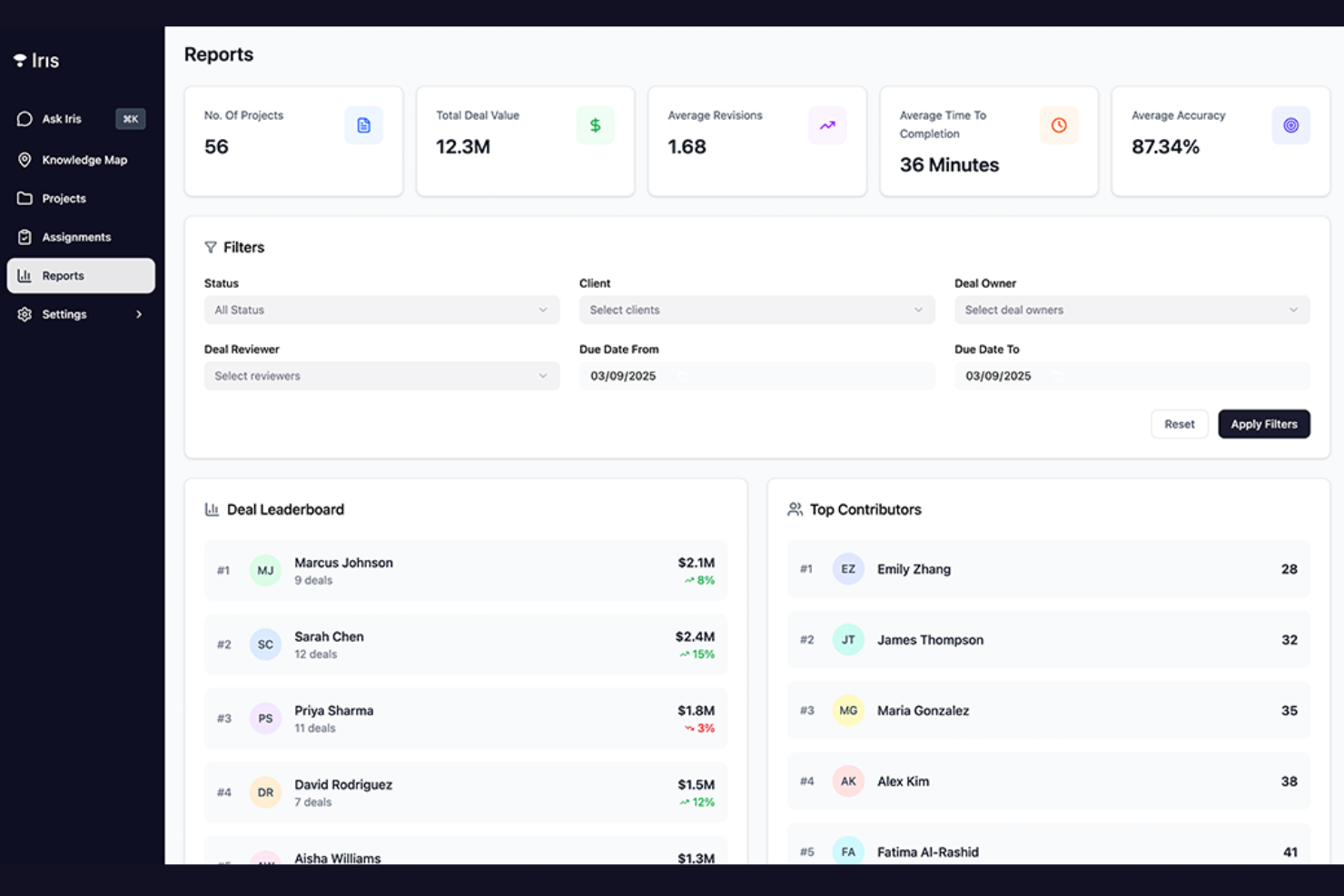
Iris è una piattaforma di automazione dei flussi di lavoro di vendita che collega direttamente i processi di qualificazione delle trattative e di gestione degli RFP al tuo CRM, offrendo estrazione dei dati tramite IA, monitoraggio della qualificazione e gestione della pipeline.
A chi è rivolta Iris?
Iris è ideale per i team di vendita e operations di ricavo in organizzazioni B2B che si affidano a flussi di lavoro incentrati sul CRM per gestire RFP e qualificare le trattative.
Perché ho scelto Iris
Ho scelto Iris tra le migliori perché ho visto la sua qualificazione delle trattative, integrata nel CRM, offrire un vero vantaggio nella gestione degli RFP nella nostra pipeline. Utilizzo la sua automazione IA per estrarre i criteri delle trattative direttamente dal CRM o dai documenti inviati, e poi monitoro lo stato tramite matrici di qualificazione personalizzabili. Il mio team beneficia di insight che evidenziano gli RFP bloccati e identificano le informazioni mancanti per l'avanzamento della trattativa.
Caratteristiche principali di Iris
- Dashboard analitica degli RFP: Visualizza metriche in tempo reale e attività su tutti gli RFP attivi.
- Mappatura dei campi personalizzati: Collega i dati estratti dagli RFP ai requisiti di schema del CRM.
- Log di audit delle attività: Traccia ogni azione e modifica su ciascun record RFP.
Integrazioni di Iris
Iris offre integrazioni native con Salesforce, HubSpot, Microsoft Dynamics 365 e Pipedrive. È disponibile una API per integrazioni personalizzate.
Pros and Cons
Pros:
- Automatizza l'estrazione dei dati delle trattative dalle candidature
- Fornisce suggerimenti basati su IA per la qualificazione degli RFP
- Sincronizza lo stato degli RFP con le pipeline in tempo reale
Cons:
- Nessun template dedicato per le risposte agli RFP
- Richiede impostazione manuale dei campi personalizzati

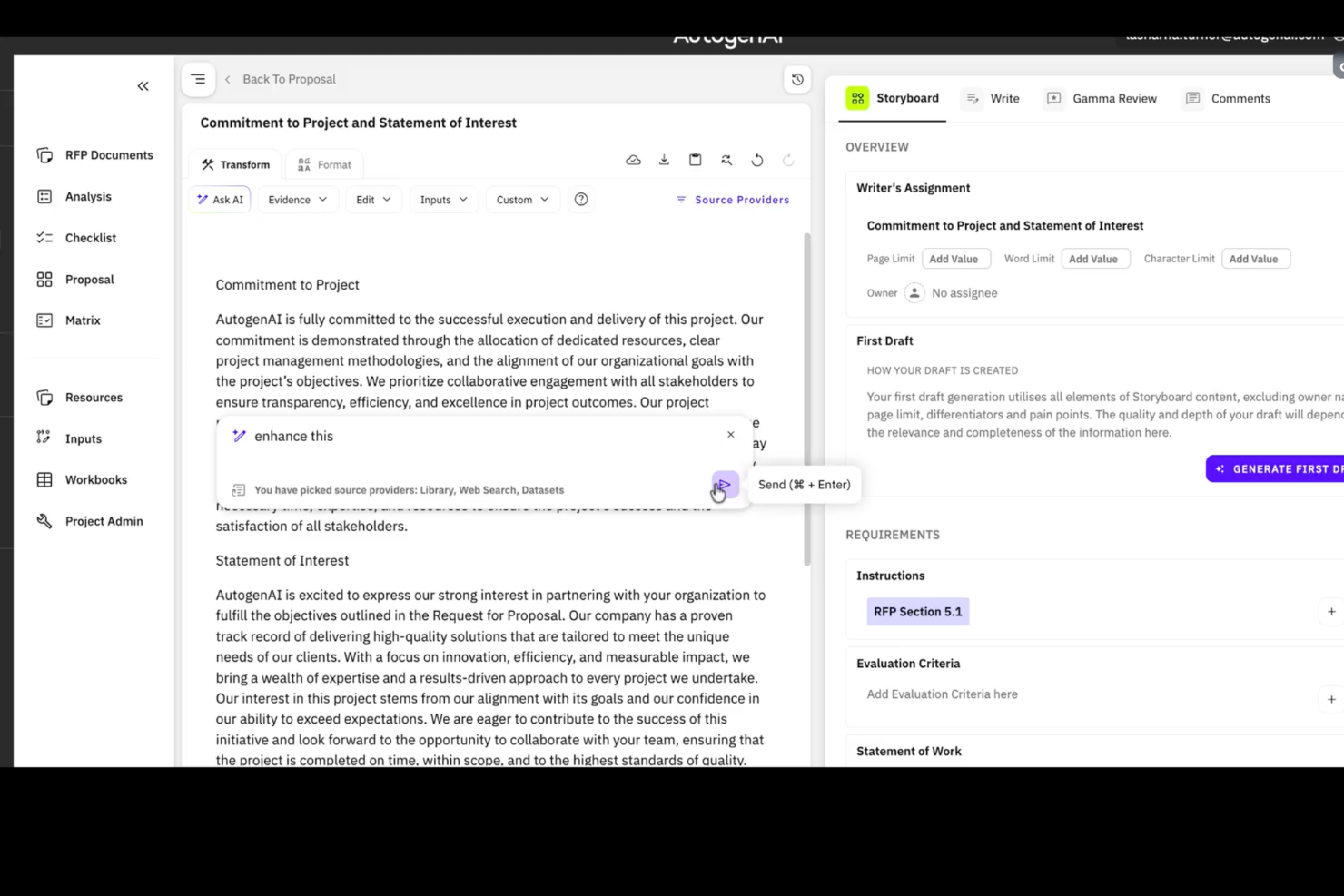
AutogenAI è una piattaforma di risposta a RFP basata sull'IA che automatizza la stesura di narrazioni di progetto, integra strumenti di collaborazione e gestisce la versioning delle proposte e la gestione dei contenuti tramite una libreria di contenuti ottimizzata.
Per chi è ideale AutogenAI?
AutogenAI è adatto a team di proposta e responsabili delle offerte in organizzazioni di livello enterprise che devono generare e gestire contenuti narrativi RFP complessi e in grandi volumi.
Perché ho scelto AutogenAI
Ho scelto AutogenAI come uno dei migliori software per RFP perché consente di generare narrazioni complete e pronte per il cliente grazie ai suoi avanzati agenti AI generativi. In pratica, il mio team redige risposte partendo da documenti sorgente dettagliati e sfrutta la collaborazione integrata per revisioni e modifiche. Dalla prima bozza alla finalizzazione della proposta, questa piattaforma permette di gestire più progetti RFP simultaneamente mantenendo librerie di contenuti distinte per diversi settori.
Funzionalità principali di AutogenAI
- Personalizzazione AI dello stile narrativo: consente agli utenti di adattare tono e stile delle proposte per diversi pubblici o settori.
- Strumenti di importazione documenti: carica ed elabora requisiti o documenti sorgente in vari formati.
- Tracciabilità dettagliata: monitora tutte le modifiche e le azioni utente sulle proposte per finalità di conformità e controllo.
Integrazioni AutogenAI
AutogenAI offre integrazioni native con Salesforce, SharePoint e Zapier, e mette a disposizione una API per integrazioni personalizzate.
Pros and Cons
Pros:
- Genera narrazioni RFP complete con l'IA
- Mantiene librerie di contenuti dedicate per ottimizzare ogni settore
- Traccia la cronologia dettagliata di tutte le modifiche ai contenuti
Cons:
- Richiede onboarding per funzionalità avanzate
- Indirizzato principalmente a grandi organizzazioni

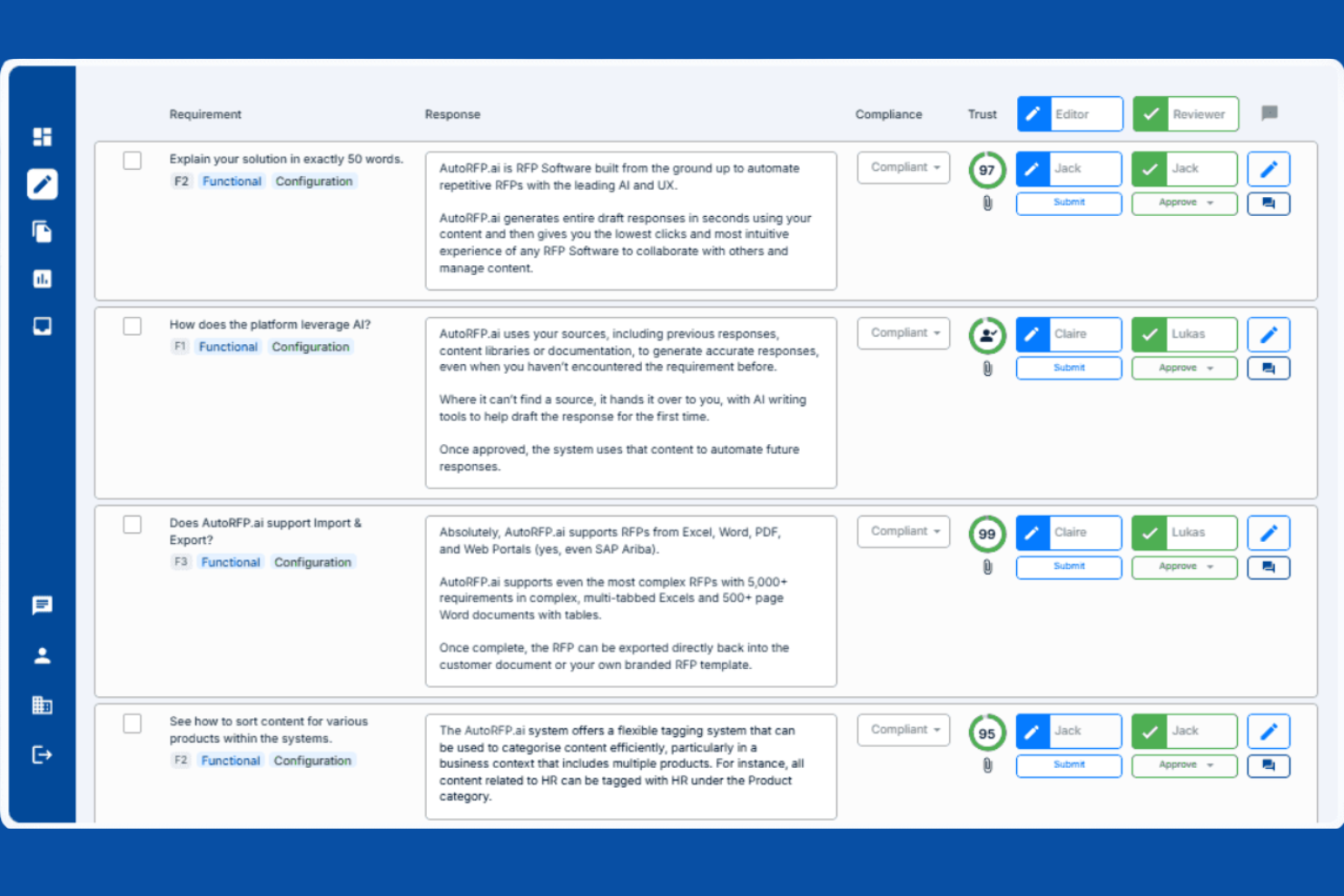
AutoRFP.ai è un software RFI e RFP basato sull'intelligenza artificiale che automatizza la redazione delle proposte direttamente dai documenti caricati, supporta la modifica in tempo reale e non richiede una libreria di contenuti predefinita.
Per chi è ideale AutoRFP.ai?
Responsabili delle proposte e membri di team piccoli o medi che necessitano di risposte rapide e in grande quantità alle RFP senza dover mantenere una libreria di contenuti.
Perché ho scelto AutoRFP.ai
Ho scelto AutoRFP.ai tra i migliori perché posso redigere risposte alle RFP istantaneamente semplicemente caricando il documento RFP. Non è necessario gestire una libreria di contenuti. Il mio team riesce a collaborare sulle proposte in tempo reale e a generare rapidamente risposte utilizzando allegati di progetto o documenti. Questo ci consente di rispondere a un alto volume di richieste senza dover preparare contenuti riutilizzabili in anticipo.
Funzionalità principali di AutoRFP.ai
- Validazione intelligente dei contenuti: utilizza controlli automatici per verificare l'accuratezza dei documenti caricati.
- Firme elettroniche: consente di acquisire firme legalmente vincolanti all'interno della piattaforma.
- Tracciamento della cronologia delle modifiche: registra tutte le attività e le modifiche apportate alle risposte RFP.
Integrazioni AutoRFP.ai
AutoRFP.ai offre integrazioni native con Box, Confluence, Google Chrome, Google Drive, Google Workspace, Intercom, Microsoft Edge, Microsoft Entra, Microsoft Teams, Notion, Okta, OneDrive, Salesforce, Seismic, SharePoint, Slack e Zendesk.
Pros and Cons
Pros:
- Redige risposte da documenti RFP caricati
- Supporta la collaborazione in tempo reale del team sulle proposte
- Include funzionalità di validazione dei contenuti basate su AI
Cons:
- È richiesta una formazione iniziale per l'utilizzo da parte dell'utente
- Nessuna app mobile dedicata


Tribble è una piattaforma di gestione della conoscenza, guidata dall'IA, pensata per acquisire, organizzare e recuperare il sapere tribale derivante dalle interazioni degli agenti e dai flussi di lavoro interni.
Per chi è ideale Tribble?
Tribble è una soluzione ideale per i team di assistenza clienti e operations di organizzazioni in rapida crescita che hanno bisogno di acquisire e valorizzare la conoscenza istituzionale.
Perché ho scelto Tribble
Ho scelto Tribble tra le mie principali opzioni perché voglio che i miei agenti siano in grado di documentare soluzioni sfumate e lezioni apprese in tempo reale da casi concreti. Utilizzo i suoi strumenti per la raccolta guidata dagli agenti per documentare il sapere tribale maturato sul campo senza interrompere il flusso di lavoro. L'IA di Tribble poi organizza e rende disponibile questa informazione così che il mio team possa trovare rapidamente risposte pertinenti quando emergono nuovi progetti o richieste di offerta (RFP).
Funzionalità principali di Tribble
- Ricerca alimentata dall'IA: Trova istantaneamente frammenti di conoscenza rilevanti usando query in linguaggio naturale.
- Integrazione con le piattaforme di chat: Acquisisci e recupera conoscenza direttamente all'interno di Slack e Microsoft Teams.
- Suggerimenti di contenuto automatici: Proponi articoli e soluzioni correlate durante la stesura delle RFP.
Integrazioni di Tribble
Tribble offre integrazioni native con Salesforce, HubSpot, SharePoint, Google Drive, Confluence, Notion, Slack, Microsoft Teams, Gong, Clari, DocuSign, Box e OneDrive, ed è disponibile un'API per integrazioni personalizzate.
Pros and Cons
Pros:
- Gli agenti possono raccogliere conoscenza dal vivo durante i progetti
- L'IA organizza e tagga rapidamente le conoscenze tribali
- Permessi basati sui ruoli per i contenuti RFP sensibili
Cons:
- Richiede manutenzione manuale della base di conoscenza
- Non supporta modelli per RFP standardizzate

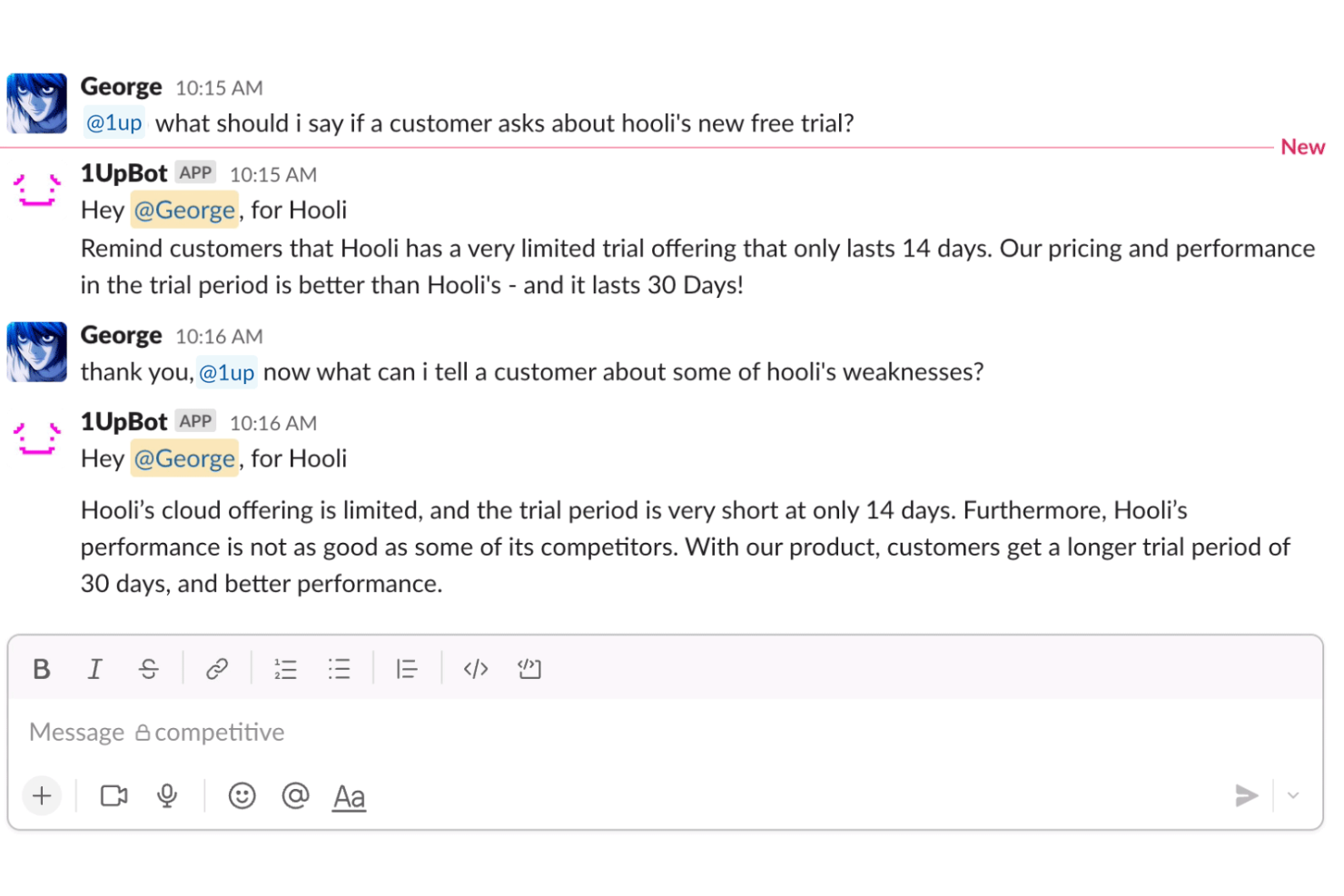
1up è una piattaforma di automazione RFP alimentata da intelligenza artificiale che si collega alle fonti di conoscenza del tuo team, gestisce i contenuti delle risposte e si integra direttamente con Slack per una collaborazione ottimizzata.
A chi è più adatto 1up?
1up è l’ideale per i team di vendita o di proposta nelle aziende tecnologiche che utilizzano Slack per coordinare risposte a RFP e la condivisione della conoscenza.
Perché ho scelto 1up
Ho scelto 1up tra i migliori perché faccio affidamento sulla sua integrazione diretta con Slack per trovare rapidamente i documenti pertinenti e automatizzare la condivisione della conoscenza durante i progetti RFP. Il mio team può acquisire e organizzare contenuti Q&A in tempo reale, tutto all’interno dei canali Slack. Mi piace anche poter utilizzare la ricerca con intelligenza artificiale per trovare all’istante risposte a RFP precedenti senza uscire dall’ambiente chat.
Funzionalità chiave di 1up
- Generazione automatica di risposte RFP: Utilizza l’IA per redigere risposte basate sulla tua base di conoscenza.
- Gestione della libreria di conoscenza: Centralizza e categorizza i contenuti RFP riutilizzabili per l’accesso del team.
- Integrazione con Google Drive: Si collega a Google Drive per reperire documenti e file aggiornati.
Integrazioni di 1up
1up offre integrazioni native con Slack, Salesforce, Confluence, Google Drive e HubSpot.
Pros and Cons
Pros:
- Collaborazione in tempo reale su Slack sulle risposte RFP
- Risposte suggerite generate automaticamente dall’IA sulla base della knowledge base
- Ricerca rapida di risposte storiche tramite IA
Cons:
- Nessun formato documenti integrato per l’esportazione
- Funzionalità di reportistica e analytics minime
Altri Software RFP
Ecco alcune ulteriori soluzioni software RFP che non sono entrate nella mia shortlist, ma che vale comunque la pena considerare:
- Bidara
Ideale per la redazione rapida di proposte coerenti con il brand
- VisibleThread
Ideale per compliance matrix shredding deterministico
- Expedience Software
Ideale per l'automazione delle risposte in formato Word nativo
- DeepRFP
Ideale per l'analisi dei requisiti dei documenti guidata dall'IA
- SparrowGenie
Ideale per la valutazione della probabilità di successo guidata dall'IA


Come valuto i software per RFP
Valuto gli strumenti RFP su due livelli: le capacità di base necessarie per il funzionamento di un team di offerte—come le librerie di contenuti e il riempimento automatico tramite IA—e i fattori distintivi che differenziano un fornitore dall’altro.
Funzionalità principali (requisiti fondamentali per questa lista)
Quando seleziono gli strumenti per la mia lista, classifico ognuno di essi su una scala da 0 (non offre la funzionalità) a 5 (eccelle in quest'area) per ciascuna delle funzionalità principali elencate sotto. Poi, calcolo il punteggio totale dello strumento in percentuale. Ogni strumento deve ottenere un punteggio totale minimo del 65% per essere considerato per l'inclusione.
- Gestione della libreria di contenuti: Valuto come ogni strumento organizza le coppie di domande e risposte riutilizzabili, verificando la presenza di tagging, qualità della ricerca, controllo delle versioni e se le risposte obsolete vengono segnalate prima di finire in una proposta attiva.
- Automazione della risposta alle RFP: Qui la profondità del riempimento automatico è fondamentale—guardo se lo strumento raccomanda risposte tramite corrispondenza di parole chiave, logica basata su regole o suggerimenti guidati dall'IA con punteggi di affidabilità.
- Gestione collaborativa del flusso di lavoro: Le offerte coinvolgono team commerciali, legali, ingegneristici e di sicurezza, quindi verifico come ogni strumento gestisce l'assegnazione degli esperti di settore, l'inoltro per la revisione e le approvazioni a più livelli tra diversi collaboratori.
- Importazione/esportazione multi-formato: Le vere RFP arrivano come documenti Word, fogli Excel, PDF e questionari su portali web, quindi valuto quanto bene ogni strumento importa ed esporta in questi formati senza compromettere la struttura.
- Monitoraggio di progetti e scadenze: I cicli di offerte seguono tempistiche serrate, quindi cerco viste delle tappe fondamentali, avvisi sulle scadenze e dashboard di avanzamento che permettano ai responsabili delle offerte di sapere sempre a che punto è ogni risposta.
- Analisi e reportistica: I buoni team di offerte monitorano i tassi di successo e i tempi di risposta, quindi verifico se ciascuna piattaforma offre report configurabili sull'utilizzo dei contenuti, il carico di lavoro dei collaboratori e le metriche dei risultati.
Una volta creata la lista degli strumenti che soddisfano i criteri, considero ciò che differenzia ogni piattaforma.
Fattori differenzianti (cosa distingue i fornitori)
Ecco come confronto e metto a paragone i diversi fornitori:
Caratteristiche distintive
La redazione generativa con IA è una grande differenza—verifico se uno strumento può generare risposte contestuali di prima stesura traendo spunto da offerte precedenti, invece di offrire solo corrispondenze di parole chiave. Anche il supporto ai questionari di sicurezza è importante, soprattutto per i team che devono gestire valutazioni SIG o CAIQ oltre alle tradizionali RFP. Valuto anche la profondità dell’integrazione con il CRM, verificando se lo stato dell’offerta e i dati sui risultati vengono riportati in Salesforce o HubSpot, così che i responsabili commerciali abbiano visibilità sulla pipeline senza dover inseguire aggiornamenti.
Oltre le caratteristiche
L’implementazione e la migrazione dei contenuti sono aspetti fondamentali. Il valore di uno strumento dipende da quanto rapidamente il team può importare anni di offerte passate in una libreria utilizzabile, quindi controllo se i fornitori offrono onboarding guidato o servizi di migrazione. La postura in termini di sicurezza e conformità è un altro elemento che valuto—i team nel settore finanziario o sanitario necessitano della certificazione SOC 2 Tipo II e opzioni per la residenza dei dati. Inoltre, valuto l’idoneità al settore cercando clienti di riferimento e casi studio che corrispondano al settore e alla dimensione del team dell’acquirente.
Come scegliere il software RFP
È facile perdersi tra lunghe liste di funzionalità e strutture di prezzo complesse. Per aiutarti a rimanere concentrato durante il tuo percorso di selezione software, ecco un elenco di fattori da tenere presenti:
| Fattore | Cosa considerare |
|---|---|
| Scalabilità | Il software si adatterà all’aumentare del volume e delle dimensioni del tuo team? Può supportare più dipartimenti o aree geografiche nel tempo? |
| Integrazioni | Si collega in modo nativo ai CRM, sistemi di gestione documentale e piattaforme di comunicazione che già utilizzi? |
| Personalizzazione | I flussi di lavoro, i campi e i formati dei documenti possono essere adattati ai tuoi processi e alle tue strutture di approvazione? |
| Facilità d’uso | L’interfaccia utente è semplice anche per chi non ha competenze tecniche? Gli stakeholder possono collaborare senza necessità di formazione aggiuntiva o intervento IT? |
| Implementazione e onboarding | Quanto tempo richiede la configurazione? Che livello di supporto e risorse offre il fornitore per guidare il tuo rollout? |
| Costo | I livelli di prezzo sono trasparenti e senza costi nascosti? I costi crescono in modo ragionevole con l’utilizzo? |
| Tutele di sicurezza | Il fornitore offre crittografia, controlli degli accessi e tracciamento delle attività per rispettare i tuoi standard sulla protezione dei dati? |
| Disponibilità del supporto | Quali canali di supporto sono previsti e sono disponibili durante i periodi critici dei tuoi progetti o le scadenze? |
Che cos’è il software RFP?
Il software RFP è uno strumento digitale che aiuta le organizzazioni a gestire l’intero processo di risposta o emissione delle richieste di proposta. Centralizza la creazione di documenti, monitora le scadenze, facilita la collaborazione e organizza i dati delle proposte per una revisione e presentazione più agevoli. Questo tipo di software riduce gli errori, migliora il coordinamento del team e garantisce la conformità ai requisiti dei committenti durante i cicli di acquisto critici.
Caratteristiche del software RFP
Quando scegli un software RFP, presta attenzione alle seguenti caratteristiche chiave:
- Archivio documentale centralizzato: Conserva, organizza e gestisci tutte le RFP, allegati e materiali correlati in un'unica posizione sicura per facilitare l'accesso e il controllo delle versioni.
- Strumenti di collaborazione: Permetti a più stakeholder di contribuire, commentare o revisionare le risposte all'interno dello stesso spazio di lavoro, riducendo confusioni e duplicazioni di sforzi.
- Monitoraggio delle scadenze e delle tappe: Imposta scadenze, assegna compiti e attiva promemoria per assicurare che nessun componente della risposta venga dimenticato o inviato in ritardo.
- Gestione dei modelli: Crea, modifica e riutilizza modelli di risposta per velocizzare il processo di proposta e garantire coerenza nel messaggio e nel branding.
- Libreria dei contenuti: Salva risposte approvate e precompilate, informazioni aziendali e testi standard da inserire rapidamente nelle nuove risposte.
- Design del flusso di lavoro personalizzato: Adatta l'assegnazione dei compiti e le fasi di approvazione ai processi di revisione e validazione delle RFP della tua organizzazione.
- Funzionalità di importazione/esportazione: Acquisisci rapidamente i dettagli delle RFP da vari formati file ed esporta le risposte nei formati richiesti dal cliente senza problemi di formattazione.
- Controlli dei permessi utente: Definisci livelli di accesso granulari e diritti di autorialità per ciascun utente per proteggere i dati sensibili e garantire la responsabilità.
- Tracciabilità e registri delle attività: Segui modifiche, revisioni e approvazioni in tempo reale per la conformità e una supervisione trasparente dei progetti.
Funzionalità AI comuni nei software RFP
Oltre alle funzionalità standard elencate sopra, molte soluzioni RFP integrano l'intelligenza artificiale con funzioni come:
- Suggerimento di risposte automatiche: L’IA analizza risposte precedenti e librerie per suggerire all’istante risposte su misura per le nuove domande RFP, riducendo i tempi di redazione manuale.
- Collegamento intelligente dei contenuti: L’IA analizza i requisiti della RFP e li associa ai contenuti pre-approvati più pertinenti o agli esperti interni all'organizzazione.
- Analisi intelligente dei documenti: L’IA legge e struttura i documenti RFP in entrata, estraendo criteri chiave, scadenze e requisiti di conformità per un’impostazione rapida delle risposte.
- Punteggio della qualità della risposta: L’IA revisiona le bozze e valuta le risposte per chiarezza, pertinenza e conformità, segnalando in tempo reale eventuali debolezze o incoerenze.
- Previsione della probabilità di aggiudicazione: L’IA utilizza dati storici di vittorie/sconfitte e le caratteristiche delle proposte per stimare la probabilità di successo prima dell’allocazione delle risorse.
Vantaggi del software RFP
L’implementazione di un software RFP offre numerosi vantaggi per il tuo team e per la tua azienda. Ecco alcuni benefici a cui puoi aspirare:
- Tempi di risposta più rapidi: Workflow automatizzati, modelli e librerie di contenuti riducono il lavoro manuale e accelerano l’intero processo di proposta.
- Conformità migliorata: Tracciabilità integrata, workflow di approvazione e gestione strutturata dei dati aiutano il team a soddisfare i requisiti di clienti e regolatori.
- Collaborazione ottimizzata: Spazi di lavoro condivisi e permessi a ruoli favoriscono il lavoro di squadra e la responsabilità tra i diversi dipartimenti.
- Maggior coerenza dei contenuti: La gestione dei modelli e le risposte standard assicurano che le tue proposte mantengano linguaggio e qualità coerenti.
- Monitoraggio dell’avanzamento semplificato: La gestione delle scadenze e gli aggiornamenti di stato in tempo reale consentono di monitorare le fasi e affrontare eventuali blocchi prima che diventino problemi.
- Rischio di errori ridotto: Il controllo centralizzato dei documenti e la tracciabilità automatica delle versioni riducono errori e necessità di revisioni dell’ultimo minuto.
- Percentuali di successo più elevate: Report avanzati, insight dell’IA e indicazioni basate sui dati permettono di concentrare le risorse sulle opportunità RFP più promettenti.
Costi e prezzi del software RFP
La scelta di un software RFP richiede la comprensione dei diversi modelli e piani di prezzo disponibili. I costi variano in base alle funzionalità, alla dimensione del team, agli extra e non solo. La tabella seguente riassume i piani più comuni, i prezzi medi e le funzionalità tipiche incluse nelle soluzioni software RFP:
Tabella comparativa dei piani per software RFP
| Tipo di piano | Prezzo medio | Caratteristiche comuni |
|---|---|---|
| Piano gratuito | $0 | Archiviazione di documenti di base, accesso per un solo utente, modelli di risposta limitati e gestione delle attività di base. |
| Piano personale | $19-$50/utente/mese | Opzioni di template ampliate, monitoraggio delle scadenze, libreria di contenuti, notifiche email e capacità di esportazione. |
| Piano business | $60-$100/utente/mese | Collaborazione avanzata, personalizzazione dei flussi di lavoro, dashboard di analisi, integrazioni con CRM e supporto prioritario. |
| Piano enterprise | $300-$1000+/mese | Flussi di lavoro personalizzati, utenti illimitati, permessi avanzati, SSO, tracciamento degli audit, onboarding dedicato e SLA. |
Domande frequenti sul software RFP
Ecco alcune risposte alle domande più comuni sul software RFP:
Il Software RFP può aiutare a gestire le scadenze e le assegnazioni del team?
Sì, la maggior parte dei software RFP include l’assegnazione delle attività, il tracciamento delle tappe, la gestione delle risposte e i promemoria automatici per mantenere tutti in linea con la pianificazione. Questo semplifica il coordinamento, previene le scadenze mancate e agevola la gestione delle proposte con più collaboratori.
Quanto sono sicuri i dati archiviati nei Software RFP?
La maggior parte dei provider di software RFP utilizza una forte crittografia, SOC 2, controlli di accesso rigorosi e log di audit per proteggere i tuoi dati. Verifica sempre i questionari di sicurezza, le certificazioni e le policy del fornitore per assicurarti che siano in linea con i requisiti di protezione dati della tua organizzazione.
È possibile integrare il Software RFP con altri strumenti aziendali?
Sì, molte soluzioni RFP offrono integrazioni con CRM, sistemi di gestione documentale e piattaforme di collaborazione. Questa connettività riduce l’inserimento manuale dei dati, aiuta a mantenere una singola fonte di verità e semplifica i flussi di lavoro RFP su tutti i principali sistemi aziendali.
Le piattaforme di Software RFP supportano la gestione della libreria di contenuti?
Sì, una libreria di contenuti integrata è una funzionalità standard per la maggior parte dei software RFP. Permette di archiviare risposte approvate, documenti tecnici e risorse riutilizzabili, velocizzando la creazione delle proposte e assicurando coerenza nelle risposte.
Cosa devo cercare nella valutazione di un Software RFP per un team numeroso?
Cerca la gestione scalabile degli utenti, permessi avanzati, accesso cloud e ampie risorse di onboarding. I team più grandi traggono spesso beneficio da flussi di lavoro personalizzati e analisi avanzate per monitorare l’attività e i risultati tra i dipartimenti.